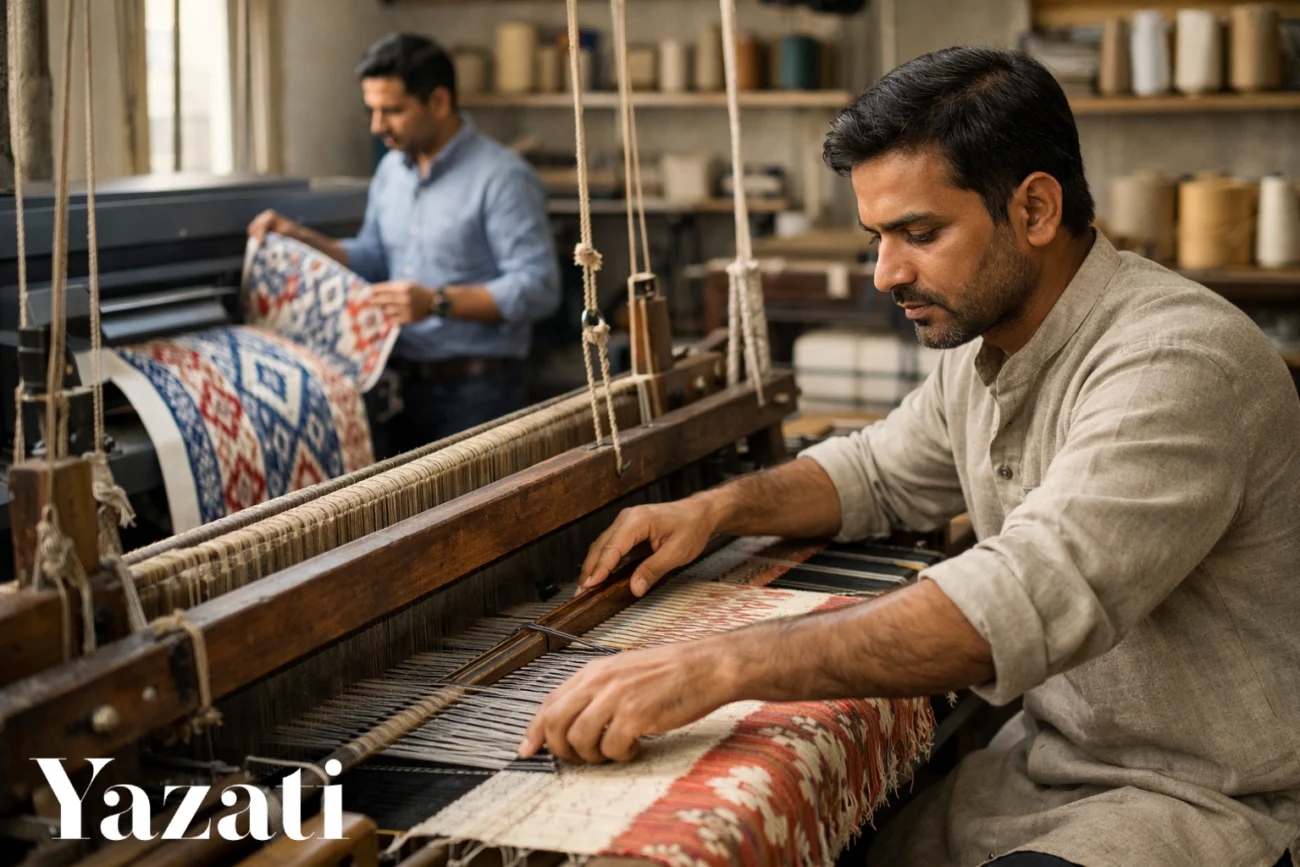
Introduction to Yazati’s Unique Textile Approach
In today’s fast-changing fashion world, brands are constantly searching for ways to stand out while staying responsible. One such innovative name is Yazati. The brand has mastered the art of blending modern technology with age-old craftsmanship. Understanding how Yazati combines digital printing and handloom techniques reveals a story of creativity, sustainability, and cultural preservation.
Instead of choosing between tradition and innovation, Yazati brings them together. This unique fusion results in fabrics that are not only visually stunning but also rich in heritage.
Understanding Digital Printing in Modern Textiles
What is Digital Fabric Printing?
Digital fabric printing is a modern technique where designs are printed directly onto fabric using specialized printers. Unlike traditional methods, it allows for detailed, high-resolution patterns.
This method uses computer-generated designs, making it easier to experiment with colors, textures, and intricate artwork.
Benefits of Digital Printing in Fashion
Digital printing offers several advantages:
- High precision and detail
- Unlimited color options
- Faster production time
- Reduced material waste
Because of these benefits, it has become a favorite choice for contemporary designers.
Exploring Traditional Handloom Techniques
History and Cultural Significance of Handloom
Handloom weaving is one of the oldest textile-making techniques in the world. It involves manually weaving threads on a loom without the use of electricity.
This craft is deeply rooted in cultural traditions and often reflects regional identities.
Types of Handloom Weaving
Some common types include:
- Plain weave
- Twill weave
- Satin weave
Each technique produces a unique texture and pattern, adding character to the fabric.
The Vision Behind Yazati’s Hybrid Model
Bridging Tradition and Technology
Yazati believes that tradition and technology do not have to compete. Instead, they can complement each other.
By combining digital printing with handloom weaving, the brand creates textiles that carry both precision and soul.
Innovation in Textile Design
This hybrid approach allows designers to:
- Experiment with bold patterns
- Maintain handcrafted authenticity
- Create one-of-a-kind pieces
It opens up endless possibilities in textile design.
How Yazati Combines Digital Printing and Handloom Techniques
Step-by-Step Production Process
Understanding how Yazati combines digital printing and handloom techniques requires a closer look at its production process.
Fabric Selection
The process begins with choosing high-quality natural fabrics like cotton, silk, or linen. These materials work well with both digital printing and handloom weaving.
Digital Design Creation
Designers create patterns using advanced software. These designs can range from traditional motifs to modern abstract art.
Printing on Fabric
The selected design is digitally printed onto the fabric. This ensures sharp details and vibrant colors.
Handloom Weaving Integration
After printing, the fabric is either:
- Woven into new structures
- Enhanced with handloom techniques
- Combined with handwoven elements
This step adds texture and depth that machines alone cannot achieve.
Benefits of Combining Digital Printing and Handloom
Enhanced Design Precision
Digital printing allows for exact patterns, while handloom adds a unique, imperfect charm. Together, they create balanced and visually appealing fabrics.
Sustainability and Eco-Friendly Practices
This method reduces waste and supports eco-friendly production. Digital printing uses less water, and handloom weaving consumes minimal energy.
Preservation of Traditional Craftsmanship
By involving artisans, Yazati helps keep traditional skills alive. This also provides employment and supports local communities.
Challenges Faced in This Integration
Technical Limitations
Combining two different techniques is not always easy. Issues like color consistency and fabric compatibility can arise.
Skill Gap and Training
Artisans need training to work with digitally printed fabrics. Bridging this gap requires time and investment.
Yazati’s Contribution to Sustainable Fashion
Reducing Waste with Digital Printing
Digital printing minimizes excess dye and fabric waste. This makes the process more environmentally friendly.
Supporting Artisan Communities
By incorporating handloom techniques, Yazati provides work opportunities for skilled artisans, helping sustain traditional livelihoods.
Market Trends and Consumer Demand
Rise of Ethical Fashion
Consumers today prefer brands that are ethical and sustainable. Yazati fits perfectly into this trend.
Demand for Unique Textile Designs
People are moving away from mass-produced items. They want unique, meaningful pieces—something Yazati delivers.
Future of Hybrid Textile Techniques
Technological Advancements
As technology improves, digital printing will become even more efficient and versatile.
Global Expansion Opportunities
The fusion of digital and handloom techniques has global appeal. It can attract customers from different cultures and markets.
FAQs
1. What makes Yazati’s textiles unique?
Yazati combines modern digital printing with traditional handloom techniques, creating fabrics that are both precise and handcrafted.
2. Is digital printing eco-friendly?
Yes, digital printing uses less water and produces less waste compared to traditional printing methods.
3. Why is handloom important?
Handloom preserves cultural heritage and provides employment to artisans.
4. Can digital printing replace handloom?
No, digital printing cannot replicate the texture and authenticity of handloom weaving.
5. Are Yazati products sustainable?
Yes, Yazati focuses on eco-friendly practices and supports artisan communities.
6. What fabrics are used in this process?
Common fabrics include cotton, silk, and linen.
Conclusion
Understanding how Yazati combines digital printing and handloom techniques highlights a powerful shift in the textile industry. It shows that innovation does not have to replace tradition—it can enhance it.
Yazati’s approach brings together the best of both worlds: the precision of modern technology and the authenticity of handcrafted textiles. This not only results in beautiful fabrics but also supports sustainability and cultural preservation.
As the demand for ethical and unique fashion grows, this hybrid model is likely to shape the future of the textile industry. Yazati stands as a shining example of how creativity and responsibility can go hand in hand.
✨ Discover Global Sourcing Excellence with Netyex ✨
Netyex is your trusted B2B sourcing partner, connecting international buyers with India’s finest manufacturers and curated product lines—from handicrafts and home décor to kitchenware, textiles, hospitality essentials, and more. With verified suppliers and end-to-end support, we make global procurement seamless, reliable, and efficient.
👉 Elevate your sourcing experience—explore Netyex today.
📦 Bulk orders & customisation | 🌍 Worldwide delivery | 🤝 Trusted by global buyers
Visit Netyex to source premium Indian products with confidence.