Introduction to Holiday Demand Forecasting
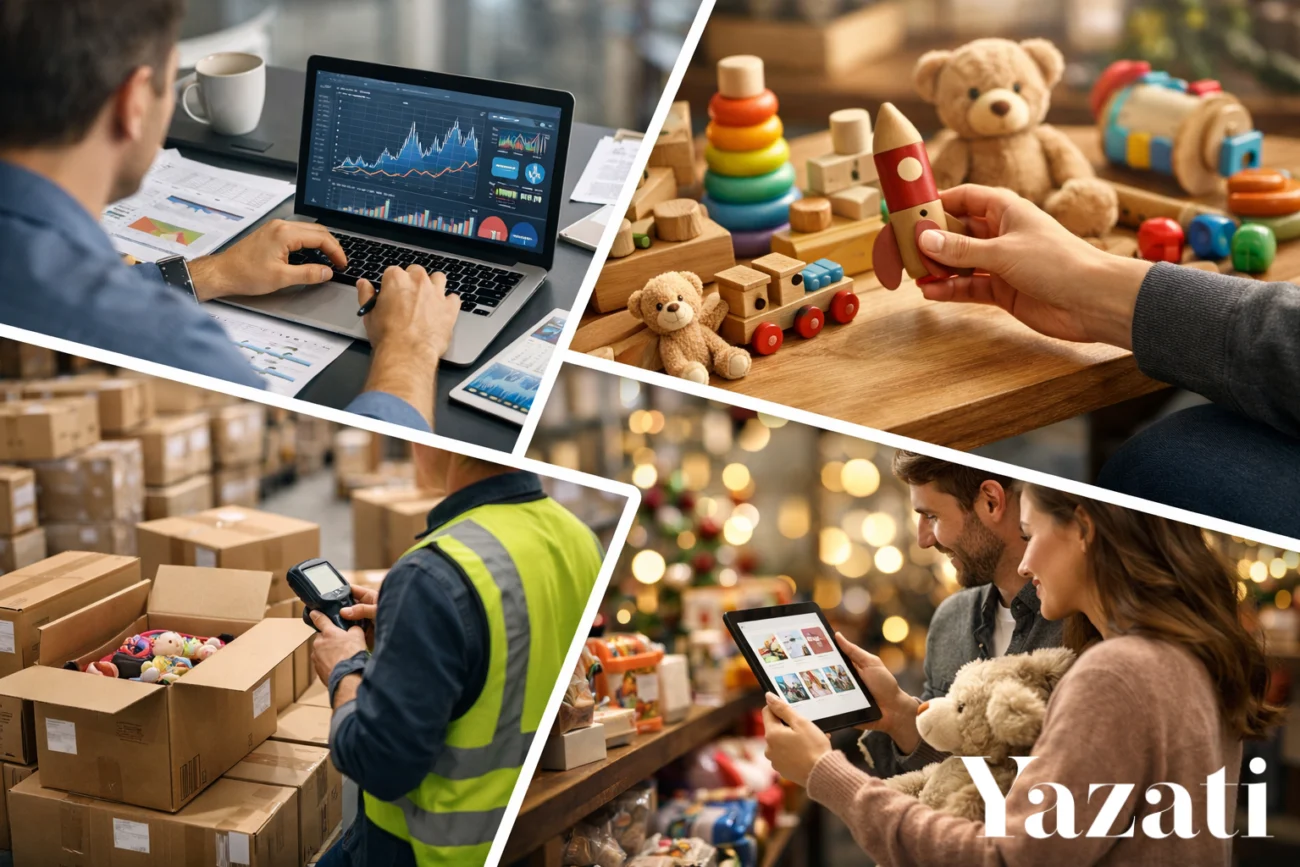
Holiday seasons bring massive opportunities for toy importers, but they also come with significant risks. Understanding how Toy Importers Can Predict Holiday Season Demand is essential for maximizing profits while avoiding overstock or stockouts.
Demand forecasting is the process of estimating how much product customers will purchase during a specific period. For toy importers, this becomes especially important during peak seasons like Christmas, Diwali, and New Year.
Why Accurate Forecasting Matters for Toy Importers
Accurate forecasting helps businesses:
- Avoid excess inventory that leads to losses
- Ensure popular toys remain in stock
- Improve cash flow management
- Strengthen relationships with retailers
Without proper forecasting, importers often face either unsold inventory or missed sales opportunities—both of which can hurt profitability.
Key Challenges in Predicting Toy Demand
Forecasting toy demand is not always easy. Some common challenges include:
- Rapidly changing trends among children
- Short product life cycles
- Unpredictable viral toys
- Supply chain delays
Because of these uncertainties, importers must rely on a combination of data, intuition, and advanced tools.
Understanding Consumer Behavior Trends
To predict demand effectively, toy importers must understand how consumers behave during holiday seasons.
Seasonal Buying Patterns
Holiday shopping follows predictable patterns:
- Early shoppers begin in October or earlier
- Peak buying occurs in the last 2–3 weeks before holidays
- Last-minute purchases often focus on trending toys
Recognizing these patterns helps importers plan inventory levels accurately.
Influence of Festive Occasions
Different holidays drive different types of toy demand:
- Educational toys during back-to-school seasons
- Gift-oriented toys during Christmas
- Cultural toys during regional festivals
Understanding these variations allows importers to align their product offerings.
Impact of Economic Conditions
Economic factors play a major role in purchasing decisions:
- Strong economy → higher spending on premium toys
- Weak economy → demand shifts toward affordable options
Monitoring inflation, disposable income, and consumer confidence helps refine forecasts.
Leveraging Historical Sales Data
Historical data is one of the most powerful tools for predicting demand.
Analyzing Past Holiday Sales
By reviewing previous years’ sales, importers can identify:
- High-demand products
- Slow-moving inventory
- Seasonal spikes
This data provides a solid foundation for future planning.
Identifying Best-Selling Categories
Common high-performing categories include:
- Action figures
- Educational toys
- Board games
- Electronic toys
Tracking category performance helps prioritize inventory investments.
Using Year-over-Year Comparisons
Comparing data across multiple years allows importers to:
- Identify growth trends
- Detect declining products
- Adjust forecasts accordingly
This approach improves accuracy over time.
Market Research and Industry Insights
Market research provides valuable external data that complements internal analysis.
Tracking Competitor Strategies
Observing competitors helps importers:
- Identify trending products
- Adjust pricing strategies
- Understand market positioning
Competitor analysis can reveal gaps and opportunities in the market.
Monitoring Retail Trends
Retail trends often indicate future demand. For example:
- Increased shelf space for certain toys
- Promotional campaigns
- Retailer stocking patterns
These signals provide early indicators of what will sell.
Utilizing Industry Reports
Industry reports offer insights into:
- Global toy market trends
- Consumer preferences
- Emerging technologies
These reports help importers stay ahead of market shifts.
Role of Technology in Demand Prediction
Technology has revolutionized how toy importers forecast demand.
AI and Machine Learning in Forecasting
Artificial intelligence can analyze large datasets quickly and accurately. Benefits include:
- Identifying hidden patterns
- Predicting demand fluctuations
- Automating forecasting processes
AI reduces human error and improves decision-making.
Predictive Analytics Tools
Modern tools provide features such as:
- Real-time data analysis
- Demand simulation
- Scenario planning
These tools help importers make informed decisions under uncertainty.
Inventory Management Systems
Advanced inventory systems allow businesses to:
- Track stock levels in real time
- Automate reordering
- Reduce stockouts
Efficient inventory management is crucial during peak seasons.
Collaboration with Retailers and Suppliers
Strong collaboration across the supply chain improves forecasting accuracy.
Sharing Data Across Supply Chain
Data sharing enables:
- Better demand visibility
- Faster response to changes
- Improved coordination
Retailers often have direct insights into customer preferences, making their data invaluable.
Supplier Lead Time Analysis
Understanding supplier timelines helps importers:
- Plan orders in advance
- Avoid delays
- Maintain consistent inventory
Lead time analysis ensures smoother operations during high-demand periods.
Monitoring Social Media and Trends
Social media has become a powerful tool for predicting toy demand.
Viral Toy Trends
Many toys become popular overnight due to viral trends. Monitoring platforms helps identify:
- Trending toys
- Popular themes
- Customer preferences
This real-time insight is invaluable.
Influencer Impact on Toy Demand
Influencers and content creators significantly impact buying decisions. A single viral video can:
- Boost product demand instantly
- Create shortages
- Drive global trends
Tracking influencers helps importers act quickly.
Importance of Pre-Orders and Early Signals
Pre-orders provide early indicators of demand.
Collecting Customer Intent Data
Pre-orders help importers:
- Gauge interest levels
- Adjust inventory
- Reduce uncertainty
This data is highly reliable because it reflects actual purchase intent.
Using Pre-Sales Campaigns
Pre-sales campaigns allow businesses to:
- Test product popularity
- Generate early revenue
- Build customer anticipation
They also provide valuable forecasting data.
Managing Risk and Uncertainty
Even the best forecasts cannot eliminate uncertainty completely.
Buffer Stock Strategies
Maintaining buffer stock helps:
- Handle unexpected demand spikes
- Avoid stockouts
- Ensure customer satisfaction
However, it must be balanced to avoid excess inventory.
Diversifying Product Portfolio
Offering a variety of products reduces risk:
- If one product fails, others can compensate
- Helps capture different customer segments
- Improves overall stability
Diversification is a smart strategy for long-term success.
FAQs
1. Why is demand forecasting important for toy importers?
It helps prevent overstocking and stockouts, ensuring maximum profitability during peak seasons.
2. What data is most useful for predicting toy demand?
Historical sales data, market trends, and consumer behavior insights are the most valuable.
3. How can social media help predict toy trends?
Social media reveals real-time trends and viral products that can quickly gain popularity.
4. What role does technology play in forecasting?
Technology like AI and predictive analytics improves accuracy and speeds up decision-making.
5. How do pre-orders help in demand prediction?
They provide direct insight into customer interest and future sales potential.
6. What is the biggest challenge in predicting toy demand?
Rapidly changing trends and unpredictable consumer preferences.
Conclusion
Understanding how Toy Importers Can Predict Holiday Season Demand is essential for thriving in a competitive market. By combining historical data, market research, technology, and real-time trend analysis, importers can significantly improve forecasting accuracy.
The key lies in being proactive rather than reactive. Businesses that invest in data-driven strategies, collaborate across the supply chain, and stay updated with consumer trends are more likely to succeed during peak seasons.
Holiday demand forecasting may never be perfect, but with the right approach, it can become a powerful tool for growth, efficiency, and long-term success.
✨ Discover Global Sourcing Excellence with Netyex ✨
Netyex is your trusted B2B sourcing partner, connecting international buyers with India’s finest manufacturers and curated product lines—from handicrafts and home décor to kitchenware, textiles, hospitality essentials, and more. With verified suppliers and end-to-end support, we make global procurement seamless, reliable, and efficient.
👉 Elevate your sourcing experience—explore Netyex today.
📦 Bulk orders & customisation | 🌍 Worldwide delivery | 🤝 Trusted by global buyers
Visit Netyex to source premium Indian products with confidence.