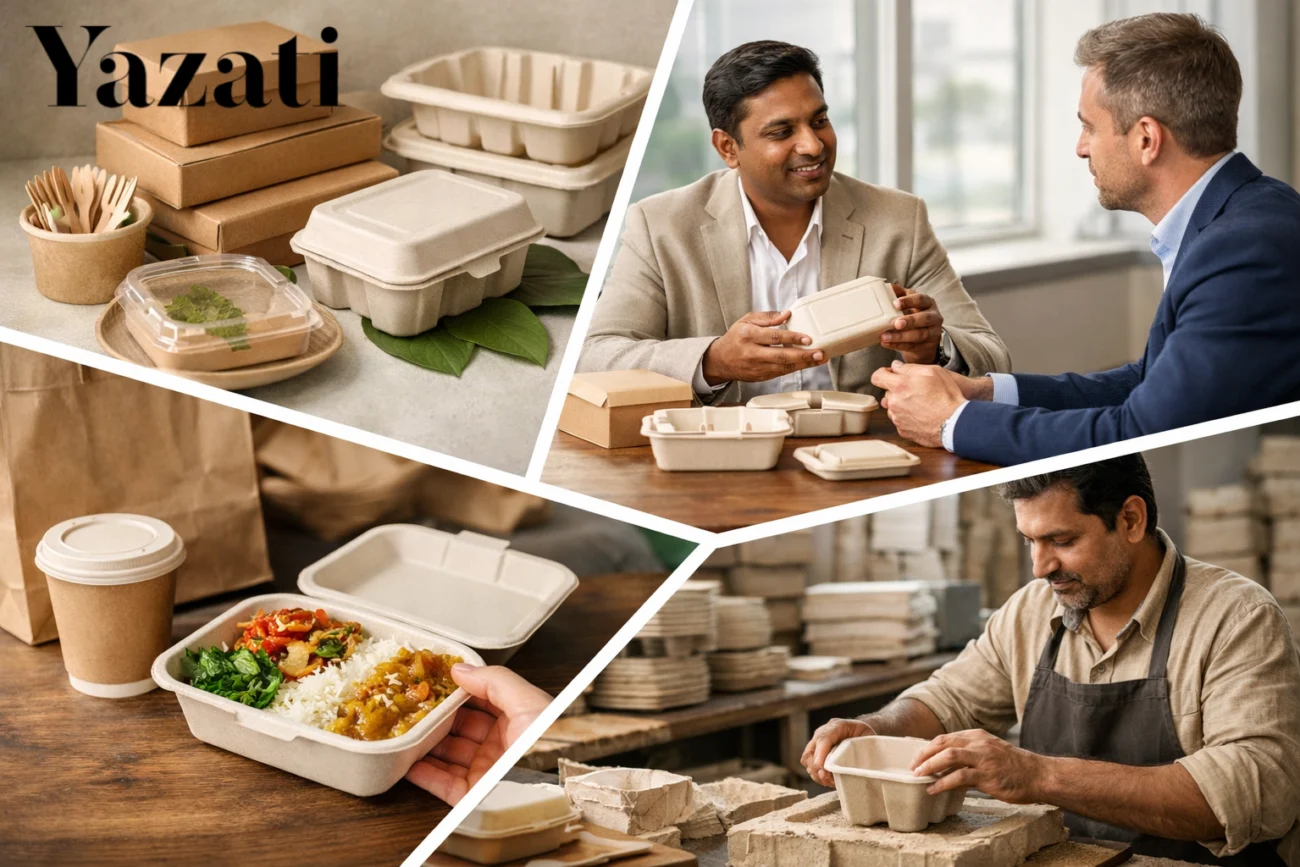
Introduction to Compostable Packaging
The rise of compostable packaging from India marks a powerful shift toward sustainability in one of the world’s fastest-growing economies. As plastic pollution becomes a global crisis, India is stepping up with innovative, eco-friendly solutions that not only address environmental issues but also create economic opportunities.
Compostable packaging is emerging as a viable alternative to traditional plastic. It breaks down naturally into non-toxic components, leaving no harmful residue behind. This transformation is not just a trend—it’s a necessity.
What is Compostable Packaging?
Compostable packaging refers to materials that decompose into natural elements like water, carbon dioxide, and biomass under composting conditions. Unlike conventional plastics, these materials do not leave behind microplastics or toxic waste.
They are typically made from renewable resources such as:
- Corn starch
- Sugarcane fibers
- Potato starch
- Agricultural residues
Difference Between Biodegradable and Compostable
Although often used interchangeably, biodegradable and compostable are not the same.
| Feature | Biodegradable | Compostable |
|---|---|---|
| Breakdown Time | Variable | Specific timeframe |
| Residue | May leave toxins | Non-toxic |
| Conditions Required | Natural | Controlled composting |
Compostable materials are more reliable and environmentally safe compared to biodegradable ones.
Why India is Embracing Compostable Packaging
India’s transition toward compostable packaging is driven by necessity, innovation, and policy support.
Environmental Challenges in India
India faces severe waste management issues:
- Over 3 million tons of plastic waste annually
- Landfills reaching capacity
- Marine pollution affecting biodiversity
These challenges have pushed industries and policymakers to explore sustainable alternatives.
Government Policies and Plastic Bans
India has implemented strict regulations to curb plastic usage, including:
- Single-use plastic bans
- Extended Producer Responsibility (EPR)
- Waste segregation mandates
Such policies are accelerating the adoption of compostable packaging nationwide.
Key Materials Used in Compostable Packaging
India is rich in agricultural resources, making it an ideal hub for compostable material production.
Plant-Based Polymers
These include materials like PLA (Polylactic Acid), derived from corn starch. They are widely used in:
- Food containers
- Disposable cutlery
- Packaging films
Agricultural Waste Materials
India produces vast amounts of agricultural waste, which is now being repurposed into packaging materials such as:
- Rice husk
- Wheat straw
- Coconut fibers
This reduces waste while creating value-added products.
Bagasse and Bamboo Innovations
Bagasse (sugarcane residue) and bamboo are leading materials in India’s compostable packaging sector. They are:
- Durable
- Heat-resistant
- Fully compostable
These materials are commonly used for plates, bowls, and takeaway containers.
The Rise of Compostable Packaging from India in Global Markets
India is not just catering to domestic demand—it’s becoming a global supplier.
Export Opportunities
Indian manufacturers are exporting compostable products to:
- Europe
- North America
- Southeast Asia
The demand is fueled by strict environmental regulations in these regions.
International Demand Trends
Global consumers are increasingly prioritizing sustainability. Businesses worldwide are shifting toward eco-friendly packaging, creating strong demand for Indian products.
Benefits of Compostable Packaging
Environmental Benefits
Compostable packaging:
- Reduces landfill waste
- Minimizes carbon footprint
- Prevents soil and water contamination
Economic Advantages
This sector is generating:
- Employment opportunities
- Export revenue
- Growth for rural industries
Social Impact
Compostable packaging promotes:
- Sustainable living
- Cleaner cities
- Healthier ecosystems
Industries Driving Adoption in India
Food and Beverage Sector
Restaurants and food delivery platforms are leading adopters due to increasing consumer demand for eco-friendly options.
E-commerce and Retail
Online retailers are switching to compostable packaging to reduce their environmental footprint and improve brand image.
Healthcare and Hospitality
Hospitals and hotels are adopting compostable products for hygiene and sustainability.
Challenges Facing Compostable Packaging in India
Cost and Affordability
Compostable packaging is currently more expensive than plastic, making it less accessible for small businesses.
Infrastructure Gaps
India lacks sufficient industrial composting facilities, limiting the effectiveness of compostable materials.
Consumer Awareness
Many consumers are still unaware of how to properly dispose of compostable products.
Innovations and Startups Leading the Change
Emerging Indian Startups
Several startups are driving innovation by developing affordable and scalable compostable solutions.
Technological Advancements
New technologies are improving:
- Material strength
- Decomposition speed
- Production efficiency
Role of Government and Regulations
Plastic Waste Management Rules
India’s regulations are becoming stricter, encouraging businesses to adopt sustainable practices.
Incentives and Subsidies
Government support includes:
- Tax benefits
- Funding for startups
- Research grants
Composting Infrastructure in India
Urban Composting Systems
Cities are developing composting plants to manage organic and compostable waste effectively.
Rural Opportunities
Rural areas can benefit from decentralized composting systems, creating jobs and reducing waste.
How Businesses Can Transition to Compostable Packaging
Steps for Implementation
- Assess current packaging
- Identify sustainable alternatives
- Partner with reliable suppliers
- Educate customers
Cost Optimization Strategies
- Bulk purchasing
- Government incentives
- Long-term sustainability savings
Consumer Behavior and Awareness Trends
Shift Toward Eco-Friendly Choices
Consumers are increasingly choosing brands that prioritize sustainability.
Role of Social Media
Social media is playing a key role in spreading awareness and influencing buying decisions.
Future Outlook of Compostable Packaging in India
Market Growth Predictions
The compostable packaging market in India is expected to grow significantly in the next decade due to:
- Policy support
- Consumer demand
- Technological advancements
Technological Evolution
Future innovations may include:
- Faster composting materials
- Lower production costs
- Improved durability
FAQs
1. What is compostable packaging made from?
It is made from natural materials like corn starch, sugarcane fiber, and agricultural waste.
2. Is compostable packaging better than plastic?
Yes, it is environmentally friendly and breaks down into non-toxic components.
3. Can compostable packaging be recycled?
No, it is designed to be composted, not recycled.
4. Is compostable packaging expensive?
Currently, it is slightly more expensive than plastic but costs are decreasing over time.
5. How long does compostable packaging take to decompose?
It typically decomposes within 90–180 days under proper conditions.
6. Why is India leading in compostable packaging?
India has abundant raw materials, strong policy support, and growing environmental awareness.
Conclusion
The rise of compostable packaging from India is a significant step toward a greener future. With strong government backing, innovative startups, and increasing consumer awareness, India is positioning itself as a global leader in sustainable packaging solutions.
While challenges remain, the momentum is undeniable. As technology advances and costs decrease, compostable packaging will likely become the norm rather than the exception.
✨ Discover Global Sourcing Excellence with Netyex ✨
Netyex is your trusted B2B sourcing partner, connecting international buyers with India’s finest manufacturers and curated product lines—from handicrafts and home décor to kitchenware, textiles, hospitality essentials, and more. With verified suppliers and end-to-end support, we make global procurement seamless, reliable, and efficient.
👉 Elevate your sourcing experience—explore Netyex today.
📦 Bulk orders & customisation | 🌍 Worldwide delivery | 🤝 Trusted by global buyers
Visit Netyex to source premium Indian products with confidence.