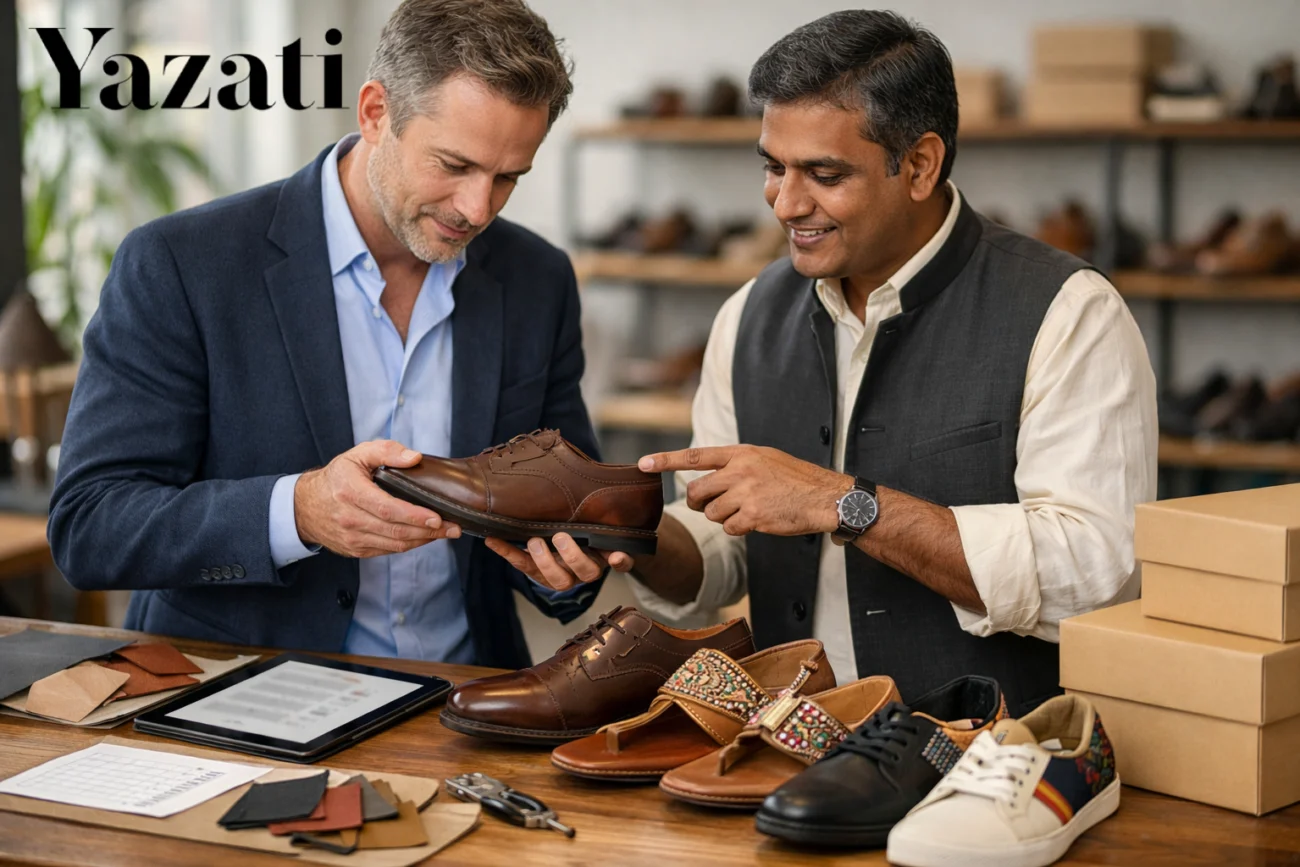
Introduction to Indian Footwear Industry
The global footwear market has grown rapidly over the past decade, and one country that continues to stand out is India. The phrase Why Importers Prefer Indian Footwear for Value and Design has become increasingly relevant as buyers across continents seek products that combine affordability, durability, and style.
India is currently one of the largest producers of footwear in the world, exporting millions of pairs annually. From handcrafted leather sandals to modern athletic shoes, Indian manufacturers offer an impressive variety that appeals to both budget-conscious and premium buyers.
Historical Roots of Footwear Craftsmanship
India’s footwear tradition dates back centuries. Skilled artisans have been crafting shoes using techniques passed down through generations. Regions like Agra, Kanpur, and Chennai are well-known hubs for footwear production.
These traditional skills have evolved over time, blending heritage craftsmanship with modern techniques. This unique combination gives Indian footwear a distinctive identity that importers find hard to replicate elsewhere.
Growth of Export-Oriented Manufacturing
Over the years, India has shifted from small-scale production to large export-driven manufacturing. Factories are now equipped with advanced machinery, enabling mass production while maintaining quality.
Export-oriented units focus on meeting international standards, ensuring that products are suitable for markets in Europe, North America, and beyond.
Cost Advantage: A Key Driver for Importers
One of the biggest reasons behind Why Importers Prefer Indian Footwear for Value and Design is the cost advantage.
Affordable Labor and Production Costs
India offers significantly lower labor costs compared to many Western countries and even some Asian competitors. This allows manufacturers to produce high-quality footwear at a fraction of the price.
Lower operational expenses, including utilities and raw materials, further contribute to cost efficiency.
Competitive Pricing Without Quality Compromise
Despite lower costs, Indian footwear does not compromise on quality. Manufacturers use advanced quality control processes to ensure durability and comfort.
For importers, this means higher profit margins without sacrificing customer satisfaction—a win-win situation.
Unique Design Appeal of Indian Footwear
Design is another major factor explaining Why Importers Prefer Indian Footwear for Value and Design.
Fusion of Traditional and Modern Styles
Indian footwear is known for its artistic flair. Traditional designs such as embroidered patterns, hand-stitched details, and ethnic motifs are combined with modern silhouettes.
This fusion creates products that stand out in global markets, appealing to consumers looking for something unique.
Customization and Design Flexibility
Indian manufacturers are highly flexible when it comes to customization. Importers can request specific designs, colors, materials, and sizes based on their target market.
This adaptability allows businesses to cater to niche audiences and seasonal trends with ease.
Quality and Durability Standards
Quality plays a crucial role in determining purchasing decisions, and India excels in this area.
Use of Premium Materials
Many Indian footwear manufacturers use high-quality leather, rubber, and synthetic materials. Leather footwear, in particular, is a strong export category due to its durability and premium feel.
Skilled Artisans and Craftsmanship
India’s workforce includes highly skilled artisans who bring precision and attention to detail. Their expertise ensures that each pair of shoes meets high standards of craftsmanship.
This blend of human skill and machine efficiency results in products that last longer and perform better.
Wide Product Range for Global Markets
Another reason behind Why Importers Prefer Indian Footwear for Value and Design is the extensive product variety.
Casual, Formal, and Ethnic Footwear
India produces all types of footwear, including:
- Casual shoes and sneakers
- Formal leather shoes
- Sandals and slippers
- Ethnic and handcrafted footwear
This diversity allows importers to source multiple product categories from a single country.
Seasonal and Trend-Based Collections
Indian manufacturers stay updated with global fashion trends. They regularly launch new collections tailored to seasons and consumer preferences.
This ensures that importers always have access to fresh and relevant designs.
Sustainability and Ethical Manufacturing
Sustainability has become a key concern for global buyers, and India is making significant strides in this area.
Eco-Friendly Materials and Processes
Many manufacturers are adopting eco-friendly practices such as:
- Using vegetable-tanned leather
- Reducing water consumption
- Recycling materials
These efforts align with the growing demand for sustainable products.
Compliance with Global Standards
Indian exporters comply with international regulations related to labor laws, safety, and environmental impact.
This builds trust among importers and enhances the reputation of Indian footwear globally.
Strong Export Infrastructure
India’s export ecosystem is well-developed, making it easier for importers to conduct business.
Government Support and Policies
The government provides various incentives, including subsidies and export benefits, to promote the footwear industry.
Special economic zones and export promotion councils also play a vital role.
Efficient Supply Chain and Logistics
India has a robust logistics network, including ports, shipping services, and warehousing facilities.
This ensures timely delivery and reduces delays, which is crucial for international buyers.
Role of Innovation and Technology
Technology has transformed the Indian footwear industry, making it more competitive globally.
Modern Manufacturing Techniques
Automated machinery and advanced production techniques improve efficiency and consistency.
This allows manufacturers to meet large orders without compromising quality.
Integration of Design Technology
Computer-aided design (CAD) tools are widely used to create innovative and precise designs.
This enhances creativity and reduces production time.
Challenges and Opportunities in the Industry
While the industry has many strengths, it also faces certain challenges.
Competition from Other Countries
Countries like China and Vietnam offer strong competition in terms of pricing and scale.
However, India’s focus on quality and design gives it a competitive edge.
Future Growth Potential
The future looks promising, with increasing global demand for affordable and stylish footwear.
Investments in technology and sustainability will further boost India’s position in the market.
Why Importers Prefer Indian Footwear for Value and Design
To summarize, Why Importers Prefer Indian Footwear for Value and Design comes down to a powerful combination of factors:
- Cost-effective production
- Unique and customizable designs
- High-quality materials and craftsmanship
- Wide product range
- Strong export infrastructure
- Growing focus on sustainability
These advantages make India a preferred sourcing destination for footwear importers worldwide.
Frequently Asked Questions (FAQs)
1. Why is Indian footwear cheaper than other countries?
Indian footwear is more affordable due to lower labor and production costs, as well as efficient manufacturing processes.
2. Is Indian footwear good in quality?
Yes, Indian footwear is known for its durability, premium materials, and skilled craftsmanship.
3. What types of footwear does India export?
India exports a wide range including leather shoes, sandals, sneakers, and ethnic footwear.
4. Can importers customize footwear designs in India?
Absolutely. Indian manufacturers offer high flexibility in customization, including design, material, and sizing.
5. Is Indian footwear eco-friendly?
Many manufacturers are adopting sustainable practices, including eco-friendly materials and ethical production methods.
6. Which countries import Indian footwear the most?
Major importers include the USA, UK, Germany, and other European nations.
Conclusion
The global footwear market continues to evolve, and India has positioned itself as a key player. The reasons behind Why Importers Prefer Indian Footwear for Value and Design are clear—affordability, creativity, quality, and reliability.
As demand for stylish yet cost-effective footwear grows, India is set to strengthen its presence even further. For importers seeking a balance between price and performance, Indian footwear remains an unbeatable choice.
✨ Discover Global Sourcing Excellence with Netyex ✨
Netyex is your trusted B2B sourcing partner, connecting international buyers with India’s finest manufacturers and curated product lines—from handicrafts and home décor to kitchenware, textiles, hospitality essentials, and more. With verified suppliers and end-to-end support, we make global procurement seamless, reliable, and efficient.
👉 Elevate your sourcing experience—explore Netyex today.
📦 Bulk orders & customisation | 🌍 Worldwide delivery | 🤝 Trusted by global buyers
Visit Netyex to source premium Indian products with confidence.