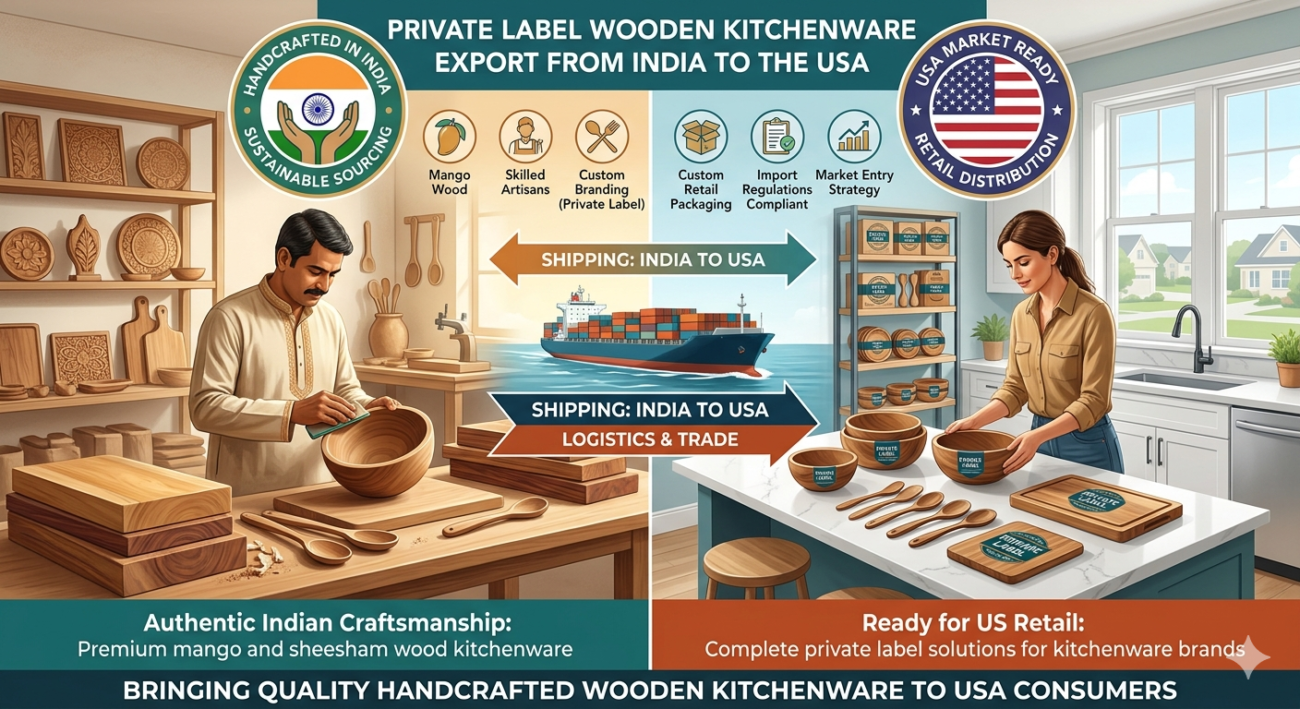
Introduction to Private Label Wooden Kitchenware Export from India to the USA
The Private Label Wooden Kitchenware Export from India to the USA is booming like never before. With growing awareness about sustainability and eco-friendly living, wooden kitchen products have become a top choice among American consumers. Businesses across the globe are now tapping into India’s rich craftsmanship to build profitable private label brands.
Private labeling allows entrepreneurs to sell products manufactured by others under their own brand name. When combined with India’s strong manufacturing base, it creates a powerful business opportunity. Whether you’re a startup or an established seller, entering this market can be a game-changer.
What is Private Labeling in Kitchenware?
Private labeling means sourcing products from manufacturers and branding them as your own. In kitchenware, this includes items like wooden spoons, cutting boards, and serving trays.
Instead of investing in manufacturing infrastructure, you focus on branding, marketing, and distribution. This reduces upfront costs and speeds up your go-to-market strategy.
Why Wooden Kitchenware is Gaining Popularity
Wooden kitchenware is not just stylish—it’s functional and eco-friendly. Consumers in the USA prefer products that are:
- Sustainable and biodegradable
- Non-toxic and safe for cooking
- Durable and aesthetically pleasing
This shift toward conscious consumption is fueling demand rapidly.
Market Demand in the USA for Wooden Kitchenware
The U.S. market is witnessing strong growth in eco-friendly kitchen products. Wooden kitchenware fits perfectly into this trend.
Consumer Trends and Sustainability Preferences
Modern consumers are ditching plastic and metal for natural alternatives. Wooden products are perceived as:
- Healthier
- Environmentally friendly
- Premium in quality
Millennials and Gen Z, in particular, drive this demand due to their eco-conscious lifestyles.
Key Product Categories in Demand
Popular wooden kitchenware products include:
- Cutting boards
- Wooden spatulas and spoons
- Salad bowls
- Serving trays
- Rolling pins
These products have high repeat purchase potential, making them ideal for private label businesses.
Why Choose India for Wooden Kitchenware Manufacturing
India is one of the leading exporters of wooden handicrafts and kitchenware.
Abundant Raw Materials and Skilled Labor
India has access to high-quality woods such as:
- Teak
- Sheesham (Indian rosewood)
- Mango wood
Skilled artisans bring traditional craftsmanship that adds uniqueness to each product.
Competitive Pricing and Export Expertise
Indian manufacturers offer:
- Lower production costs
- Flexible MOQ (Minimum Order Quantity)
- Experience in exporting globally
This makes India a preferred sourcing destination.
Types of Wooden Kitchenware You Can Export
Cooking Utensils and Tools
These include:
- Spatulas
- Ladles
- Cooking spoons
They are heat-resistant and safe for non-stick cookware.
Serving and Dining Products
Examples include:
- Cheese boards
- Serving platters
- Wooden bowls
These items are popular for gifting and home decor.
Step-by-Step Process for Private Label Export
Finding Reliable Manufacturers
Look for suppliers via:
- Trade fairs
- B2B platforms
- Direct factory visits
Always verify certifications and request samples.
Custom Branding and Packaging
Branding is your biggest differentiator. Focus on:
- Logo engraving
- Eco-friendly packaging
- Premium presentation
Quality Control and Certifications
Ensure compliance with:
- Food safety standards
- Moisture content checks
- Durability testing
Third-party inspections are highly recommended.
Legal Requirements for Exporting to the USA
FDA Regulations and Compliance
Wooden kitchenware must comply with U.S. food contact safety standards. Ensure materials are non-toxic and properly treated.
Import Duties and Documentation
Key documents include:
- Commercial invoice
- Packing list
- Bill of lading
- Certificate of origin
Understanding tariffs is crucial for pricing strategy.
Pricing Strategy and Profit Margins
Cost Breakdown Analysis
Your costs include:
- Manufacturing
- Shipping
- Customs duties
- Marketing
Setting Competitive Prices
Aim for at least 30–50% profit margins. Research competitors on platforms like Amazon to benchmark pricing.
Branding and Marketing Strategies
Building a Unique Brand Identity
Focus on:
- Eco-friendly messaging
- Minimalist design
- Storytelling around craftsmanship
Selling on Amazon and E-commerce Platforms
Platforms like Amazon and Shopify are ideal for launching your brand.
Logistics and Shipping Considerations
Choosing Shipping Methods
Options include:
- Air freight (fast but expensive)
- Sea freight (cost-effective for bulk orders)
Managing Warehousing in the USA
Use fulfillment centers like:
- Amazon FBA
- Third-party logistics providers
Challenges in Wooden Kitchenware Export
Quality Consistency Issues
Wood is a natural material, so variations are common. Standardization is key.
Regulatory Barriers
Strict U.S. import regulations can delay shipments if not handled properly.
Tips to Scale Your Private Label Business
Expanding Product Lines
Introduce complementary products like:
- Bamboo kitchenware
- Eco-friendly packaging
Building Long-Term Supplier Relationships
Strong partnerships ensure:
- Better pricing
- Consistent quality
- Faster production
Future Trends in Wooden Kitchenware Export
Eco-Friendly Innovations
Expect growth in:
- FSC-certified wood products
- Plastic-free packaging
Digital Transformation in Export
Technology is simplifying:
- Supplier communication
- Inventory tracking
- Global logistics
FAQs
1. Is private label wooden kitchenware profitable?
Yes, it offers high margins due to low manufacturing costs and strong demand.
2. What certifications are required for exporting to the USA?
FDA compliance and phytosanitary certifications are commonly required.
3. How do I find reliable suppliers in India?
Use B2B platforms, attend trade fairs, and conduct factory audits.
4. What is the minimum investment required?
It can start from $2,000–$5,000 depending on order size.
5. Which wood is best for kitchenware?
Sheesham, teak, and bamboo are highly preferred.
6. Can I sell wooden kitchenware on Amazon?
Yes, platforms like Amazon are ideal for private label sellers.
Conclusion
The Private Label Wooden Kitchenware Export from India to the USA presents a golden opportunity for entrepreneurs seeking a scalable and sustainable business model. With rising demand for eco-friendly products, strong manufacturing capabilities in India, and the power of private labeling, success is within reach.
By focusing on quality, compliance, branding, and smart logistics, you can build a thriving global brand in this niche. The future is wooden, sustainable, and full of potential—now is the perfect time to get started.
✨ Discover Global Sourcing Excellence with Netyex ✨
Netyex is your trusted B2B sourcing partner, connecting international buyers with India’s finest manufacturers and curated product lines—from handicrafts and home décor to kitchenware, textiles, hospitality essentials, and more. With verified suppliers and end-to-end support, we make global procurement seamless, reliable, and efficient.
👉 Elevate your sourcing experience—explore Netyex today.
📦 Bulk orders & customisation | 🌍 Worldwide delivery | 🤝 Trusted by global buyers
Visit Netyex to source premium Indian products with confidence.