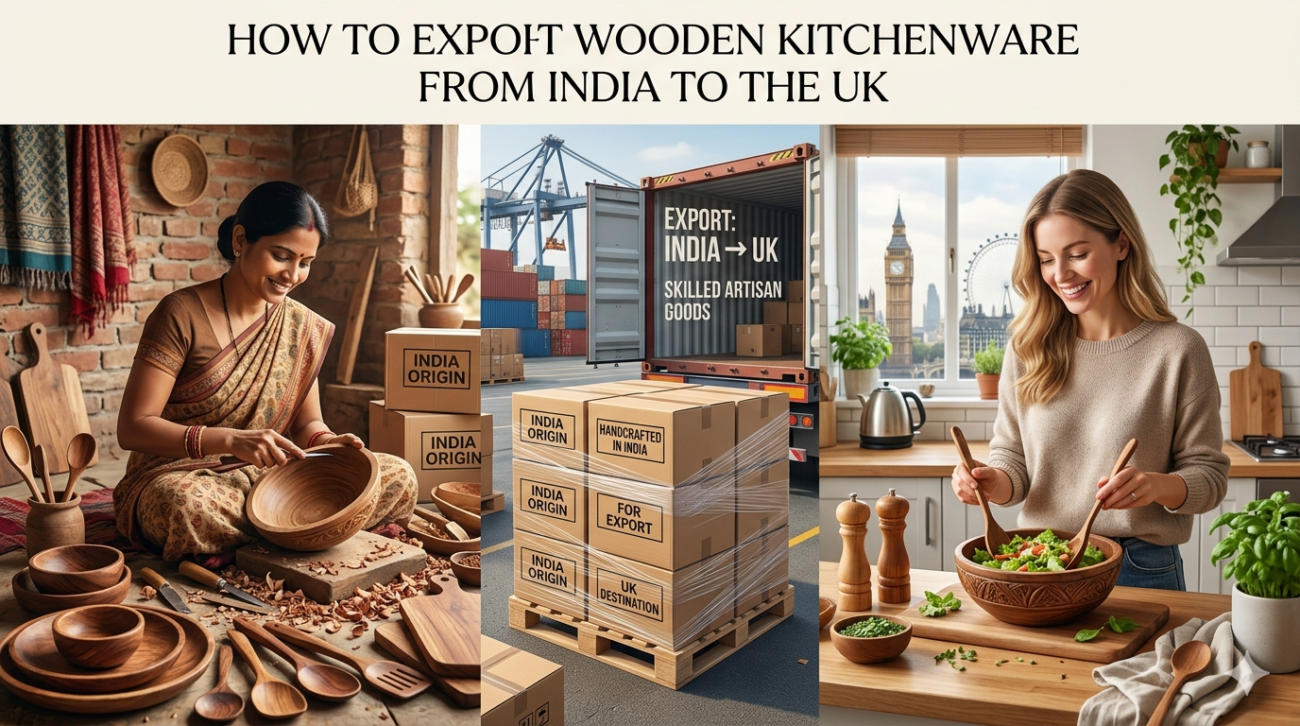
🌍 Introduction to Exporting Wooden Kitchenware
Exporting wooden kitchenware from India to the UK has become a booming opportunity in recent years. With increasing awareness about sustainability, eco-friendly kitchen tools like wooden spoons, cutting boards, and serving trays are gaining popularity among UK consumers.
India, known for its rich craftsmanship and access to raw materials like teak, sheesham, and mango wood, has a strong competitive advantage. If you’re planning to enter this market, understanding how to export wooden kitchenware from India to the UK is essential for long-term success.
📈 Why Wooden Kitchenware is in Demand in the UK
Eco-Friendly Consumer Shift
UK consumers are moving away from plastic and metal kitchen tools due to environmental concerns. Wooden kitchenware offers a biodegradable and sustainable alternative.
Aesthetic and Functional Appeal
Wooden products are not just practical—they also add a rustic charm to modern kitchens. This blend of style and utility makes them highly desirable.
Market Trends and Growth Opportunities
The UK homeware market is expanding rapidly, especially in eco-conscious segments. Retailers are actively sourcing handcrafted and ethically produced kitchenware from countries like India.
📜 Understanding Export Regulations in India
Exporting goods legally requires proper registration and compliance with Indian laws.
Registration with DGFT
You must register your business with the Directorate General of Foreign Trade. This authority regulates exports and provides necessary licenses.
Obtaining Import Export Code (IEC)
An IEC is mandatory for any export business. It’s a unique identification number required for customs clearance and international trade.
Role of EPCH
The Export Promotion Council for Handicrafts supports exporters by offering guidance, market insights, and participation in international trade fairs.
🇬🇧 UK Import Requirements and Compliance
UK Timber Regulations
The UK enforces strict laws to prevent illegal timber trade. Ensure your wood is legally sourced and documented.
Food Safety Standards
Wooden kitchenware must comply with food safety regulations. Products should be non-toxic, treated with food-safe oils, and free from harmful chemicals.
Required Certifications
- Phytosanitary Certificate
- FSC Certification (recommended)
- CE marking (if applicable)
🪵 Product Preparation and Quality Standards
Types of Wooden Kitchenware in Demand
- Cutting boards
- Serving trays
- Wooden spoons and spatulas
- Bowls and salad servers
Quality Control
Ensure smooth finishing, durability, and resistance to moisture. Avoid cracks and rough edges.
Packaging and Labeling
Use eco-friendly packaging. Labels should include:
- Product description
- Country of origin
- Material details
- Care instructions
💰 Pricing Strategy and Cost Calculation
Factors Affecting Pricing
- Raw material cost
- Labor and craftsmanship
- Packaging
- Shipping and logistics
Currency Exchange and Profit Margins
Keep track of INR to GBP exchange rates. Aim for a profit margin of 20–40% depending on your market positioning.
🚢 Logistics and Shipping Process
Air vs Sea Freight
- Air Freight: Faster but expensive
- Sea Freight: Cost-effective for bulk shipments
Freight Forwarders
Work with experienced freight forwarders to handle documentation, customs, and shipping.
Customs Clearance
Ensure all documents are accurate:
- Commercial invoice
- Packing list
- Bill of lading
🤝 Finding Buyers in the UK Market
Online B2B Platforms
Use platforms like Alibaba, IndiaMART, and Global Sources to connect with buyers.
Trade Shows
Participate in international exhibitions to showcase your products.
Retail Partnerships
Approach UK retailers and eco-friendly stores directly.
📢 Marketing Your Wooden Kitchenware
Branding and Storytelling
Highlight your craftsmanship, sustainability, and origin story. UK buyers value authenticity.
Digital Marketing
- SEO-optimized website
- Social media marketing
- Email outreach
💳 Payment Methods and Risk Management
Secure Payment Options
- Letter of Credit (LC)
- PayPal
- Bank transfer
Avoiding Risks
- Verify buyers
- Use export insurance
- Draft clear contracts
⚠️ Common Challenges and Solutions
Regulatory Delays
Solution: Keep documents updated and work with experts.
Logistics Issues
Solution: Choose reliable shipping partners.
Market Competition
Solution: Focus on unique designs and quality.
❓ FAQs
1. Is exporting wooden kitchenware from India profitable?
Yes, due to high demand in eco-conscious markets like the UK.
2. Do I need certification for wooden products?
Yes, especially for legality and food safety compliance.
3. What is the minimum investment required?
It depends, but small exporters can start with ₹1–5 lakhs.
4. How long does shipping take?
Sea freight takes 20–40 days; air freight takes 5–10 days.
5. Can I export without a company?
No, you need a registered business and IEC.
6. How do I find reliable UK buyers?
Use B2B platforms, trade fairs, and direct outreach.
🏁 Conclusion
Understanding how to export wooden kitchenware from India to the UK can open doors to a highly profitable international business. With the right certifications, quality products, and effective marketing strategies, you can establish a strong presence in the UK market.
Stay compliant, focus on sustainability, and build lasting relationships with buyers. Success in exports isn’t just about selling—it’s about delivering value across borders.
✨ Discover Global Sourcing Excellence with Netyex ✨
Netyex is your trusted B2B sourcing partner, connecting international buyers with India’s finest manufacturers and curated product lines—from handicrafts and home décor to kitchenware, textiles, hospitality essentials, and more. With verified suppliers and end-to-end support, we make global procurement seamless, reliable, and efficient.
👉 Elevate your sourcing experience—explore Netyex today.
📦 Bulk orders & customisation | 🌍 Worldwide delivery | 🤝 Trusted by global buyers
Visit Netyex to source premium Indian products with confidence.