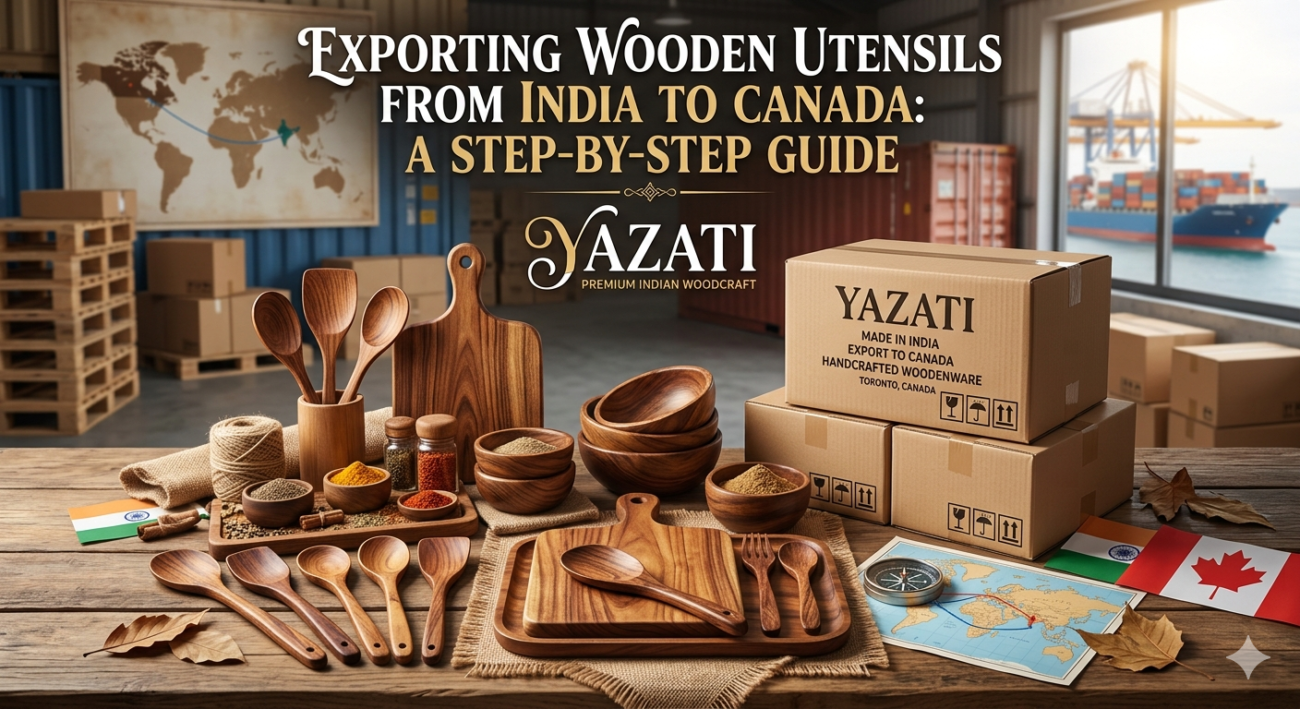
🌱 Introduction to Wooden Utensils Export
The demand for eco-friendly kitchen products has grown rapidly worldwide, making Wooden Utensils Export from India to Canada: Step-by-Step a highly profitable opportunity for Indian exporters. With increasing awareness about sustainability, Canadian consumers are shifting from plastic to natural alternatives like wooden spoons, spatulas, and serving bowls.
India, known for its rich craftsmanship and abundant natural resources, has become a leading exporter of wooden kitchenware. From handmade neem wood spoons to teak serving trays, Indian products are valued for their durability, design, and eco-conscious appeal.
Exporting wooden utensils is not just about shipping goods abroad—it involves understanding regulations, certifications, logistics, and buyer expectations. This guide walks you through every stage in a simple and practical way.
🇨🇦 Why Export Wooden Utensils to Canada?
Canada offers a strong market for wooden kitchen products due to its environmentally conscious population.
📈 Rising Demand for Eco-Friendly Kitchenware
Canadian consumers prefer biodegradable and non-toxic products. Wooden utensils are:
- Chemical-free
- Sustainable
- Long-lasting
- Aesthetic and premium
This makes them highly desirable in households and restaurants.
💰 Profit Opportunities for Indian Exporters
Exporters from India benefit due to:
- Lower production costs
- Skilled artisans
- Availability of quality wood
Margins can be attractive, especially when targeting premium markets or private labeling.
🍴 Types of Wooden Utensils in Demand
Understanding product demand is key to success.
🥄 Kitchen Tools
- Wooden spoons
- Spatulas
- Ladles
- Rolling pins
🍽️ Serving Items
- Salad bowls
- Serving trays
- Cheese boards
- Cutlery sets
Products made from neem, bamboo, teak, and sheesham wood are especially popular.
📜 Legal Requirements in India
Before exporting, you must fulfill certain legal obligations.
🧾 IEC Code Registration
You need an Import Export Code (IEC) from the Directorate General of Foreign Trade. This is mandatory for all exporters.
💼 GST and Tax Compliance
Ensure your business is registered under GST. Exporters can claim tax refunds under zero-rated supply rules.
🍁 Canadian Import Regulations
Exporting to Canada requires strict compliance.
🔍 CFIA Guidelines
The Canadian Food Inspection Agency ensures that wooden utensils are safe and pest-free. Products must be:
- Properly treated
- Free from contamination
📦 Packaging and Labeling Rules
Labels must include:
- Country of origin
- Material details
- Usage instructions
🚀 Step-by-Step Export Process
Here’s the complete workflow for Wooden Utensils Export from India to Canada: Step-by-Step.
1️⃣ Product Sourcing and Quality Check
Choose reliable manufacturers. Ensure:
- Smooth finishing
- Food-safe coating
- No cracks or defects
Quality determines long-term success.
2️⃣ Pricing and Costing Strategy
Calculate:
- Manufacturing cost
- Packaging
- Freight charges
- Customs duties
Set competitive pricing while maintaining profit margins.
3️⃣ Finding Buyers in Canada
You can connect with buyers via:
- B2B platforms like Alibaba
- Trade fairs
- Importers and distributors
Building relationships is key.
4️⃣ Documentation Preparation
Essential export documents include:
- Commercial invoice
- Packing list
- Bill of lading
- Certificate of origin
Errors here can delay shipments.
5️⃣ Shipping and Logistics
Choose between:
- Air freight (fast but costly)
- Sea freight (economical for bulk)
Work with reliable logistics partners for smooth delivery.
📑 Certifications Required
Certifications increase trust and compliance.
- FSC (Forest Stewardship Council) certification
- Fumigation certificate
- Phytosanitary certificate
These prove that the wood is sustainably sourced and pest-free.
🎁 Packaging and Branding Strategy
Good packaging enhances product value.
Tips:
- Use recyclable packaging
- Highlight eco-friendly branding
- Include brand story
Premium packaging can justify higher prices.
🚢 Shipping Methods Explained
✈️ Air Freight
- Faster delivery
- Higher cost
- Suitable for small shipments
🚢 Sea Freight
- Cost-effective
- Longer transit time
- Ideal for bulk exports
💵 Cost Breakdown of Exporting
Typical costs include:
- Production
- Packaging
- Certification
- Freight
- Insurance
- Customs clearance
Planning finances properly avoids losses.
⚠️ Challenges in Exporting
Common issues exporters face:
- Regulatory compliance
- Shipping delays
- Quality disputes
- Currency fluctuations
Understanding these risks helps in better planning.
✅ Tips for Successful Export Business
- Focus on quality over quantity
- Build long-term buyer relationships
- Stay updated with regulations
- Invest in branding
Consistency leads to growth.
📣 Digital Marketing for Exporters
Online presence can boost your export business.
Use:
- Websites
- Social media
- SEO strategies
Having a professional catalog improves credibility.
❓ FAQs
1. Is exporting wooden utensils from India profitable?
Yes, due to low production costs and high international demand, it can be highly profitable.
2. Do I need certification to export wooden products?
Yes, certifications like fumigation and FSC are often required.
3. What is the best shipping method?
Sea freight is best for bulk, while air freight suits smaller orders.
4. How can I find buyers in Canada?
You can use platforms like Alibaba or attend trade fairs.
5. Are wooden utensils allowed in Canada?
Yes, but they must meet safety and import regulations.
6. What wood is best for export utensils?
Neem, bamboo, and teak are highly preferred.
🏁 Conclusion
The process of Wooden Utensils Export from India to Canada: Step-by-Step may seem complex at first, but with proper planning, it becomes manageable and rewarding. By understanding legal requirements, ensuring product quality, and building strong buyer relationships, you can establish a successful export business.
With sustainability trends growing stronger each year, wooden utensils are not just a product—they’re a global opportunity waiting to be tapped.
✨ Discover Global Sourcing Excellence with Netyex ✨
Netyex is your trusted B2B sourcing partner, connecting international buyers with India’s finest manufacturers and curated product lines—from handicrafts and home décor to kitchenware, textiles, hospitality essentials, and more. With verified suppliers and end-to-end support, we make global procurement seamless, reliable, and efficient.
👉 Elevate your sourcing experience—explore Netyex today.
📦 Bulk orders & customisation | 🌍 Worldwide delivery | 🤝 Trusted by global buyers
Visit Netyex to source premium Indian products with confidence.