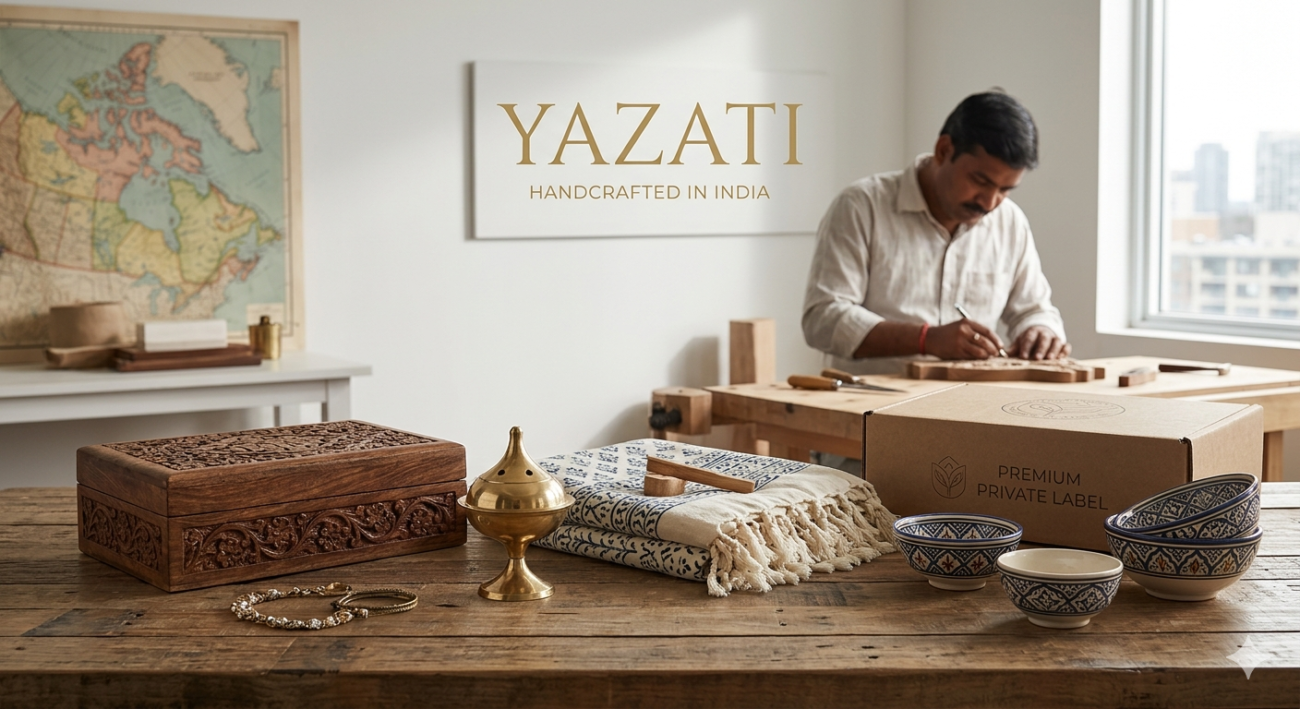
Private Label Indian Handicrafts for Canadian Brands is becoming a powerful business strategy in today’s global marketplace. Canadian companies are increasingly looking to India for unique, handcrafted products that reflect authenticity, sustainability, and cultural richness. This growing trend is not just about cost savings—it’s about storytelling, craftsmanship, and building a brand identity that stands out.
India has a long-standing tradition of handicrafts, dating back thousands of years. From handwoven textiles to intricate wood carvings, Indian artisans bring unmatched skill and creativity to every product. For Canadian brands, this offers an incredible opportunity to create exclusive product lines that resonate with modern consumers.
What Are Private Label Products?
Private labeling is a business model where products are manufactured by one company but sold under another brand’s name. In this case, Canadian brands collaborate with Indian artisans or manufacturers to produce handicrafts that are customized and branded as their own.
This approach allows businesses to:
- Control branding and pricing
- Build customer loyalty
- Offer exclusive product lines
Why Indian Handicrafts Are Globally Popular
Indian handicrafts are celebrated worldwide for their:
- Authenticity: Each piece reflects cultural heritage
- Handmade Quality: Crafted with care and precision
- Sustainability: Often made using eco-friendly materials
Consumers today are moving away from mass-produced goods and seeking products with a story. Indian handicrafts perfectly meet this demand.
Why Canadian Brands Are Turning to Indian Handicrafts
Rising Demand for Ethical and Handmade Products
Canadian consumers are becoming more conscious about what they buy. They prefer products that are:
- Ethically sourced
- Environmentally friendly
- Handmade rather than factory-produced
Private Label Indian Handicrafts for Canadian Brands aligns perfectly with these preferences.
Cost Efficiency and High Margins
One of the biggest advantages is cost-effectiveness. Manufacturing in India often costs less due to:
- Skilled labor availability
- Lower production costs
- Efficient supply chains
This allows Canadian brands to enjoy higher profit margins while still offering competitive pricing.
Types of Indian Handicrafts Suitable for Private Labeling
Textile-Based Handicrafts
Handwoven Fabrics and Embroidery
India is famous for its textiles, including:
- Cotton and silk fabrics
- Hand embroidery like Kantha and Zardozi
- Block printing techniques
These products are ideal for:
- Clothing lines
- Home décor items
- Accessories
Wooden and Metal Crafts
Decorative and Functional Items
Indian artisans create stunning wooden and metal products such as:
- Carved furniture
- Brass décor pieces
- Kitchenware
These items combine functionality with artistic beauty.
Eco-Friendly and Sustainable Products
Bamboo, Jute, and Recycled Materials
Sustainability is a key trend. Indian handicrafts made from:
- Bamboo
- Jute
- Recycled materials
are highly appealing to eco-conscious Canadian consumers.
Benefits of Private Label Indian Handicrafts for Canadian Brands
Brand Differentiation
In a competitive market, uniqueness is everything. Private labeling allows brands to offer exclusive designs that cannot be found elsewhere.
Customization and Flexibility
Canadian brands can:
- Choose materials
- Customize designs
- Add branding elements
This level of flexibility ensures that products align perfectly with brand identity.
Scalability
Whether you’re a small startup or an established company, private labeling offers scalability. You can start small and expand as demand grows.
How to Source Indian Handicrafts for Private Label
Finding Reliable Manufacturers
Look for:
- Verified suppliers
- Positive reviews
- Transparent communication
Platforms like Alibaba and IndiaMART can help connect with manufacturers.
Quality Control and Certifications
Ensure that products meet international standards by checking:
- Quality certifications
- Material safety
- Ethical sourcing practices
Logistics and Shipping to Canada
Shipping involves:
- Choosing reliable freight partners
- Understanding customs duties
- Planning delivery timelines
Working with experienced logistics providers can simplify this process.
Legal and Compliance Considerations
Import Regulations in Canada
Canadian businesses must comply with import laws, including:
- Duties and taxes
- Product safety standards
Refer to Canada Border Services Agency for official guidelines.
Labeling Requirements
Products must include:
- Country of origin
- Material details
- Safety instructions
Proper labeling ensures compliance and builds consumer trust.
Marketing Private Label Handicrafts in Canada
Branding Strategies
Effective branding includes:
- Storytelling about artisans
- Highlighting sustainability
- Creating a premium image
E-commerce and Retail Channels
Sell through:
- Online platforms like Shopify
- Marketplaces like Amazon
- Physical retail stores
Challenges and How to Overcome Them
Cultural Differences
Understanding cultural nuances is essential for smooth collaboration. Clear communication helps avoid misunderstandings.
Supply Chain Issues
Delays and disruptions can occur. Mitigate risks by:
- Working with multiple suppliers
- Maintaining inventory buffers
Future Trends in Private Label Handicrafts
Sustainable and Ethical Sourcing
Sustainability will continue to drive demand. Brands that prioritize eco-friendly practices will gain a competitive edge.
Digital Transformation
Technology is making sourcing easier through:
- Online marketplaces
- Virtual product inspections
- Digital supply chain management
FAQs
1. What are private label handicrafts?
Private label handicrafts are products made by manufacturers but sold under another brand’s name.
2. Why choose Indian handicrafts for private labeling?
They offer authenticity, craftsmanship, and cost efficiency.
3. Are Indian handicrafts sustainable?
Many are made using eco-friendly materials and traditional methods.
4. How can Canadian brands ensure quality?
By working with certified suppliers and conducting quality checks.
5. What are the shipping options from India to Canada?
Air freight and sea freight are the most common options.
6. Is private labeling profitable?
Yes, it allows for higher margins and brand control.
Conclusion
Private Label Indian Handicrafts for Canadian Brands is more than just a sourcing strategy—it’s a pathway to building a unique, meaningful, and profitable business. With growing demand for handmade, sustainable products, Canadian brands have a golden opportunity to tap into India’s rich artisanal heritage.
By focusing on quality, ethical sourcing, and strong branding, businesses can create products that not only sell but also tell a story. The future of retail is personal, authentic, and sustainable—and Indian handicrafts fit perfectly into this vision.
✨ Discover Global Sourcing Excellence with Netyex ✨
Netyex is your trusted B2B sourcing partner, connecting international buyers with India’s finest manufacturers and curated product lines—from handicrafts and home décor to kitchenware, textiles, hospitality essentials, and more. With verified suppliers and end-to-end support, we make global procurement seamless, reliable, and efficient.
👉 Elevate your sourcing experience—explore Netyex today.
📦 Bulk orders & customisation | 🌍 Worldwide delivery | 🤝 Trusted by global buyers
Visit Netyex to source premium Indian products with confidence.