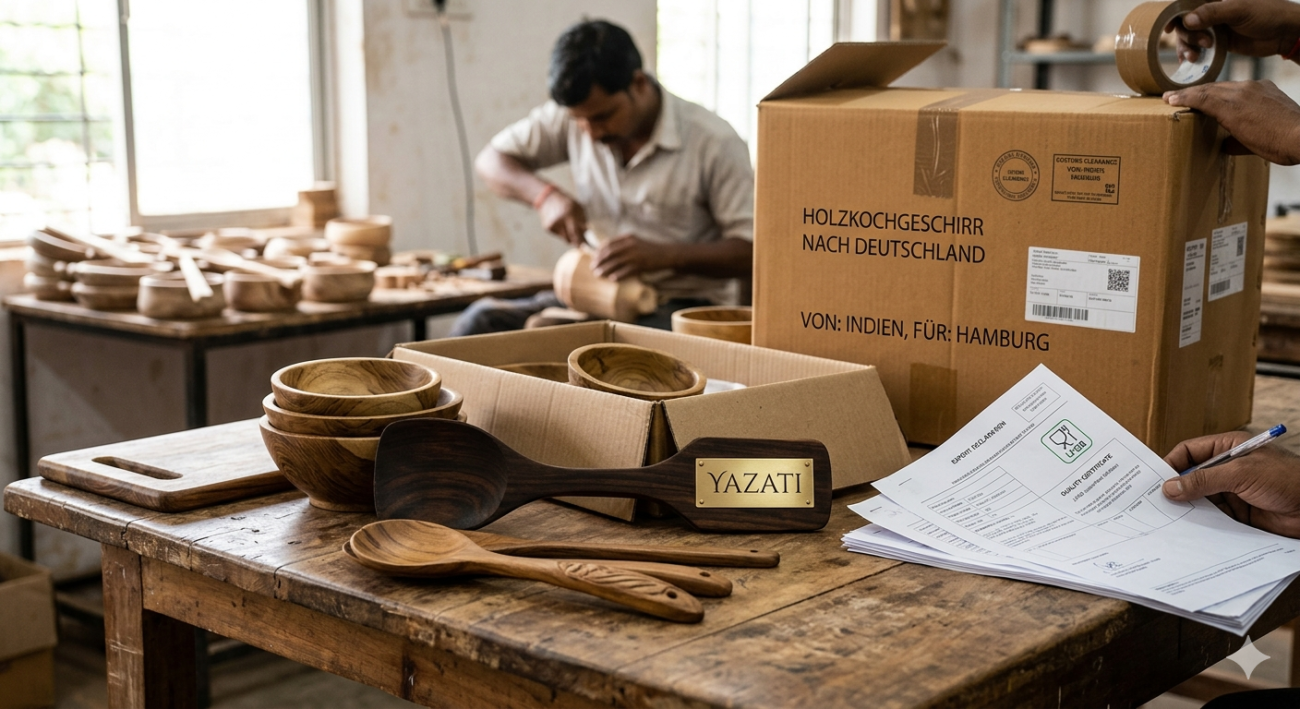
Introduction to Exporting Wooden Cookware
Exporting wooden cookware from India to Germany is becoming a profitable opportunity for entrepreneurs. With rising demand for eco-friendly kitchen products in Europe, Indian exporters are uniquely positioned to meet this need. India has abundant raw materials, skilled artisans, and competitive pricing—all of which make it a strong exporter of wooden kitchen tools like spatulas, spoons, and cutting boards.
Germany, being one of the largest economies in Europe, has a strong preference for sustainable and non-toxic kitchenware. This creates a perfect match between Indian producers and German consumers.
Why Wooden Cookware is in Demand in Germany
Market Trends and Consumer Preferences
German consumers are increasingly shifting toward natural and chemical-free kitchen products. Wooden cookware is seen as safer compared to plastic alternatives, especially when cooking at high temperatures.
Sustainability and Eco-Friendly Appeal
Germany places a strong emphasis on sustainability. Wooden cookware, especially when sourced responsibly, aligns with eco-conscious lifestyles. Products made from bamboo, neem, or teak wood are particularly popular.
Understanding Export Regulations in India
Registering Your Export Business
To begin exporting, you must legally register your business in India. This can be as a sole proprietorship, partnership, or private limited company.
IEC Code from DGFT
An Import Export Code (IEC) is mandatory for any export activity. It is issued by the Directorate General of Foreign Trade (DGFT).
GST and Compliance Requirements
You must register under GST and comply with tax regulations. Exporters can benefit from zero-rated GST on exports.
Import Regulations in Germany
EU Food Safety Standards
Wooden cookware must comply with EU food safety regulations to ensure it does not release harmful substances.
REACH Compliance
REACH (Registration, Evaluation, Authorization, and Restriction of Chemicals) ensures that products do not contain hazardous chemicals.
FSC Certification Importance
Forest Stewardship Council (FSC) certification proves that the wood used is sourced sustainably—an important factor for German buyers.
Product Standards for Wooden Cookware
Types of Wood Allowed
Only food-safe woods like bamboo, beechwood, and teak are generally accepted in Germany.
Chemical Treatment Restrictions
Avoid using harmful varnishes or chemicals. Natural oils are preferred for finishing.
Packaging and Labeling Rules
Labels must include:
- Product material
- Country of origin
- Usage instructions
Finding Buyers in Germany
B2B Platforms and Trade Fairs
Platforms like Alibaba, IndiaMART, and global trade fairs are excellent for finding buyers.
Building Relationships with Importers
Trust and consistency are key. German buyers value long-term partnerships.
Pricing Strategies
Offer competitive pricing without compromising on quality. Bulk discounts can help attract large buyers.
Documentation Required for Export
Commercial Invoice and Packing List
These documents provide details about the shipment and its contents.
Certificate of Origin
This proves that the goods are manufactured in India.
Bill of Lading
Issued by the shipping company, it acts as proof of shipment.
Shipping and Logistics
Choosing the Right Shipping Method
Sea freight is cost-effective for bulk shipments, while air freight is faster but more expensive.
Freight Forwarders
Hiring a reliable freight forwarder simplifies logistics and documentation.
Cost Optimization Tips
- Consolidate shipments
- Negotiate freight rates
- Plan shipments in advance
Customs Clearance Process
Export Clearance in India
Goods must pass Indian customs before leaving the country.
Import Clearance in Germany
German customs will inspect the goods for compliance.
Duties and Taxes
Wooden cookware may attract import duties and VAT in Germany.
Quality Control and Inspection
Pre-shipment Inspection
Ensure products meet quality standards before dispatch.
Third-party Testing
Independent agencies can certify product safety.
Maintaining Standards
Consistency in quality builds trust with buyers.
Marketing Your Wooden Cookware
Branding and Packaging
Eco-friendly packaging enhances brand value.
Online Marketing Strategies
Use SEO, social media, and e-commerce platforms to reach buyers.
Certifications as Selling Points
Highlight certifications like FSC and food safety approvals.
Challenges in Exporting Wooden Cookware
Regulatory Barriers
Strict EU regulations can be challenging for new exporters.
Logistics Issues
Shipping delays and damage risks must be managed.
Currency Fluctuations
Exchange rate changes can impact profits.
Cost Breakdown and Profit Margins
Production Costs
Include raw materials, labor, and finishing.
Shipping Costs
Freight, insurance, and handling charges.
Expected Profit Margins
Margins can range from 15% to 40% depending on scale and efficiency.
Tips for First-Time Exporters
Avoiding Common Mistakes
- Ignoring compliance
- Poor packaging
- Underpricing
Building Long-Term Partnerships
Consistency and communication are key.
Scaling Your Business
Invest in automation and expand product lines.
Digital Tools for Export Management
ERP and Inventory Tools
Help manage stock and orders efficiently.
Export Marketplaces
Expand reach through global platforms.
Payment Gateways
Ensure secure international transactions.
Government Support and Incentives
Export Promotion Schemes
India offers schemes like RoDTEP for exporters.
Subsidies and Benefits
MSMEs can access financial support.
MSME Support
Training and financial aid are available for small businesses.
Future Opportunities in Wooden Cookware Export
Growing Eco Market
Demand for sustainable products will continue to rise.
Expansion to Other EU Countries
Germany can be a gateway to the entire EU market.
Innovation in Product Design
Unique designs can set your brand apart.
FAQs
1. Is wooden cookware allowed in Germany?
Yes, as long as it meets EU food safety and chemical regulations.
2. Do I need certification to export wooden cookware?
Yes, certifications like FSC and REACH compliance are highly recommended.
3. What is the best wood for export?
Bamboo, teak, and beechwood are widely accepted.
4. How long does shipping take?
Sea freight takes 20–40 days; air freight takes 5–10 days.
5. What are the main costs involved?
Production, packaging, shipping, and compliance costs.
6. Can small businesses export wooden cookware?
Yes, with proper registration and compliance, even small businesses can export successfully.
Conclusion
Exporting wooden cookware from India to Germany is a promising business opportunity driven by sustainability trends and growing demand. By understanding regulations, maintaining quality, and building strong buyer relationships, exporters can achieve long-term success in this market.
For more official export guidelines, visit the Directorate General of Foreign Trade (DGFT) website: https://dgft.gov.in
✨ Discover Global Sourcing Excellence with Netyex ✨
Netyex is your trusted B2B sourcing partner, connecting international buyers with India’s finest manufacturers and curated product lines—from handicrafts and home décor to kitchenware, textiles, hospitality essentials, and more. With verified suppliers and end-to-end support, we make global procurement seamless, reliable, and efficient.
👉 Elevate your sourcing experience—explore Netyex today.
📦 Bulk orders & customisation | 🌍 Worldwide delivery | 🤝 Trusted by global buyers
Visit Netyex to source premium Indian products with confidence.