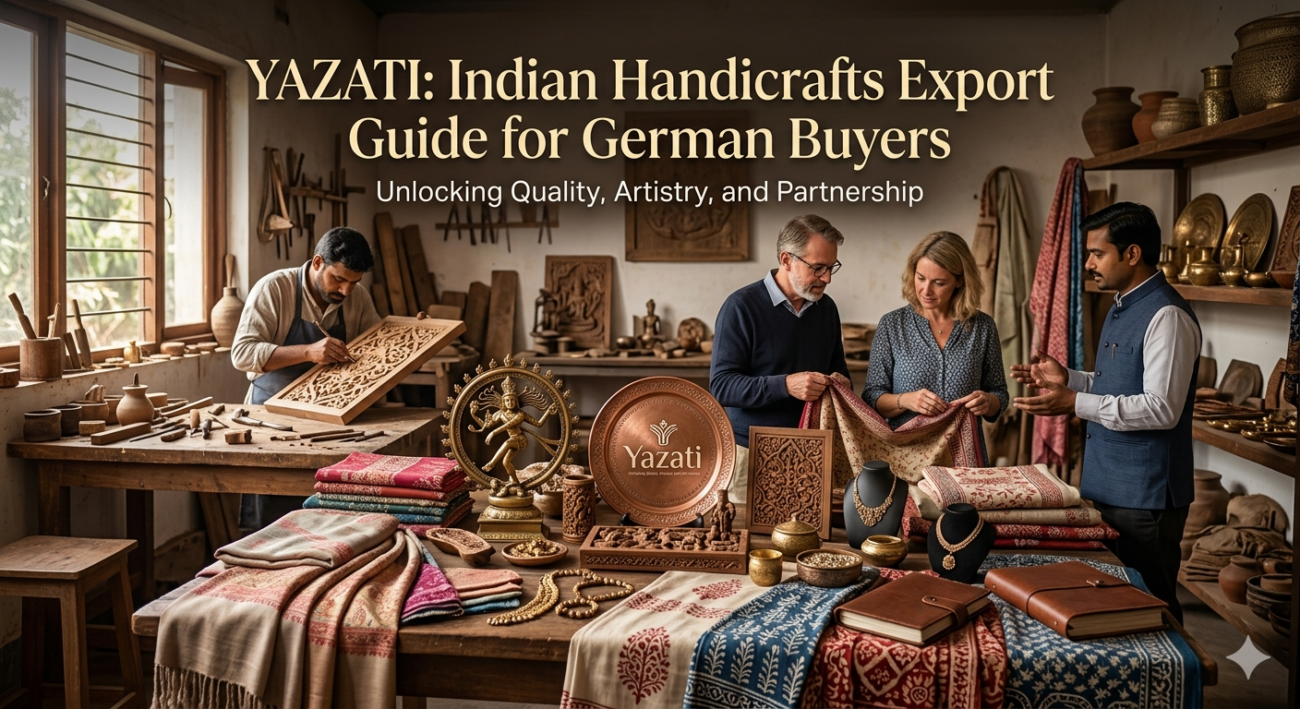
Introduction to Indian Handicrafts Export Market
India is one of the largest producers of handicrafts in the world, offering a rich blend of tradition, artistry, and cultural heritage. The Indian Handicrafts Export Guide for German Buyers is designed to help importers understand how to source authentic, high-quality products efficiently.
Indian handicrafts are not just decorative items—they tell stories. From handwoven textiles to intricately carved woodwork, every piece reflects centuries of craftsmanship. For German buyers, these products offer a unique opportunity to tap into a growing market that values authenticity and sustainability.
Germany, being one of Europe’s largest economies, has a strong demand for handmade, eco-friendly, and ethically sourced products. This makes Indian handicrafts highly appealing in retail, interior design, and gifting sectors.
Why Germany is a Key Market for Indian Handicrafts
Germany imports a wide range of handcrafted goods due to increasing consumer awareness about sustainability and artisanal value. German consumers appreciate:
- Eco-friendly production methods
- Handmade uniqueness
- Fair trade practices
This demand creates a profitable opportunity for importers who understand sourcing strategies.
Cultural Appeal of Indian Crafts in Europe
Indian handicrafts blend beautifully with modern European aesthetics. Items like handwoven rugs, brass decor, and ceramic pottery are widely used in German homes, boutiques, and lifestyle stores.
Understanding Indian Handicrafts Categories
India’s handicraft sector is vast and diverse. Understanding product categories helps German buyers choose the right niche.
Textile-Based Handicrafts
Textiles are among the most exported handicrafts from India. Popular items include:
- Handwoven silk and cotton fabrics
- Embroidered garments
- Block-printed textiles
These products are widely used in fashion and home décor markets in Germany.
Wooden and Metal Crafts
Wooden and metal handicrafts are known for durability and artistic value. Examples include:
- Carved furniture
- Brass lamps and statues
- Decorative trays and utensils
Stone, Marble, and Ceramic Crafts
These products are popular for interior décor and gifting purposes. Marble inlay work and ceramic pottery are especially valued in European markets.
Indian Handicrafts Export Guide for German Buyers: Market Trends
Understanding market trends is essential for success in imports.
Demand Patterns in Germany
German consumers prefer:
- Minimalist designs
- Natural materials
- Functional décor items
Products like handmade baskets, eco-friendly textiles, and rustic furniture are trending.
Sustainable and Eco-Friendly Trends
Sustainability is no longer optional—it’s a requirement. Buyers should prioritize:
- Recycled materials
- Organic dyes
- Fair trade certifications
Legal Requirements for Importing into Germany
Importing handicrafts into Germany requires compliance with EU regulations.
Import Regulations and Certifications
Key requirements include:
- CE marking (if applicable)
- REACH compliance for chemicals
- FSC certification for wood products
Failure to meet these standards can lead to shipment rejection.
VAT and Customs Duties
German importers must pay:
- Import VAT (typically 19%)
- Customs duties based on product category
Working with a customs broker can simplify this process.
Finding Reliable Indian Suppliers
Choosing the right supplier is critical.
Government Export Bodies
Organizations like the Export Promotion Council for Handicrafts (EPCH) help connect buyers with verified exporters.
Trade Fairs and B2B Platforms
Popular sourcing channels include:
- Trade fairs in India
- Online B2B platforms
- Export directories
Quality Standards and Inspection Tips
Quality control is essential when importing.
European Compliance Standards
Ensure products meet:
- Safety standards
- Material quality norms
- Environmental regulations
Packaging and Labeling Requirements
Proper labeling should include:
- Country of origin
- Material details
- Care instructions
Pricing, MOQ, and Negotiation Strategies
Understanding pricing helps maximize profits.
Understanding Cost Structure
Costs include:
- Product cost
- Packaging
- Shipping
- Duties
Payment Terms and Risk Management
Common payment methods:
- Letter of Credit (LC)
- Advance payment
- Net terms for trusted suppliers
Shipping and Logistics from India to Germany
Efficient logistics ensure timely delivery.
Shipping Methods and Transit Time
- Air freight: 5–10 days
- Sea freight: 20–40 days
Freight Forwarders and Documentation
Required documents include:
- Invoice
- Packing list
- Bill of lading
Challenges and Risk Factors
Cultural Differences
Communication gaps can affect negotiations. Clear documentation helps avoid misunderstandings.
Supply Chain Issues
Delays, quality inconsistencies, and logistics disruptions are common risks.
Benefits of Importing Indian Handicrafts
Profit Margins
Handicrafts often have high margins due to their uniqueness.
Unique Selling Proposition
Each product is handmade, making it distinct and valuable.
Digital Sourcing and E-commerce Opportunities
Online Marketplaces
Platforms like Etsy and Amazon Handmade are ideal for selling imported handicrafts.
Dropshipping and Wholesale Models
Buyers can choose between:
- Bulk importing
- Dropshipping partnerships
Building Long-Term Supplier Relationships
Communication Tips
Maintain regular communication and visit suppliers when possible.
Contract Agreements
Always use written agreements to avoid disputes.
FAQs
1. What are the most popular Indian handicrafts in Germany?
Textiles, wooden décor, and eco-friendly crafts are highly popular.
2. Do I need certification to import handicrafts into Germany?
Yes, depending on the product type, certifications like FSC or REACH may be required.
3. What is the average shipping time from India to Germany?
Sea freight takes 20–40 days, while air freight takes 5–10 days.
4. How can I verify Indian suppliers?
Use government export councils, trade fairs, and verified B2B platforms.
5. Are Indian handicrafts profitable in Germany?
Yes, due to high demand for handmade and sustainable products.
6. What payment methods are safest for imports?
Letters of Credit and escrow services are considered safe.
Conclusion
The Indian Handicrafts Export Guide for German Buyers provides a complete roadmap for sourcing, importing, and selling handcrafted products successfully. With the right supplier, compliance knowledge, and market understanding, German buyers can build a profitable and sustainable business in this growing sector.
By focusing on quality, sustainability, and strong supplier relationships, you can unlock the full potential of Indian handicrafts in the European market.
🔗 External Resource
Learn more about Indian handicrafts export opportunities here:
https://www.epch.in
✨ Discover Global Sourcing Excellence with Netyex ✨
Netyex is your trusted B2B sourcing partner, connecting international buyers with India’s finest manufacturers and curated product lines—from handicrafts and home décor to kitchenware, textiles, hospitality essentials, and more. With verified suppliers and end-to-end support, we make global procurement seamless, reliable, and efficient.
👉 Elevate your sourcing experience—explore Netyex today.
📦 Bulk orders & customisation | 🌍 Worldwide delivery | 🤝 Trusted by global buyers
Visit Netyex to source premium Indian products with confidence.