Introduction to Copper Cookware Export Regulations
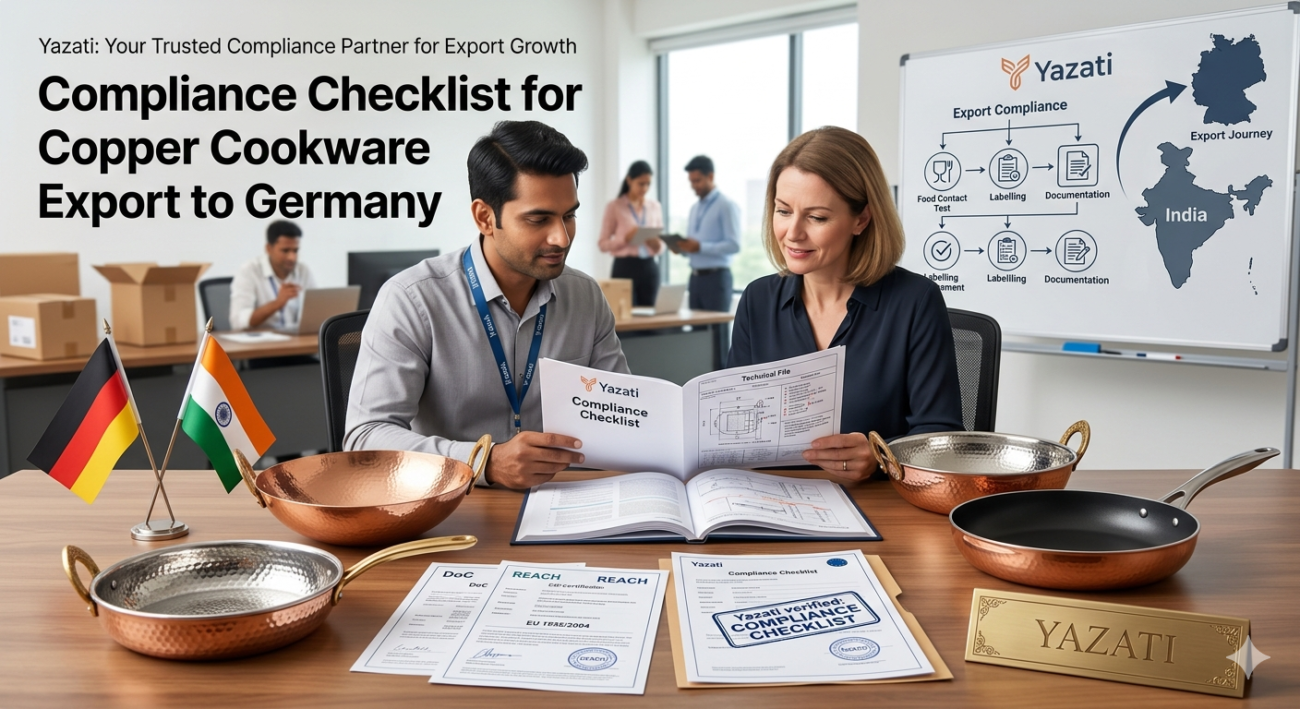
Exporting copper cookware to Germany can be a lucrative opportunity, but it comes with strict regulatory expectations. Germany, as part of the European Union, follows rigorous safety, environmental, and quality standards. If you’re planning to enter this market, understanding the Compliance Checklist for Copper Cookware Export to Germany is not optional—it’s essential.
Germany prioritizes consumer safety, especially for products that come into contact with food. Copper cookware, while valued for its heat conductivity and aesthetic appeal, must meet strict migration limits and safety requirements. Exporters must align with EU-wide laws as well as Germany-specific regulations.
Why Germany Has Strict Import Standards
Germany enforces high standards to:
- Protect consumer health
- Ensure environmental sustainability
- Maintain product quality
- Prevent harmful chemical exposure
Organizations like European Commission and European Chemicals Agency play a major role in defining these rules.
Overview of EU Compliance Framework
The EU regulatory system is built on:
- Harmonized product safety laws
- Mandatory testing and certification
- Strict documentation and traceability
Understanding this framework is your first step toward successful exporting.
Understanding EU Food Contact Material Laws
Copper cookware falls under food contact materials (FCM), meaning it must comply with strict EU laws.
Key Rules Under Regulation (EC) No 1935/2004
This regulation ensures materials:
- Do not transfer harmful substances into food
- Maintain food quality
- Are traceable across the supply chain
Good Manufacturing Practices (GMP) Requirements
Under GMP rules:
- Production processes must be controlled
- Contamination risks must be minimized
- Documentation must be maintained
Compliance with these standards ensures your cookware is safe for everyday use.
REACH Compliance for Copper Cookware
The REACH Regulation governs chemical usage in products.
Chemical Safety and Substance Restrictions
Exporters must ensure:
- No restricted chemicals are used
- Copper levels are within safe limits
- Coatings are non-toxic
Registration and Documentation Process
Manufacturers must:
- Register substances with ECHA
- Provide safety data sheets
- Maintain compliance records
Failure to comply can result in product bans.
LFGB Certification Requirements
Germany has its own food safety law known as LFGB.
German Food Safety Standards
The LFGB ensures:
- No harmful substance migration
- Safe interaction with food
- High hygiene standards
Testing Procedures for Compliance
Products must undergo:
- Migration testing
- Chemical analysis
- Durability checks
Certification is often mandatory for market entry.
Product Safety and CE Marking
When CE Marking Applies
Copper cookware usually doesn’t require CE marking unless it includes electrical components (like induction-compatible electronics).
Labeling and Safety Instructions
Products must include:
- Usage instructions
- Safety warnings
- Manufacturer details
Clear labeling improves trust and reduces liability.
Packaging and Labeling Requirements
Mandatory Product Information
Each product must display:
- Country of origin
- Material composition
- Usage instructions
Language Requirements for Germany
Labels must be in German to ensure consumer understanding.
Quality Standards and Testing
Third-Party Laboratory Testing
Independent labs verify:
- Chemical safety
- Durability
- Heat resistance
Migration Testing for Copper
Copper migration must stay within safe EU limits to prevent toxicity.
Customs Documentation and Export Paperwork
Essential Export Documents
You’ll need:
- Commercial invoice
- Packing list
- Certificate of origin
- Bill of lading
Tariffs and HS Codes
Correct HS classification ensures smooth customs clearance and avoids delays.
Environmental and Sustainability Regulations
Packaging Waste Directive
EU laws require:
- Minimal packaging
- Recyclable materials
- Reduced environmental impact
Recycling and Eco Compliance
Germany enforces strict recycling rules under the dual system.
Logistics and Shipping Considerations
Choosing the Right Shipping Method
Options include:
- Sea freight (cost-effective)
- Air freight (faster but expensive)
Insurance and Risk Management
Always insure shipments against:
- Damage
- Theft
- Delays
Certification and Documentation Checklist
Pre-Shipment Checklist
Before shipping:
- Ensure all certifications are complete
- Verify labeling compliance
- Conduct final inspections
Post-Arrival Compliance
After arrival:
- Confirm customs clearance
- Address any inspection issues
Common Mistakes to Avoid
Regulatory Pitfalls
- Ignoring REACH requirements
- Skipping testing procedures
Documentation Errors
- Incorrect labeling
- Missing certificates
Cost Implications of Compliance
Testing and Certification Costs
Expect costs for:
- Lab testing
- Certification fees
- Compliance audits
Logistics and Customs Costs
Additional costs include:
- Shipping
- Duties
- Insurance
Benefits of Full Compliance
Market Trust and Brand Value
Compliance builds:
- Consumer confidence
- Brand credibility
- Competitive advantage
Long-Term Business Growth
It opens doors to:
- EU-wide expansion
- Retail partnerships
- Sustainable growth
FAQs
1. Is LFGB certification mandatory for copper cookware?
Yes, it is highly recommended and often required for selling in Germany.
2. What is the most important regulation for copper cookware?
Regulation (EC) No 1935/2004 is crucial for food contact safety.
3. Do I need CE marking for cookware?
Not usually, unless the product includes electrical components.
4. How can I ensure REACH compliance?
Register substances and maintain proper documentation with ECHA.
5. Are German labels mandatory?
Yes, all product information must be in German.
6. What testing is required?
Migration testing, chemical analysis, and durability testing are essential.
Conclusion
Exporting copper cookware to Germany requires careful planning, strict adherence to regulations, and thorough documentation. This Compliance Checklist for Copper Cookware Export to Germany serves as your roadmap to success.
By following these steps, you can avoid costly mistakes, ensure product safety, and build a strong presence in one of Europe’s most demanding markets.
For more details on EU regulations, visit the official European Commission website: https://ec.europa.eu
✨ Discover Global Sourcing Excellence with Netyex ✨
Netyex is your trusted B2B sourcing partner, connecting international buyers with India’s finest manufacturers and curated product lines—from handicrafts and home décor to kitchenware, textiles, hospitality essentials, and more. With verified suppliers and end-to-end support, we make global procurement seamless, reliable, and efficient.
👉 Elevate your sourcing experience—explore Netyex today.
📦 Bulk orders & customisation | 🌍 Worldwide delivery | 🤝 Trusted by global buyers
Visit Netyex to source premium Indian products with confidence.