Introduction to Indo-French Handmade Trade
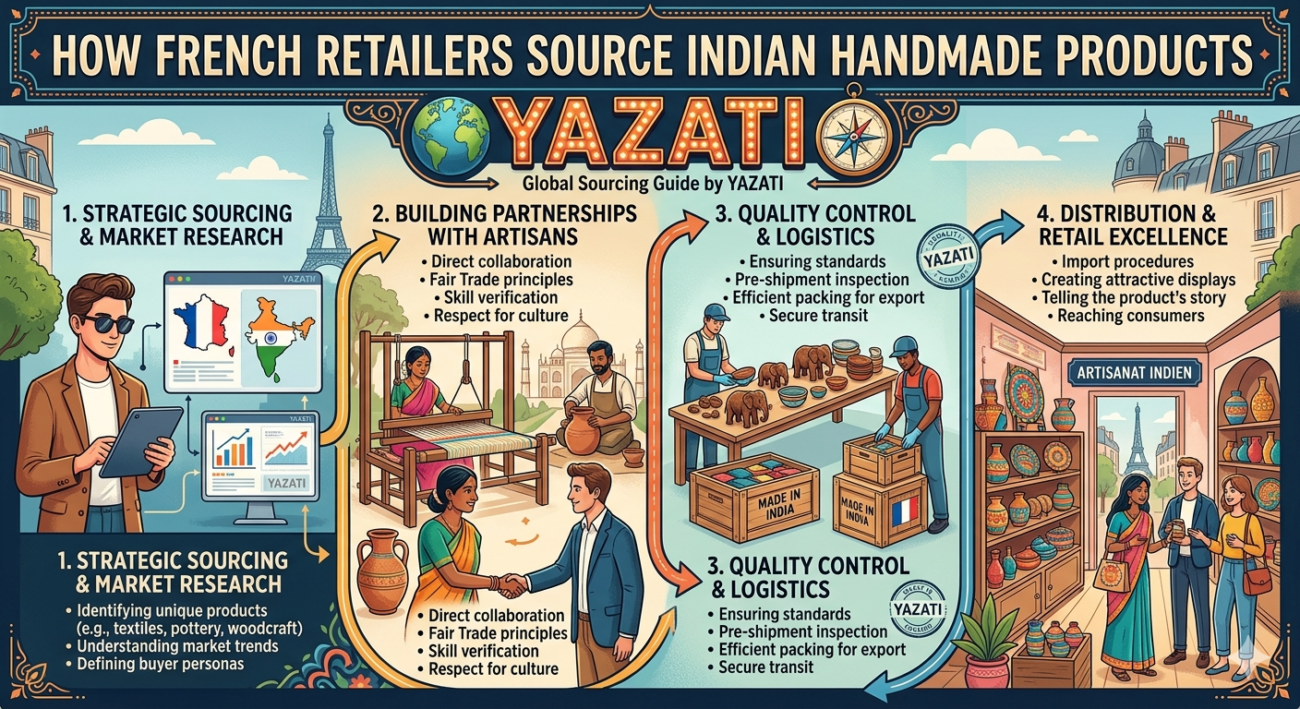
The global demand for artisanal goods has seen a remarkable rise in recent years, and one of the most fascinating trade relationships is between France and India. Understanding How French Retailers Source Indian Handmade Products reveals a mix of tradition, innovation, and ethical business practices.
French consumers are increasingly drawn to products that tell a story—items crafted with care, rooted in heritage, and aligned with sustainability values. India, with its rich legacy of craftsmanship, offers exactly that.
Growing Demand for Handmade Goods in France
France has long been associated with luxury, design, and artistic appreciation. Today, consumers are shifting from mass-produced goods to handmade alternatives. This trend is fueled by:
- A desire for authenticity
- Interest in sustainable consumption
- Appreciation for cultural diversity
Retailers across Paris, Lyon, and Marseille are actively seeking unique handmade collections to meet this demand.
Why India is a Global Hub for Handmade Products
India stands as one of the world’s largest producers of handmade goods. Its strength lies in:
- Generations of skilled artisans
- Diverse regional crafts (block printing, weaving, carving)
- Affordable production costs
- Government support for handicrafts
For French retailers, India offers both variety and value.
Understanding the Indian Handmade Industry
Types of Handmade Products Exported
India exports a wide range of handcrafted goods that appeal to French markets.
Textiles and Fabrics
Handwoven cotton, silk scarves, and embroidered fabrics are among the top exports. Techniques like block printing and natural dyeing are especially popular.
Jewelry and Accessories
From silver tribal jewelry to beaded necklaces, Indian accessories add a unique flair to French fashion collections.
Home Decor and Furniture
Hand-carved wooden furniture, ceramic pottery, and decorative items are widely sourced by lifestyle stores.
Handcrafted Gifts and Artifacts
Items like candles, paintings, and eco-friendly gift products are in high demand, especially during festive seasons.
Key Sourcing Methods Used by French Retailers
Direct Artisan Partnerships
Many French retailers prefer working directly with artisans. This approach ensures:
- Better quality control
- Unique, exclusive designs
- Strong ethical alignment
Retailers often visit artisan clusters in regions like Rajasthan or Gujarat to build relationships.
Working with Indian Export Houses
Export houses act as intermediaries, simplifying sourcing. They handle:
- Production coordination
- Quality checks
- Documentation
This is ideal for retailers new to international sourcing.
Trade Fairs and Exhibitions
Events like international trade fairs provide opportunities to connect with suppliers. These fairs showcase:
- New designs
- Bulk order options
- Networking opportunities
Online B2B Marketplaces
Digital platforms have revolutionized sourcing. Retailers now use online marketplaces to:
- Compare suppliers
- Review product catalogs
- Place orders remotely
A useful external resource is
👉 https://www.indianhandicrafts.gov.in/ (official handicrafts portal)
Ethical Sourcing and Sustainability Practices
Fair Trade Principles
French retailers prioritize fair wages and safe working conditions. Many collaborate with certified fair-trade organizations.
Eco-Friendly Production
Sustainability is a major focus. Retailers prefer:
- Natural dyes
- Organic materials
- Low-impact production methods
Supporting Artisan Communities
Sourcing handmade products directly contributes to rural livelihoods, empowering communities and preserving traditions.
Supply Chain and Logistics
Shipping and Freight Management
Retailers typically use sea freight for bulk shipments and air freight for smaller, urgent orders.
Customs and Import Regulations in France
Understanding EU import laws is essential. Retailers must comply with:
- Product safety standards
- Labeling requirements
- Duties and taxes
Quality Control and Packaging
To maintain product integrity, retailers implement:
- Pre-shipment inspections
- Durable packaging
- Standardized quality checks
Challenges in Sourcing Handmade Products
Language and Cultural Barriers
Communication gaps can lead to misunderstandings. Many retailers hire local agents or translators.
Quality Consistency Issues
Since products are handmade, slight variations are common. Retailers must set clear expectations.
Pricing and Negotiation
Balancing fair wages with competitive pricing requires careful negotiation.
Benefits for French Retailers
Unique Product Offerings
Handmade goods stand out in a crowded retail market, attracting niche customers.
Competitive Pricing
Despite shipping costs, Indian products remain cost-effective due to lower production costs.
Ethical Brand Positioning
Retailers can market their products as ethical and sustainable, enhancing brand value.
Digital Transformation in Sourcing
Use of E-commerce Platforms
Platforms like B2B marketplaces allow retailers to source globally without traveling.
Virtual Trade Shows
Online exhibitions have made sourcing more accessible and efficient.
Case Studies of Successful Sourcing
Boutique Retailers in Paris
Small boutiques often collaborate directly with artisans to create exclusive collections.
Large French Lifestyle Brands
Bigger brands rely on export houses for large-scale sourcing while maintaining ethical standards.
Tips for New Retailers Entering Indian Market
Choosing Reliable Suppliers
- Verify certifications
- Request samples
- Check reviews
Building Long-Term Relationships
Consistency and trust are key. Long-term partnerships ensure better pricing and quality.
Future Trends in Handmade Trade
Rise of Sustainable Fashion
Eco-conscious consumers will continue driving demand for handmade goods.
Increasing Demand for Customization
Retailers are seeking personalized designs to differentiate their offerings.
FAQs
1. Why do French retailers prefer Indian handmade products?
Because they offer authenticity, cultural richness, and competitive pricing.
2. How do retailers ensure quality when sourcing from India?
Through inspections, sampling, and working with trusted suppliers.
3. Are handmade products more expensive to import?
Not necessarily—lower production costs often offset shipping expenses.
4. What certifications should retailers look for?
Fair Trade, organic certifications, and export licenses.
5. Can small retailers source from India?
Yes, especially through online marketplaces and export houses.
6. Is sourcing from India sustainable?
Yes, when done ethically with eco-friendly practices and fair wages.
Conclusion
Understanding How French Retailers Source Indian Handmade Products reveals a dynamic and mutually beneficial trade relationship. French retailers gain access to unique, high-quality goods, while Indian artisans benefit from global exposure and fair income.
As sustainability and authenticity continue to shape consumer behavior, this Indo-French partnership is set to grow even stronger in the coming years.
✨ Discover Global Sourcing Excellence with Netyex ✨
Netyex is your trusted B2B sourcing partner, connecting international buyers with India’s finest manufacturers and curated product lines—from handicrafts and home décor to kitchenware, textiles, hospitality essentials, and more. With verified suppliers and end-to-end support, we make global procurement seamless, reliable, and efficient.
👉 Elevate your sourcing experience—explore Netyex today.
📦 Bulk orders & customisation | 🌍 Worldwide delivery | 🤝 Trusted by global buyers
Visit Netyex to source premium Indian products with confidence.