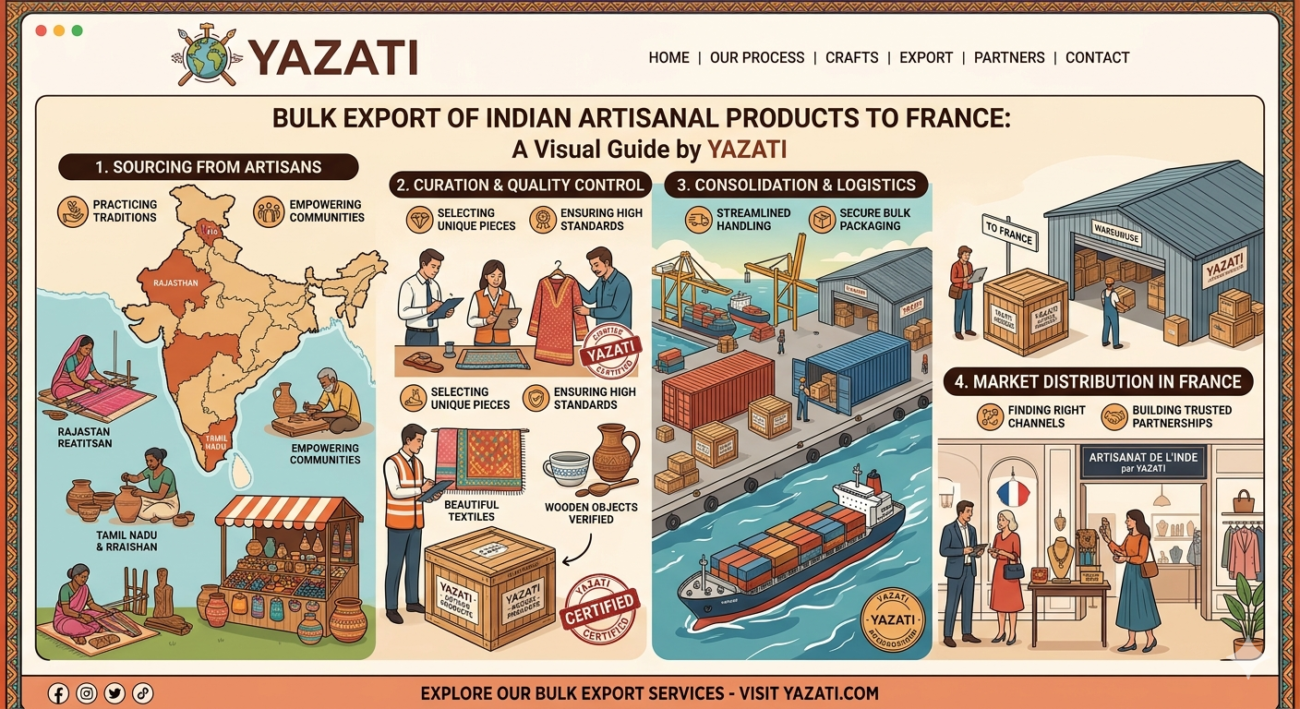
Introduction to Indian Artisanal Exports
The Bulk Export of Indian Artisanal Products to France is rapidly becoming a profitable opportunity for Indian exporters. With global consumers increasingly valuing sustainability, craftsmanship, and cultural authenticity, Indian handmade goods are gaining strong traction in European markets—especially in France.
India has a long-standing tradition of artisanal craftsmanship, ranging from handwoven textiles to intricate pottery and wooden carvings. These products not only represent heritage but also align perfectly with France’s appreciation for artistic expression and quality.
What Defines Artisanal Products in India
Artisanal products are handmade or minimally mechanized goods created by skilled craftspeople. These include:
- Handloom textiles (silk, cotton, wool)
- Handmade jewelry
- Pottery and ceramics
- Wooden handicrafts
- Metalwork and decorative items
These products often reflect regional traditions and centuries-old techniques.
Rising Global Demand for Handmade Goods
Consumers today are shifting away from mass-produced items. Instead, they prefer:
- Sustainable production
- Ethical sourcing
- Unique, handcrafted designs
France, in particular, values authenticity and storytelling—making it a prime destination for Indian artisanal exports.
Why France is a Lucrative Market
France stands out as one of Europe’s largest importers of decorative and lifestyle goods. Its strong retail sector and appreciation for culture make it an ideal target market.
Consumer Preferences in France
French consumers typically prefer:
- Eco-friendly materials
- Minimalistic yet artistic designs
- High-quality craftsmanship
- Products with cultural stories
This aligns perfectly with Indian artisanal offerings.
Popular Indian Crafts in France
Some high-demand products include:
- Block-printed textiles from Rajasthan
- Handwoven scarves and shawls
- Brass and copper decor
- Handcrafted furniture
- Organic handmade soaps and candles
Market Research and Demand Analysis
Before diving into exports, thorough market research is essential.
Identifying Target Customers
Your potential buyers in France may include:
- Boutique store owners
- Interior designers
- Online marketplaces
- Fair-trade organizations
Understanding their needs helps tailor your offerings effectively.
Studying Competitors and Trends
Analyze:
- Pricing models
- Popular product categories
- Seasonal demand patterns
Use platforms like Etsy or French retail websites to track trends.
Legal Requirements for Export
Exporting goods requires compliance with both Indian and French regulations.
Export Licensing in India
To start exporting, you need:
- Import Export Code (IEC)
- GST registration
- Registration with export promotion councils
Organizations like the Export Promotion Council for Handicrafts can assist exporters.
Import Regulations in France
France follows European Union regulations. Key requirements include:
- Product safety compliance
- Proper labeling (in French)
- CE marking for certain goods
EU Standards and Certifications
Ensure compliance with:
- REACH regulations (chemical safety)
- Eco-label certifications
- Fair trade certifications (optional but beneficial)
Product Selection and Quality Control
Choosing the right products is crucial for success.
Choosing the Right Artisanal Goods
Focus on:
- High-demand categories
- Durable products for shipping
- Unique designs with cultural appeal
Maintaining Consistent Quality
Bulk export requires uniform quality. Ensure:
- Standardized production processes
- Skilled artisan training
- Regular quality checks
Pricing Strategy and Cost Structure
Pricing can make or break your export business.
Calculating Export Costs
Include:
- Production costs
- Packaging
- Shipping and freight
- Customs duties
- Distributor margins
Competitive Pricing in European Markets
Your pricing should balance:
- Affordability
- Premium perception
- Profit margins
Avoid underpricing—it may reduce perceived value.
Logistics and Shipping Methods
Efficient logistics are essential for bulk exports.
Choosing Freight Options
Options include:
- Air freight (faster but expensive)
- Sea freight (cost-effective for bulk shipments)
Packaging and Labeling Requirements
Ensure:
- Durable packaging
- Eco-friendly materials
- French-language labels
- Barcode and product details
Building Distribution Channels
Getting your products into the right hands is key.
Working with French Distributors
Partner with:
- Import agents
- Retail chains
- Specialty stores
Selling via E-commerce Platforms
Platforms like Etsy and Amazon allow direct access to French consumers.
Branding and Marketing Strategies
Your brand story matters.
Storytelling and Cultural Appeal
Highlight:
- Artisan background
- Traditional techniques
- Cultural significance
This emotional connection drives sales.
Digital Marketing for Global Reach
Use:
- Social media marketing
- Influencer collaborations
- SEO-optimized product listings
Trade Agreements and Benefits
Understanding trade policies helps reduce costs.
India-EU Trade Relations
India and the EU have ongoing trade discussions that may reduce tariffs in the future.
Duty Benefits and Tariff Considerations
Check for:
- Preferential tariffs
- Export incentives from the Indian government
Payment Methods and Currency Handling
Secure transactions are critical.
Secure Payment Options
Common methods include:
- Letters of Credit (LC)
- PayPal
- Bank transfers
Managing Currency Exchange Risks
Use:
- Forward contracts
- Multi-currency accounts
Challenges in Exporting Artisanal Products
Exporting isn’t without hurdles.
Cultural Differences
Understanding French tastes and preferences is vital.
Logistics and Compliance Issues
Delays, documentation errors, and compliance failures can impact business.
Tips for Scaling Bulk Export Operations
Growth requires strategy and planning.
Automation and Supply Chain Efficiency
Invest in:
- Inventory management systems
- Production planning tools
Partnering with Export Agencies
Collaborate with export consultants for smoother operations.
FAQs
1. What are the best Indian artisanal products to export to France?
Handwoven textiles, home decor items, and eco-friendly crafts are highly popular.
2. Do I need a license for exporting from India?
Yes, an Import Export Code (IEC) is mandatory.
3. How can I find buyers in France?
Through trade fairs, online platforms, and export agencies.
4. Is France a profitable market for artisanal goods?
Yes, due to high demand for handmade and sustainable products.
5. What are the shipping options for bulk exports?
Sea freight is the most cost-effective for large shipments.
6. How can I ensure product compliance in France?
Follow EU regulations, labeling laws, and certification requirements.
Conclusion
The Bulk Export of Indian Artisanal Products to France offers immense potential for growth, profitability, and global recognition. With the right combination of quality products, market understanding, legal compliance, and strategic marketing, Indian exporters can successfully tap into the French market.
By focusing on authenticity, sustainability, and efficient logistics, businesses can build strong international relationships and scale their operations effectively.
For more insights on export regulations, visit the official EU trade portal: https://trade.ec.europa.eu
✨ Discover Global Sourcing Excellence with Netyex ✨
Netyex is your trusted B2B sourcing partner, connecting international buyers with India’s finest manufacturers and curated product lines—from handicrafts and home décor to kitchenware, textiles, hospitality essentials, and more. With verified suppliers and end-to-end support, we make global procurement seamless, reliable, and efficient.
👉 Elevate your sourcing experience—explore Netyex today.
📦 Bulk orders & customisation | 🌍 Worldwide delivery | 🤝 Trusted by global buyers
Visit Netyex to source premium Indian products with confidence.