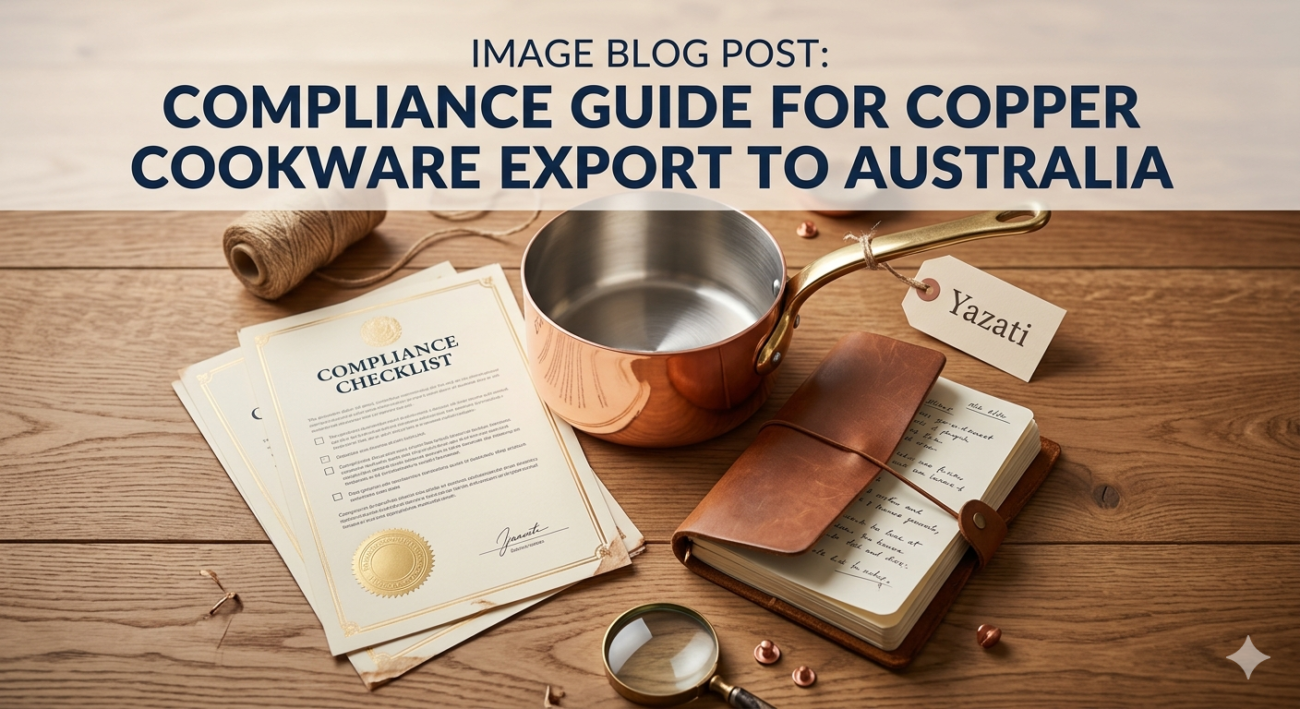
Exporting cookware can be a profitable venture, but entering the Australian market requires careful attention to regulations and safety standards. This Compliance Guide for Copper Cookware Export to Australia will help manufacturers, exporters, and business owners understand the legal, quality, and labeling requirements needed to succeed.
Australia has strict consumer safety laws, especially for products that come into contact with food. Copper cookware, while popular for its excellent heat conductivity and aesthetic appeal, must meet specific standards before it can be sold in the country.
Let’s dive into a complete, step-by-step guide to ensure your copper cookware complies with Australian regulations.
Introduction to Copper Cookware Export Regulations
Exporting kitchenware may sound straightforward, but when it comes to Australia, things can get a bit technical. The Compliance Guide for Copper Cookware Export to Australia is essential because cookware directly interacts with food, making safety a top priority.
Importance of Compliance in International Trade
Compliance ensures:
- Consumer safety
- Legal market entry
- Brand credibility
- Avoidance of penalties or recalls
Non-compliance can result in shipment rejection, financial loss, or even bans.
Overview of Australian Import Laws
Australia enforces strict import regulations to protect:
- Public health
- Environmental safety
- Consumer rights
Products must meet both federal laws and industry standards before entering the market.
Key Regulatory Authorities in Australia
Understanding the governing bodies is crucial for compliance.
Role of ACCC (Australian Competition and Consumer Commission)
The ACCC ensures:
- Product safety compliance
- Fair trading practices
- Consumer protection
They regulate unsafe goods and can recall non-compliant products.
Role of FSANZ (Food Standards Australia New Zealand)
FSANZ oversees:
- Food contact materials
- Chemical safety in cookware
- Migration limits for metals
Material Safety Standards for Copper Cookware
Copper cookware must meet strict material safety guidelines.
Copper Purity Requirements
- High-quality copper is required
- Impurities must be minimal
- Inner linings (like stainless steel or tin) are often mandatory
Food Contact Material Safety
Cookware must not release harmful substances into food.
Lead and Heavy Metal Limits
Australia enforces strict limits on:
- Lead
- Cadmium
- Other toxic metals
Testing ensures that cookware is safe for everyday use.
Australian Consumer Goods Safety Requirements
Mandatory vs Voluntary Standards
- Mandatory: Must be followed by law
- Voluntary: Industry best practices
For cookware, safety-related standards often become essential.
Product Testing Requirements
Products must undergo:
- Chemical testing
- Durability testing
- Heat resistance testing
Testing should be done in accredited laboratories.
Certification and Documentation
Proper documentation is critical in the Compliance Guide for Copper Cookware Export to Australia.
Certificates of Conformity
This document proves that your product meets:
- Australian safety standards
- Regulatory requirements
Laboratory Testing Reports
Reports must include:
- Material composition
- Chemical migration results
- Safety verification
Labeling Requirements for Copper Cookware
Labeling is not just about branding—it’s about compliance.
Product Labeling Rules
Labels must clearly show:
- Product name
- Manufacturer details
- Material composition
Country of Origin Labeling
Australia requires clear origin labeling such as:
- “Made in India”
- “Manufactured in China”
Usage Instructions and Warnings
Include:
- Safe usage guidelines
- Cleaning instructions
- Heat limitations
Packaging and Environmental Compliance
Australia promotes eco-friendly practices.
Sustainable Packaging Standards
Packaging should:
- Be recyclable
- Minimize plastic use
- Follow environmental guidelines
Waste Reduction Regulations
Exporters must comply with:
- Packaging waste laws
- Environmental protection standards
Import Duties and Tariffs
HS Codes for Copper Cookware
Copper cookware typically falls under:
- HS Code: 7418 (for copper kitchenware)
Correct classification ensures accurate duty calculation.
Trade Agreements Impact
Australia has trade agreements that may:
- Reduce tariffs
- Simplify import procedures
Shipping and Logistics Compliance
Customs Clearance Procedures
To clear customs, you need:
- Commercial invoice
- Packing list
- Bill of lading
Documentation Checklist
Ensure you have:
- Certificate of origin
- Test reports
- Compliance certificates
Risk Management and Quality Control
Pre-shipment Inspection
Before shipping:
- Inspect product quality
- Verify compliance
Supplier Audits
Ensure manufacturers:
- Follow safety standards
- Maintain consistent quality
Common Challenges in Exporting Copper Cookware
Regulatory Delays
Delays can happen due to:
- Missing documents
- Failed inspections
Product Rejections
Common reasons:
- High metal contamination
- Incorrect labeling
Best Practices for Successful Export
Partnering with Compliance Experts
Working with experts helps:
- Reduce risk
- Ensure accuracy
Continuous Monitoring of Regulations
Regulations change frequently, so stay updated.
Digital Tools for Compliance Management
Modern tools can:
- Track regulations
- Manage documentation
- Automate compliance checks
Explore resources like the official Australian government portal:
👉 https://www.business.gov.au/
FAQs
1. Is copper cookware allowed in Australia?
Yes, but it must meet strict safety and food-contact regulations.
2. Do I need certification to export copper cookware to Australia?
Yes, certification and lab testing reports are essential.
3. What is the biggest compliance risk?
Heavy metal contamination and improper labeling.
4. Are eco-friendly packaging rules mandatory?
Yes, Australia strongly enforces environmental packaging standards.
5. How long does compliance approval take?
It varies but typically takes a few weeks depending on testing and documentation.
6. Can non-compliant products be re-exported?
Yes, but it leads to additional costs and delays.
Conclusion
Entering the Australian market with copper cookware can be highly rewarding, but only if you follow the right compliance steps. This Compliance Guide for Copper Cookware Export to Australia highlights the importance of safety standards, documentation, labeling, and environmental responsibility.
By adhering to these regulations, you not only avoid legal issues but also build trust with Australian consumers. With proper planning, testing, and certification, your copper cookware business can thrive in this competitive market.
✨ Discover Global Sourcing Excellence with Netyex ✨
Netyex is your trusted B2B sourcing partner, connecting international buyers with India’s finest manufacturers and curated product lines—from handicrafts and home décor to kitchenware, textiles, hospitality essentials, and more. With verified suppliers and end-to-end support, we make global procurement seamless, reliable, and efficient.
👉 Elevate your sourcing experience—explore Netyex today.
📦 Bulk orders & customisation | 🌍 Worldwide delivery | 🤝 Trusted by global buyers
Visit Netyex to source premium Indian products with confidence.