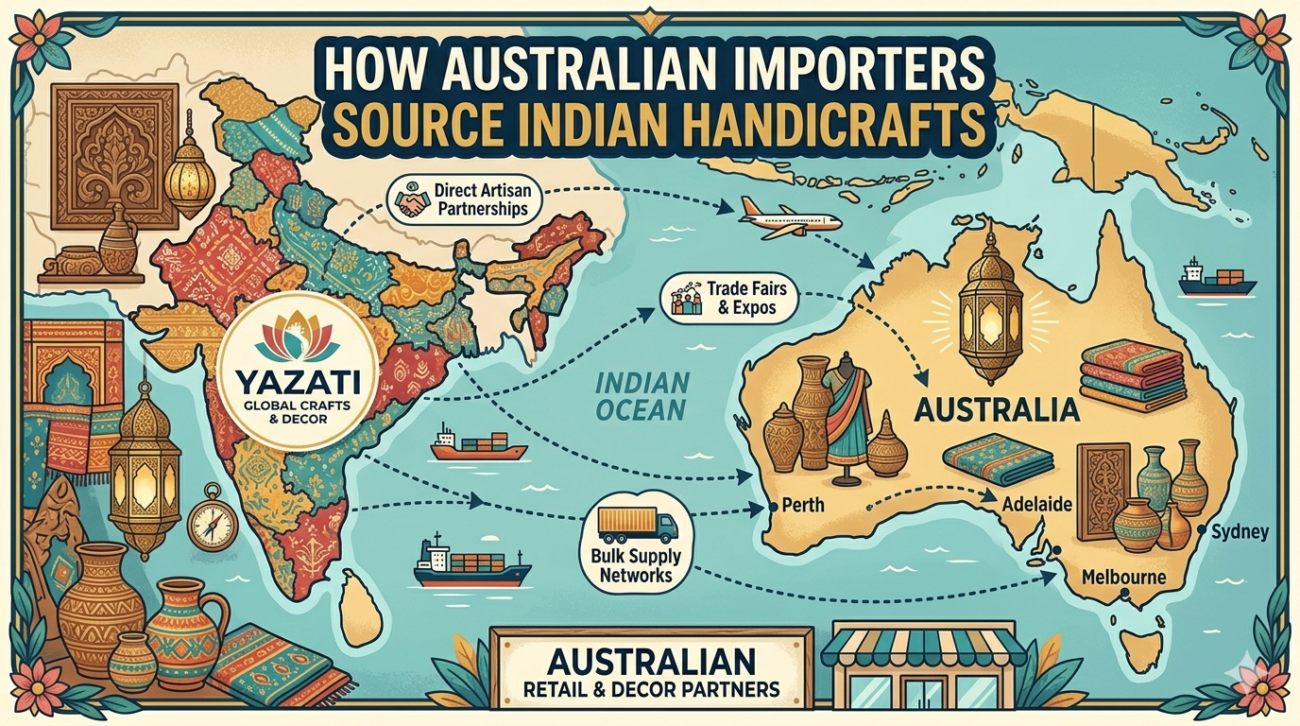
Introduction to Indian Handicrafts Export Market
Indian handicrafts have long held a special place in global markets due to their artistic richness, cultural depth, and handcrafted uniqueness. When discussing how Australian Importers Source Indian Handicrafts, it’s essential to understand the scale and significance of this vibrant sector.
India is one of the largest exporters of handicrafts, offering products made from wood, metal, textiles, clay, and more. These items reflect centuries-old traditions passed down through generations. From intricately carved furniture to colorful embroidered fabrics, the diversity is unmatched.
Importance of Indian Handicrafts Globally
Indian handicrafts are valued worldwide for their authenticity and craftsmanship. Unlike mass-produced goods, each piece tells a story. This uniqueness appeals strongly to modern consumers seeking individuality and sustainability.
Why Australia is a Growing Market
Australia has seen a steady rise in demand for handmade, eco-friendly, and culturally rich products. Consumers there appreciate artisanal goods that bring warmth and character to homes. This growing demand makes Australia a key destination for Indian handicraft exports.
Understanding the Demand in Australia
To succeed, importers must understand what Australian consumers want.
Popular Handicraft Categories in Australia
Home Decor and Furniture
Wooden carvings, antique-style furniture, and decorative items are highly popular. These pieces often serve as statement items in modern Australian homes.
Textiles and Fabrics
Handwoven rugs, cushion covers, and block-printed fabrics are in high demand. These products add color and texture to interiors.
Jewelry and Accessories
Handmade jewelry, especially those with ethnic designs, attracts niche markets looking for unique fashion pieces.
Market Research Techniques
Understanding the market is crucial when learning how Australian Importers Source Indian Handicrafts.
Identifying Trends and Consumer Preferences
Importers often analyze:
- Online marketplaces
- Social media trends
- Interior design magazines
These sources help identify what styles and products are trending.
Competitor Analysis
Studying competitors allows importers to:
- Identify pricing strategies
- Discover popular product lines
- Find gaps in the market
Finding Reliable Indian Suppliers
One of the most critical steps is sourcing trustworthy suppliers.
Online B2B Platforms
Platforms like:
- Alibaba
- IndiaMART
- TradeIndia
These platforms connect importers with thousands of verified suppliers.
Trade Fairs and Exhibitions
Events such as handicraft expos provide opportunities to:
- Meet artisans directly
- Inspect product quality
- Build relationships
Direct Artisan Sourcing
Some importers prefer working directly with artisans. This approach ensures:
- Better pricing
- Authentic products
- Support for local communities
Evaluating Supplier Credibility
Certifications and Compliance
Reliable suppliers often have:
- Export licenses
- Quality certifications
- Ethical sourcing credentials
Quality Assurance Methods
Importers may:
- Request samples
- Conduct factory inspections
- Use third-party quality checks
Pricing and Negotiation Strategies
Understanding Cost Structures
Costs typically include:
- Raw materials
- Labor
- Packaging
- Shipping
Understanding these helps in negotiating better deals.
Negotiation Tips
- Build long-term relationships
- Order in bulk
- Be clear about expectations
Import Regulations and Documentation
Australian Import Laws
Australia has strict import regulations to ensure product safety and quality. Importers must comply with biosecurity and customs requirements.
Required Documentation
Key documents include:
- Bill of lading
- Commercial invoice
- Packing list
- Certificate of origin
Logistics and Shipping Methods
Air Freight vs Sea Freight
| Method | Pros | Cons |
| Air Freight | Fast delivery | Expensive |
| Sea Freight | Cost-effective | Slower |
Packaging and Handling
Proper packaging ensures products arrive safely. Fragile items require special care.
Payment Methods and Risk Management
Secure Payment Options
Common methods include:
- Letter of Credit (LC)
- Bank transfers
- Escrow services
Risk Mitigation Techniques
- Use contracts
- Verify suppliers
- Start with small orders
Building Long-Term Supplier Relationships
Communication Practices
Clear communication helps avoid misunderstandings. Regular updates and feedback are essential.
Contract Agreements
Contracts should outline:
- Pricing
- Delivery timelines
- Quality standards
Sustainability and Ethical Sourcing
Eco-Friendly Products
Australian consumers prefer sustainable goods. Products made from recycled or natural materials are highly valued.
Fair Trade Practices
Ethical sourcing ensures artisans are paid fairly, which enhances brand reputation.
Role of Government and Trade Bodies
Export Promotion Councils
Organizations support exporters by:
- Providing market insights
- Offering certifications
- Organizing trade events
Trade Agreements
Trade agreements between India and Australia help reduce tariffs and simplify processes.
Challenges Faced by Australian Importers
Cultural Differences
Language barriers and business practices can sometimes create misunderstandings.
Supply Chain Issues
Delays, quality inconsistencies, and logistics challenges are common hurdles.
Technology in Sourcing
Digital Platforms
Modern importers use digital tools to:
- Track shipments
- Communicate with suppliers
- Manage inventory
Automation Tools
Automation helps streamline operations and improve efficiency.
Case Studies of Successful Importers
Real-Life Examples
Many Australian businesses have successfully built brands around Indian handicrafts by focusing on quality, storytelling, and sustainability.
Future Trends in Handicraft Trade
E-commerce Growth
Online platforms are making it easier to source and sell handicrafts globally.
Customization Demand
Consumers increasingly prefer personalized products, creating new opportunities for importers.
FAQs
1. Why do Australian importers prefer Indian handicrafts?
Because of their uniqueness, craftsmanship, and cultural value.
2. What are the most popular Indian handicrafts in Australia?
Home decor items, textiles, and handmade jewelry are highly popular.
3. How do importers verify suppliers in India?
Through certifications, samples, and third-party inspections.
4. What is the best shipping method for handicrafts?
Sea freight is cost-effective, while air freight is faster.
5. Are there risks in importing handicrafts?
Yes, including quality issues and delays, but these can be managed with proper planning.
6. How can importers ensure ethical sourcing?
By working with certified suppliers and supporting fair trade practices.
Conclusion
Understanding how Australian Importers Source Indian Handicrafts requires a blend of market research, supplier evaluation, compliance knowledge, and relationship building. With growing demand for sustainable and unique products, the opportunity in this sector is immense.
By leveraging the right strategies—such as sourcing directly from artisans, ensuring quality control, and embracing technology—importers can build profitable and ethical businesses. The future of handicraft trade between India and Australia looks bright, driven by cultural appreciation and evolving consumer preferences.
✨ Discover Global Sourcing Excellence with Netyex ✨
Netyex is your trusted B2B sourcing partner, connecting international buyers with India’s finest manufacturers and curated product lines—from handicrafts and home décor to kitchenware, textiles, hospitality essentials, and more. With verified suppliers and end-to-end support, we make global procurement seamless, reliable, and efficient.
👉 Elevate your sourcing experience—explore Netyex today.
📦 Bulk orders & customisation | 🌍 Worldwide delivery | 🤝 Trusted by global buyers
Visit Netyex to source premium Indian products with confidence.