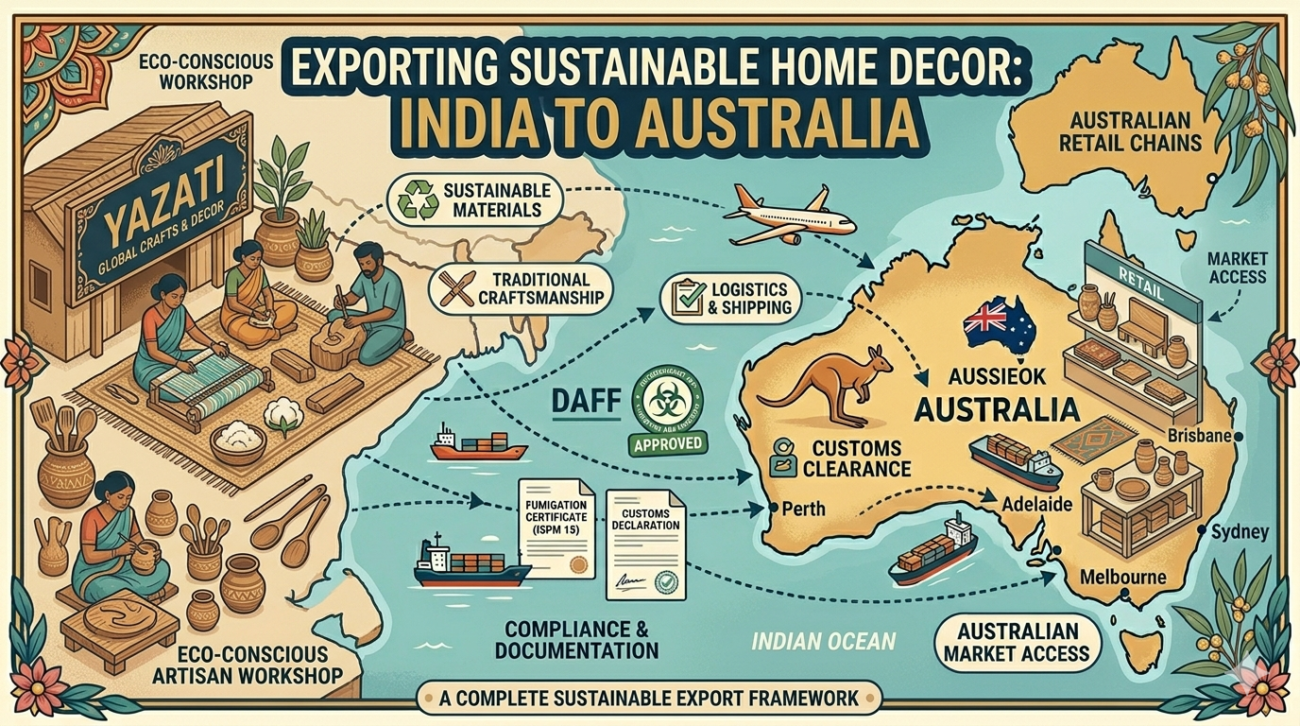
Introduction to Sustainable Home Decor Export
Exporting Sustainable Home Decor from India to Australia is becoming one of the most promising opportunities in global trade. With increasing awareness of climate change and ethical consumption, Australian consumers are actively seeking eco-friendly, handcrafted, and ethically sourced home decor products. India, with its deep-rooted artisan traditions and sustainable production methods, is perfectly positioned to meet this demand.
Understanding Eco-Friendly Decor Trends
Eco-friendly home decor focuses on products made from natural, recycled, or sustainably sourced materials. Items like jute rugs, bamboo furniture, terracotta pieces, and organic cotton textiles are gaining traction. Consumers are now prioritizing sustainability over mass-produced goods, favoring items that tell a story.
Why Sustainability Matters in Global Trade
Sustainability is no longer optional—it’s a competitive advantage. Businesses that adopt eco-friendly practices often gain better brand loyalty, higher margins, and easier entry into developed markets like Australia.
Market Demand in Australia
Australia has seen a sharp rise in eco-conscious living. From urban apartments to coastal homes, sustainable decor is shaping interior design trends.
Consumer Preferences for Sustainable Products
Australian buyers prefer:
- Non-toxic materials
- Handmade products
- Ethical sourcing
- Minimalist and natural aesthetics
Growth Trends in Australian Eco Market
The Australian home decor market is steadily shifting toward sustainability. Retailers and consumers alike are investing in products that reduce environmental impact while enhancing home aesthetics.
Benefits of Exporting from India
India offers a strong foundation for sustainable exports due to its cultural heritage and resource availability.
Rich Craftsmanship and Heritage
India is known for its traditional craftsmanship—block printing, weaving, carving, and pottery. These techniques are inherently sustainable and add unique value.
Cost Advantages and Skilled Labor
Lower production costs combined with skilled artisans allow Indian exporters to remain competitive while maintaining quality.
Key Product Categories
Products such as:
- Organic cotton cushion covers
- Handwoven rugs
- Kantha quilts
These items are popular for their aesthetic and eco-friendly appeal.
Bamboo and Wooden Decor
Bamboo lamps, wooden carvings, and furniture made from reclaimed wood are highly desirable.
Recycled and Upcycled Items
Items made from recycled glass, metal, or fabric are trending due to their low environmental footprint.
Legal Requirements and Export Regulations
Understanding compliance is essential for successful exporting.
Indian Export Policies
Exporters must:
- Register with DGFT
- Obtain IEC (Import Export Code)
- Comply with GST regulations
Australian Import Regulations
Australia has strict import rules, especially for wooden and plant-based products.
Biosecurity and Environmental Standards
Products must meet biosecurity requirements to prevent pests and contamination. Proper treatment and certification are mandatory.
Certifications for Sustainable Products
Certifications build trust and credibility in international markets.
Fair Trade Certification
Ensures ethical wages and working conditions.
FSC and Organic Labels
Forest Stewardship Council (FSC) certification ensures sustainable sourcing of wood. Organic labels verify eco-friendly materials.
Finding Buyers in Australia
B2B Platforms and Trade Shows
Use platforms like:
- Alibaba
- IndiaMART
- Global Sources
Participate in trade fairs to network with buyers.
Building Long-Term Partnerships
Consistency, transparency, and communication are key to maintaining strong relationships.
Pricing Strategies and Costing
FOB vs CIF Pricing
- FOB (Free on Board): Buyer handles shipping
- CIF (Cost, Insurance, Freight): Seller includes shipping
Currency Exchange Considerations
Monitor exchange rates to maintain profitability.
Packaging and Logistics
Eco-Friendly Packaging Solutions
Use:
- Recycled cardboard
- Biodegradable fillers
- Minimal plastic
Shipping Methods and Freight
Choose between:
- Air freight (fast, expensive)
- Sea freight (cost-effective, slower)
Marketing Your Sustainable Brand
Digital Marketing Strategies
Leverage:
- Social media
- SEO
- Email marketing
Storytelling and Branding
Highlight:
- Artisan stories
- Sustainable practices
- Cultural heritage
Challenges in Exporting
Logistics Delays
Shipping disruptions can impact delivery timelines.
Compliance Issues
Failure to meet regulations can result in rejected shipments.
Tips for Success
Building Trust with Buyers
Provide:
- Transparent pricing
- Certifications
- Reliable communication
Maintaining Product Quality
Consistent quality ensures repeat business.
FAQs
1. What products are best for exporting sustainable home decor?
Handmade textiles, bamboo items, and recycled decor products are highly popular.
2. Do I need certifications to export to Australia?
Yes, certifications like FSC and Fair Trade improve credibility and market access.
3. How do I find buyers in Australia?
Use B2B platforms, attend trade shows, and network with importers.
4. What is the best shipping method?
Sea freight is cost-effective for bulk orders, while air freight is faster for smaller shipments.
5. Are there strict regulations in Australia?
Yes, especially regarding biosecurity and environmental compliance.
6. How can I make my brand stand out?
Focus on storytelling, sustainability, and unique craftsmanship.
Conclusion
Exporting Sustainable Home Decor from India to Australia offers immense growth potential for businesses willing to embrace sustainability, quality, and compliance. With the right strategies, certifications, and marketing approach, exporters can tap into a thriving eco-conscious market and build a profitable international presence.
🔗 External Resource
Learn more about export regulations here: https://www.dgft.gov.in/
✨ Discover Global Sourcing Excellence with Netyex ✨
Netyex is your trusted B2B sourcing partner, connecting international buyers with India’s finest manufacturers and curated product lines—from handicrafts and home décor to kitchenware, textiles, hospitality essentials, and more. With verified suppliers and end-to-end support, we make global procurement seamless, reliable, and efficient.
👉 Elevate your sourcing experience—explore Netyex today.
📦 Bulk orders & customisation | 🌍 Worldwide delivery | 🤝 Trusted by global buyers
Visit Netyex to source premium Indian products with confidence.