Introduction to Indian Handicraft Export Business
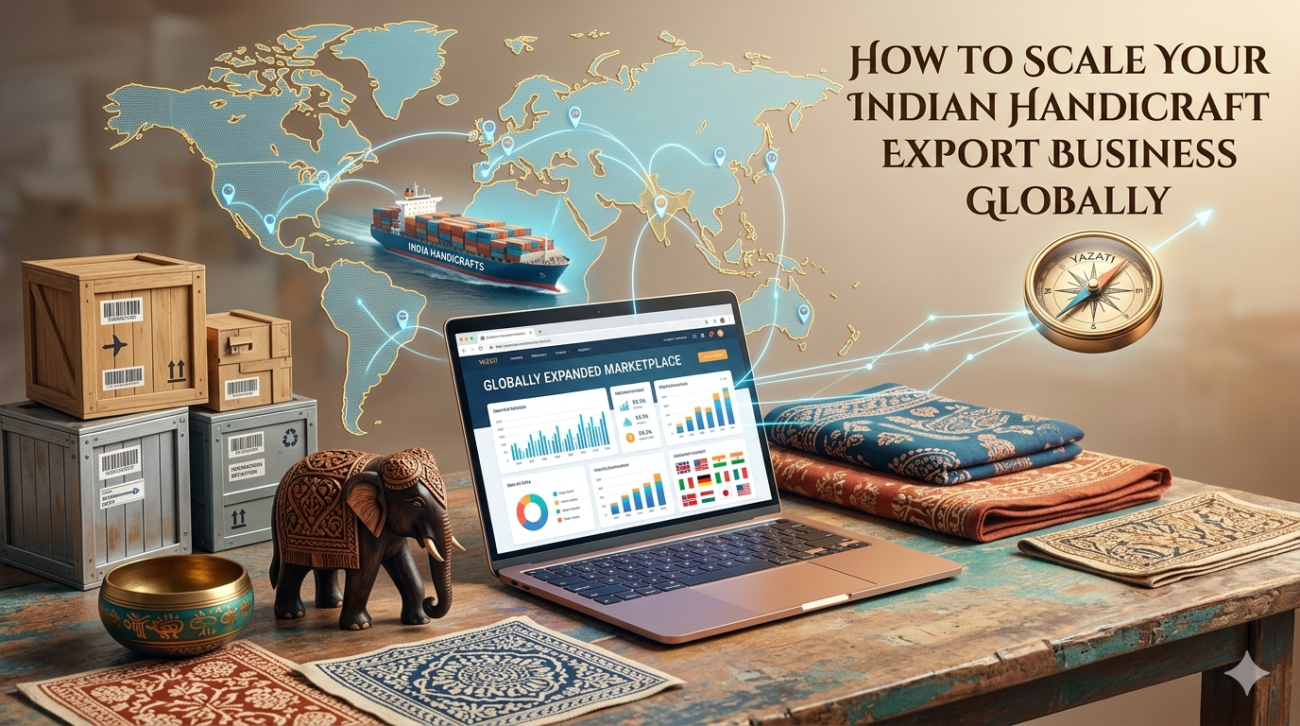
India’s handicraft industry is a vibrant reflection of its culture, heritage, and artistry. From handwoven textiles to intricate wood carvings, Indian handicrafts are admired worldwide. If you’re wondering how to scale your Indian Handicraft Export Business Globally, you’re already on the right path toward tapping into a billion-dollar opportunity.
Importance of Global Expansion
Expanding globally isn’t just about increasing revenue—it’s about building a brand that resonates across cultures. International markets offer higher profit margins, diverse customer bases, and long-term sustainability.
Current Market Trends in Handicrafts
The global handicraft market is shifting toward:
- Sustainable and eco-friendly products
- Handmade, unique items over mass-produced goods
- Cultural storytelling behind products
Understanding the Global Handicraft Market
To succeed internationally, you must understand where demand exists and what customers want.
Key International Markets
USA and Europe Demand
These markets value authenticity, sustainability, and craftsmanship. Products like handmade rugs, pottery, and ethnic décor perform exceptionally well.
Middle East and Asia Opportunities
Luxury décor and traditional art pieces are in high demand, especially in premium segments.
Consumer Preferences and Buying Behavior
Global consumers look for:
- Unique, handcrafted designs
- Ethical sourcing
- Cultural authenticity
- Premium packaging
Building a Strong Brand Identity
Scaling your Indian Handicraft Export Business Globally requires a memorable and trustworthy brand.
Crafting a Unique Value Proposition
What makes your product stand out? It could be:
- Handmade by rural artisans
- Eco-friendly materials
- Traditional techniques
Storytelling and Cultural Heritage
Customers love stories. Share the journey of your artisans, the origin of your craft, and the cultural significance behind each product.
Packaging and Presentation
High-quality packaging:
- Protects your product
- Enhances perceived value
- Creates a premium unboxing experience
Legal Requirements and Export Documentation
Before going global, compliance is critical.
Export Licenses and Certifications
You’ll need:
- Import Export Code (IEC)
- GST Registration
- Export Promotion Council registration
IEC Code and GST Compliance
Without these, you simply cannot export legally from India.
Trade Regulations and Compliance
Each country has different import rules. Always:
- Check customs duties
- Understand product restrictions
- Follow labeling requirements
Choosing the Right Export Channels
Your distribution strategy determines your scalability.
Online Marketplaces
Platforms like Etsy, Amazon Global, and Alibaba open doors to international buyers.
B2B vs B2C Platforms
- B2B: Bulk orders, lower margins
- B2C: Higher margins, direct customer relationships
Direct Export vs Third-Party Export
- Direct export gives control and higher profits
- Third-party export reduces complexity but lowers margins
Leveraging Digital Marketing for Global Reach
Digital marketing is the backbone of scaling globally.
SEO and Content Marketing
Create blogs, product descriptions, and guides using keywords like How to Scale Your Indian Handicraft Export Business Globally to attract organic traffic.
Social Media Strategies
Use platforms like:
- Instagram for visual storytelling
- Pinterest for product discovery
- Facebook for global reach
Influencer and Affiliate Marketing
Collaborate with global influencers who align with your brand to boost visibility and trust.
Pricing Strategy for International Markets
Pricing can make or break your global expansion.
Cost Calculation and Margins
Include:
- Production cost
- Packaging
- Shipping
- Customs duties
Competitive Pricing Techniques
Research competitors and adjust pricing based on:
- Market demand
- Product uniqueness
- Brand positioning
Logistics and Supply Chain Management
Efficient logistics ensure timely delivery and customer satisfaction.
Shipping Methods and Freight Options
Choose between:
- Air freight (fast but expensive)
- Sea freight (economical for bulk orders)
Warehousing and Inventory Management
Consider international warehouses to:
- Reduce delivery time
- Improve customer experience
Quality Control and Product Standardization
Consistency builds trust.
Maintaining Consistency
Ensure every product meets the same standards in:
- Design
- Material
- Finish
Certifications for Global Markets
Certifications like fair trade and eco-labels increase credibility.
Building International Partnerships
Strong partnerships accelerate growth.
Distributors and Retailers
Collaborate with local distributors to enter new markets quickly.
Trade Shows and Exhibitions
Participate in global expos to:
- Showcase products
- Build connections
- Secure bulk orders
Scaling Production Without Losing Authenticity
Growth should not compromise quality.
Working with Artisan Clusters
Partner with artisan groups to increase production while maintaining craftsmanship.
Use of Technology in Production
Use tools for:
- Inventory management
- Order tracking
- Quality control
Financial Planning and Funding Options
Scaling requires capital.
Government Schemes
India offers schemes like:
- Export promotion incentives
- MSME support programs
Export Incentives
These reduce costs and improve profitability.
Common Challenges and How to Overcome Them
Cultural Barriers
Understand local tastes and adapt designs accordingly.
Payment Risks
Use secure payment methods like:
- Letters of Credit
- Escrow services
Future Trends in Handicraft Export Industry
Sustainable and Eco-Friendly Products
Demand for eco-conscious products is rising rapidly.
Customization and Personalization
Customers love products tailored to their preferences.
FAQs
1. How can I start exporting handicrafts from India?
You need an IEC code, GST registration, and access to global marketplaces.
2. Which countries are best for handicraft exports?
USA, UK, UAE, and Germany are top markets.
3. Is digital marketing जरूरी for export business?
Yes, it’s essential for global visibility and customer acquisition.
4. How do I price my handicrafts internationally?
Include all costs and analyze competitor pricing before setting rates.
5. What are the biggest challenges in export business?
Logistics, compliance, and payment risks are the most common.
6. Can small businesses scale globally?
Absolutely! With the right strategy, even small artisans can reach global markets.
Conclusion
Scaling your Indian Handicraft Export Business Globally is not just a dream—it’s a practical and achievable goal. With the right mix of branding, marketing, compliance, and partnerships, you can turn your local craft into a global success story. Stay consistent, embrace innovation, and never lose the authenticity that makes Indian handicrafts truly special.
✨ Discover Global Sourcing Excellence with Netyex ✨
Netyex is your trusted B2B sourcing partner, connecting international buyers with India’s finest manufacturers and curated product lines—from handicrafts and home décor to kitchenware, textiles, hospitality essentials, and more. With verified suppliers and end-to-end support, we make global procurement seamless, reliable, and efficient.
👉 Elevate your sourcing experience—explore Netyex today.
📦 Bulk orders & customisation | 🌍 Worldwide delivery | 🤝 Trusted by global buyers
Visit Netyex to source premium Indian products with confidence.