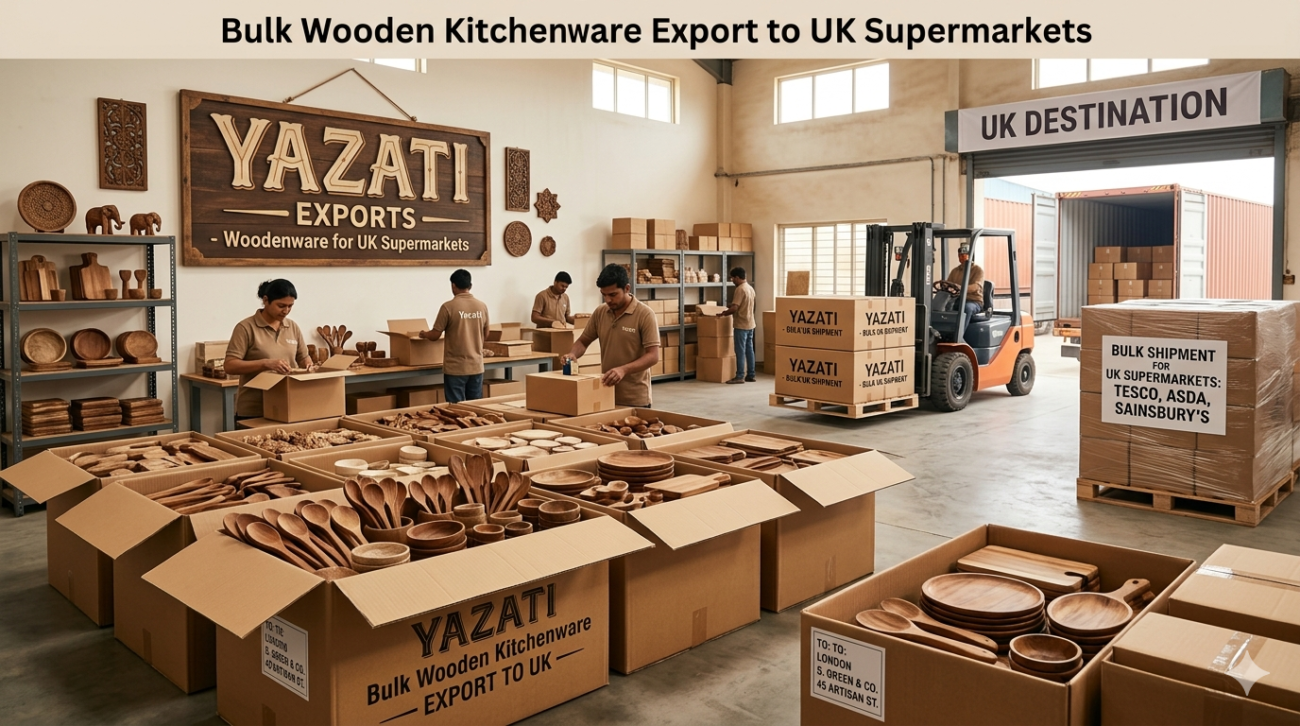
The global demand for eco-friendly kitchen products is rising rapidly, and one of the fastest-growing sectors is Bulk Wooden Kitchenware Export to UK Supermarkets. Consumers in the United Kingdom are increasingly choosing sustainable alternatives over plastic kitchen products. As a result, supermarkets across the UK are searching for reliable exporters that can provide high-quality wooden spoons, cutting boards, spatulas, trays, bowls, and serving accessories in large quantities.
For manufacturers and exporters, this trend creates a profitable business opportunity. Whether you are a small factory owner, sourcing agent, or established exporter, entering the UK supermarket supply chain can significantly increase revenue and international visibility.
In this comprehensive guide, you will learn everything about exporting wooden kitchenware products to UK supermarkets, including market demand, certifications, pricing, logistics, packaging, compliance requirements, marketing strategies, and common mistakes to avoid.
Understanding the UK Wooden Kitchenware Market
The UK retail market has shifted strongly toward environmentally responsible products. Consumers now prefer reusable and biodegradable kitchenware products that reduce plastic waste. This change has encouraged supermarkets to expand their eco-friendly product categories.
Major UK retailers actively source wooden kitchen products because they appeal to modern buyers seeking sustainability and durability. Products made from bamboo, acacia wood, beech wood, teak, and mango wood are especially popular.
Why UK Consumers Prefer Wooden Kitchenware
Several factors influence purchasing behavior in the UK market:
- Eco-conscious lifestyles
- Plastic reduction campaigns
- Natural product aesthetics
- Long-lasting durability
- Safe cooking materials
Wooden kitchenware products also fit perfectly into minimalist and rustic kitchen designs, making them highly attractive to homeowners.
Market Growth Trends in Sustainable Kitchen Products
The sustainable kitchenware industry continues to expand due to:
- Government regulations against single-use plastics
- Rising awareness about sustainability
- Increased online shopping
- Premium home décor trends
- Growth in organic and eco-friendly lifestyles
This creates excellent long-term opportunities for exporters targeting UK supermarkets.
Types of Wooden Kitchenware Products in Demand
Understanding product demand is critical for success in Bulk Wooden Kitchenware Export to UK Supermarkets.
Wooden Cooking Utensils
These are among the highest-selling products:
- Wooden spoons
- Spatulas
- Ladles
- Tongs
- Rolling pins
Supermarkets often prefer complete utensil sets because they increase basket value.
Wooden Serving Products
Popular serving items include:
- Cheese boards
- Serving trays
- Salad bowls
- Wooden plates
- Pizza boards
Premium packaging can significantly improve shelf appeal.
Wooden Storage and Decorative Items
Modern UK kitchens combine functionality with decoration. High-demand products include:
- Spice racks
- Wooden jars
- Bread boxes
- Cutlery holders
- Decorative kitchen organizers
Benefits of Exporting Wooden Kitchenware to UK Supermarkets
Exporting to UK retailers offers several business advantages.
High Profit Margins
Wooden kitchenware products often provide better margins than plastic alternatives because consumers are willing to pay premium prices for sustainable goods.
Growing Eco-Friendly Consumer Base
The UK market continues expanding as environmentally aware consumers increase yearly.
Long-Term Retail Contracts
Supermarkets usually prefer stable suppliers. Once approved, exporters can receive recurring purchase orders for years.
UK Import Regulations and Compliance
Compliance is one of the most important aspects of Bulk Wooden Kitchenware Export to UK Supermarkets.
Food Safety Standards
Kitchenware products must be safe for food contact. Retailers often require:
- Chemical testing
- Food-grade finishing oils
- Non-toxic coatings
- Formaldehyde testing
Products that fail safety standards may be rejected.
Timber and Sustainability Certifications
UK retailers prioritize sustainable sourcing. Exporters should prove wood legality and environmental responsibility.
Important certifications include:
- FSC certification
- Sustainable forestry documentation
- Timber traceability records
Packaging and Labeling Rules
Labels typically must include:
- Country of origin
- Product material
- Barcode
- Care instructions
- Importer information
Clear labeling improves retail acceptance.
Essential Certifications for Exporters
Certifications build trust and improve buyer confidence.
FSC Certification
The Forest Stewardship Council certification verifies responsible forest management practices. Many UK supermarkets prefer FSC-certified suppliers.
Learn more at Forest Stewardship Council Official Website
BSCI and Ethical Audits
Retailers frequently require ethical sourcing audits to ensure fair labor conditions.
Common audit systems include:
- BSCI
- SEDEX
- SMETA
- ISO standards
LFGB and Food Contact Testing
LFGB testing confirms that products are safe for food contact and suitable for European markets.
Finding UK Supermarket Buyers
Finding the right buyers is essential for export growth.
Direct Retail Partnerships
Large UK supermarkets often source products through approved supplier systems.
Popular retailers include:
- Tesco
- Sainsbury’s
- Aldi
- Lidl
- Morrisons
- Asda
Each retailer has unique supplier onboarding procedures.
Importers and Distributors
Many exporters first work with UK importers who already supply supermarkets. This approach simplifies logistics and market entry.
Trade Shows and B2B Platforms
Trade exhibitions are excellent for networking with buyers.
Important trade platforms include:
- Ambiente
- Spring Fair Birmingham
- Global Sources
- Alibaba
- IndiaMART
Pricing Strategy for Bulk Wooden Kitchenware Export to UK Supermarkets
Pricing can determine whether your business wins or loses contracts.
Manufacturing Costs
Calculate costs carefully:
| Cost Category | Example |
| Raw Materials | Wood, coatings |
| Labor | Factory workers |
| Packaging | Boxes and labels |
| Machinery | Cutting and polishing |
| Compliance | Certifications and testing |
Shipping and Customs Costs
Include:
- Sea freight
- Insurance
- Import duties
- Port charges
- Customs clearance
Ignoring hidden costs can reduce profitability.
Profit Margin Optimization
Ways to improve margins:
- Bulk production
- Better supplier negotiations
- Automated machinery
- Optimized packaging sizes
- Efficient shipping containers
Packaging Requirements for UK Retail Chains
Packaging strongly affects retail success.
Sustainable Packaging Trends
UK supermarkets increasingly prefer:
- Recyclable cardboard
- Plastic-free packaging
- Soy-based inks
- Compostable wraps
Eco-friendly packaging strengthens brand reputation.
Barcode and SKU Requirements
Retailers usually require:
- EAN barcodes
- SKU tracking
- Product dimensions
- Retail-ready packaging
Mistakes in packaging can delay shipments.
Shipping and Logistics Management
Reliable logistics are critical for international trade success.
Sea Freight vs Air Freight
| Method | Advantages | Disadvantages |
| Sea Freight | Low cost for bulk orders | Longer delivery time |
| Air Freight | Fast shipping | High transportation cost |
Sea freight is generally preferred for large supermarket orders.
Choosing Freight Forwarders
A professional freight forwarder can help with:
- Customs documentation
- Shipping schedules
- Insurance
- Port coordination
Experienced partners reduce shipping risks.
Managing Customs Clearance
Required documents often include:
- Commercial invoice
- Packing list
- Bill of lading
- Certificate of origin
- Inspection certificates
Proper paperwork prevents customs delays.
Quality Control and Product Inspection
Quality consistency is essential when supplying supermarkets.
Factory Audits
Retailers may inspect:
- Production facilities
- Worker safety
- Quality systems
- Environmental practices
Factories with organized systems gain more buyer confidence.
Third-Party Inspections
Independent inspections help verify:
- Product dimensions
- Moisture levels
- Finishing quality
- Packaging standards
Third-party verification reduces disputes.
Marketing Strategies for Export Success
Modern exporters must market professionally to compete internationally.
Digital Marketing for Exporters
Strong online visibility can attract buyers globally.
Important strategies include:
- SEO-optimized websites
- LinkedIn networking
- Product catalogs
- Trade marketplace listings
- Email marketing campaigns
A professional online presence increases credibility.
Building a Professional Export Brand
Your brand should communicate:
- Sustainability
- Quality craftsmanship
- Ethical sourcing
- Reliability
Consistent branding helps secure long-term contracts.
Common Challenges and Solutions
Export businesses face several operational challenges.
Currency Fluctuations
Exchange rate changes can impact profits.
Solutions include:
- Forward contracts
- USD pricing agreements
- Multi-currency accounts
Delayed Shipments
Common causes include:
- Port congestion
- Documentation errors
- Weather disruptions
Buffer planning can reduce risk.
Retail Compliance Failures
Products may fail due to:
- Incorrect labeling
- Poor packaging
- Missing certifications
Pre-shipment inspections help avoid these issues.
Future Trends in Wooden Kitchenware Export
The future looks promising for exporters focused on sustainability and innovation.
Smart Eco-Friendly Packaging
Retailers are moving toward:
- Zero-plastic packaging
- QR code product tracking
- Recyclable retail displays
Premium Handmade Kitchenware
Consumers increasingly value:
- Artisan craftsmanship
- Handmade finishes
- Unique wood textures
- Luxury kitchen accessories
Premium products often achieve higher retail margins.
Frequently Asked Questions
Is Bulk Wooden Kitchenware Export to UK Supermarkets profitable?
Yes. The growing demand for eco-friendly kitchen products makes this sector highly profitable for exporters with quality products and certifications.
Which wooden kitchenware products sell best in the UK?
Wooden spoons, chopping boards, serving trays, salad bowls, and spatula sets are among the top-selling products.
Do UK supermarkets require FSC certification?
Many retailers strongly prefer FSC-certified products because sustainability is important in the UK market.
What shipping method is best for bulk exports?
Sea freight is usually the most cost-effective option for large supermarket shipments.
How can exporters find UK buyers?
Exporters can use trade fairs, B2B marketplaces, LinkedIn, distributors, and direct retailer supplier portals.
What are the biggest export challenges?
Common challenges include compliance issues, delayed logistics, rising freight costs, and maintaining consistent product quality.
Conclusion
The market for Bulk Wooden Kitchenware Export to UK Supermarkets offers substantial opportunities for exporters willing to invest in quality, sustainability, compliance, and professional branding. As UK consumers continue shifting toward eco-friendly lifestyles, supermarkets are increasing demand for responsibly sourced wooden kitchenware products.
Success in this industry requires more than manufacturing capacity. Exporters must understand UK regulations, maintain consistent product quality, secure certifications, optimize logistics, and build strong buyer relationships. Businesses that focus on long-term trust and sustainable practices are likely to achieve stable growth and recurring supermarket contracts.
With the right strategy, exporters can transform wooden kitchenware products into a thriving international business serving one of the world’s most sustainability-focused retail markets.
✨ Discover Global Sourcing Excellence with Netyex ✨
Netyex is your trusted B2B sourcing partner, connecting international buyers with India’s finest manufacturers and curated product lines—from handicrafts and home décor to kitchenware, textiles, hospitality essentials, and more. With verified suppliers and end-to-end support, we make global procurement seamless, reliable, and efficient.
👉 Elevate your sourcing experience—explore Netyex today.
📦 Bulk orders & customisation | 🌍 Worldwide delivery | 🤝 Trusted by global buyers
Visit Netyex to source premium Indian products with confidence.