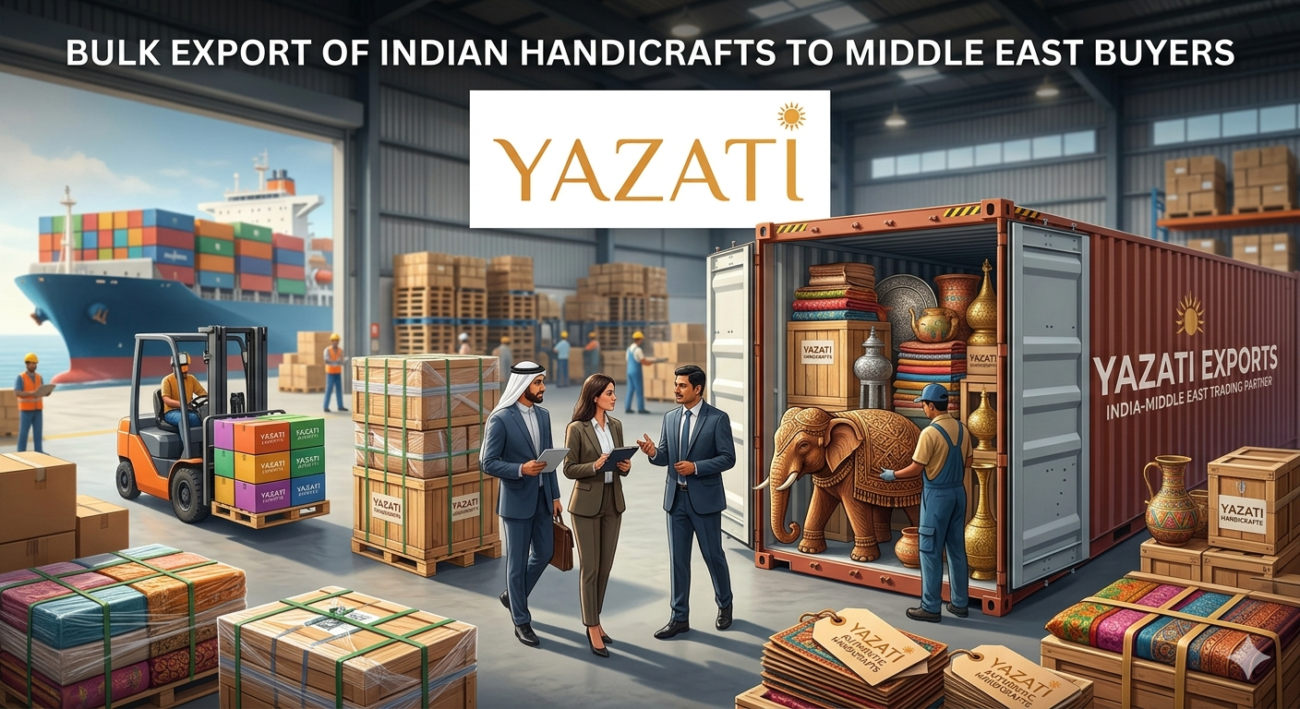
The Bulk Export of Indian Handicrafts to Middle East Buyers has become one of the most profitable opportunities for Indian exporters in recent years. Indian handicrafts are famous worldwide for their detailed craftsmanship, rich cultural history, handmade quality, and artistic beauty. Countries in the Middle East, especially the UAE, Saudi Arabia, Qatar, Kuwait, and Oman, are increasingly importing Indian handicraft products for luxury homes, hotels, offices, resorts, and retail stores.
India has a strong advantage because of its large artisan base, affordable labor costs, and centuries-old craftsmanship traditions. From wooden furniture to brass décor items, marble inlay work, embroidered textiles, and handmade gifts, Indian handicrafts fit perfectly with the luxury and cultural preferences of Middle Eastern consumers.
In this complete guide, you will learn everything about starting and growing a successful handicraft export business targeting Middle East buyers.
Introduction to Indian Handicraft Export Business
India is one of the world’s largest producers of handicrafts. The country exports thousands of unique handmade items every year to international buyers. The handicraft sector supports millions of artisans across rural and urban regions.
The export market for handicrafts is growing rapidly because buyers now prefer:
- Handmade products
- Eco-friendly items
- Traditional artwork
- Premium interior décor
- Customized luxury products
The Middle East is especially attractive because consumers there value luxury, elegance, and artistic home decoration.
According to export industry trends, Gulf countries continue increasing imports of:
- Home décor
- Handmade furniture
- Decorative lamps
- Traditional textiles
- Ethnic gifting products
This creates a massive opportunity for Indian exporters.
Why the Middle East is a High-Potential Market
Rising Demand for Handmade Luxury Products
Middle Eastern consumers are known for their strong purchasing power. Luxury shopping is deeply connected to lifestyle culture in Gulf countries.
Hotels, villas, shopping malls, restaurants, and commercial spaces regularly import:
- Premium décor products
- Handcrafted furniture
- Artistic wall hangings
- Antique-style metal items
Indian handicrafts offer a perfect balance between affordability and luxury appeal.
Cultural Preference for Artisan Décor
Arab interior design styles often include:
- Intricate carvings
- Rich textures
- Gold and brass finishes
- Traditional patterns
- Elegant handcrafted furniture
Indian handicrafts naturally align with these design preferences, making them highly desirable in the Middle East market.
Most Popular Indian Handicrafts in Middle Eastern Markets
Wooden Handicrafts
Wooden products from Rajasthan and Saharanpur are highly popular.
Top-selling products include:
- Carved wooden furniture
- Decorative trays
- Mirror frames
- Side tables
- Jewelry boxes
Buyers often prefer teakwood, mango wood, and Sheesham wood products.
Brass and Metal Crafts
Moradabad is famous for brass handicrafts exported globally.
Popular items include:
- Brass lanterns
- Decorative bowls
- Islamic art décor
- Candle holders
- Wall art
These products are especially popular during Ramadan and festive seasons.
Marble and Stone Artifacts
Marble handicrafts from Agra and Rajasthan are widely exported.
Examples:
- Marble tabletops
- Inlay work
- Stone sculptures
- Decorative vases
Luxury hotels in Dubai and Doha often source these products.
Textile and Embroidery Products
Indian textile handicrafts remain highly demanded.
Common exports:
Understanding Buyer Preferences in Gulf Countries
UAE Buyer Trends
The UAE acts as a major re-export hub for global trade.
Dubai buyers prefer:
- Modern luxury décor
- Customized products
- Premium packaging
- Fast shipping
Bulk orders are common in the hospitality and retail sectors.
Saudi Arabian Import Demand
Saudi Arabia imports large volumes of:
- Traditional décor
- Islamic art products
- Luxury furniture
- Handmade lighting products
Religious tourism growth also boosts demand for decorative items.
Qatar and Kuwait Retail Preferences
Consumers in Qatar and Kuwait often focus on:
- High-end craftsmanship
- Exclusive handmade designs
- Boutique interior décor
Smaller but premium-quality shipments perform well here.
How to Start Bulk Export of Indian Handicrafts to Middle East Buyers
Business Registration and IEC Code
To begin exporting, you need:
- Business registration
- GST registration
- Import Export Code (IEC)
- Current bank account
- Export documentation setup
The IEC code is mandatory for international trade in India.
You can apply through the official DGFT portal:
Directorate General of Foreign Trade (DGFT)
GST and Export Documentation
Important export documents include:
- Commercial invoice
- Packing list
- Bill of lading
- Certificate of origin
- Shipping bill
Maintaining proper documentation avoids customs delays.
Finding Reliable Suppliers and Artisans
Strong supplier relationships are critical.
When selecting artisans:
- Verify production capacity
- Check quality consistency
- Review delivery timelines
- Inspect craftsmanship standards
Building long-term artisan partnerships improves export reliability.
Product Quality Standards for Export
Packaging Requirements
International shipping requires strong packaging.
Recommended methods:
- Bubble wrapping
- Corrugated boxes
- Wooden crates
- Moisture protection
- Shock-resistant packaging
Fragile handicrafts require extra care during sea freight.
Labeling and Safety Compliance
Labels should include:
- Product description
- Country of origin
- Material details
- Quantity information
Some countries also require barcode labeling.
Best Indian Cities for Sourcing Handicrafts
Jaipur
Jaipur is famous for:
- Blue pottery
- Marble crafts
- Wooden décor
- Textile handicrafts
Moradabad
Known as the “Brass City of India,” Moradabad specializes in:
- Brassware
- Metal décor
- Aluminum handicrafts
Saharanpur
Saharanpur leads in:
- Wooden furniture
- Hand carving
- Interior décor products
Jodhpur
Jodhpur exports:
- Vintage furniture
- Industrial-style handicrafts
- Rustic décor items
Pricing Strategy for Bulk Export
FOB vs CIF Pricing
FOB (Free on Board)
The buyer handles shipping after goods reach the port.
CIF (Cost, Insurance, Freight)
The exporter covers freight and insurance costs.
Most new exporters begin with FOB pricing because it reduces risk.
Wholesale Margin Calculation
Your export pricing should include:
- Manufacturing cost
- Packaging expense
- Freight charges
- Customs duty
- Profit margin
Avoid underpricing products simply to win buyers.
Shipping and Logistics for Middle East Markets
Sea Freight vs Air Cargo
| Method | Advantages | Disadvantages |
| Sea Freight | Low cost for bulk shipments | Slower delivery |
| Air Cargo | Fast delivery | Higher shipping cost |
Sea freight is ideal for large handicraft shipments.
Choosing Freight Forwarders
Reliable freight forwarders help with:
- Customs clearance
- Shipment tracking
- Documentation
- Insurance handling
Choose companies with Middle East shipping experience.
How to Find Middle East Buyers
B2B Marketplaces
Popular platforms include:
- Alibaba
- IndiaMART
- TradeIndia
- Global Sources
These platforms help exporters connect with verified buyers.
Trade Shows and Expos
Trade fairs are powerful for networking.
Important exhibitions include:
- Dubai International Gift Show
- Index Dubai
- Saudi Build Expo
Face-to-face meetings improve trust with buyers.
LinkedIn and Direct Outreach
LinkedIn works extremely well for B2B export marketing.
Best practices:
- Build a professional company profile
- Share product catalogs
- Contact importers directly
- Send personalized proposals
Digital Marketing for Exporters
SEO for Export Websites
A professional export website helps attract buyers organically.
Your website should include:
- Product catalogs
- Export certifications
- Inquiry forms
- Buyer testimonials
- Mobile-friendly design
SEO keywords like Bulk Export of Indian Handicrafts to Middle East Buyers help improve Google rankings.
WhatsApp and Email Marketing
Many Middle East buyers prefer WhatsApp communication.
Use:
- Product brochures
- Catalog PDFs
- Pricing sheets
- Quick response support
Email campaigns also help nurture long-term buyers.
Common Challenges in Handicraft Export
Delayed Payments
International trade sometimes involves payment risks.
Use safer payment methods:
- Letter of Credit (LC)
- Advance payment
- Export insurance
Customs Clearance Issues
Incomplete documents can delay shipments.
Always double-check:
- HS codes
- Invoice details
- Product descriptions
Product Damage During Transit
Fragile products face transit risks.
Use:
- Export-grade packaging
- Marine insurance
- Strong palletization
Government Support and Export Incentives
Export Promotion Councils
The Export Promotion Council for Handicrafts supports exporters through:
- Trade fair participation
- Buyer-seller meets
- Market development programs
Official website:
Export Promotion Council for Handicrafts (EPCH)
MSME Benefits
Indian MSMEs can access:
- Export subsidies
- Financial assistance
- Training programs
- Credit support schemes
Future Trends in Middle East Handicraft Imports
Sustainable and Eco-Friendly Products
Eco-conscious buyers increasingly prefer:
- Recycled materials
- Sustainable wood
- Handmade natural products
Green handicrafts are expected to dominate future demand.
Smart Luxury Interior Trends
Luxury real estate growth in Dubai and Saudi Arabia continues driving imports of:
- Premium furniture
- Artistic décor
- Bespoke handcrafted interiors
Customized handcrafted products are becoming highly profitable.
Frequently Asked Questions
What are the best Indian handicrafts for export to the Middle East?
Wooden furniture, brass décor, marble handicrafts, textiles, and handmade lighting products are among the best-selling items.
Which Middle East country imports the most Indian handicrafts?
The UAE is one of the largest importers because Dubai acts as a global trading hub.
Do I need an IEC code for exporting handicrafts?
Yes, an Import Export Code (IEC) is mandatory for export businesses in India.
How can I find genuine Middle East buyers?
Use B2B marketplaces, LinkedIn networking, trade fairs, and export promotion councils.
Is sea freight better for handicraft exports?
Yes, sea freight is generally more cost-effective for bulk shipments.
What is the biggest challenge in handicraft export?
Maintaining consistent quality and ensuring safe product delivery are major challenges.
Conclusion
The Bulk Export of Indian Handicrafts to Middle East Buyers offers enormous growth opportunities for Indian exporters in 2026 and beyond. The Middle East market values luxury, artistry, tradition, and premium craftsmanship — qualities that Indian handicrafts naturally provide.
With the right sourcing strategy, export documentation, pricing model, and buyer acquisition methods, exporters can build highly profitable international businesses. Digital marketing, trade shows, and strong logistics partnerships further improve long-term success.
As global demand for sustainable and handmade products continues rising, Indian handicrafts are perfectly positioned to dominate premium markets across the Gulf region.
Businesses that focus on quality, trust, customization, and professional branding will enjoy significant export growth in the coming years.
✨ Discover Global Sourcing Excellence with Netyex ✨
Netyex is your trusted B2B sourcing partner, connecting international buyers with India’s finest manufacturers and curated product lines—from handicrafts and home décor to kitchenware, textiles, hospitality essentials, and more. With verified suppliers and end-to-end support, we make global procurement seamless, reliable, and efficient.
👉 Elevate your sourcing experience—explore Netyex today.
📦 Bulk orders & customisation | 🌍 Worldwide delivery | 🤝 Trusted by global buyers
Visit Netyex to source premium Indian products with confidence.