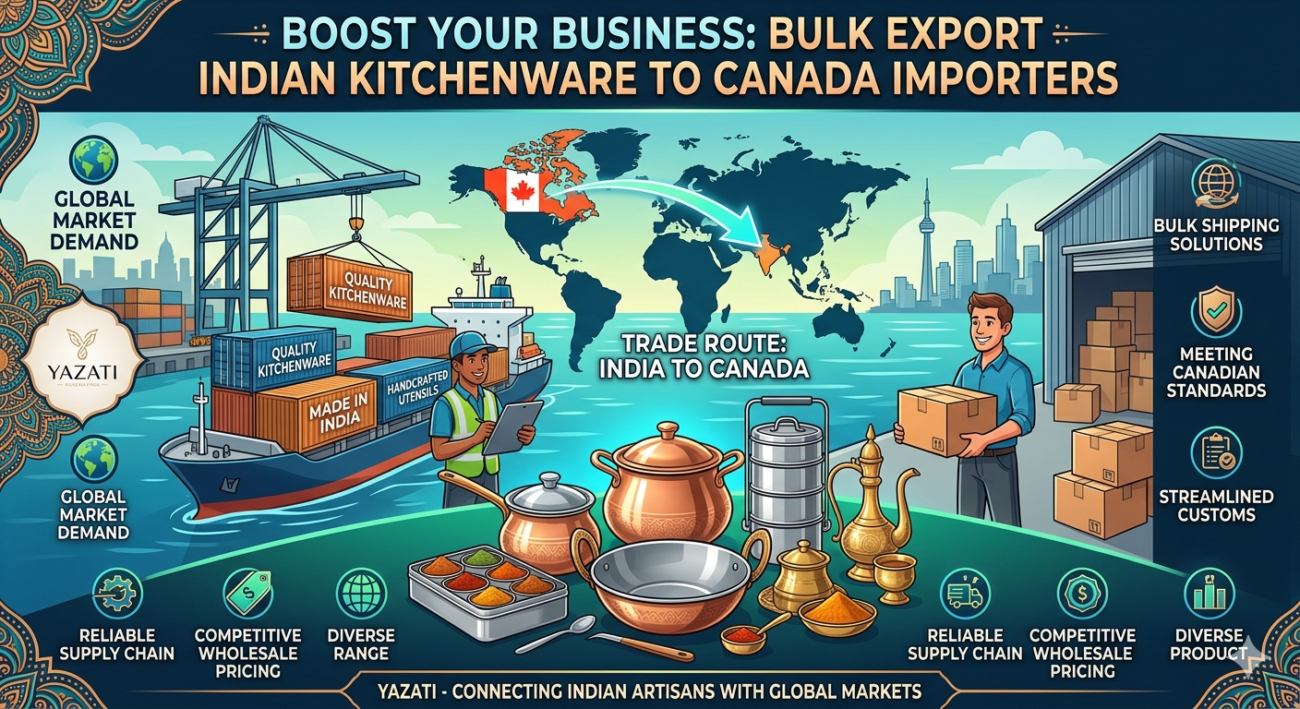
The Bulk Export of Indian Kitchenware to Canada Importers has become a rapidly growing business opportunity for Indian exporters. Canada’s multicultural population, expanding hospitality sector, and increasing interest in durable and affordable kitchen products have created strong demand for Indian kitchenware products.
Indian manufacturers are well-known for producing high-quality stainless steel utensils, copper cookware, brass serving items, spice boxes, pressure cookers, and eco-friendly kitchen tools at competitive prices. With proper planning, certifications, and marketing strategies, exporters can build a profitable long-term business in the Canadian market.
In this detailed guide, you will learn everything about exporting Indian kitchenware products to Canadian importers, including regulations, logistics, pricing, buyer acquisition, and future trends.
Introduction to the Indian Kitchenware Export Industry
India is one of the leading producers of kitchenware products in the world. Cities such as Moradabad, Mumbai, Delhi, Rajkot, and Chennai are major manufacturing hubs for stainless steel utensils, cookware, and kitchen accessories.
The export industry has witnessed steady growth due to:
- Increasing global demand
- Competitive manufacturing costs
- Skilled craftsmanship
- Wide product variety
- Growing e-commerce opportunities
Indian exporters now serve buyers across North America, Europe, the Middle East, and Australia. Canada, in particular, has become an attractive destination because of its expanding retail and wholesale market.
Why Canada Is a Profitable Market for Indian Kitchenware
Canada offers a stable economy, high purchasing power, and strong demand for imported household goods. The kitchenware market continues to expand as consumers seek durable and stylish products.
Rising Demand for Indian and Asian Kitchen Products
Canada’s multicultural population has increased demand for traditional cooking utensils used in Indian, Pakistani, Chinese, and Middle Eastern cuisines. Products like pressure cookers, tawa pans, masala boxes, and stainless steel containers are especially popular.
Retailers and wholesalers often prefer Indian suppliers because they provide:
- Affordable pricing
- Large product ranges
- Custom branding options
- Bulk supply capabilities
Growth of Immigrant Communities in Canada
The Indian diaspora in Canada continues to grow each year. This community frequently purchases authentic Indian kitchenware products that are difficult to manufacture locally.
As Indian restaurants and grocery chains expand, the demand for commercial kitchen utensils also rises significantly.
Types of Indian Kitchenware Popular in Canada
Understanding product demand is essential for successful exporting.
Stainless Steel Kitchenware
Stainless steel remains one of the most exported kitchenware categories because of its durability and affordability.
Popular items include:
- Steel plates
- Bowls
- Storage containers
- Serving spoons
- Lunch boxes
These products are highly preferred in households and restaurants.
Copper and Brass Utensils
Traditional copper and brass kitchenware has gained popularity due to health-conscious consumers and Ayurvedic lifestyle trends.
Examples include:
- Copper water bottles
- Brass serving trays
- Decorative cookware
- Copper tumblers
Non-Stick Cookware
Modern consumers prefer non-stick pans and cookware for convenience and ease of cleaning.
Exporters should ensure these products comply with Canadian safety regulations.
Eco-Friendly Kitchen Products
Sustainability trends are driving demand for:
- Bamboo utensils
- Wooden serving items
- Coconut shell bowls
- Reusable steel straws
Eco-friendly products can provide exporters with a strong competitive advantage.
Understanding Canadian Import Regulations
Compliance is critical when exporting kitchenware products to Canada.
Product Safety Standards
Canadian authorities require imported kitchenware products to meet health and safety standards.
Products must be:
- Free from toxic chemicals
- Food-safe certified
- Properly tested for quality
For metal cookware, exporters should verify lead and cadmium limits.
Packaging and Labeling Requirements
Packaging must include:
- Product name
- Country of origin
- Material composition
- Manufacturer information
- Safety instructions
Labels should generally be in English and French.
Customs Documentation
Important export documents include:
| Document | Purpose |
| Commercial Invoice | Product value declaration |
| Packing List | Shipment details |
| Bill of Lading | Transport document |
| Certificate of Origin | Confirms manufacturing country |
| IEC Certificate | Export authorization |
Proper documentation helps avoid customs delays.
Steps to Start Bulk Export of Indian Kitchenware to Canada Importers
Starting an export business involves multiple stages.
Registering Your Export Business
First, establish a legal business entity such as:
- Sole proprietorship
- LLP
- Private limited company
Choose a business structure based on your expansion goals.
Obtaining IEC and Certifications
In India, exporters must obtain an Import Export Code (IEC) from DGFT.
Additional certifications may include:
- ISO certification
- Food-safe compliance
- Product testing certificates
These certifications improve buyer trust.
Finding Reliable Manufacturers
Choose manufacturers with:
- Strong production capacity
- Export experience
- Quality control systems
- Competitive pricing
Visiting manufacturing facilities personally can help verify production standards.
Market Research for Canadian Buyers
Research helps exporters identify profitable opportunities.
Identifying Wholesale Importers
Potential buyers include:
- Retail chains
- Restaurant suppliers
- Ethnic grocery stores
- Kitchenware wholesalers
- Online marketplaces
Developing a detailed importer database is highly beneficial.
Studying Competitor Pricing
Analyze competitor pricing carefully.
Factors affecting prices include:
- Product material
- Packaging quality
- Shipping costs
- Brand reputation
Competitive pricing helps attract long-term clients.
Understanding Consumer Preferences
Canadian consumers often prioritize:
- Durable materials
- Modern designs
- Eco-friendly packaging
- Easy maintenance
Understanding these preferences improves product selection.
Best Cities in Canada for Kitchenware Imports
Certain Canadian cities offer stronger demand.
Toronto
Toronto is Canada’s largest multicultural city and a major hub for Indian grocery stores and restaurants.
Importers in Toronto frequently purchase:
- Stainless steel utensils
- Spice containers
- Commercial cookware
Vancouver
Vancouver has a growing Asian and Indian population, creating strong demand for imported kitchenware.
Eco-friendly products perform especially well in this market.
Montreal
Montreal’s hospitality sector creates demand for restaurant-grade kitchen equipment and serving utensils.
French labeling requirements are particularly important here.
Pricing Strategy for Bulk Exports
Pricing directly impacts profitability.
FOB vs CIF Pricing
Two common export pricing models include:
| Pricing Type | Meaning |
| FOB | Buyer pays shipping costs |
| CIF | Seller includes shipping and insurance |
Many Canadian buyers prefer CIF pricing for convenience.
Managing Currency Fluctuations
Exchange rate fluctuations can affect profits.
Strategies include:
- Quoting prices in USD
- Using forward contracts
- Regular pricing reviews
Proper financial planning reduces risk.
Logistics and Shipping Solutions
Efficient logistics ensure customer satisfaction.
Sea Freight vs Air Freight
Sea freight is generally preferred for bulk kitchenware exports because it is cost-effective.
Air freight may be suitable for:
- Urgent orders
- Sample shipments
- Premium products
Choosing Freight Forwarders
Reliable freight forwarders help manage:
- Customs clearance
- Documentation
- Warehousing
- Shipment tracking
Experienced logistics partners reduce delays.
Warehouse and Distribution Planning
Some exporters partner with Canadian warehouses to improve delivery speed and customer service.
This approach also supports e-commerce sales growth.
How to Find Canada Importers for Indian Kitchenware
Finding buyers is one of the biggest challenges for exporters.
Trade Shows and B2B Platforms
Popular B2B platforms include:
- Alibaba
- IndiaMART
- TradeIndia
- Global Sources
Trade shows also provide networking opportunities.
You can explore export guidance through the official Canadian trade portal: https://www.tradecommissioner.gc.ca
LinkedIn Outreach
LinkedIn is highly effective for B2B networking.
Effective outreach strategies include:
- Connecting with procurement managers
- Sharing product catalogs
- Posting industry updates
- Running targeted campaigns
Distributor Partnerships
Partnering with local Canadian distributors can simplify:
- Warehousing
- Retail distribution
- Customer support
- Marketing efforts
Strong distributor relationships often lead to repeat orders.
Digital Marketing for Export Businesses
Modern exporters need strong online visibility.
SEO for Exporters
SEO helps attract international buyers searching online.
Important SEO practices include:
- Optimized product pages
- Keyword-rich blog content
- Fast-loading websites
- Mobile optimization
The keyword Bulk Export of Indian Kitchenware to Canada Importers should appear naturally throughout content.
Email Marketing Campaigns
Email campaigns help nurture leads.
Useful email content includes:
- Product launches
- Price updates
- Seasonal promotions
- Trade fair invitations
Social Media Promotion
Platforms such as Instagram, Facebook, and LinkedIn help showcase product quality visually.
High-quality product photography can improve buyer interest significantly.
Common Challenges in Exporting Kitchenware
Export businesses face several operational risks.
Delayed Shipments
Shipping delays may occur because of:
- Port congestion
- Customs inspections
- Documentation errors
Maintaining clear communication with buyers is essential.
Product Quality Issues
Poor quality control can damage long-term business relationships.
Exporters should conduct:
- Pre-shipment inspections
- Random quality checks
- Packaging verification
Import Duty Concerns
Import duties may affect pricing competitiveness.
Working with customs experts helps exporters calculate accurate landed costs.
Future Trends in Indian Kitchenware Exports
The market continues evolving rapidly.
Smart Kitchen Products
Technology-driven products are becoming more popular.
Examples include:
- Smart pressure cookers
- Digital kitchen scales
- Energy-efficient cookware
Innovation can help exporters differentiate themselves.
Sustainable and Eco-Friendly Utensils
Eco-conscious consumers increasingly prefer reusable and sustainable products.
Indian exporters focusing on bamboo, wood, and recyclable steel products may see strong future demand.
FAQs
1. Is Canada a good market for Indian kitchenware exports?
Yes, Canada offers strong demand due to its multicultural population, restaurant industry, and growing interest in durable imported kitchenware products.
2. What documents are needed for exporting kitchenware to Canada?
Essential documents include a commercial invoice, packing list, bill of lading, IEC certificate, and certificate of origin.
3. Which Indian kitchenware products sell best in Canada?
Stainless steel utensils, copper bottles, pressure cookers, spice boxes, and eco-friendly kitchen products are highly popular.
4. How can I find Canadian kitchenware importers?
You can use B2B marketplaces, LinkedIn networking, trade shows, and distributor partnerships.
5. What shipping method is best for bulk exports?
Sea freight is generally the most cost-effective method for large shipments.
6. Do kitchenware products require certifications for Canada?
Yes, products must comply with food safety and labeling regulations to enter the Canadian market legally.
Conclusion
The Bulk Export of Indian Kitchenware to Canada Importers presents a powerful opportunity for Indian manufacturers and exporters seeking international growth. Canada’s increasing demand for quality kitchenware products, combined with India’s strong manufacturing capabilities, creates ideal conditions for profitable trade partnerships.
Success in this industry depends on several factors, including product quality, compliance with Canadian regulations, efficient logistics, strong pricing strategies, and consistent buyer outreach. Exporters who invest in digital marketing, trade relationships, and sustainable product innovation are likely to achieve long-term success.
As consumer demand continues to evolve, businesses that adapt quickly and maintain high standards will gain a major competitive advantage in the Canadian kitchenware market.
✨ Discover Global Sourcing Excellence with Netyex ✨
Netyex is your trusted B2B sourcing partner, connecting international buyers with India’s finest manufacturers and curated product lines—from handicrafts and home décor to kitchenware, textiles, hospitality essentials, and more. With verified suppliers and end-to-end support, we make global procurement seamless, reliable, and efficient.
👉 Elevate your sourcing experience—explore Netyex today.
📦 Bulk orders & customisation | 🌍 Worldwide delivery | 🤝 Trusted by global buyers
Visit Netyex to source premium Indian products with confidence.