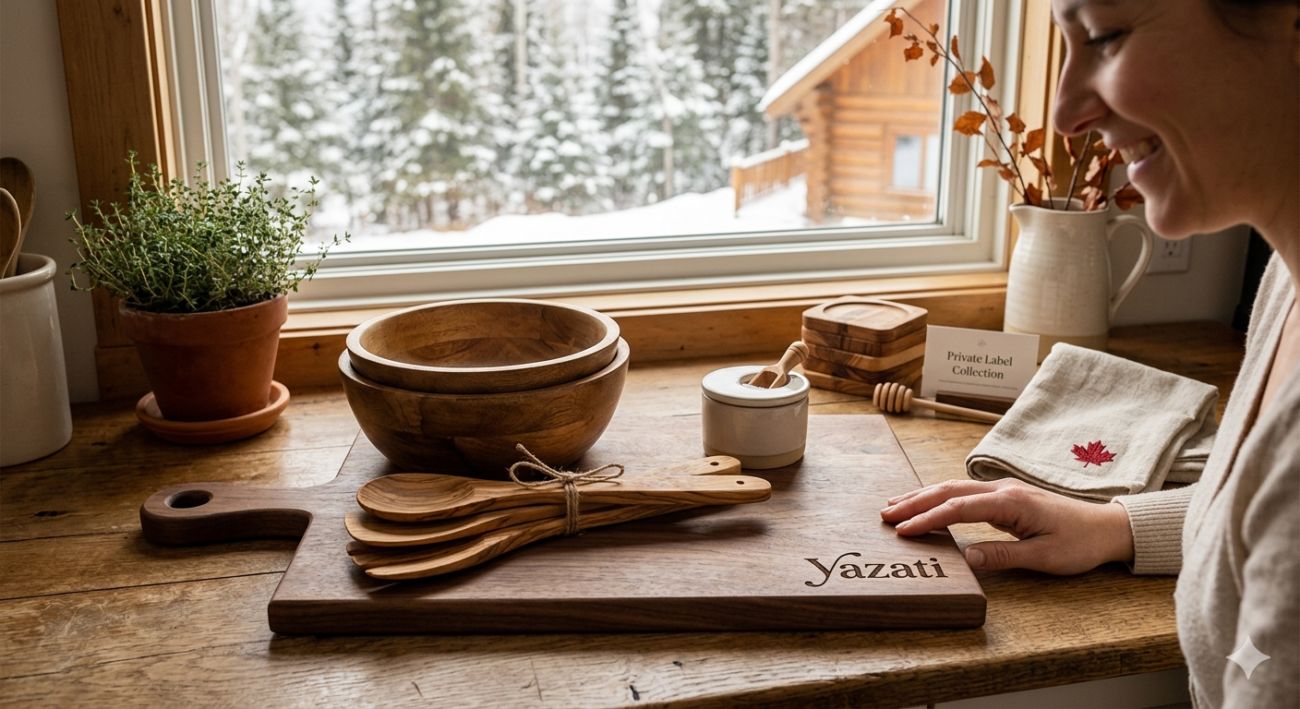
Introduction to Private Label Wooden Kitchen Products for Canada
The demand for eco-friendly kitchenware is growing rapidly across North America, and Canada is leading the trend. Consumers are becoming more conscious about sustainability, natural materials, and healthier alternatives to plastic products. This has created an excellent opportunity for entrepreneurs interested in Private Label Wooden Kitchen Products for Canada.
Private labeling allows businesses to sell products manufactured by another company under their own brand name. In the wooden kitchenware industry, this can include cutting boards, wooden spoons, serving trays, bowls, spice racks, and more.
With the rise of sustainable living and premium home décor trends, wooden kitchen products have evolved from simple household tools into stylish lifestyle products. Canadians appreciate high-quality craftsmanship, environmentally friendly materials, and aesthetically pleasing kitchen accessories.
This guide explores everything you need to know about building a successful private label wooden kitchenware business for the Canadian market.
Understanding the Canadian Wooden Kitchenware Market
Canada’s kitchenware industry has experienced strong growth over the last decade. Consumers are investing more in home cooking, kitchen décor, and sustainable household items.
Why Wooden Kitchen Products Are Growing in Popularity
Wooden kitchenware offers several benefits that appeal to modern buyers:
- Eco-friendly and biodegradable
- Durable and long-lasting
- Safe for cookware surfaces
- Attractive natural appearance
- Minimal chemical exposure
Unlike plastic utensils, wooden products do not release harmful substances into food when exposed to heat. This makes them especially attractive to health-conscious families.
Additionally, social media platforms like Instagram and Pinterest have increased interest in rustic and natural kitchen aesthetics. Wooden kitchen tools fit perfectly into farmhouse, Scandinavian, and minimalist interior designs.
Consumer Preferences in Canada
Canadian shoppers often prioritize:
- Sustainability
- Ethical sourcing
- Premium quality
- Handmade appearance
- Non-toxic finishes
- Local or environmentally responsible brands
Businesses entering the Canadian market should focus on transparency and eco-conscious branding.
Benefits of Starting a Private Label Wooden Kitchen Brand
Launching a private label brand comes with several advantages.
Higher Profit Margins
Private label products typically generate higher profits because you control pricing, branding, and positioning. Instead of competing only on price, you compete on value and customer experience.
For example, a basic wooden spoon may cost only a few dollars to manufacture but can sell for significantly more with premium branding and attractive packaging.
Brand Ownership and Customer Loyalty
Building your own brand helps create repeat customers. Once people trust your quality, they are more likely to purchase additional products from your collection.
Strong branding also increases business valuation if you eventually decide to sell the company.
Eco-Friendly Market Opportunities
Consumers actively seek sustainable products. Wooden kitchenware aligns perfectly with this trend.
Marketing messages can focus on:
- Reducing plastic waste
- Sustainable forestry
- Renewable materials
- Eco-conscious lifestyles
These themes resonate strongly with Canadian consumers.
Best Types of Wooden Kitchen Products for Canada
Choosing the right products is essential for success.
Wooden Cutting Boards
Cutting boards remain one of the most popular wooden kitchen products.
Popular styles include:
- End-grain cutting boards
- Charcuterie boards
- Personalized engraved boards
- Reversible chopping boards
Acacia, walnut, and maple are highly preferred due to durability and appearance.
Wooden Spoons and Utensils
Wooden utensils are practical and affordable, making them excellent entry-level products.
Popular items include:
- Spatulas
- Salad servers
- Mixing spoons
- Soup ladles
- Tongs
Many customers purchase these as gift sets.
Serving Trays and Bowls
Decorative serving products combine functionality with home décor appeal.
Trending products:
- Snack trays
- Serving platters
- Salad bowls
- Coffee trays
- Sushi serving boards
Rustic and handmade designs perform particularly well online.
Spice Racks and Organizers
Kitchen organization products are increasingly popular in Canada.
Examples:
- Countertop spice racks
- Drawer organizers
- Bamboo storage boxes
- Wall-mounted wooden shelves
These products appeal to both homeowners and apartment dwellers seeking efficient storage solutions.
Choosing the Right Wood Materials
Material selection directly impacts quality, pricing, and customer satisfaction.
Bamboo vs Hardwood
Bamboo is technically a grass but commonly used for kitchenware because it is:
- Renewable
- Lightweight
- Affordable
- Moisture-resistant
Hardwoods offer a more premium feel.
Maple, Walnut, and Acacia Wood
Maple
- Strong and durable
- Light-colored appearance
- Popular in Canada
Walnut
- Dark luxury finish
- Premium market appeal
- Higher price point
Acacia
- Water-resistant
- Rich grain patterns
- Excellent durability
Each material serves different customer segments.
Sustainability Certifications
Consumers increasingly look for certifications such as:
- FSC Certification
- Sustainable Forestry Initiative
- Eco-friendly packaging certifications
Displaying these certifications improves trust and credibility.
Finding Reliable Manufacturers for Private Label Wooden Kitchen Products for Canada
Supplier selection is one of the most important business decisions.
Domestic vs Overseas Manufacturing
Domestic Manufacturing
Advantages:
- Faster shipping
- Easier communication
- Better quality control
Disadvantages:
- Higher production costs
Overseas Manufacturing
Advantages:
- Lower costs
- Large-scale production
Disadvantages:
- Longer shipping times
- Potential quality inconsistencies
Many Canadian brands use overseas production while maintaining strict quality standards.
Evaluating Supplier Quality
Before selecting a manufacturer:
- Request product samples
- Review certifications
- Check factory audits
- Read customer reviews
- Verify communication responsiveness
Never skip sample testing.
MOQ and Pricing Strategies
MOQ stands for Minimum Order Quantity.
New businesses should negotiate lower MOQs to reduce inventory risk. As sales grow, larger orders can improve profit margins.
Branding and Packaging Strategies
Brand identity strongly influences buying decisions.
Creating a Premium Brand Identity
A strong wooden kitchenware brand should communicate:
- Quality craftsmanship
- Sustainability
- Natural beauty
- Functionality
Use earthy colors, clean logos, and minimalist packaging.
Sustainable Packaging Ideas
Eco-conscious packaging can include:
- Recycled cardboard
- Compostable inserts
- Soy-based inks
- Cloth storage bags
Avoid excessive plastic packaging whenever possible.
Logo Placement and Product Customization
Customization options include:
- Laser engraving
- Burned logos
- Custom gift packaging
- Personalized messaging
Personalized products perform exceptionally well during holidays and weddings.
Canadian Import Regulations and Compliance
Compliance is critical when selling kitchen products in Canada.
Product Safety Standards
Wooden kitchenware should:
- Use food-safe finishes
- Avoid toxic chemicals
- Meet Canadian consumer safety standards
Ensure suppliers provide testing documentation.
Labeling Requirements
Labels should include:
- Country of origin
- Material information
- Care instructions
- Brand details
Bilingual English and French labeling may be required in some cases.
Customs and Duties
Import duties vary depending on:
- Product category
- Country of origin
- Trade agreements
Working with a customs broker can simplify the process.
For official information, visit:
https://www.cbsa-asfc.gc.ca/
SEO and Digital Marketing Strategies
Marketing is essential for growing your brand.
Building an E-commerce Store
A professional website should include:
- High-quality product photography
- SEO product descriptions
- Mobile optimization
- Fast checkout systems
Platforms like Shopify work extremely well for kitchenware brands.
Amazon Canada and Etsy Opportunities
Selling on marketplaces expands visibility.
Amazon Canada
Best for:
- Large product catalogs
- Fast fulfillment
- High search traffic
Etsy
Best for:
- Handmade-style branding
- Personalized products
- Gift buyers
Many successful brands use both platforms simultaneously.
Social Media Marketing
Visual platforms perform best for kitchenware products.
Effective channels:
- TikTok
Content ideas include:
- Recipe videos
- Kitchen styling
- Product care tutorials
- Behind-the-scenes craftsmanship
Pricing Strategies for Maximum Profit
Pricing affects both sales volume and brand perception.
Wholesale Pricing
Wholesale customers usually expect:
- Bulk discounts
- Consistent supply
- Private packaging options
Wholesale partnerships can provide stable revenue.
Retail Pricing
Premium branding allows higher retail prices.
Factors influencing pricing:
- Material quality
- Packaging
- Product uniqueness
- Branding strength
Avoid competing only on low prices.
Bundle Offers and Upselling
Bundle strategies increase average order value.
Examples:
- Cutting board + knife set
- Spoon collection bundles
- Gift box collections
Upselling complementary products improves profitability.
Common Challenges and Solutions
Every business faces obstacles.
Shipping and Logistics
Wooden products can be bulky and expensive to ship.
Solutions:
- Use lightweight designs
- Optimize packaging dimensions
- Partner with fulfillment centers
Product Cracking or Warping
Wood reacts to moisture and temperature changes.
Prevention methods:
- Proper sealing
- Moisture control during storage
- Including care instructions
Competition from Low-Cost Sellers
Low-price competitors are common.
Differentiate through:
- Superior branding
- Better photography
- Sustainable positioning
- Exceptional customer service
Premium presentation often matters more than lowest pricing.
Future Trends in Wooden Kitchen Products
The industry continues evolving.
Personalized Kitchenware
Customization is becoming increasingly popular.
Consumers love:
- Name engravings
- Wedding gifts
- Custom recipes
- Personalized charcuterie boards
Sustainable Consumerism
Environmental awareness will continue driving demand.
Brands that prioritize sustainability will likely gain long-term customer loyalty.
Smart Kitchen Integration
Future wooden kitchen products may integrate:
- Digital recipe holders
- Smart storage systems
- Hybrid natural-tech designs
Innovation creates opportunities for differentiation.
Frequently Asked Questions
1. Are wooden kitchen products profitable in Canada?
Yes. Sustainable kitchenware has strong demand in Canada, especially among eco-conscious consumers seeking premium household products.
2. What is the best wood for kitchen utensils?
Acacia, maple, walnut, and bamboo are among the best materials because of their durability and food-safe properties.
3. Can I sell private label wooden products on Amazon Canada?
Absolutely. Amazon Canada is one of the best platforms for selling wooden kitchenware products.
4. Do wooden kitchen products require certifications?
Food-safe finishes and compliance with Canadian consumer safety regulations are important. Some businesses also use FSC certifications.
5. How much does it cost to start a private label kitchenware business?
Startup costs vary depending on inventory size, branding, packaging, and manufacturing source. Small businesses can often begin with moderate investments.
6. Which wooden kitchen products sell best online?
Cutting boards, wooden utensil sets, charcuterie boards, serving trays, and spice organizers consistently perform well.
Conclusion
The market for Private Label Wooden Kitchen Products for Canada continues to expand as consumers prioritize sustainability, premium quality, and stylish kitchen essentials. Entrepreneurs who focus on strong branding, eco-friendly materials, quality manufacturing, and effective digital marketing can build highly profitable businesses in this growing industry.
Success depends on understanding Canadian consumer preferences, maintaining high product standards, and creating a memorable brand experience. From cutting boards to serving trays, wooden kitchenware offers excellent opportunities for long-term growth.
Businesses that embrace sustainability, customization, and modern branding strategies will be well-positioned to thrive in the evolving Canadian marketplace.
✨ Discover Global Sourcing Excellence with Netyex ✨
Netyex is your trusted B2B sourcing partner, connecting international buyers with India’s finest manufacturers and curated product lines—from handicrafts and home décor to kitchenware, textiles, hospitality essentials, and more. With verified suppliers and end-to-end support, we make global procurement seamless, reliable, and efficient.
👉 Elevate your sourcing experience—explore Netyex today.
📦 Bulk orders & customisation | 🌍 Worldwide delivery | 🤝 Trusted by global buyers
Visit Netyex to source premium Indian products with confidence.