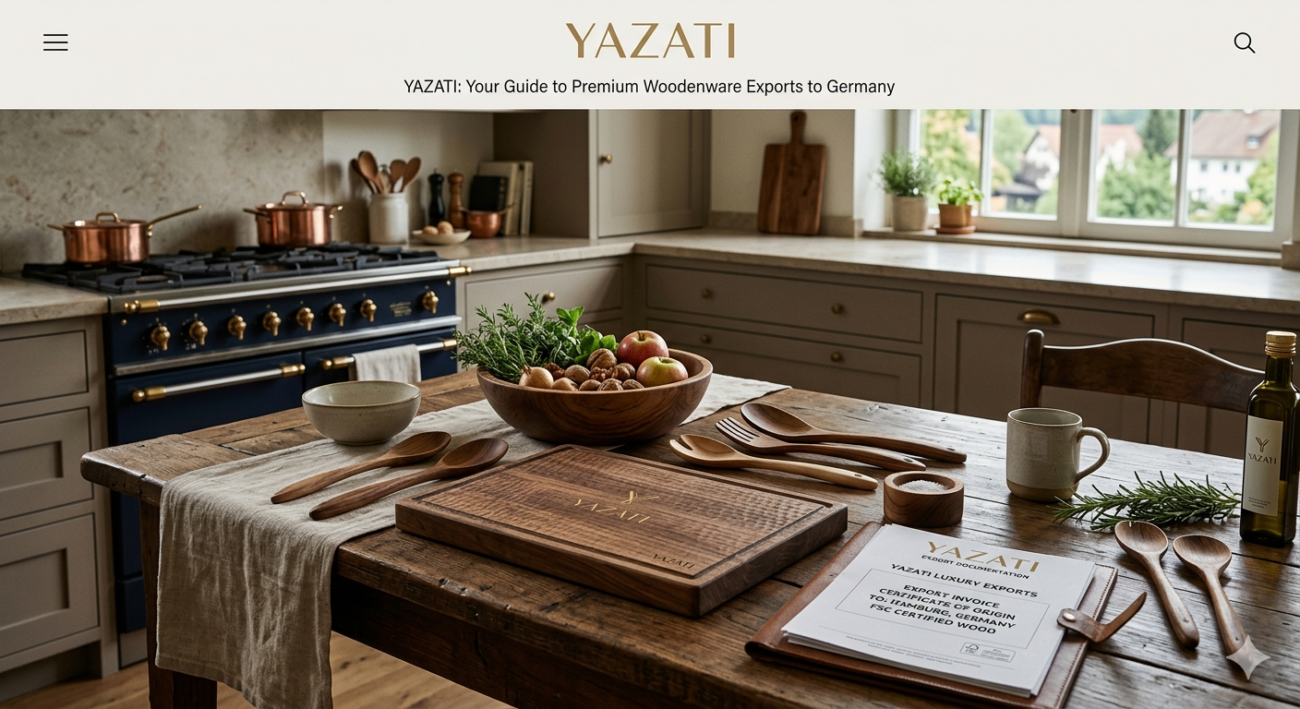
Exporting wooden kitchen products to Germany can be a profitable business opportunity for manufacturers and traders worldwide. Germany is one of Europe’s largest importers of eco-friendly kitchenware, including wooden spoons, chopping boards, trays, bowls, spatulas, and serving accessories. However, entering the German market requires accurate paperwork, strict compliance with European Union regulations, and proper shipping procedures.
Understanding Wooden Kitchenware Export Documentation for Germany is essential for avoiding customs delays, rejected shipments, and unexpected financial penalties. This guide explains every important document, regulation, and process needed to export wooden kitchenware successfully.
Introduction to Exporting Wooden Kitchenware to Germany
Germany has a strong demand for sustainable and environmentally friendly household products. Wooden kitchenware fits perfectly into this trend because consumers prefer natural materials over plastic alternatives.
Exporters from countries such as India, Vietnam, Indonesia, China, and Turkey often supply wooden kitchen products to German retailers, wholesalers, and online marketplaces. Still, exporters must meet detailed European import regulations before products can enter the market.
Proper documentation helps customs officials verify:
- Product origin
- Material safety
- Packaging standards
- Tax and duty obligations
- Environmental compliance
Without the correct export documents, shipments may face inspections, fines, or even destruction.
Understanding the German Market for Wooden Kitchenware
Why Germany Imports Wooden Kitchenware
Germany’s market favors:
- Sustainable products
- Handmade kitchenware
- Eco-conscious home accessories
- Organic lifestyle products
Many German consumers actively avoid plastic kitchen utensils due to environmental concerns. As a result, wooden kitchenware sales continue to grow in supermarkets, home décor stores, and eCommerce platforms.
According to the European Commission trade data, eco-friendly kitchen and dining products have experienced steady import growth across the EU. Exporters who meet compliance standards can benefit from long-term opportunities.
External Resource: European Commission Trade Helpdesk
Popular Wooden Kitchenware Products in Germany
Commonly exported items include:
- Wooden spoons
- Cutting boards
- Salad bowls
- Rolling pins
- Serving trays
- Spatulas
- Wooden coasters
- Mortar and pestles
Beechwood, bamboo, acacia, mango wood, and teak are among the most popular materials.
Key Export Regulations for Germany
European Union Import Standards
Germany follows European Union import regulations. Exporters must comply with EU standards related to:
- Product safety
- Food contact materials
- Timber legality
- Packaging waste
- Chemical restrictions
If your products come into contact with food, stricter safety requirements apply.
German Customs Compliance
German customs authorities require accurate declarations for:
- Product classification
- Shipment value
- Country of origin
- Weight and quantity
- Import duties
Incorrect declarations can result in customs penalties or shipment seizures.
Essential Wooden Kitchenware Export Documentation for Germany
The most critical part of Wooden Kitchenware Export Documentation for Germany is preparing complete and accurate paperwork.
Commercial Invoice
The commercial invoice is one of the most important export documents. It includes:
- Seller and buyer details
- Product description
- Quantity
- Unit price
- Total shipment value
- Currency used
- Incoterms
German customs uses the commercial invoice to calculate import taxes and duties.
Packing List
A packing list provides shipment details such as:
- Carton dimensions
- Gross and net weight
- Number of packages
- Product breakdown
This helps customs officers inspect shipments efficiently.
Bill of Lading or Airway Bill
The transport document depends on the shipping method:
- Bill of Lading (B/L) for sea freight
- Airway Bill (AWB) for air freight
These documents serve as:
- Proof of shipment
- Cargo ownership record
- Transportation agreement
Certificate of Origin
The certificate of origin confirms where the goods were manufactured. German customs may require this document to determine:
- Applicable tariffs
- Trade agreement benefits
- Import eligibility
Many chambers of commerce issue certificates of origin.
Fumigation Certificate
Wood products often require fumigation treatment to prevent pest contamination. A fumigation certificate proves the shipment has been treated according to international standards.
Germany may reject untreated wooden products due to biosecurity risks.
Phytosanitary Certificate
A phytosanitary certificate confirms the wood materials are free from harmful pests and diseases. It is usually issued by agricultural or plant protection authorities in the exporting country.
This certificate is particularly important for untreated wooden kitchenware.
Insurance Certificate
Cargo insurance protects shipments against:
- Damage
- Theft
- Loss during transportation
Many German importers request proof of insurance coverage before shipment.
Export License
Some countries require exporters to obtain export licenses for wood-based products. Requirements vary depending on:
- Wood species
- Country regulations
- Environmental restrictions
Always verify local export laws before shipping.
HS Codes for Wooden Kitchenware
Common HS Codes Used
HS codes help customs authorities classify imported goods. Common codes for wooden kitchenware include:
| Product | Example HS Code |
| Wooden kitchen utensils | 4419 |
| Wooden tableware | 4419.90 |
| Bamboo kitchenware | 1401 / 4419 |
| Wooden cutting boards | 4419 |
Using the wrong HS code can delay customs clearance.
Importance of Correct Classification
Correct HS classification ensures:
- Accurate duty calculation
- Faster customs processing
- Proper compliance
- Reduced legal risks
Consult a customs broker if unsure about product classification.
Packaging and Labeling Requirements
Eco-Friendly Packaging Rules
Germany has strict packaging waste laws under the German Packaging Act (VerpackG). Exporters may need to:
- Use recyclable packaging
- Reduce plastic waste
- Register packaging with German authorities
Eco-friendly packaging improves product appeal in Germany’s environmentally conscious market.
Product Labeling Standards
Labels should include:
- Product name
- Material type
- Country of origin
- Importer details
- Care instructions
Incorrect labeling can create customs problems or consumer complaints.
Food Safety and Product Compliance
EU Food Contact Material Regulations
Wooden kitchenware that touches food must comply with food safety standards. Products should not release harmful chemicals into food.
Manufacturers should maintain:
- Safety test reports
- Material declarations
- Compliance documentation
Chemical and Coating Restrictions
Germany and the EU restrict dangerous chemicals in:
- Paints
- Varnishes
- Adhesives
- Coatings
Exporters should avoid toxic substances such as:
- Heavy metals
- Harmful solvents
- Unsafe preservatives
Testing through certified laboratories is highly recommended.
Customs Clearance Process in Germany
Import Duties and VAT
German imports may face:
- Customs duties
- Import VAT
- Additional inspection fees
Duty rates depend on:
- HS code
- Product value
- Trade agreements
Import VAT in Germany generally applies to most commercial shipments.
Customs Inspection Procedures
German customs authorities may inspect shipments to verify:
- Product safety
- Documentation accuracy
- Packaging standards
- Pest control compliance
Incomplete paperwork often leads to shipment delays.
Shipping Methods for Wooden Kitchenware
Sea Freight vs Air Freight
| Shipping Method | Advantages | Disadvantages |
| Sea Freight | Lower cost for bulk shipments | Longer delivery time |
| Air Freight | Faster delivery | Higher shipping cost |
Sea freight is generally preferred for large wooden kitchenware shipments.
Choosing the Right Freight Forwarder
A reliable freight forwarder helps with:
- Documentation preparation
- Customs clearance
- Cargo tracking
- Shipping coordination
Experienced logistics partners reduce export risks significantly.
Common Export Challenges and Solutions
Documentation Errors
Incorrect paperwork is one of the biggest export problems. Common mistakes include:
- Wrong HS codes
- Missing certificates
- Invoice mismatches
- Incorrect shipment values
Solution:
- Double-check all documents
- Use digital record systems
- Work with export consultants
Delays in Customs Clearance
Delays may happen because of:
- Incomplete documents
- Inspection requests
- Packaging violations
- Product testing requirements
Solution:
- Submit documents early
- Maintain compliance records
- Communicate with importers regularly
Best Practices for Smooth Export Operations
Digital Documentation Management
Using digital systems helps exporters:
- Store certificates securely
- Track shipment records
- Reduce paperwork errors
- Improve communication
Cloud-based export management software can streamline operations.
Working with Compliance Experts
Professional customs brokers and trade consultants can help exporters:
- Understand EU regulations
- Avoid penalties
- Manage certifications
- Improve shipping efficiency
This investment often saves time and money.
Frequently Asked Questions
1. Is a phytosanitary certificate mandatory for wooden kitchenware exports to Germany?
In many cases, yes. Untreated wooden products may require phytosanitary certification to confirm they are free from pests and diseases.
2. What is the main HS code for wooden kitchenware?
The most common HS code category is 4419, which covers wooden tableware and kitchenware.
3. Does Germany require food safety testing for wooden utensils?
Yes. Wooden utensils that come into contact with food should comply with EU food contact material regulations.
4. Can bamboo kitchenware be exported under the same rules?
Bamboo products may follow similar regulations, but classification and phytosanitary requirements can differ depending on processing methods.
5. What happens if export documents are incomplete?
Incomplete documentation may cause customs delays, penalties, shipment rejection, or product destruction.
6. Is fumigation necessary for all wooden kitchenware shipments?
Not always. Requirements depend on the wood type, treatment method, and import regulations.
Conclusion
Exporting wooden kitchenware to Germany offers strong business opportunities, especially as consumers continue choosing eco-friendly kitchen products. However, success depends heavily on compliance, accurate paperwork, and proper shipment preparation.
Understanding Wooden Kitchenware Export Documentation for Germany helps exporters avoid customs problems, maintain buyer trust, and improve delivery efficiency. Key documents such as commercial invoices, packing lists, certificates of origin, phytosanitary certificates, and fumigation certificates are essential for smooth trade operations.
Exporters who focus on product quality, sustainable packaging, and regulatory compliance can build long-term relationships with German importers and grow successfully in the European market.
✨ Discover Global Sourcing Excellence with Netyex ✨
Netyex is your trusted B2B sourcing partner, connecting international buyers with India’s finest manufacturers and curated product lines—from handicrafts and home décor to kitchenware, textiles, hospitality essentials, and more. With verified suppliers and end-to-end support, we make global procurement seamless, reliable, and efficient.
👉 Elevate your sourcing experience—explore Netyex today.
📦 Bulk orders & customisation | 🌍 Worldwide delivery | 🤝 Trusted by global buyers
Visit Netyex to source premium Indian products with confidence.