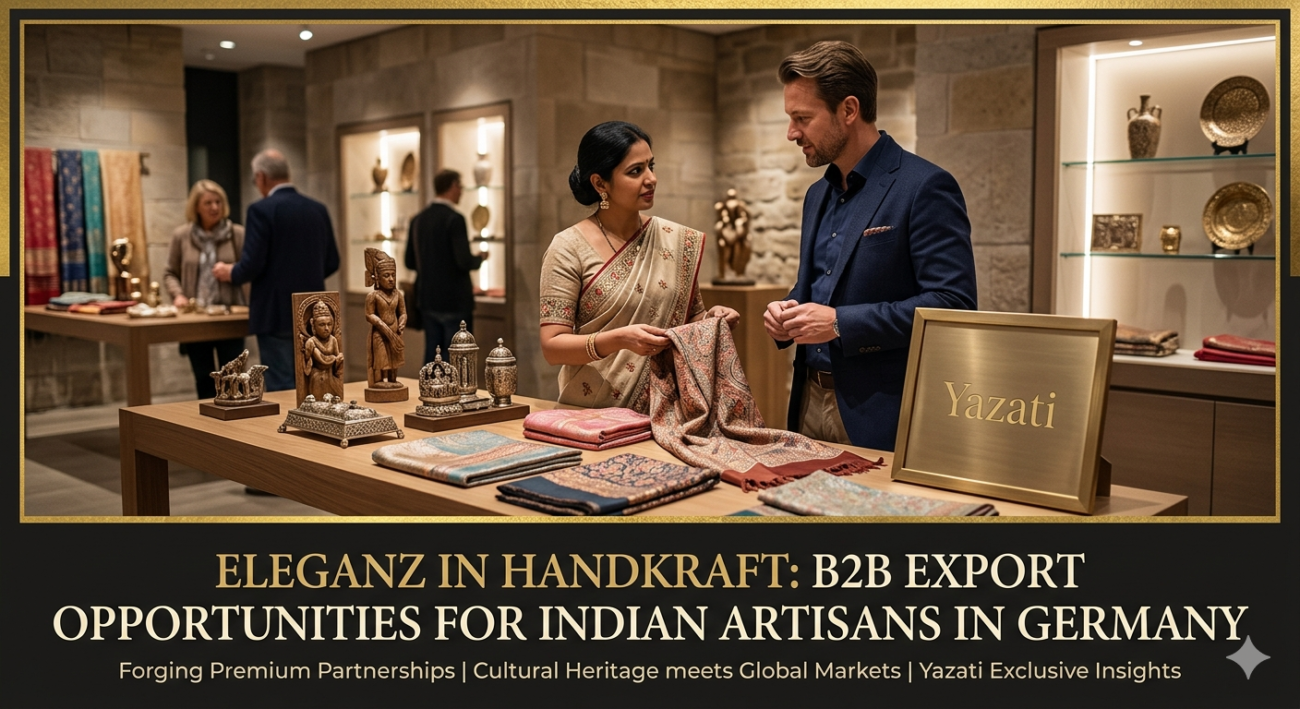
India has long been known for its rich heritage of handicrafts, textiles, handmade décor, jewelry, pottery, and artisanal craftsmanship. At the same time, Germany stands as one of Europe’s strongest economies with a growing market for sustainable, eco-friendly, and handmade products. Together, these trends create enormous B2B Export Opportunities for Indian Artisans in Germany.
German businesses, wholesalers, interior designers, lifestyle stores, and online retailers are actively looking for authentic handmade products that tell a story. Indian artisans possess the craftsmanship and cultural richness needed to meet this demand. From handcrafted wooden furniture to eco-friendly textiles and handmade jewelry, the possibilities are expanding every year.
This article explores the complete landscape of export opportunities, profitable sectors, challenges, strategies, and future trends for Indian artisans aiming to enter the German B2B market.
Understanding the German Market
Germany is one of Europe’s largest importers of handicrafts, sustainable goods, and artisan-made products. German consumers value quality, environmental responsibility, and authenticity. These preferences create excellent B2B Export Opportunities for Indian Artisans in Germany.
Businesses in Germany are increasingly sourcing products from India because Indian artisans offer:
- Handcrafted uniqueness
- Competitive pricing
- Sustainable production methods
- Cultural authenticity
- High-quality craftsmanship
The German market is especially attractive because buyers often establish long-term partnerships with reliable suppliers.
Why Germany Loves Handmade Products
German consumers are moving away from mass-produced items. They prefer products with:
- Handmade appeal
- Ethical sourcing
- Eco-friendly materials
- Cultural significance
- Durability
Indian handicrafts fit perfectly into these preferences. Handmade rugs, embroidered textiles, terracotta décor, brass products, and handwoven baskets are highly appreciated in Germany.
Additionally, minimalist interior design trends in Germany blend beautifully with Indian artisanal décor.
Market Size and Import Trends
Germany imports billions of euros worth of handicrafts and lifestyle products annually. Categories such as:
- Home décor
- Sustainable fashion
- Handmade furniture
- Organic textiles
- Recycled products
continue to grow rapidly.
Online retail expansion has also increased demand for unique imported products. German retailers are constantly searching for suppliers who can offer authenticity and scalability.
Top Product Categories in Demand
Handmade Home Décor
One of the biggest B2B Export Opportunities for Indian Artisans in Germany lies in the home décor segment.
Popular items include:
- Handmade lamps
- Wall hangings
- Ceramic vases
- Brass décor
- Wooden carvings
- Traditional Indian art pieces
German interior designers frequently seek handcrafted items that combine tradition with modern aesthetics.
Sustainable Textiles
Sustainability has become a major buying factor in Germany.
Indian artisans producing:
- Organic cotton products
- Handloom fabrics
- Natural dyes
- Block-printed textiles
- Recycled fabric products
have strong export potential.
Hotels, boutique stores, and eco-fashion brands in Germany are actively looking for ethical textile suppliers.
Handcrafted Jewelry
Handmade jewelry from India has gained popularity among German fashion retailers.
Trending styles include:
- Silver jewelry
- Beaded accessories
- Tribal designs
- Bohemian styles
- Gemstone jewelry
German buyers often prefer small-batch collections with artisan storytelling.
Wooden and Bamboo Products
Eco-conscious German consumers are replacing plastic products with natural alternatives.
High-demand products include:
- Bamboo kitchenware
- Wooden serving trays
- Handmade furniture
- Bamboo décor
- Eco-storage products
Indian artisans using sustainable raw materials can benefit significantly.
Eco-Friendly Lifestyle Goods
Germany’s environmentally conscious market strongly supports reusable and biodegradable products.
Examples include:
- Jute bags
- Handmade candles
- Coconut shell bowls
- Palm leaf products
- Recycled paper goods
These items perform well both online and in retail chains.
Benefits for Indian Artisans
Access to Premium Buyers
German importers often pay premium prices for quality handmade products. Buyers prioritize craftsmanship over cheap production.
This creates better income opportunities for Indian artisans.
Long-Term Business Partnerships
Unlike highly volatile markets, German businesses value consistency and reliability. Once trust is established, partnerships can continue for many years.
This stability benefits artisan communities and small exporters.
Higher Profit Margins
Because handmade products are perceived as premium goods, exporters can maintain healthier profit margins compared to mass-market products.
Artisan branding further increases product value.
Export Regulations and Compliance
Understanding export requirements is essential before entering the German market.
Product Certifications
German importers may require certifications such as:
- Fair Trade Certification
- Organic Certification
- FSC Certification for wood products
- REACH compliance for chemicals
Meeting these standards improves buyer confidence.
For official export guidance, visit the Government of India export portal:
https://www.dgft.gov.in/
Packaging Standards
German buyers prefer:
- Recyclable packaging
- Minimal plastic usage
- Clear labeling
- Eco-friendly materials
Professional packaging also reduces product damage during shipping.
Customs and Documentation
Essential export documents include:
| Document | Purpose |
| Commercial Invoice | Product details |
| Packing List | Shipment information |
| Bill of Lading | Transport documentation |
| Certificate of Origin | Product origin verification |
| IEC Code | Export registration |
Accurate paperwork prevents customs delays.
How to Find B2B Buyers in Germany
Trade Fairs
Trade fairs remain one of the best ways to connect with German buyers.
Popular fairs include:
- Ambiente Frankfurt
- Heimtextil
- Tendence
- Christmasworld
These events attract wholesalers, retailers, and sourcing companies.
Online B2B Marketplaces
Indian artisans can use platforms like:
- Alibaba
- IndiaMART
- Faire
- Global Sources
to showcase products globally.
Professional product photography and detailed catalogs improve conversion rates.
LinkedIn and Networking
LinkedIn has become an effective B2B networking tool.
Strategies include:
- Connecting with German importers
- Joining sourcing groups
- Sharing artisan stories
- Posting product updates
Relationship-building is highly important in German business culture.
Pricing Strategies for German Buyers
Competitive Pricing
Pricing should balance:
- Material costs
- Labor
- Shipping
- Packaging
- Import duties
German buyers appreciate transparent pricing structures.
Shipping Cost Considerations
Shipping costs significantly impact profitability.
Factors include:
- Air freight vs sea freight
- Product weight
- Packaging dimensions
- Insurance
Bulk shipping often lowers costs per unit.
Logistics and Shipping
Freight Options
Air Freight
Best for:
- Small shipments
- Urgent deliveries
- High-value products
Sea Freight
Best for:
- Large orders
- Furniture
- Bulk décor items
Sea freight is generally more economical.
Warehousing Solutions
Some exporters use European warehouses to improve delivery speed.
Benefits include:
- Faster shipping
- Better inventory management
- Easier returns handling
- Improved customer satisfaction
Germany’s central location also supports wider European distribution.
Digital Marketing for Export Growth
SEO and E-commerce
A professional website helps establish credibility.
Key SEO strategies include:
- Product-focused blogs
- German keyword optimization
- Export-focused landing pages
- Mobile-friendly design
Search visibility attracts international buyers organically.
Social Media Branding
Instagram and Pinterest are powerful platforms for showcasing handcrafted products.
Content ideas include:
- Behind-the-scenes artisan videos
- Craftsmanship stories
- Sustainability messaging
- Product styling inspiration
Visual storytelling increases perceived value.
Challenges Indian Exporters Face
Cultural Differences
German buyers value:
- Punctuality
- Precision
- Clear communication
- Consistency
Understanding these expectations improves relationships.
Quality Expectations
Germany maintains strict quality standards.
Common buyer expectations include:
- Consistent dimensions
- Durable materials
- Flawless finishing
- Timely delivery
Quality control systems are essential.
Delivery Delays
Shipping disruptions can damage trust.
Exporters should:
- Use reliable freight partners
- Build buffer timelines
- Communicate proactively
Transparency strengthens buyer confidence.
Government Support and Incentives
Export Promotion Councils
Indian artisans can receive support from organizations such as:
- EPCH (Export Promotion Council for Handicrafts)
- TEXPROCIL
- FIEO
These organizations assist with trade fairs, certifications, and export training.
MSME and Handicraft Schemes
Government schemes offer:
- Financial assistance
- Export subsidies
- Skill development
- Technology upgrades
Such programs help artisans compete globally.
Future Trends in German Imports
Sustainable Consumerism
Sustainability will continue driving purchasing decisions.
German consumers increasingly support:
- Handmade products
- Ethical sourcing
- Carbon-neutral production
- Circular economy products
Indian artisans are well-positioned for this shift.
Ethical Sourcing Demand
Buyers want transparency about:
- Worker conditions
- Material sourcing
- Environmental practices
Story-driven branding can significantly improve market appeal.
Frequently Asked Questions
1. What products have the highest export demand in Germany?
Handmade home décor, sustainable textiles, bamboo products, and handcrafted jewelry currently have strong demand.
2. Do Indian artisans need certifications to export to Germany?
Yes. Certifications such as Fair Trade, Organic, and FSC can improve market acceptance and buyer trust.
3. Is Germany a profitable market for handicraft exports?
Yes. German buyers often pay premium prices for authentic, high-quality handmade products.
4. How can Indian artisans find German buyers?
Trade fairs, B2B marketplaces, LinkedIn networking, and export councils are effective methods.
5. What are the biggest export challenges?
Quality consistency, logistics management, and compliance with European standards are major challenges.
6. Why are eco-friendly products popular in Germany?
German consumers strongly support sustainability and environmentally responsible purchasing.
Conclusion
The future of B2B Export Opportunities for Indian Artisans in Germany looks highly promising. Germany’s demand for sustainable, authentic, and handcrafted products aligns perfectly with India’s artisanal strengths.
By focusing on quality, ethical sourcing, professional branding, and export compliance, Indian artisans can build profitable long-term relationships with German buyers. As global consumers increasingly seek meaningful and environmentally responsible products, Indian craftsmanship holds a unique competitive advantage.
With proper planning, digital marketing, participation in trade fairs, and strong logistics management, Indian artisans can successfully expand into Germany and across the broader European market.
✨ Discover Global Sourcing Excellence with Netyex ✨
Netyex is your trusted B2B sourcing partner, connecting international buyers with India’s finest manufacturers and curated product lines—from handicrafts and home décor to kitchenware, textiles, hospitality essentials, and more. With verified suppliers and end-to-end support, we make global procurement seamless, reliable, and efficient.
👉 Elevate your sourcing experience—explore Netyex today.
📦 Bulk orders & customisation | 🌍 Worldwide delivery | 🤝 Trusted by global buyers
Visit Netyex to source premium Indian products with confidence.