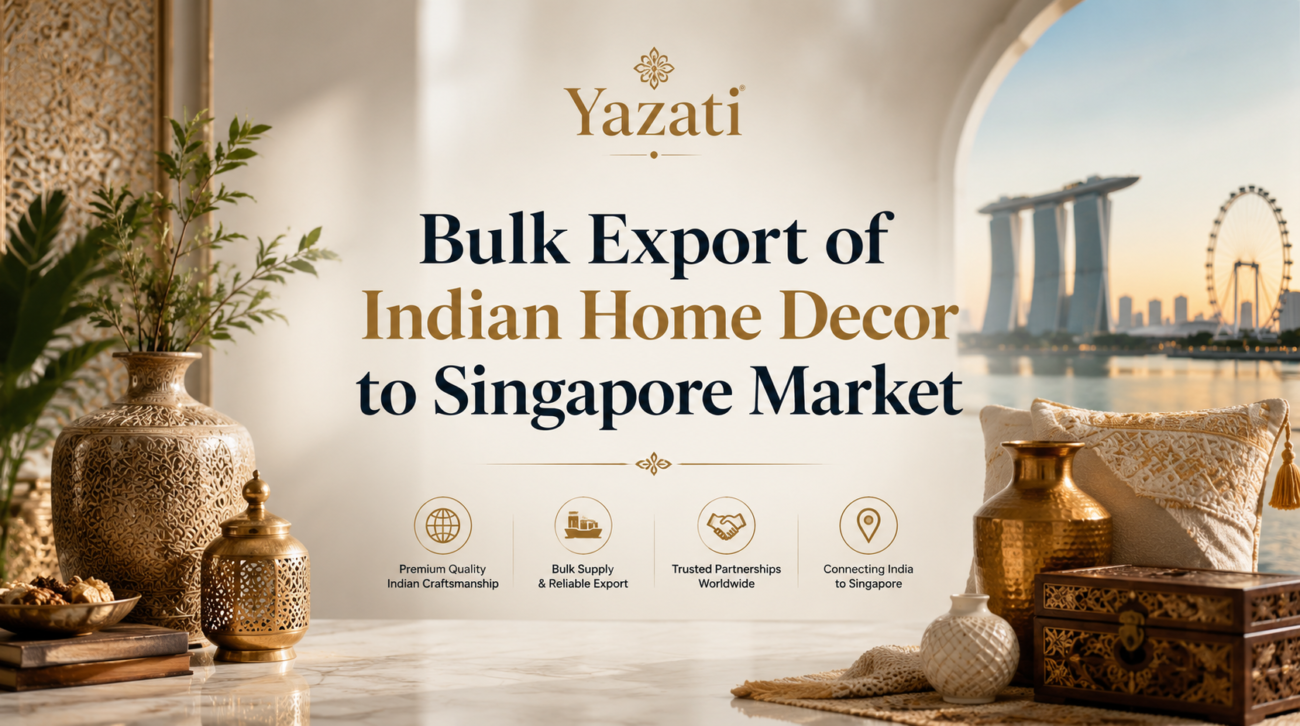
India’s home decor industry is booming, and Singapore has emerged as one of the most attractive destinations for exporters. With rising demand for handcrafted furniture, ethnic décor, sustainable products, and luxury interior accessories, the Bulk Export of Indian Home Decor to Singapore Market presents a profitable opportunity for manufacturers, wholesalers, and exporters.
Singapore consumers appreciate high-quality craftsmanship, modern aesthetics, and eco-friendly products—qualities that Indian home decor products naturally offer. From wooden handicrafts and brass items to textiles and wall art, Indian exporters can tap into a premium customer base willing to pay for unique designs.
In this comprehensive guide, you’ll learn everything about exporting Indian home decor products to Singapore in bulk, including market demand, product categories, export documentation, logistics, pricing strategies, and practical tips to build a successful export business.
Why Singapore Is a Lucrative Market for Indian Home Decor
Singapore is one of Asia’s strongest retail and lifestyle markets. The country has a high purchasing power, sophisticated consumers, and a growing interest in ethnic and artisanal decor products.
Key Reasons Singapore Imports Indian Home Decor
| Factor | Explanation |
| High Disposable Income | Consumers spend heavily on premium interior décor |
| Preference for Handcrafted Goods | Handmade Indian products attract buyers |
| Strong Hospitality Sector | Hotels and restaurants need decorative items |
| Multi-Cultural Population | Indian-inspired décor blends well culturally |
| E-Commerce Growth | Online decor shopping is rapidly increasing |
Indian exporters benefit from established trade relations and efficient shipping routes between India and Singapore.
Understanding the Singapore Home Decor Market
Before starting the Bulk Export of Indian Home Decor to Singapore Market, it is essential to understand local buying behavior and market trends.
Popular Home Decor Trends in Singapore
Minimalist Luxury
Singapore consumers prefer modern interiors with elegant decorative accents.
Eco-Friendly Products
Sustainable décor made from bamboo, reclaimed wood, jute, and recycled materials is in demand.
Handcrafted and Artisan Products
Handmade Indian décor products are viewed as premium and authentic.
Space-Saving Decor
Compact decorative furniture and multifunctional accessories perform well because apartments in Singapore are often smaller.
Smart and Functional Decor
Decorative products that also serve practical purposes attract urban buyers.
Top Indian Home Decor Products Exported to Singapore
The success of the Bulk Export of Indian Home Decor to Singapore Market depends greatly on selecting the right products.
1. Wooden Handicrafts
Indian wooden products are highly valued for their craftsmanship and durability.
Examples include:
- Carved wall panels
- Wooden trays
- Decorative boxes
- Console tables
- Wooden lamps
2. Brass and Metal Decor
Brass items from India are popular in luxury and ethnic interior settings.
Top-selling items:
- Candle holders
- Decorative bowls
- Figurines
- Temple décor
- Wall hangings
3. Textile-Based Home Decor
India is globally famous for textiles.
High-demand products include:
- Cushion covers
- Curtains
- Rugs
- Table runners
- Tapestries
4. Ceramic and Pottery Items
Hand-painted pottery and ceramic décor are gaining popularity in Singapore.
5. Eco-Friendly Decor Products
Sustainability-focused consumers prefer:
- Bamboo baskets
- Jute décor
- Cane furniture
- Recycled wood products
How to Start Bulk Export of Indian Home Decor to Singapore Market
Starting an export business requires proper planning and compliance.
Step 1: Register Your Business
You need:
- GST registration
- IEC (Import Export Code)
- MSME registration (optional but beneficial)
In India, the Directorate General of Foreign Trade (DGFT) issues IEC codes.
You can learn more at:
https://www.dgft.gov.in/
Step 2: Conduct Market Research
Identify:
- Product demand
- Competitor pricing
- Consumer preferences
- Retail trends
- Importers and wholesalers
Best Research Sources
- Singapore trade fairs
- B2B marketplaces
- Retail stores
- Import databases
Step 3: Find Buyers in Singapore
Finding reliable buyers is critical.
Potential Buyers Include
- Interior designers
- Retail chains
- Furniture stores
- Hotels
- E-commerce sellers
- Lifestyle boutiques
Popular B2B Platforms
| Platform | Purpose |
| Alibaba | International wholesale |
| IndiaMART | B2B leads |
| TradeIndia | Export inquiries |
| Global Sources | Asian buyers |
Documentation Required for Export
The Bulk Export of Indian Home Decor to Singapore Market requires several documents.
Essential Export Documents
| Document | Purpose |
| Commercial Invoice | Product billing |
| Packing List | Shipment details |
| Bill of Lading | Shipping proof |
| Certificate of Origin | Country verification |
| IEC Code | Export authorization |
| GST Documents | Tax compliance |
Failure to maintain accurate documentation can delay shipments.
Packaging Standards for Singapore Exports
Singapore buyers expect professional packaging.
Best Packaging Practices
Use Strong Cartons
Protect fragile products during transportation.
Eco-Friendly Packaging
Sustainable packaging improves brand perception.
Product Labeling
Labels should include:
- Product name
- Material
- Country of origin
- Care instructions
Moisture Protection
Humidity-resistant packaging is important during sea transport.
Shipping and Logistics for Singapore Exports
Efficient logistics directly impact profitability.
Shipping Methods
| Method | Best For |
| Sea Freight | Bulk shipments |
| Air Freight | Urgent deliveries |
Major Indian Export Ports
- Nhava Sheva
- Chennai Port
- Mundra Port
- Kolkata Port
Average Transit Time
| Mode | Estimated Time |
| Sea Freight | 7–15 days |
| Air Freight | 1–3 days |
Customs Regulations in Singapore
Singapore has a transparent import process.
Key Import Considerations
GST on Imports
Singapore may apply GST to imported products.
Restricted Materials
Certain wood products may require certifications.
Safety Standards
Decorative lighting and electronics must meet local standards.
Always verify regulations before shipment.
Pricing Strategy for Bulk Exports
Pricing is one of the most important factors in export success.
How to Calculate Export Pricing
Include:
- Manufacturing cost
- Packaging
- Freight charges
- Customs duties
- Insurance
- Profit margin
Sample Pricing Formula
Total Cost + Logistics + Taxes + Margin = Export Price
Competitive Pricing Tips
- Offer volume discounts
- Bundle products
- Reduce packaging weight
- Use efficient shipping methods
Challenges in Bulk Export of Indian Home Decor to Singapore Market
Every export business faces obstacles.
1. Competition
Chinese and Vietnamese suppliers offer competitive prices.
2. Quality Expectations
Singapore buyers expect premium finishing and consistency.
3. Logistics Delays
Shipping disruptions can impact delivery schedules.
4. Currency Fluctuations
Exchange rate changes may affect profits.
5. Compliance Requirements
Import regulations can change frequently.
How to Build a Strong Export Brand
Branding helps Indian exporters stand out.
Create a Professional Catalog
Include:
- Product photos
- Dimensions
- Material details
- MOQ information
Develop a Website
Your website should:
- Showcase products
- Include certifications
- Offer contact information
- Display export capabilities
Use Social Media
Platforms like Instagram and Pinterest work well for home décor promotion.
Digital Marketing Strategies for Exporters
Online visibility is essential in modern export business.
SEO Optimization
Target keywords such as:
- Indian home decor exporter
- Singapore home décor supplier
- handmade décor wholesale
Email Marketing
Send catalogs and offers to buyers regularly.
LinkedIn Networking
Connect with:
- Importers
- Retailers
- Interior designers
Online Advertising
Use:
- Google Ads
- Facebook Ads
- LinkedIn Ads
Benefits of Exporting Indian Home Decor to Singapore
The Bulk Export of Indian Home Decor to Singapore Market offers several advantages.
High Profit Margins
Premium products command better prices.
Growing Demand
Interior design trends support consistent demand.
Strong Bilateral Trade
India and Singapore maintain healthy trade relations.
Brand Expansion
Singapore acts as a gateway to Southeast Asia.
Role of Trade Fairs and Exhibitions
Trade shows help exporters find direct buyers.
Benefits of Participating
- Product showcasing
- Networking opportunities
- Market insights
- Buyer meetings
Popular Trade Events
| Event Type | Focus |
| Home Décor Expo | Interior products |
| Furniture Fairs | Home furnishings |
| Lifestyle Exhibitions | Premium décor |
Tips for Long-Term Export Success
Maintain Product Consistency
Quality control builds trust.
Offer Customization
Singapore buyers appreciate personalized products.
Focus on Timely Delivery
Reliable logistics improve repeat business.
Build Buyer Relationships
Strong communication increases long-term partnerships.
Stay Updated with Trends
Monitor changing consumer preferences regularly.
Future of Indian Home Decor Exports to Singapore
The future looks highly promising for Indian exporters.
Emerging Trends
Sustainable Living
Eco-conscious products will dominate demand.
Luxury Handcrafted Decor
Premium artisanal products are becoming more desirable.
Online Wholesale Expansion
Digital B2B trade is growing rapidly.
Fusion Designs
Modern designs with traditional Indian elements are gaining popularity.
Frequently Asked Questions (FAQs)
1. Is Singapore a good market for Indian home decor exports?
Yes, Singapore has strong demand for premium, handcrafted, and eco-friendly home decor products from India.
2. Which Indian home decor products sell best in Singapore?
Wooden handicrafts, brass décor, textiles, eco-friendly products, and ceramic items perform well.
3. What documents are required for exporting to Singapore?
You generally need an IEC code, invoice, packing list, bill of lading, and certificate of origin.
4. What is the best shipping method for bulk exports?
Sea freight is the most cost-effective option for large-volume shipments.
5. How can I find buyers in Singapore?
Use B2B platforms, trade fairs, LinkedIn networking, and direct outreach to retailers and wholesalers.
6. Are eco-friendly products popular in Singapore?
Yes, sustainable and environmentally friendly home decor products are increasingly popular.
Conclusion
The Bulk Export of Indian Home Decor to Singapore Market presents a highly profitable opportunity for Indian manufacturers and exporters. Singapore’s demand for premium handcrafted décor, eco-friendly products, and stylish interior accessories aligns perfectly with India’s strengths in craftsmanship and design.
Success in this market depends on:
- Selecting the right products
- Maintaining consistent quality
- Following export regulations
- Building strong buyer relationships
- Investing in branding and digital marketing
With proper planning and market understanding, Indian exporters can establish a strong presence in Singapore and expand further into Southeast Asia.
✨ Discover Global Sourcing Excellence with Netyex ✨
Netyex is your trusted B2B sourcing partner, connecting international buyers with India’s finest manufacturers and curated product lines—from handicrafts and home décor to kitchenware, textiles, hospitality essentials, and more. With verified suppliers and end-to-end support, we make global procurement seamless, reliable, and efficient.
👉 Elevate your sourcing experience—explore Netyex today.
📦 Bulk orders & customisation | 🌍 Worldwide delivery | 🤝 Trusted by global buyers
Visit Netyex to source premium Indian products with confidence.