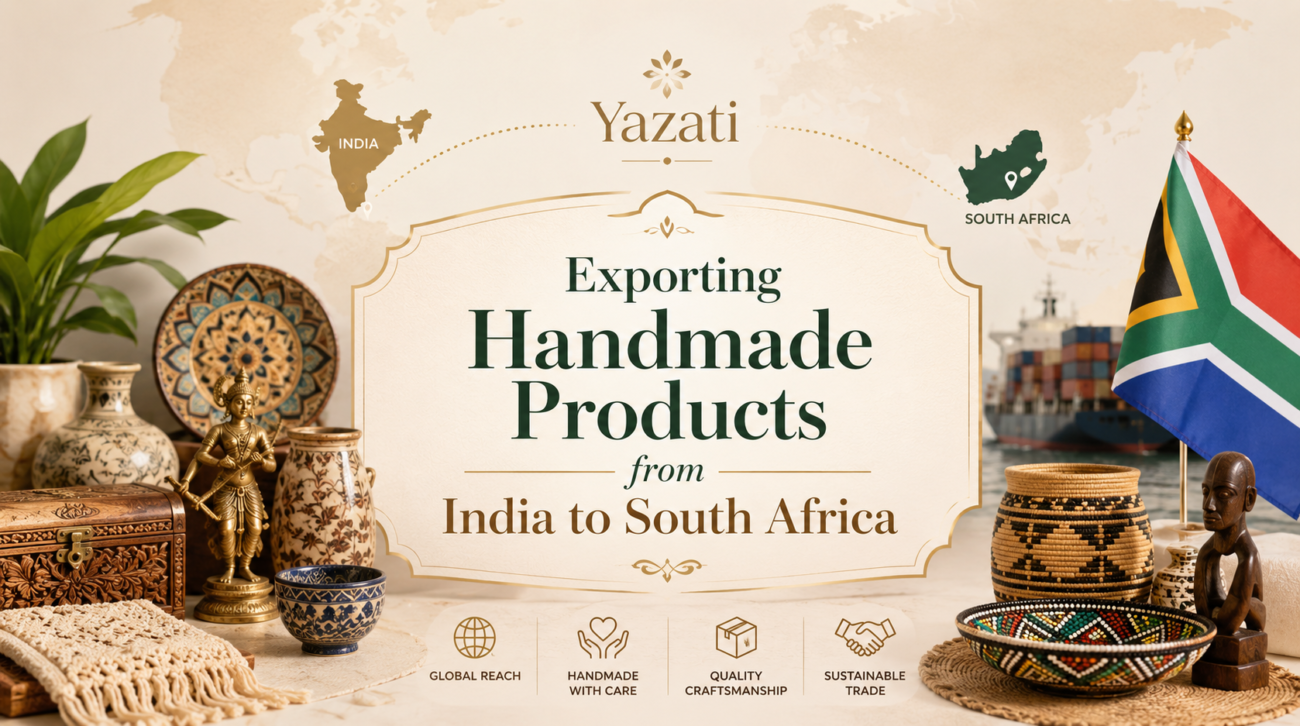
India has long been famous for its rich tradition of handmade products, colorful textiles, artistic décor, and skilled craftsmanship. Today, Exporting Handmade Products from India to South Africa has become a profitable opportunity for small businesses, artisans, and exporters looking to expand globally.
South Africa offers a growing market for authentic handmade goods because consumers increasingly prefer eco-friendly, unique, and culturally rich products. Indian handicrafts fit perfectly into this trend. Whether you sell jewelry, textiles, wooden artifacts, or home décor, the export industry can help your business achieve international success.
This guide explains everything you need to know about exporting handmade products successfully, from regulations and logistics to marketing and payment systems.
Introduction to the Handmade Export Industry
The handmade products industry in India contributes significantly to employment and economic growth. Millions of artisans across states like Rajasthan, Gujarat, Uttar Pradesh, and West Bengal create traditional goods that attract buyers worldwide.
The export market for handicrafts has expanded rapidly because customers now value:
- Sustainable products
- Handmade uniqueness
- Cultural authenticity
- Eco-friendly manufacturing
South Africa imports various handmade products for retail stores, gift shops, interior decoration businesses, and online marketplaces. As online shopping grows, the opportunity for Indian exporters continues to increase.
Why South Africa is a Strong Market for Indian Handmade Products
Growing Demand for Handmade Goods
Consumers in South Africa increasingly prefer handcrafted items over mass-produced products. Handmade items are considered premium because they carry artistic value and originality.
Several sectors contribute to this demand:
- Home decoration
- Fashion accessories
- Tourism retail
- Luxury gifting
Indian exporters can take advantage of this demand by offering high-quality handcrafted collections.
Cultural Appreciation for Indian Craftsmanship
South Africa has a multicultural population with strong appreciation for Indian traditions and designs. Indian communities in cities like Durban and Johannesburg also contribute to the popularity of Indian products.
Traditional embroidery, ethnic fabrics, brass décor, and handcrafted furniture often perform well in the South African market.
Popular Handmade Products Exported from India
Handmade Jewelry
Indian handmade jewelry is highly valued due to intricate designs and affordability. Popular categories include:
- Silver jewelry
- Beaded necklaces
- Tribal jewelry
- Kundan and meenakari designs
These products attract boutique stores and fashion retailers in South Africa.
Textiles and Fabrics
India is globally recognized for handcrafted textiles such as:
- Handloom sarees
- Cotton fabrics
- Silk scarves
- Embroidered cushion covers
- Block-printed materials
Textiles are among the most exported handmade goods because of their versatility and artistic appeal.
Wooden Handicrafts
Wood carving is a traditional Indian art form. Handmade wooden products exported to South Africa include:
- Decorative boxes
- Furniture
- Sculptures
- Kitchenware
Eco-conscious buyers especially appreciate sustainably sourced wooden products.
Home Décor and Artifacts
Indian home décor products remain highly popular internationally. Common exports include:
- Brass lamps
- Wall hangings
- Ceramic pottery
- Handmade candles
- Metal crafts
These products appeal to hotels, interior designers, and home furnishing retailers.
Leather and Eco-Friendly Products
Eco-friendly handmade bags, journals, and accessories are becoming popular because sustainability trends continue to grow globally.
Understanding Export Regulations in India
Before starting your export business, you must complete the legal requirements.
Import Export Code (IEC)
An Import Export Code issued by the Directorate General of Foreign Trade (DGFT) is mandatory for exports from India.
Without an IEC, businesses cannot legally export products internationally.
GST and Tax Requirements
Exporters must comply with Goods and Services Tax (GST) regulations. Fortunately, exports are generally considered zero-rated supplies under GST laws.
Maintaining proper invoices and records is essential for claiming tax benefits.
Export Documentation
Important export documents include:
- Commercial invoice
- Packing list
- Shipping bill
- Certificate of origin
- Bill of lading or airway bill
Accurate paperwork helps avoid customs delays.
South African Import Rules and Compliance
Understanding South African import laws is equally important.
Customs Duties
Imported products may face customs duties depending on product category and valuation. Exporters should check updated tariff rates before shipping.
Labeling and Packaging Standards
Products should clearly display:
- Country of origin
- Material information
- Care instructions
- Safety labels when necessary
Professional packaging improves brand perception and protects products during transit.
Restricted and Prohibited Items
Some materials or products may require special permits. Always verify South African import restrictions before shipping goods.
How to Find Buyers in South Africa
Finding reliable buyers is one of the most important steps in Exporting Handmade Products from India to South Africa.
B2B Marketplaces
Online wholesale platforms help exporters connect with international buyers. Popular marketplaces include:
- Alibaba
- IndiaMART
- TradeIndia
These platforms allow businesses to showcase product catalogs and negotiate directly with buyers.
For global trade information, visit the official WTO website:
https://www.wto.org/
Trade Fairs and Exhibitions
Participating in international exhibitions helps build trust and long-term partnerships.
Trade shows allow exporters to:
- Display product quality
- Understand market preferences
- Meet distributors and wholesalers
Social Media Marketing
Instagram, Facebook, and Pinterest work extremely well for handmade products because visuals drive customer interest.
High-quality photography and storytelling significantly improve sales opportunities.
Pricing Strategy for Handmade Exports
Pricing handmade products requires careful planning.
Calculating Production Costs
Include:
- Raw materials
- Labor
- Packaging
- Utilities
- Marketing expenses
Ignoring hidden costs can reduce profits.
Shipping and Insurance Expenses
International shipping costs can vary depending on:
- Weight
- Delivery speed
- Shipping method
- Insurance coverage
Always include these costs in final pricing calculations.
Competitive Pricing Techniques
Research competitors in South Africa to understand market pricing. Your pricing should reflect:
- Product uniqueness
- Handmade craftsmanship
- Material quality
Avoid underpricing because handmade goods deserve premium positioning.
Best Shipping Methods for Exporting Handmade Products
Air Freight vs Sea Freight
| Shipping Type | Advantages | Disadvantages |
| Air Freight | Fast delivery | Higher cost |
| Sea Freight | Lower cost for bulk orders | Longer transit time |
Small shipments often use air freight, while large orders benefit from sea freight.
Courier Services
International courier companies simplify small-scale exports. Popular services include:
- DHL
- FedEx
- UPS
These services provide tracking and customs assistance.
Packaging for Fragile Handmade Products
Proper packaging is critical for:
- Ceramics
- Glass items
- Wooden carvings
- Metal décor
Use bubble wrap, foam padding, and moisture-resistant materials for protection.
Payment Methods and Financial Security
Letters of Credit
Letters of Credit (LC) reduce financial risk because banks guarantee payment once shipment conditions are met.
PayPal and International Transfers
Smaller exporters may use:
- PayPal
- Wise
- SWIFT bank transfers
Always confirm payment security before dispatching goods.
Managing Currency Exchange Risks
Currency fluctuations can impact profits significantly. Exporters should monitor exchange rates regularly and consider forward contracts for large transactions.
Digital Marketing for Handmade Export Businesses
SEO for Export Websites
A professional website optimized for search engines increases visibility globally.
Important SEO practices include:
- Keyword optimization
- Mobile-friendly design
- Fast loading speed
- Product descriptions with export keywords
Email Marketing
Email campaigns help nurture relationships with international buyers. Share:
- Product updates
- Catalog launches
- Seasonal discounts
- Trade fair participation announcements
Influencer Collaborations
Collaborating with interior designers, fashion influencers, and décor bloggers helps increase brand awareness in South Africa.
Challenges in Exporting Handmade Products from India to South Africa
Logistics Delays
Shipping disruptions may occur due to:
- Port congestion
- Customs inspections
- Weather conditions
Planning ahead reduces risks.
Currency Fluctuations
Exchange rate instability can affect profitability. Exporters should maintain flexible pricing strategies.
Quality Control Issues
Consistency is essential in international trade. Buyers expect uniform product quality across every shipment.
Implement strict quality inspections before dispatch.
Government Support and Export Incentives
Export Promotion Councils
India offers multiple export support organizations that help businesses grow internationally.
Examples include:
- Export Promotion Council for Handicrafts (EPCH)
- Federation of Indian Export Organisations (FIEO)
Financial Assistance Schemes
Government initiatives may provide:
- Export subsidies
- Training programs
- Market development assistance
- Financial support for exhibitions
These programs encourage small businesses to enter global markets.
Sustainability and Ethical Export Practices
Sustainability is becoming a major purchasing factor worldwide. Buyers increasingly prefer:
- Eco-friendly packaging
- Fair-trade practices
- Natural materials
- Ethical labor standards
Businesses that promote sustainability often build stronger international reputations.
Future Trends in Handmade Product Exports
The future of handmade exports looks promising due to:
- Rising demand for sustainable products
- Growth of e-commerce
- Increased appreciation for artisanal craftsmanship
- Expansion of global online marketplaces
Artificial intelligence and digital tools are also helping exporters identify trends and target international customers more effectively.
Frequently Asked Questions
1. Is exporting handmade products from India profitable?
Yes, handmade exports can be highly profitable because international buyers often pay premium prices for authentic handcrafted goods.
2. Which handmade products sell best in South Africa?
Jewelry, textiles, home décor, wooden crafts, and eco-friendly accessories are among the most popular categories.
3. Do I need an Import Export Code to export from India?
Yes, an IEC is mandatory for legally exporting products from India.
4. What is the safest payment method for international exports?
Letters of Credit are generally considered one of the safest payment methods for exporters.
5. How can I find buyers in South Africa?
You can use B2B marketplaces, trade fairs, social media marketing, and networking through export councils.
6. What are the biggest challenges in exporting handmade products?
Common challenges include logistics delays, customs regulations, quality control, and currency fluctuations.
Conclusion
Exporting Handmade Products from India to South Africa presents an exciting opportunity for artisans, entrepreneurs, and small businesses looking to expand internationally. South Africa’s growing appreciation for handmade, sustainable, and culturally rich products creates strong demand for Indian handicrafts.
Success in the export industry depends on careful planning, compliance with regulations, smart marketing, reliable logistics, and consistent quality. Businesses that combine traditional craftsmanship with modern export strategies can build profitable long-term international ventures.
With the right approach, Indian handmade exporters can establish strong brands, increase global reach, and contribute to preserving India’s rich artistic heritage for future generations.
✨ Discover Global Sourcing Excellence with Netyex ✨
Netyex is your trusted B2B sourcing partner, connecting international buyers with India’s finest manufacturers and curated product lines—from handicrafts and home décor to kitchenware, textiles, hospitality essentials, and more. With verified suppliers and end-to-end support, we make global procurement seamless, reliable, and efficient.
👉 Elevate your sourcing experience—explore Netyex today.
📦 Bulk orders & customisation | 🌍 Worldwide delivery | 🤝 Trusted by global buyers
Visit Netyex to source premium Indian products with confidence.