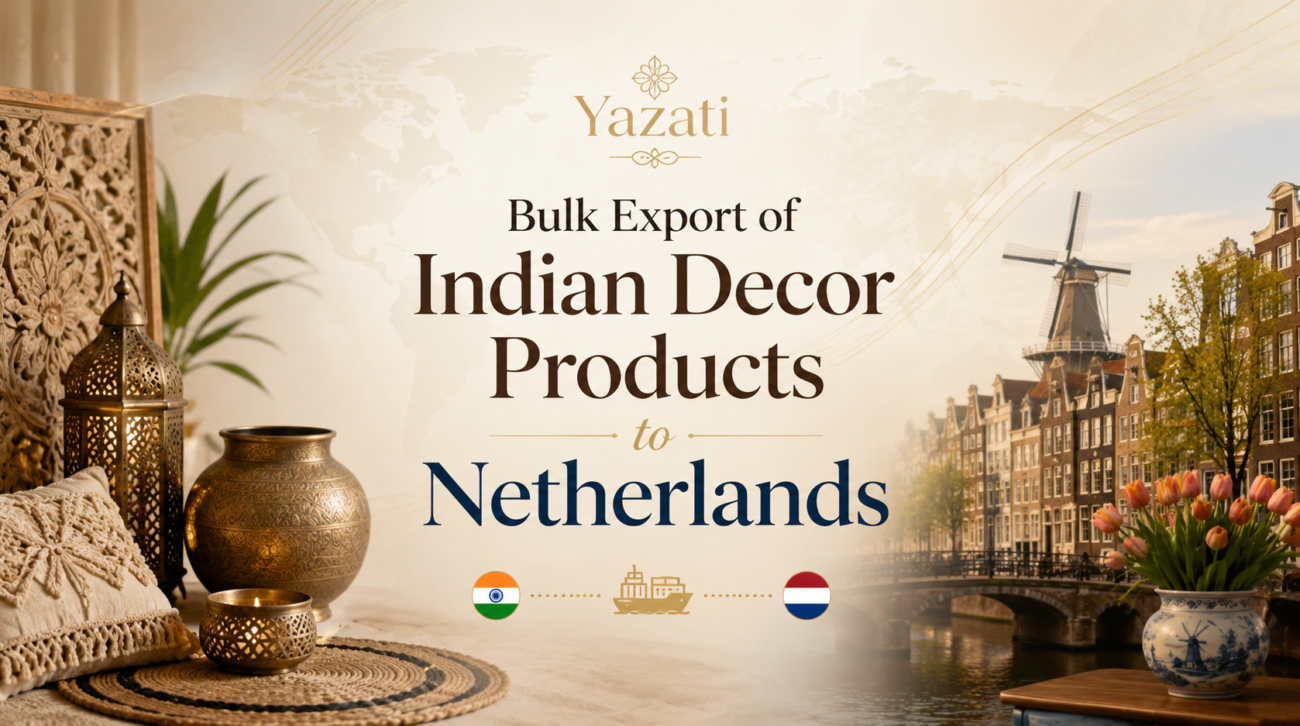
The Bulk Export of Indian Decor Products to Netherlands has become a highly profitable opportunity for Indian manufacturers, artisans, wholesalers, and export houses. Dutch consumers increasingly prefer handmade, eco-friendly, artistic, and culturally rich decor items, making Indian decor products a perfect fit for the European home styling market.
India has a long tradition of producing premium-quality handicrafts, wooden decor, brass artifacts, handwoven textiles, ceramics, and sustainable lifestyle products. Meanwhile, the Netherlands serves as an important gateway into Europe due to its advanced logistics infrastructure and thriving retail sector.
If you’re planning to enter this market, understanding regulations, pricing, shipping, and buyer preferences is essential. This detailed guide explains everything you need to know to succeed in exporting Indian decor products to the Netherlands in bulk.
Introduction to Bulk Export of Indian Decor Products to Netherlands
Exporting decor items from India to the Netherlands is more than simply shipping products overseas. It involves:
- Market research
- Product selection
- EU compliance
- Competitive pricing
- Reliable logistics
- Strategic marketing
The Netherlands imports large quantities of home decor and lifestyle products every year. Dutch buyers often look for:
- Sustainable products
- Handmade craftsmanship
- Ethnic aesthetics
- Fair-trade sourcing
- Unique artistic designs
Indian exporters can benefit greatly because Indian craftsmanship naturally aligns with these trends.
Why Indian Decor Products Are Popular in the Netherlands
Growing Demand for Handmade and Sustainable Decor
Dutch consumers increasingly value authenticity. Mass-produced products are losing appeal, while handcrafted products are becoming more desirable.
Indian artisans produce decor items using:
- Natural wood
- Bamboo
- Recycled metal
- Organic cotton
- Clay and terracotta
These materials fit perfectly into the European sustainability movement.
Many buyers in the Netherlands also prefer products with:
- Ethical sourcing
- Low environmental impact
- Traditional craftsmanship
- Handmade uniqueness
This creates a strong advantage for Indian exporters.
Dutch Consumer Preferences in Home Styling
Interior design trends in the Netherlands often focus on:
- Minimalism
- Natural textures
- Earth-tone colors
- Sustainable living
- Bohemian aesthetics
Indian decor complements these styles beautifully through:
- Carved wooden furniture
- Handmade cushions
- Brass lamps
- Woven rugs
- Decorative mirrors
- Terracotta planters
Best Indian Decor Products for Export
Wooden Handicrafts
Wooden decor items remain among the most exported Indian products.
Popular products include:
- Wall panels
- Carved trays
- Decorative boxes
- Console tables
- Photo frames
- Candle holders
Sheesham wood and mango wood products are particularly popular.
Brass and Metal Artifacts
Indian brass craftsmanship has global recognition.
High-demand products include:
- Brass figurines
- Lanterns
- Decorative bowls
- Candle stands
- Wall art
- Antique-style accessories
These products attract premium pricing in Europe.
Textile-Based Home Decor
Textile products offer excellent export margins.
Popular categories:
- Cushion covers
- Curtains
- Table runners
- Handwoven throws
- Cotton rugs
- Embroidered decor fabrics
Block-printed and handloom products perform especially well.
Ceramic and Terracotta Products
Eco-conscious consumers increasingly prefer handmade ceramics and terracotta.
Examples:
- Plant pots
- Decorative vases
- Dinnerware
- Wall decor
- Rustic table accessories
Eco-Friendly and Sustainable Decor
Sustainability is no longer optional in Europe.
Eco-friendly products gaining popularity:
- Jute baskets
- Bamboo decor
- Coconut shell crafts
- Recycled wood decor
- Natural fiber accessories
Understanding the Netherlands Market
Major Cities and Import Hubs
Important Dutch import and distribution centers include:
- Amsterdam
- Rotterdam
- Utrecht
- The Hague
- Eindhoven
The Port of Rotterdam is one of Europe’s largest shipping hubs, making logistics highly efficient.
Amsterdam is especially important for premium lifestyle retailers and design-focused buyers.
Popular Retail Channels
Decor products in the Netherlands are sold through:
- Interior boutiques
- Furniture stores
- Online marketplaces
- Lifestyle chains
- Garden centers
- Concept stores
E-commerce is growing rapidly, especially for sustainable products.
Seasonal Buying Trends
Peak buying seasons:
- Spring home collections
- Christmas decor season
- Summer garden decor
- Autumn interior refresh trends
Exporters should prepare inventory well in advance.
Legal Requirements for Exporting to the Netherlands
IEC Code and GST Registration
Indian exporters must obtain:
- Import Export Code (IEC)
- GST registration
- RCMC certificate (optional but beneficial)
These are mandatory for legal exports.
EU Product Compliance Standards
The European Union maintains strict standards.
Products may require:
- REACH compliance
- FSC certification (for wood)
- CE marking (certain products)
- Packaging regulations
- Chemical safety checks
Always verify product category regulations before shipping.
Useful export guidance can be found through Federation of Indian Export Organisations.
Packaging and Labeling Rules
Packaging should include:
- Country of origin
- Product description
- Material details
- Safety warnings
- Barcode labeling
Eco-friendly packaging is strongly preferred in Europe.
Pricing Strategy for Bulk Export
FOB vs CIF Pricing
Two common export pricing methods:
| Pricing Type | Meaning |
| FOB | Buyer pays shipping from Indian port onward |
| CIF | Seller includes shipping and insurance |
Most new exporters begin with FOB pricing.
Currency and Payment Terms
Common payment methods:
- Letter of Credit (LC)
- Advance payment
- Documents against Payment (D/P)
- Wire transfer
Euro pricing helps attract Dutch buyers.
Calculating Export Margins
Include:
- Production cost
- Packaging
- Inland transport
- Port charges
- Freight
- Duties
- Marketing expenses
Proper costing prevents losses.
Shipping and Logistics for Decor Exports
Sea Freight vs Air Freight
| Method | Best For |
| Sea Freight | Bulk shipments |
| Air Freight | Urgent small orders |
Sea freight is most economical for decor exports.
Choosing the Right Freight Forwarder
A reliable logistics partner helps with:
- Customs clearance
- Documentation
- Cargo tracking
- Warehousing
- Insurance
Experience with EU shipments is important.
Insurance and Customs Clearance
Marine insurance protects against:
- Damage
- Theft
- Transit loss
Always ensure proper HS codes are used during customs filing.
Finding Buyers in the Netherlands
Online B2B Platforms
Popular export marketplaces:
- Alibaba
- IndiaMART
- TradeIndia
- Global Sources
Professional catalogs improve buyer trust.
Trade Fairs and Exhibitions
Important European trade fairs:
- Ambiente Germany
- Maison & Objet Paris
- Dutch lifestyle exhibitions
Trade shows help build wholesale partnerships.
Building Long-Term Partnerships
Dutch buyers value:
- Reliability
- Consistent quality
- Transparent communication
- Timely delivery
Long-term trust leads to recurring bulk orders.
Marketing Strategies for Indian Decor Exporters
Digital Catalogs and Product Photography
Professional product photography is essential.
Your catalog should include:
- Dimensions
- Material details
- MOQ
- Packaging specifications
- Pricing tiers
Social Media and LinkedIn Outreach
Platforms useful for B2B marketing:
Pinterest works especially well for decor inspiration.
Website SEO for Export Businesses
Your website should target keywords like:
- Indian handicraft exporter
- Wholesale home decor supplier
- Sustainable decor manufacturer India
An SEO-friendly website helps attract international buyers organically.
For export-related information, visit
Common Challenges in Bulk Export of Indian Decor Products to Netherlands
Quality Control Issues
Bulk orders require consistency.
Use:
- Product inspections
- Sample approvals
- Packaging checks
- Moisture testing for wood
Shipping Delays
Global shipping disruptions can affect timelines.
Maintain:
- Buffer inventory
- Backup logistics providers
- Early production schedules
Competition from Other Countries
Major competitors include:
- China
- Vietnam
- Indonesia
- Turkey
Indian exporters should emphasize:
- Handmade quality
- Sustainability
- Cultural craftsmanship
Tips to Scale Your Export Business
Diversifying Product Collections
Offer:
- Seasonal collections
- Modern fusion decor
- Eco-friendly ranges
- Luxury handmade collections
Creating Private Label Opportunities
Many Dutch retailers prefer private labeling.
Benefits include:
- Larger orders
- Long-term contracts
- Higher profit margins
Using Sustainable Packaging
Eco-packaging enhances brand image and supports EU sustainability goals.
Popular materials:
- Recycled cardboard
- Kraft paper
- Biodegradable fillers
Future Opportunities in Dutch Home Decor Imports
The future looks highly promising for Indian exporters.
Emerging trends:
- Sustainable living
- Artisan-made products
- Ethical sourcing
- Natural materials
- Small-batch luxury decor
The Netherlands continues to act as a gateway to the wider European Union market, creating even bigger opportunities for Indian decor exporters.
Frequently Asked Questions
1. Which Indian decor products sell best in the Netherlands?
Wooden handicrafts, brass decor, textiles, eco-friendly products, and handmade ceramics are highly popular.
2. Is CE certification mandatory for decor products?
Not all decor products require CE marking, but certain electrical or functional items may need it.
3. What is the best shipping method for bulk exports?
Sea freight is usually the most cost-effective option for large shipments.
4. Do Dutch buyers prefer sustainable products?
Yes. Sustainability is a major purchasing factor in the Netherlands.
5. Can small businesses export decor products to Europe?
Absolutely. Small exporters can begin with smaller MOQs and scale gradually.
6. How can I find buyers in the Netherlands?
You can use B2B marketplaces, trade fairs, LinkedIn outreach, and SEO-optimized websites.
Conclusion
The Bulk Export of Indian Decor Products to Netherlands offers tremendous growth potential for Indian exporters. Dutch consumers appreciate authentic craftsmanship, sustainable sourcing, and artistic home decor — all strengths of Indian manufacturing and handicraft traditions.
Success depends on:
- Understanding EU regulations
- Maintaining high product quality
- Building reliable logistics systems
- Developing strong buyer relationships
- Investing in digital marketing
With the right strategy, Indian exporters can establish profitable and long-lasting partnerships in the Dutch home decor market.
✨ Discover Global Sourcing Excellence with Netyex ✨
Netyex is your trusted B2B sourcing partner, connecting international buyers with India’s finest manufacturers and curated product lines—from handicrafts and home décor to kitchenware, textiles, hospitality essentials, and more. With verified suppliers and end-to-end support, we make global procurement seamless, reliable, and efficient.
👉 Elevate your sourcing experience—explore Netyex today.
📦 Bulk orders & customisation | 🌍 Worldwide delivery | 🤝 Trusted by global buyers
Visit Netyex to source premium Indian products with confidence.