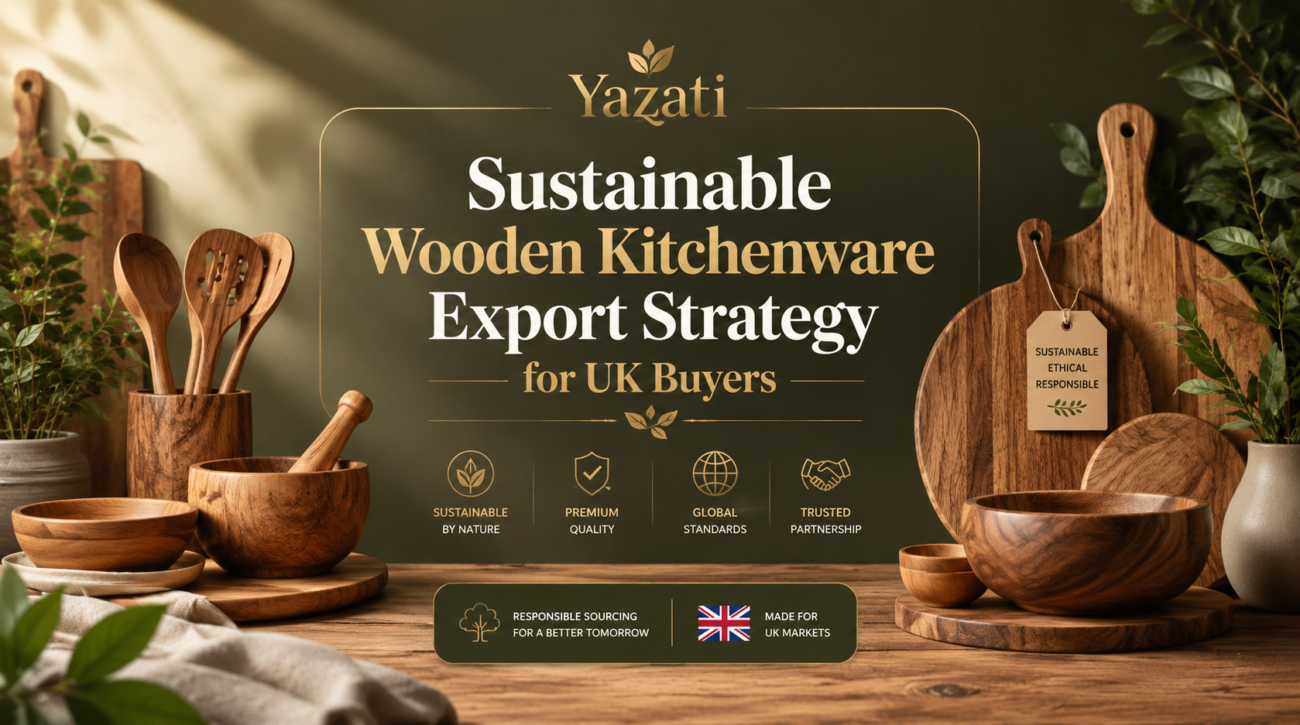
The global demand for eco-friendly kitchen products is growing rapidly, and the United Kingdom has become one of the strongest markets for sustainable home goods. Businesses that develop a strong Sustainable Wooden Kitchenware Export Strategy for UK Buyers can benefit from rising consumer awareness, premium product pricing, and long-term partnerships with environmentally conscious retailers.
Wooden kitchenware products such as spoons, cutting boards, bowls, trays, and serving utensils are no longer seen as simple household tools. In the UK market, they represent sustainability, craftsmanship, healthy living, and ethical purchasing habits.
For exporters, this creates a major opportunity. However, entering the UK market successfully requires more than manufacturing beautiful wooden products. Exporters must understand buyer expectations, legal compliance, logistics, branding, sustainability standards, and digital marketing strategies.
This comprehensive guide explains how to create a successful export strategy that aligns with UK market trends and buyer preferences.
Understanding the UK Market for Sustainable Wooden Kitchenware
Why UK Consumers Prefer Eco-Friendly Kitchen Products
UK consumers are becoming increasingly eco-conscious. Many households now prefer products that reduce plastic waste and support sustainable living. Wooden kitchenware fits perfectly into this trend because it is biodegradable, reusable, durable, and aesthetically appealing.
Consumers in cities such as London, Manchester, Birmingham, and Edinburgh actively seek sustainable kitchen accessories that complement modern home décor while supporting environmental values.
Several factors influence purchasing decisions in the UK:
- Reduced environmental impact
- Natural and non-toxic materials
- Ethical sourcing
- Handmade craftsmanship
- Minimal packaging waste
- Long-lasting durability
As a result, sustainable wooden kitchenware products often command higher prices than plastic alternatives.
Growth Trends in Sustainable Kitchenware Imports
The UK homeware market continues to grow due to rising demand for sustainable consumer goods. Importers and retailers are expanding their eco-friendly product lines to attract environmentally conscious shoppers.
Online marketplaces and retail chains now prioritize products with sustainability certifications. Buyers also prefer suppliers who can demonstrate transparent sourcing and environmentally responsible production practices.
According to sustainability-focused retail trends, wooden kitchenware exports are expected to continue growing as governments and consumers push for reduced plastic usage.
Benefits of Exporting Sustainable Wooden Kitchenware to the UK
Rising Demand for Ethical Home Products
The ethical consumer market in the UK has expanded significantly. Consumers increasingly support businesses that focus on sustainability and fair trade practices.
Wooden kitchenware products are especially attractive because they combine:
- Functionality
- Eco-friendliness
- Natural beauty
- Health-conscious materials
Exporters who position their products correctly can attract premium buyers and specialty retailers.
Opportunities for Emerging Exporters
Small and medium-sized exporters can compete effectively in the UK market by offering:
- Handmade craftsmanship
- Sustainable sourcing
- Unique designs
- Custom branding
- Small-batch manufacturing
Unlike mass-produced plastic kitchen tools, sustainable wooden products often succeed through authenticity and storytelling.
Key Types of Sustainable Wooden Kitchenware in Demand
Wooden Spoons and Spatulas
Wooden cooking utensils remain among the most popular kitchen products in the UK. Buyers appreciate them because they are:
- Safe for non-stick cookware
- Heat resistant
- Durable
- Natural-looking
Popular products include:
- Cooking spoons
- Salad servers
- Spatulas
- Honey dippers
- Ladles
Cutting Boards and Serving Trays
Wooden cutting boards and serving trays are highly desirable in premium kitchenware markets.
Consumers value these products for both functionality and decorative appeal. Many UK buyers prefer rustic, handcrafted styles with natural finishes.
Customization options such as laser engraving and personalized branding can significantly increase product value.
Bowls, Plates, and Utensils
Eco-friendly dining products are becoming increasingly popular as consumers move away from disposable plastics.
Sustainable wooden bowls and plates appeal to customers seeking minimalist and environmentally friendly lifestyles.
Choosing Sustainable Wood Materials
Bamboo vs Hardwood
Selecting the right material is critical when developing a Sustainable Wooden Kitchenware Export Strategy for UK Buyers.
Bamboo Advantages
- Fast-growing renewable resource
- Lightweight
- Water resistant
- Affordable
Hardwood Advantages
- Greater durability
- Premium appearance
- Long lifespan
- Better carving detail
Common hardwood choices include:
- Acacia
- Teak
- Maple
- Beechwood
- Olive wood
FSC-Certified Wood Importance
UK buyers increasingly request FSC certification. The Forest Stewardship Council (FSC) ensures that wood comes from responsibly managed forests.
Benefits of FSC certification include:
- Improved buyer trust
- Access to premium retailers
- Stronger sustainability branding
- Better export credibility
Learn more about FSC certification at
UK Import Regulations and Compliance Standards
Food Safety Standards
Kitchenware products that contact food must comply with UK food safety standards.
Exporters should ensure products are:
- Free from toxic coatings
- Properly treated
- Hygienically manufactured
- Tested for food safety compliance
Documentation often requested by buyers includes:
- Material safety declarations
- Product testing reports
- Compliance certificates
Packaging and Labeling Requirements
UK importers also pay close attention to packaging sustainability.
Preferred packaging materials include:
- Recycled cardboard
- Compostable wrapping
- Soy-based inks
- Plastic-free packaging
Labels should clearly mention:
- Product origin
- Material type
- Care instructions
- Sustainability certifications
Building a Strong Sustainable Wooden Kitchenware Export Strategy for UK Buyers
Product Positioning
Exporters must carefully position their products in the market.
There are several profitable positioning strategies:
| Strategy | Target Buyer |
| Premium Handmade Products | Luxury retailers |
| Eco-Friendly Essentials | Mass-market eco stores |
| Rustic Farmhouse Style | Home décor retailers |
| Modern Minimalist Design | Urban lifestyle brands |
Clear positioning helps buyers understand product value immediately.
Sustainability Storytelling
Modern UK buyers want more than products—they want stories.
Your brand story should explain:
- Where the wood comes from
- How artisans produce items
- Environmental benefits
- Community impact
- Ethical manufacturing practices
Strong storytelling creates emotional connections and increases customer loyalty.
Competitive Pricing Strategy
Pricing should balance:
- Product quality
- Shipping costs
- Import duties
- Retail margins
- Market positioning
Avoid competing only on price. Instead, focus on:
- Quality
- Sustainability
- Design uniqueness
- Certifications
- Brand value
Branding and Packaging Techniques
Eco-Friendly Packaging Solutions
Sustainable packaging strengthens your brand image.
Popular packaging options include:
- Kraft paper wraps
- Recycled paper tags
- Cloth bags
- Compostable boxes
Minimalist packaging designs are particularly popular among UK eco-conscious consumers.
Private Label Opportunities
Many UK retailers seek private-label manufacturers for wooden kitchenware.
Benefits of private labeling include:
- Long-term contracts
- Larger order volumes
- Brand partnerships
- Stable revenue streams
Exporters should offer:
- Flexible MOQ options
- Custom engraving
- Packaging customization
- Product development support
Logistics and Shipping Best Practices
Freight Options
The most common shipping methods include:
Sea Freight
Best for:
- Large orders
- Lower shipping costs
- Bulk containers
Air Freight
Best for:
- Small urgent shipments
- Sample orders
- Premium buyers
Reducing Carbon Footprint During Transportation
Sustainability-conscious buyers appreciate exporters who reduce transportation emissions.
Strategies include:
- Consolidated shipping
- Recyclable shipping materials
- Efficient container usage
- Carbon offset programs
Finding UK Buyers and Distributors
Online B2B Platforms
Exporters can connect with UK buyers using:
- Alibaba
- Faire
- Global Sources
- TradeIndia
- Europages
Strong product photography and professional catalogs are essential.
Trade Shows and Networking
Trade exhibitions help exporters establish relationships with importers and retailers.
Popular UK trade events include:
- Spring Fair Birmingham
- Top Drawer London
- Ambiente (Europe-wide relevance)
Trade shows allow exporters to:
- Showcase craftsmanship
- Understand market trends
- Meet distributors directly
Digital Marketing for Export Growth
SEO and Content Marketing
A strong online presence is essential for export success.
Your website should include:
- Product catalogs
- Sustainability information
- Certifications
- Buyer testimonials
- Export capabilities
SEO strategies should target keywords like:
- Eco-friendly kitchenware supplier
- Sustainable wooden utensils exporter
- Wooden kitchenware wholesale UK
Social Media Promotion
Instagram and Pinterest perform exceptionally well for wooden kitchenware products because they are highly visual platforms.
Content ideas include:
- Product demonstrations
- Kitchen styling
- Sustainability tips
- Artisan stories
- Manufacturing videos
Common Challenges and Solutions
Managing Compliance Costs
Certifications and testing can be expensive for small exporters.
Solutions include:
- Starting with core certifications
- Partnering with compliance consultants
- Scaling certifications gradually
Competing with Low-Cost Suppliers
Many exporters compete primarily on price, but UK buyers increasingly value quality and sustainability over the cheapest option.
Focus on:
- Superior craftsmanship
- Ethical sourcing
- Product uniqueness
- Branding
- Customer service
Future Trends in Sustainable Wooden Kitchenware
Smart Eco-Friendly Products
Future innovations may include:
- Multi-functional utensils
- Ergonomic designs
- Heat-resistant eco coatings
- Hybrid sustainable materials
Circular Economy Practices
The circular economy model encourages:
- Reusable products
- Repairability
- Recyclability
- Waste reduction
Exporters aligning with circular economy principles will likely gain stronger long-term market advantages.
FAQs
What makes wooden kitchenware sustainable?
Wooden kitchenware is sustainable when made from responsibly sourced wood, produced ethically, and designed for long-term reusable use.
Why do UK buyers prefer wooden kitchenware?
UK buyers value wooden kitchenware because it is eco-friendly, durable, aesthetically pleasing, and safer for non-stick cookware.
Which wood is best for kitchenware exports?
Popular choices include bamboo, acacia, teak, olive wood, maple, and beechwood due to their durability and natural appearance.
Do UK importers require FSC certification?
Many UK buyers prefer FSC-certified products because the certification confirms responsible forest management practices.
How can exporters find UK kitchenware buyers?
Exporters can use B2B marketplaces, trade fairs, LinkedIn networking, and direct outreach to eco-friendly retailers.
What packaging is preferred in the UK market?
Eco-friendly packaging such as recycled cardboard, compostable materials, and plastic-free packaging is highly preferred.
Conclusion
Developing a successful Sustainable Wooden Kitchenware Export Strategy for UK Buyers requires a balanced approach that combines sustainability, compliance, branding, quality, and market understanding.
UK consumers increasingly seek products that align with environmentally responsible lifestyles. This creates strong opportunities for exporters who can deliver authentic, well-designed, ethically sourced wooden kitchenware products.
Businesses that invest in sustainability certifications, eco-friendly packaging, compelling storytelling, and strong buyer relationships can position themselves for long-term success in the growing UK sustainable homeware market.
By focusing on quality rather than price competition alone, exporters can build profitable partnerships and establish a trusted reputation within one of the world’s most sustainability-driven consumer markets.
✨ Discover Global Sourcing Excellence with Netyex ✨
Netyex is your trusted B2B sourcing partner, connecting international buyers with India’s finest manufacturers and curated product lines—from handicrafts and home décor to kitchenware, textiles, hospitality essentials, and more. With verified suppliers and end-to-end support, we make global procurement seamless, reliable, and efficient.
👉 Elevate your sourcing experience—explore Netyex today.
📦 Bulk orders & customisation | 🌍 Worldwide delivery | 🤝 Trusted by global buyers
Visit Netyex to source premium Indian products with confidence.