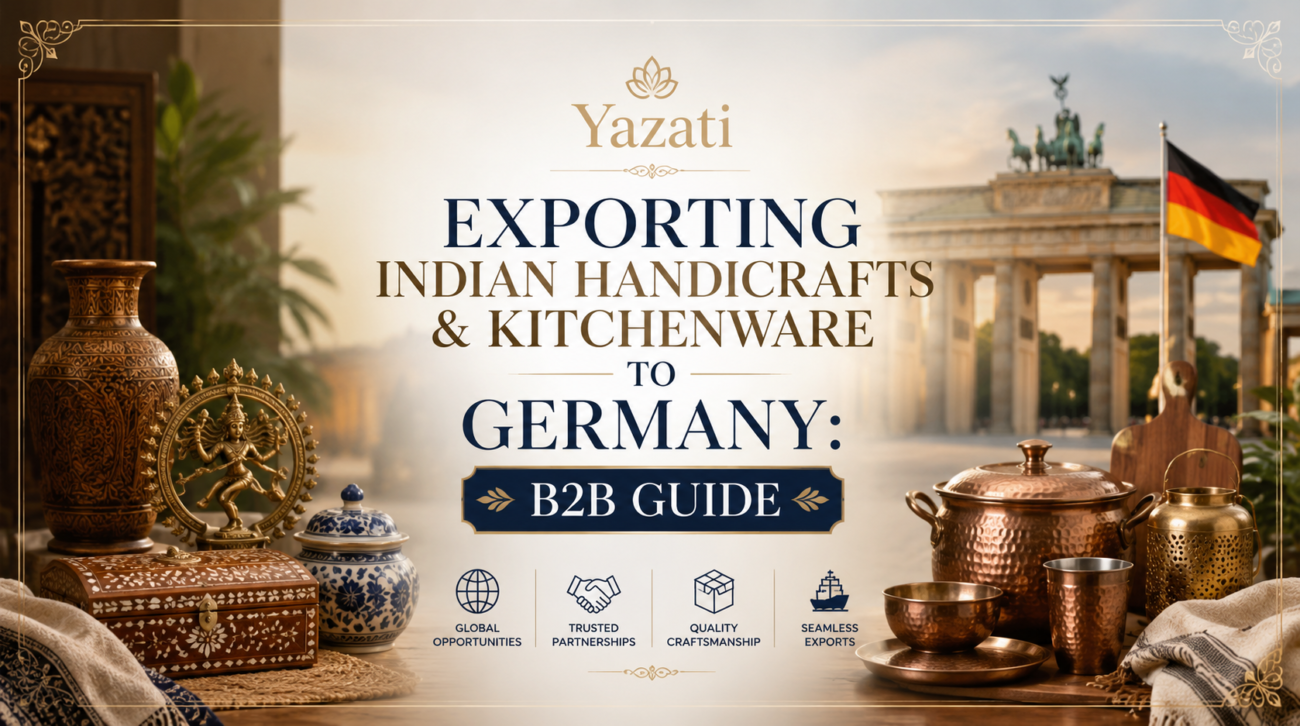
Germany is one of Europe’s strongest economies and a major importer of handcrafted products and premium kitchenware. Indian exporters have a huge opportunity to supply authentic, handmade, eco-friendly, and high-quality products to German wholesalers, retailers, and online sellers.
The market for Indian handicrafts and kitchenware continues to grow because German consumers appreciate craftsmanship, sustainability, and cultural uniqueness. From wooden décor items to stainless steel cookware, Indian manufacturers can build profitable B2B partnerships with German buyers when they understand market expectations and compliance requirements.
This guide explains everything exporters need to know about Exporting Indian Handicrafts & Kitchenware to Germany, including market trends, regulations, logistics, pricing, and buyer acquisition strategies.
Understanding the German Import Market
Germany is Europe’s largest consumer market and one of the top importers of handcrafted and household products. Businesses across Germany constantly search for suppliers that can offer quality products at competitive prices.
Why Germany Loves Indian Handicrafts
Indian handicrafts are admired for their artistic value, traditional designs, and handmade appeal. German buyers often prefer products that tell a cultural story and reflect authenticity.
Popular categories include:
- Hand-carved wooden décor
- Handmade rugs and textiles
- Brass statues and artifacts
- Ceramic decorative items
- Sustainable home décor
Consumers in Germany also appreciate ethically sourced and handmade products because sustainability has become a major purchasing factor.
Growing Demand for Sustainable Kitchenware
Eco-friendly living is a major trend in Germany. Buyers increasingly prefer reusable, recyclable, and non-toxic kitchen products.
Indian exporters benefit from this trend because India produces:
- Stainless steel utensils
- Copper water bottles
- Bamboo kitchen accessories
- Brass cookware
- Wooden serving trays
Products made from natural or recyclable materials have strong market potential.
Overview of India’s Handicrafts and Kitchenware Export Industry
India has one of the world’s largest handicraft industries. Millions of artisans and manufacturers contribute to exports globally.
Key Export Hubs in India
Several Indian cities specialize in export manufacturing:
| City | Specialization |
|---|---|
| Moradabad | Brass and metal handicrafts |
| Jaipur | Marble and textile handicrafts |
| Saharanpur | Wooden handicrafts |
| Delhi NCR | Mixed handicraft exports |
| Mumbai | Export logistics and trading |
| Jodhpur | Furniture and wooden décor |
These cities support both large exporters and small-scale artisan businesses.
Popular Export Categories
The most exported handicraft and kitchenware categories include:
- Home décor
- Tableware
- Cookware
- Garden décor
- Handmade textiles
- Gift items
- Sustainable lifestyle products
Germany imports many of these products for retail chains, interior designers, hotels, and online stores.
Best Indian Handicraft Products for Germany
Choosing the right product category is essential for export success.
Wooden Handicrafts
Wooden products from India are highly popular because they combine craftsmanship with eco-friendly appeal.
Examples include:
- Hand-carved wall art
- Decorative trays
- Wooden candle holders
- Rustic furniture
- Serving platters
Saharanpur is particularly famous for high-quality wooden handicrafts.
Brass and Metal Artifacts
Metal handicrafts from Moradabad are globally recognized. German buyers often import:
- Brass figurines
- Lanterns
- Decorative bowls
- Vintage-style décor
- Metal candle stands
These products perform especially well during holiday seasons.
Handmade Textiles and Décor
Indian handmade fabrics attract premium buyers in Germany.
Popular products include:
- Cushion covers
- Handwoven rugs
- Block print tablecloths
- Wall hangings
- Curtains
Organic cotton and natural dyes are particularly attractive to eco-conscious consumers.
Top Kitchenware Products Exported to Germany
Kitchenware remains one of the strongest B2B categories for Indian exporters.
Stainless Steel Kitchenware
Indian stainless steel products are known for durability and affordability.
Common export products:
- Plates and bowls
- Storage containers
- Cooking utensils
- Cutlery sets
- Hotel kitchen supplies
Commercial buyers often place bulk orders for restaurants and hospitality businesses.
Copper and Brass Utensils
Traditional Ayurvedic and wellness trends have increased demand for copper products in Europe.
Popular products include:
- Copper bottles
- Serving utensils
- Brass plates
- Decorative cookware
Many German buyers market these products as wellness or luxury lifestyle items.
Eco-Friendly Bamboo Products
Bamboo kitchenware is rapidly growing in popularity due to environmental concerns.
Examples include:
- Bamboo cutlery
- Chopping boards
- Storage organizers
- Reusable straws
Eco-conscious German retailers frequently seek sustainable suppliers from India.
Germany’s B2B Buyer Expectations
German importers are highly professional and quality-focused.
Product Quality Standards
German buyers expect:
- Consistent product quality
- Proper finishing
- Accurate dimensions
- Durable materials
- Safe packaging
Even minor quality issues can affect long-term relationships.
Sustainable Packaging Requirements
Germany strongly promotes recycling and sustainable packaging.
Exporters should use:
- Recyclable cartons
- Minimal plastic
- Eco-friendly fillers
- Barcode labeling
Sustainable packaging can become a strong selling point.
Timely Delivery and Documentation
German buyers value punctuality and accuracy.
Important documents include:
- Commercial invoice
- Packing list
- Bill of lading
- Certificate of origin
- Insurance documents
Late shipments may damage business credibility.
Export Regulations and Compliance
Understanding export rules is critical for smooth international trade.
IEC and GST Requirements
Indian exporters need:
- Import Export Code (IEC)
- GST registration
- RCMC certificate where applicable
These registrations are essential before starting exports.
EU Product Standards and Certifications
The European Union has strict compliance requirements.
Depending on the product, exporters may require:
- REACH compliance
- Food-safe certifications
- FSC certification for wood
- CE marking in certain cases
Always confirm standards with buyers before shipment.
Customs Documentation Checklist
Essential export documents include:
| Document | Purpose |
|---|---|
| Commercial Invoice | Product valuation |
| Packing List | Shipment details |
| Bill of Lading | Transport proof |
| Certificate of Origin | Country verification |
| Insurance Certificate | Cargo protection |
Accurate documentation prevents customs delays.
Finding B2B Buyers in Germany
Finding reliable buyers is one of the biggest challenges for exporters.
Trade Fairs and Exhibitions
Trade fairs are excellent for networking and generating leads.
Important events include:
- Ambiente Frankfurt
- Heimtextil
- Tendence
- Christmasworld
You can learn more at the official German trade fair portal:
These exhibitions connect exporters with wholesalers, distributors, and retailers.
Online B2B Marketplaces
Popular B2B platforms include:
- Alibaba
- IndiaMART
- Global Sources
- Europages
Professional product catalogs improve conversion rates significantly.
Direct Outreach to Importers
Cold emailing and LinkedIn outreach remain effective.
Best practices include:
- Personalized emails
- Professional catalogs
- Competitive quotations
- Product certifications
- High-quality product photography
Strong communication builds trust quickly.
Pricing Strategy for German Buyers
Pricing must balance competitiveness and profitability.
FOB vs CIF Pricing
Two common pricing methods are:
| Pricing Type | Meaning |
|---|---|
| FOB | Buyer pays shipping |
| CIF | Seller includes freight and insurance |
Many German importers prefer CIF quotes for simplicity.
Currency Exchange Considerations
Exchange rate fluctuations can impact profits. Exporters should:
- Monitor EUR/INR rates
- Use forward contracts
- Include margin buffers
Financial planning helps reduce risk.
Shipping and Logistics Solutions
Reliable logistics are essential for successful exporting.
Sea Freight vs Air Freight
| Method | Advantages | Disadvantages |
|---|---|---|
| Sea Freight | Low cost for bulk shipments | Slower transit |
| Air Freight | Faster delivery | Higher cost |
Sea freight is generally preferred for handicrafts and kitchenware exports.
Warehousing and Distribution
Some exporters partner with German warehouses to improve delivery speed.
Benefits include:
- Faster local shipping
- Lower return handling costs
- Better customer satisfaction
This strategy works especially well for repeat buyers.
Marketing Indian Products in Germany
Strong marketing increases brand visibility and buyer confidence.
Digital Marketing for Exporters
Effective strategies include:
- SEO-optimized websites
- LinkedIn marketing
- Product videos
- Email campaigns
- Online catalogs
A professional online presence improves credibility.
Building a Strong Brand Identity
German buyers often prefer suppliers with:
- Consistent branding
- Sustainable positioning
- Reliable communication
- Product storytelling
Branding helps exporters move beyond price competition.
Common Challenges in Exporting
Exporting comes with operational and cultural challenges.
Cultural and Communication Gaps
German business culture values:
- Direct communication
- Transparency
- Punctuality
- Documentation accuracy
Understanding these expectations improves relationships.
Product Damage and Delays
Common issues include:
- Poor packaging
- Port congestion
- Customs inspections
- Incorrect labeling
Using experienced freight forwarders can reduce these risks.
Opportunities for Small and Medium Exporters
Small businesses can also succeed in the German market.
Private Label Manufacturing
Many German brands look for Indian manufacturers to produce private-label products.
Advantages include:
- Long-term contracts
- Higher order volumes
- Stable business relationships
E-commerce Expansion
Online marketplaces in Europe continue growing rapidly.
Exporters can supply:
- Amazon sellers
- Boutique online stores
- Eco-friendly brands
- Home décor retailers
Smaller MOQ strategies can attract emerging buyers.
FAQs
1. Is Germany a good market for Indian handicrafts?
Yes, Germany has strong demand for handmade, sustainable, and culturally unique products.
2. Which Indian kitchenware products sell best in Germany?
Stainless steel utensils, copper bottles, bamboo products, and brass cookware are highly popular.
3. What certifications are required for exports to Germany?
Requirements vary by product but may include REACH compliance, FSC certification, and food-safe certifications.
4. How can I find German importers?
You can connect through trade fairs, B2B platforms, LinkedIn, and direct outreach campaigns.
5. What is the best shipping method for handicrafts?
Sea freight is usually the most cost-effective option for bulk shipments.
6. Can small exporters succeed in Germany?
Absolutely. Many German buyers work with small and medium-sized Indian suppliers offering unique products.
Conclusion
The opportunity for Exporting Indian Handicrafts & Kitchenware to Germany is growing rapidly as German buyers increasingly seek sustainable, handmade, and high-quality products. Indian exporters can build long-term B2B success by focusing on quality, compliance, branding, and reliable logistics.
From handcrafted wooden décor to eco-friendly kitchenware, Indian products hold a strong competitive advantage in the European market. Exporters who understand German buyer expectations and invest in professional operations can unlock substantial international growth opportunities.
✨ Discover Global Sourcing Excellence with Netyex ✨
Netyex is your trusted B2B sourcing partner, connecting international buyers with India’s finest manufacturers and curated product lines—from handicrafts and home décor to kitchenware, textiles, hospitality essentials, and more. With verified suppliers and end-to-end support, we make global procurement seamless, reliable, and efficient.
👉 Elevate your sourcing experience—explore Netyex today.
📦 Bulk orders & customisation | 🌍 Worldwide delivery | 🤝 Trusted by global buyers
Visit Netyex to source premium Indian products with confidence.