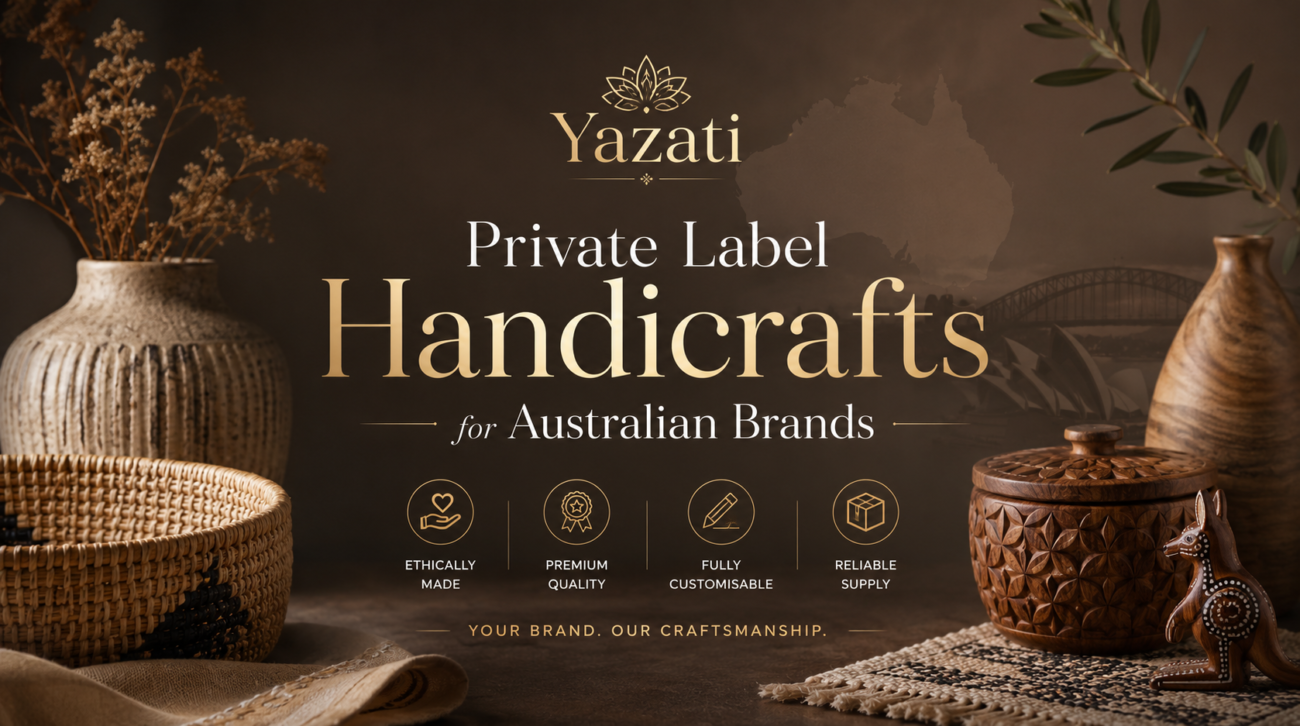
The market for Private Label Handicrafts for Australian Brands has grown rapidly over the past few years. Australian consumers are increasingly searching for products that are unique, sustainable, handmade, and ethically sourced. Because of this shift in buying behavior, retailers and entrepreneurs are turning toward private label handicrafts to create profitable and recognizable brands.
From handcrafted home décor to eco-friendly kitchenware and artisan fashion accessories, the handicraft industry is opening exciting opportunities for Australian businesses. In 2026, this trend is expected to grow even faster as sustainability and authenticity become essential parts of consumer culture.
This article explores everything you need to know about private label handicrafts, including sourcing, branding, manufacturing, customization, challenges, and future opportunities.
Understanding the Rise of Private Label Handicrafts
Private label handicrafts are products manufactured by one company and sold under another company’s brand name. Instead of creating products from scratch, Australian retailers can work with artisan manufacturers to customize and brand handmade goods.
What Private Label Means in the Handicraft Industry
In the handicraft sector, private labeling allows businesses to:
- Add their own logo and packaging
- Customize product designs
- Control pricing and brand positioning
- Build customer loyalty
This model is highly attractive because it reduces production complexity while allowing businesses to focus on branding and marketing.
Why Australian Consumers Love Artisan Products
Australian buyers appreciate products with:
- Handmade craftsmanship
- Ethical sourcing
- Eco-friendly materials
- Cultural authenticity
- Unique designs
Unlike mass-produced factory items, handicrafts offer emotional value and individuality. Consumers often feel more connected to handmade products because they tell a story.
Key Benefits of Private Label Handicrafts for Australian Brands
There are several advantages to entering this growing market.
Better Profit Margins
Private label products usually provide higher margins compared to reselling established brands. Businesses can:
- Set their own pricing
- Reduce competition
- Increase perceived value
Handcrafted items also command premium pricing because consumers associate them with quality and exclusivity.
Stronger Brand Identity
A private label strategy helps businesses establish:
- Brand uniqueness
- Customer recognition
- Long-term loyalty
Australian brands can build collections that reflect local lifestyle trends while maintaining artisan authenticity.
Greater Product Customization
Manufacturers often allow:
- Material selection
- Color customization
- Packaging design
- Logo printing
This flexibility makes it easier to align products with specific target audiences.
Popular Categories in the Australian Handicraft Market
Several handicraft categories perform exceptionally well in Australia.
Handmade Home Décor
Products such as:
- Wooden wall art
- Ceramic vases
- Handmade candles
- Macramé décor
- Decorative baskets
are increasingly popular among homeowners seeking minimalist and natural aesthetics.
Eco-Friendly Kitchenware
Sustainable kitchen products are gaining traction due to environmental awareness. Examples include:
- Bamboo utensils
- Coconut bowls
- Wooden serving trays
- Handmade pottery
Handmade Jewelry and Accessories
Australian consumers often seek:
- Beaded jewelry
- Artisan handbags
- Handwoven scarves
- Leather accessories
These products combine fashion with individuality.
Sustainable Fashion and Textiles
Eco-conscious fashion continues to rise in popularity. Handmade textiles using natural fibers are especially appealing in boutique markets.
Why India Is a Leading Supplier for Australian Handicraft Brands
India remains one of the top global exporters of handmade products.
Skilled Artisan Communities
Indian artisans possess centuries-old craftsmanship skills in:
- Wood carving
- Textile weaving
- Pottery
- Metalwork
- Embroidery
These traditional techniques create highly authentic products.
Competitive Manufacturing Costs
Indian manufacturers often offer:
- Affordable labor costs
- Flexible production volumes
- Competitive export pricing
This makes private labeling accessible even for small Australian startups.
Sustainable Raw Materials
India provides access to:
- Reclaimed wood
- Organic cotton
- Jute
- Bamboo
- Natural dyes
These materials align with eco-friendly branding strategies.
For export insights, businesses can also explore resources from the Export Promotion Council for Handicrafts.
How to Choose the Right Private Label Handicraft Manufacturer
Choosing the right manufacturing partner is crucial.
Evaluating Product Quality
Before placing bulk orders:
- Request samples
- Check craftsmanship consistency
- Review materials used
- Assess finishing quality
Quality directly impacts brand reputation.
Checking Certifications and Compliance
Australian importers should verify:
- Ethical sourcing certifications
- Sustainability standards
- Export documentation
- Product safety compliance
This helps avoid customs issues and legal complications.
Understanding MOQ and Pricing
MOQ (Minimum Order Quantity) varies between manufacturers. Small businesses should seek suppliers with flexible MOQs to reduce inventory risks.
Customization Options for Australian Retailers
Customization is one of the biggest strengths of private label handicrafts.
Packaging and Branding
Customized packaging can include:
- Eco-friendly boxes
- Branded tags
- Printed logos
- Story cards about artisans
This creates a premium customer experience.
Product Design Customization
Retailers can often modify:
- Product dimensions
- Materials
- Colors
- Patterns
- Engravings
Such personalization helps brands stand out in crowded markets.
White Label vs Private Label
Although similar, they differ:
- White label: Generic products sold by many brands
- Private label: Exclusive custom products for one brand
Private labeling offers stronger market differentiation.
Trends Driving the Handicraft Industry in Australia
Several major trends are fueling growth.
Sustainable Consumerism
Modern consumers increasingly prefer products that:
- Reduce environmental impact
- Support artisans
- Use recyclable materials
Sustainability is no longer optional; it is becoming expected.
Ethical Sourcing Practices
Consumers want transparency about:
- Worker conditions
- Fair wages
- Production methods
Brands that communicate ethical values build stronger trust.
Minimalist Interior Design Trends
Natural handcrafted products perfectly complement modern minimalist home aesthetics popular in Australia.
Challenges in the Private Label Handicraft Business
Despite opportunities, businesses must manage several challenges.
Shipping and Logistics
International freight can involve:
- Delays
- Customs procedures
- Damage risks
- High shipping costs
Reliable logistics partners are essential.
Quality Consistency
Handmade products naturally vary slightly. Brands should establish clear quality control standards with suppliers.
Import Regulations in Australia
Businesses must comply with Australian import requirements involving:
- Packaging regulations
- Biosecurity rules
- Product safety standards
Failure to comply can result in shipment delays or penalties.
Marketing Strategies for Private Label Handicrafts for Australian Brands
Effective marketing is key to long-term success.
Social Media Marketing
Platforms like:
- TikTok
are ideal for visually showcasing handmade products.
High-quality photography and behind-the-scenes artisan stories often perform exceptionally well.
Influencer Collaborations
Lifestyle influencers can help:
- Increase brand visibility
- Build trust
- Drive targeted traffic
Micro-influencers are especially effective for niche handicraft brands.
SEO and E-Commerce Optimization
Businesses should optimize:
- Product descriptions
- Blog content
- Category pages
- Metadata
Using keywords like Private Label Handicrafts for Australian Brands can improve search rankings significantly.
How Small Businesses Can Start Their Own Handicraft Brand
Starting a handicraft brand is now easier than ever.
Finding Niche Markets
Popular niches include:
- Sustainable home décor
- Bohemian fashion
- Handmade gifts
- Eco-friendly kitchen products
Choosing a focused niche helps reduce competition.
Creating a Strong Brand Story
Customers connect emotionally with brands that:
- Support artisans
- Promote sustainability
- Share authentic stories
Storytelling increases brand loyalty.
Building an Online Store
Platforms like:
- Shopify
- Etsy
- WooCommerce
make launching an online handicraft business affordable and scalable.
For additional guidance on Australian imports, visit the official website.
Future of Private Label Handicrafts for Australian Brands
The future looks extremely promising.
Technology and Handmade Products
Technology now supports artisans through:
- Online marketplaces
- Digital branding
- AI-powered marketing
- Global logistics solutions
This allows small brands to compete internationally.
Expansion into Global Markets
Australian handicraft brands are increasingly exporting to:
- North America
- Europe
- Asia-Pacific regions
Strong branding and sustainability positioning can create global demand.
Frequently Asked Questions
1. What are private label handicrafts?
Private label handicrafts are handmade products manufactured by one company and sold under another company’s brand name.
2. Why are handicrafts popular in Australia?
Australian consumers value sustainability, uniqueness, ethical sourcing, and artisan craftsmanship.
3. Which country is best for sourcing handicrafts?
India is considered one of the top sourcing destinations due to its skilled artisans and competitive pricing.
4. What products sell best in the handicraft market?
Popular categories include home décor, jewelry, eco-friendly kitchenware, textiles, and handmade accessories.
5. Is private labeling profitable?
Yes. Private labeling often provides higher profit margins and stronger brand identity compared to reselling generic products.
6. How can small businesses start a handicraft brand?
Small businesses can begin by selecting a niche, partnering with manufacturers, creating branding, and launching an e-commerce store.
Conclusion
The demand for Private Label Handicrafts for Australian Brands continues to rise as consumers seek authentic, sustainable, and beautifully crafted products. Businesses that invest in ethical sourcing, quality craftsmanship, and strong branding can build profitable and long-lasting brands in this growing industry.
Whether you are a startup entrepreneur or an established retailer, private label handicrafts offer tremendous opportunities to stand out in the Australian market. By combining artisan creativity with smart branding and digital marketing, businesses can create products that customers truly value.
✨ Discover Global Sourcing Excellence with Netyex ✨
Netyex is your trusted B2B sourcing partner, connecting international buyers with India’s finest manufacturers and curated product lines—from handicrafts and home décor to kitchenware, textiles, hospitality essentials, and more. With verified suppliers and end-to-end support, we make global procurement seamless, reliable, and efficient.
👉 Elevate your sourcing experience—explore Netyex today.
📦 Bulk orders & customisation | 🌍 Worldwide delivery | 🤝 Trusted by global buyers
Visit Netyex to source premium Indian products with confidence.