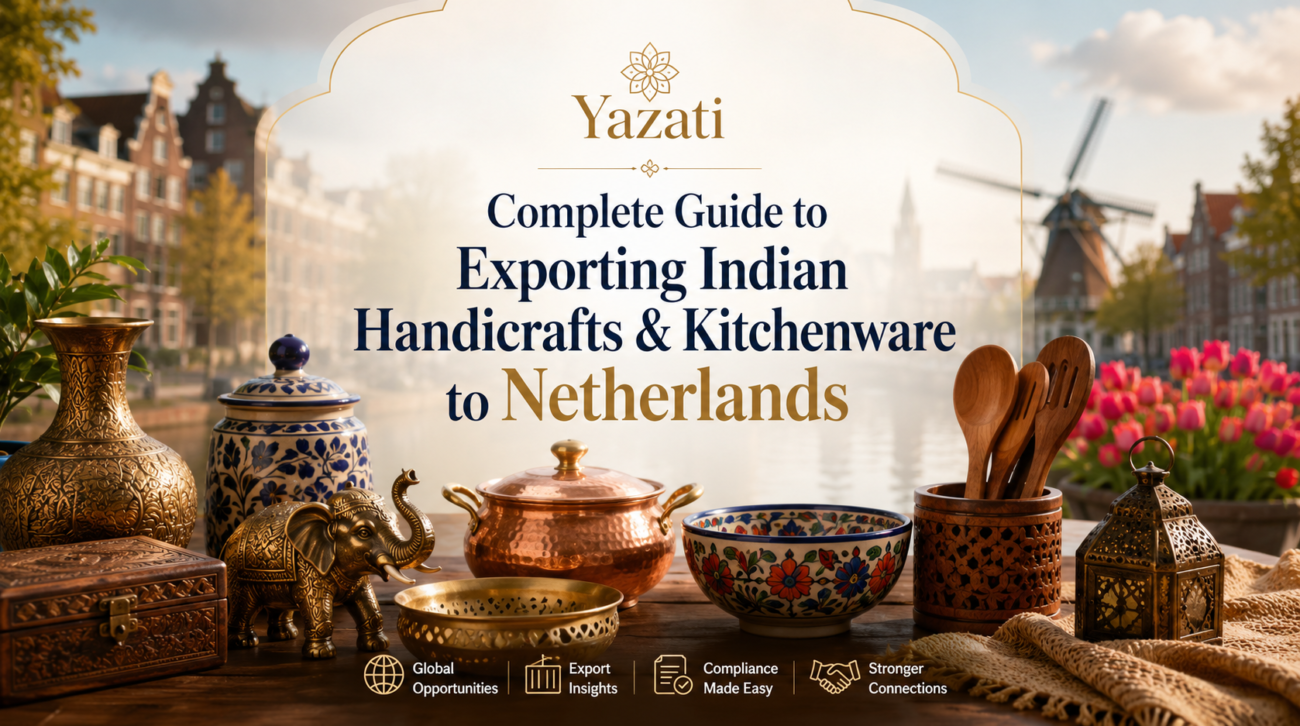
India has long been known for its rich cultural heritage, artistic craftsmanship, and beautifully designed kitchenware products. In recent years, the Netherlands has emerged as one of the most attractive European destinations for Indian exporters. The demand for eco-friendly home décor, handcrafted items, sustainable kitchenware, and artisan-made products is rapidly increasing across Dutch markets.
This Complete Guide to Exporting Indian Handicrafts & Kitchenware to Netherlands will help exporters understand the Dutch market, legal requirements, logistics, pricing, packaging, and strategies needed to build a profitable export business.
Introduction to the Netherlands Import Market
The Netherlands is one of Europe’s leading trading hubs. With advanced logistics infrastructure, world-famous ports, and easy access to neighboring European countries, Dutch importers actively source products from India.
The country acts as a gateway to Europe because imported products entering Dutch ports can easily move across Germany, Belgium, France, and other EU nations.
Indian exporters benefit from:
- Strong consumer demand
- Stable economy
- Appreciation for handmade products
- Growing eco-conscious buying behavior
- Access to wider European markets
The Dutch retail sector values authenticity, sustainability, and high-quality craftsmanship, making Indian handicrafts highly attractive.
Why Indian Handicrafts and Kitchenware Are Popular in the Netherlands
Indian products have a unique appeal in the Netherlands because they combine tradition, artistry, and sustainability.
Growing Demand for Sustainable Products
Dutch consumers increasingly prefer environmentally friendly products. Handmade Indian items made from wood, bamboo, jute, clay, brass, or recycled materials fit perfectly into this trend.
Sustainable shopping has become more than a trend in Europe. Many customers actively avoid mass-produced plastic items and instead seek handcrafted alternatives.
Popular sustainable exports include:
- Wooden serving trays
- Bamboo kitchen accessories
- Handmade ceramic bowls
- Recycled metal décor
- Eco-friendly tableware
Influence of Indian Art and Culture
Indian culture is admired worldwide for its colors, patterns, textures, and artistic value. Dutch interior designers and retailers often import Indian handicrafts to create ethnic-inspired home décor collections.
Products with traditional Indian designs often attract premium pricing in European markets.
Understanding the Dutch Consumer Market
Before exporting, businesses must understand customer behavior in the Netherlands.
Consumer Preferences in Netherlands
Dutch buyers generally prefer:
- Minimalist designs
- Neutral colors
- Functional products
- Sustainable packaging
- Ethical sourcing
- Premium quality finishing
Consumers also appreciate transparency. Many buyers want to know:
- Where the product was made
- Which materials were used
- Whether artisans received fair wages
Trending Handicraft and Kitchenware Categories
Currently trending categories include:
| Product Category | Demand Level |
|---|---|
| Wooden kitchenware | High |
| Handmade ceramics | High |
| Brass utensils | Medium |
| Eco-friendly décor | High |
| Woven baskets | High |
| Sustainable cutlery | Medium |
| Marble serving items | Growing |
Products combining modern European aesthetics with traditional Indian craftsmanship perform exceptionally well.
Key Indian Handicraft Products Exported to Netherlands
India exports a wide range of handcrafted products to Europe.
Wooden Handicrafts
Wooden products are among the top-selling exports.
Popular items include:
- Serving boards
- Salad bowls
- Wooden spoons
- Decorative trays
- Wall décor
Sheesham wood and mango wood products are especially popular because of their durability and rustic appearance.
Brass and Metal Kitchenware
Brass kitchenware has gained popularity among premium consumers seeking luxury handcrafted products.
Examples include:
- Brass serving bowls
- Copper bottles
- Decorative utensils
- Handmade candle holders
These products often target boutique retailers and high-end interior stores.
Ceramic and Eco-Friendly Products
Handmade ceramic tableware is growing rapidly in European markets.
Eco-conscious buyers also prefer:
- Coconut shell bowls
- Palm leaf plates
- Bamboo kitchen tools
- Jute organizers
The eco-friendly lifestyle movement continues to drive sales in the Netherlands.
Export Regulations and Compliance Requirements
Understanding legal requirements is critical when exporting to Europe.
IEC Registration in India
Indian exporters must obtain an Import Export Code (IEC) from the Directorate General of Foreign Trade (DGFT).
Without IEC registration, businesses cannot legally export products from India.
EORI Number Requirements
European importers generally require an EORI number for customs clearance within the European Union.
While the Dutch importer usually handles this, exporters should understand the requirement to coordinate shipments properly.
CE Marking and EU Standards
Some kitchenware products may require compliance with European safety regulations.
Food-contact kitchenware products must meet EU standards related to:
- Chemical safety
- Heavy metal restrictions
- Food-safe coatings
- Product durability
You can learn more from the official European Union trade portal:
https://trade.ec.europa.eu/
Documentation Required for Export
Proper documentation ensures smooth customs clearance.
Commercial Invoice
The commercial invoice contains:
- Product details
- Buyer information
- HS codes
- Quantity
- Pricing
- Payment terms
Packing List
The packing list includes:
- Box dimensions
- Weight details
- Number of cartons
- Packaging specifications
Bill of Lading
This document acts as proof of shipment issued by the shipping carrier.
Certificate of Origin
The Certificate of Origin confirms that the products were manufactured in India.
Some European buyers request this document for customs and tariff purposes.
Finding Buyers in Netherlands
Finding reliable buyers is one of the biggest challenges for exporters.
B2B Marketplaces
Online B2B platforms help exporters connect with importers.
Popular platforms include:
- Alibaba
- IndiaMART
- Global Sources
- TradeIndia
Professional product photography and clear product descriptions significantly improve inquiries.
Trade Fairs and Exhibitions
Trade fairs are excellent for networking with buyers.
Important European trade exhibitions include:
- Ambiente Germany
- Maison&Objet Paris
- Dutch design fairs
- European home décor expos
These events allow exporters to showcase products directly to wholesalers and retailers.
Direct Importers and Retail Chains
Many Dutch companies directly source from Indian manufacturers.
Potential buyer categories include:
- Interior décor stores
- Kitchenware retailers
- Sustainable lifestyle brands
- Online marketplaces
- Boutique gift stores
LinkedIn can also help exporters identify purchasing managers and import companies.
Packaging and Labeling Standards
European packaging expectations are very high.
Eco-Friendly Packaging Trends
Dutch consumers strongly prefer recyclable and sustainable packaging materials.
Recommended packaging materials include:
- Recycled cardboard
- Kraft paper
- Biodegradable fillers
- Paper tape
Plastic-heavy packaging may negatively affect customer perception.
Labeling Rules in the EU
Labels should clearly mention:
- Country of origin
- Product material
- Care instructions
- Safety information
Incorrect labeling can lead to customs delays.
Shipping and Logistics for Netherlands
Efficient logistics reduce costs and improve customer satisfaction.
Sea Freight vs Air Freight
| Shipping Method | Best For | Cost |
|---|---|---|
| Sea Freight | Bulk orders | Lower |
| Air Freight | Urgent shipments | Higher |
Sea freight is the preferred option for handicraft exporters due to lower transportation costs.
Best Dutch Ports for Imports
The Port of Rotterdam is Europe’s largest seaport and a major entry point for imports.
Other important logistics hubs include:
- Amsterdam Port
- Schiphol Airport
- Rotterdam logistics centers
These hubs provide excellent connectivity across Europe.
Pricing Strategy and Profit Margins
Pricing must balance competitiveness and profitability.
Cost Calculation Methods
Exporters should calculate:
- Production cost
- Packaging cost
- Inland transportation
- Freight charges
- Insurance
- Customs duties
- Marketing expenses
Ignoring hidden costs can reduce profit margins significantly.
Currency and Payment Terms
Most European buyers prefer transactions in:
- Euros (EUR)
- US Dollars (USD)
Common payment methods include:
- Letter of Credit (LC)
- Advance payment
- Telegraphic Transfer (TT)
For new buyers, secure payment methods are recommended.
Marketing Indian Products in Netherlands
Strong marketing helps exporters build long-term relationships.
Digital Marketing Strategies
Effective digital marketing includes:
- SEO-optimized websites
- Instagram product showcases
- Pinterest décor inspiration
- LinkedIn networking
- Google Ads campaigns
Professional branding increases trust among European buyers.
Building Brand Trust
Dutch buyers value consistency and transparency.
To build trust:
- Maintain product quality
- Respond quickly to inquiries
- Share certifications
- Provide clear shipping timelines
- Offer professional catalogs
Storytelling about artisans and handmade production also attracts European consumers.
Common Challenges in Exporting
Every export business faces challenges.
Customs Delays
Incorrect paperwork can delay shipments.
To avoid problems:
- Double-check invoices
- Verify HS codes
- Use experienced freight forwarders
Product Quality Issues
European buyers expect high finishing standards.
Common quality concerns include:
- Color inconsistency
- Moisture damage in wooden items
- Weak packaging
- Uneven polishing
Strict quality control is essential.
Government Support and Export Incentives
India offers several export support schemes.
EPCs and Export Promotion Schemes
Export Promotion Councils help businesses with:
- Buyer connections
- Trade fairs
- Market intelligence
- Export training
Relevant councils include:
- EPCH (Export Promotion Council for Handicrafts)
- CHEMEXCIL
- FIEO
Financial Assistance for Exporters
Government support may include:
- Export subsidies
- Duty drawback schemes
- MSME support programs
- Export financing assistance
Small exporters can significantly benefit from these initiatives.
Future Opportunities in Netherlands Market
The future looks highly promising for Indian handicraft exporters.
Major growth drivers include:
- Sustainable living trends
- Rising online retail sales
- Demand for handmade products
- Ethical sourcing awareness
- Growth in premium home décor
Indian exporters who focus on quality, branding, sustainability, and reliable logistics can build long-term success in the Dutch market.
Frequently Asked Questions
1. Is the Netherlands a good market for Indian handicrafts?
Yes, the Netherlands is an excellent market because Dutch consumers appreciate sustainable, handmade, and artistic products.
2. Which Indian handicraft products sell best in Netherlands?
Wooden kitchenware, eco-friendly décor, handmade ceramics, woven baskets, and brass products are highly popular.
3. Do I need certification for exporting kitchenware to Europe?
Some kitchenware products require compliance with EU food safety standards and material regulations.
4. What is the best shipping method for handicrafts?
Sea freight is generally the most cost-effective option for bulk handicraft shipments.
5. How can I find buyers in Netherlands?
You can find buyers through B2B marketplaces, trade fairs, LinkedIn networking, and export promotion councils.
6. What are the biggest export challenges?
Common challenges include customs documentation errors, product quality control, shipping delays, and finding reliable buyers.
Conclusion
This Complete Guide to Exporting Indian Handicrafts & Kitchenware to Netherlands highlights the enormous opportunities available for Indian exporters in the Dutch market. The Netherlands offers strong demand, access to wider European markets, and growing interest in sustainable handmade products.
Success in exporting depends on several important factors:
- Understanding Dutch consumer preferences
- Following EU compliance standards
- Maintaining high product quality
- Using eco-friendly packaging
- Building long-term buyer relationships
- Investing in digital marketing and branding
Indian handicrafts and kitchenware products have a unique global appeal. Exporters who combine traditional craftsmanship with modern business practices can build profitable and sustainable export businesses in Europe.
✨ Discover Global Sourcing Excellence with Netyex ✨
Netyex is your trusted B2B sourcing partner, connecting international buyers with India’s finest manufacturers and curated product lines—from handicrafts and home décor to kitchenware, textiles, hospitality essentials, and more. With verified suppliers and end-to-end support, we make global procurement seamless, reliable, and efficient.
👉 Elevate your sourcing experience—explore Netyex today.
📦 Bulk orders & customisation | 🌍 Worldwide delivery | 🤝 Trusted by global buyers
Visit Netyex to source premium Indian products with confidence.