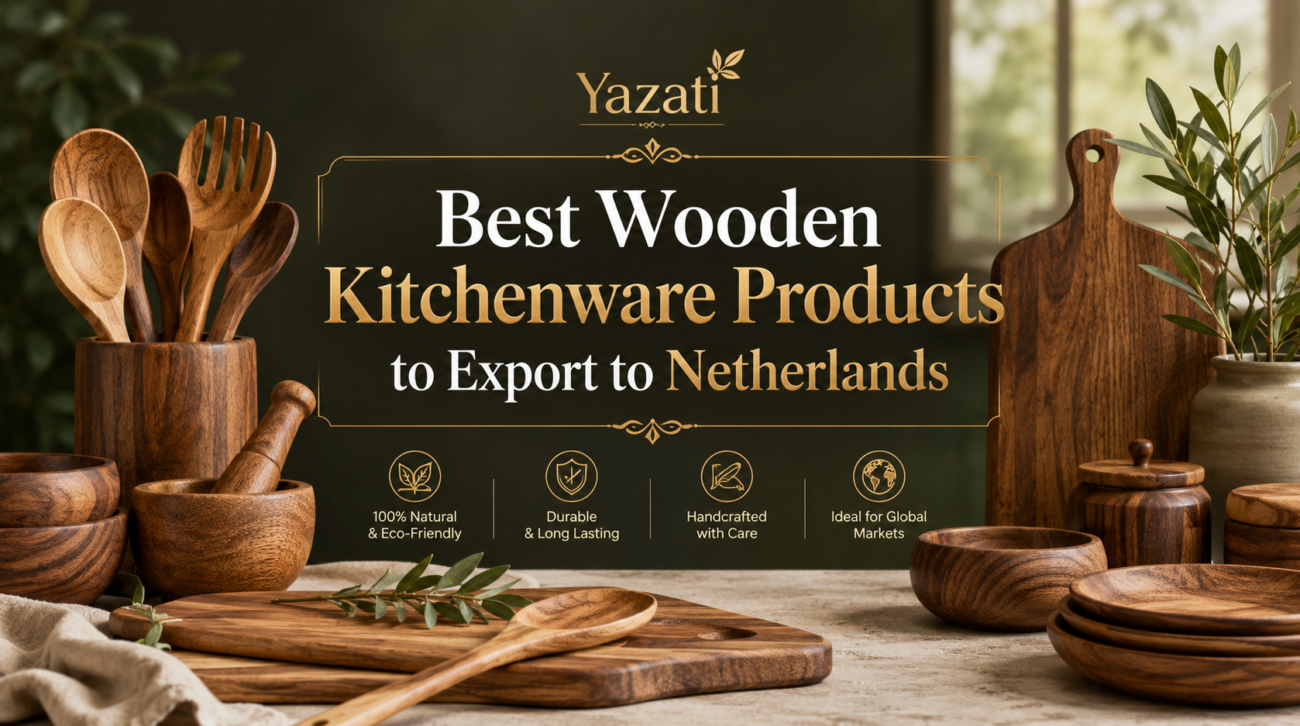
The demand for eco-friendly home products is growing rapidly across Europe, and the Netherlands is one of the leading importers of sustainable kitchen accessories. For exporters, this creates a major opportunity to sell high-quality wooden products to Dutch wholesalers, retailers, and online marketplaces.
If you are searching for the Best Wooden Kitchenware Products to Export to Netherlands, this guide covers everything you need to know—from profitable products and market trends to certifications and export strategies.
Why the Netherlands Is a Strong Market for Wooden Kitchenware
The Netherlands has a strong culture of sustainability and environmentally conscious shopping. Dutch consumers often prefer reusable, biodegradable, and natural household products over plastic alternatives.
Several factors make the Dutch market attractive:
- High purchasing power
- Growing eco-conscious consumer base
- Popularity of minimalist Scandinavian-style interiors
- Strong eCommerce sector
- Easy distribution access to other EU countries
The Netherlands also acts as a gateway to Europe because of major ports like Rotterdam. Many importers distribute products from the Netherlands to Germany, Belgium, and France.
Dutch Consumer Trends Driving Demand
Sustainability and Eco-Friendly Living
Dutch consumers are highly aware of environmental issues. Products made from renewable materials such as bamboo, teak, and acacia are increasingly popular.
Wooden kitchenware fits perfectly into the zero-waste lifestyle trend because it is:
- Biodegradable
- Durable
- Reusable
- Plastic-free
Preference for Natural Home Products
Natural textures and earthy colors are becoming common in modern Dutch kitchens. Wooden products add warmth and elegance to kitchen spaces.
Consumers especially like handmade or artisan products with unique grain patterns and organic finishes.
Rise of Organic and Minimalist Kitchens
Minimalist kitchen designs often use wooden utensils, serving trays, and cutting boards for aesthetic appeal. Restaurants and cafes in the Netherlands also use wooden serving products to create rustic dining experiences.
Key Benefits of Exporting Wooden Kitchenware
Exporting wooden kitchenware offers many advantages:
| Benefit | Explanation |
|---|---|
| High Demand | Eco-friendly products are growing fast |
| Good Profit Margins | Handmade products often command premium pricing |
| Low Manufacturing Cost | Especially in Asian and African exporting countries |
| Wide Product Variety | Many customization options |
| Repeat Orders | Retailers reorder frequently |
Best Wooden Kitchenware Products to Export to Netherlands
Here are the most profitable and in-demand products.
Wooden Cutting Boards
Wooden cutting boards are among the top-selling kitchen products in Europe. Acacia and bamboo cutting boards are especially popular because they are durable and visually attractive.
Popular styles include:
- Live-edge cutting boards
- Personalized engraved boards
- Cheese serving boards
- Paddle-shaped boards
Wooden Spoons and Spatulas
These are essential kitchen tools and excellent export products because they are lightweight and affordable.
Popular items include:
- Flat spatulas
- Slotted spoons
- Soup ladles
- Stirring spoons
Dutch consumers prefer smooth finishes and ergonomic designs.
Wooden Salad Bowls
Large handcrafted salad bowls are commonly used in homes and restaurants. Matching bowl-and-server sets are especially attractive to premium buyers.
Acacia wood bowls are highly preferred due to their rich appearance.
Wooden Serving Trays
Serving trays are popular in cafes, hotels, and homes.
Trending tray designs include:
- Breakfast trays
- Rectangular serving trays
- Rustic farmhouse trays
- Coffee table trays
Wooden Rolling Pins
Wooden rolling pins remain a classic baking accessory. European consumers often choose beech wood rolling pins because they are durable and food-safe.
Wooden Mortar and Pestle Sets
These products are growing in popularity due to interest in fresh spices and homemade cooking.
Teak and granite-combination designs are becoming fashionable in Dutch kitchens.
Wooden Coasters
Wooden coasters are inexpensive and easy to export in bulk. Laser-engraved or customized coaster sets are especially attractive as gifts.
Wooden Utensil Holders
Kitchen organization products are becoming increasingly popular. Wooden utensil holders fit modern minimalist kitchen designs perfectly.
Wooden Cheese Boards
The Netherlands is famous for cheese culture. Stylish cheese boards paired with serving knives have excellent export potential.
Wooden Cooking Chopsticks
Asian cuisine continues to grow in popularity across Europe. Wooden chopsticks designed for cooking and serving are in rising demand.
Wooden Honey Dippers
These small kitchen accessories are ideal for gift sets and gourmet food stores.
Wooden Spice Containers
Minimalist spice jars and wooden spice boxes are increasingly used in Dutch kitchens focused on sustainable living.
Wooden Pizza Paddles
Wood-fired pizza cooking trends have increased demand for wooden pizza boards and paddles.
Wooden Bread Boxes
Bread is an important part of Dutch cuisine. Stylish wooden bread storage boxes are becoming premium kitchen products.
Wooden Egg Holders
Rustic egg trays and farmhouse-style holders are trendy in eco-conscious kitchens.
Best Wood Types for Kitchenware Exports
Acacia Wood
Acacia is highly durable and water-resistant. Its beautiful grain patterns make it ideal for premium products.
Bamboo
Bamboo is technically grass, but it is widely used in eco-friendly kitchenware because it grows quickly and sustainably.
Teak Wood
Teak offers excellent moisture resistance and durability, making it suitable for luxury kitchenware.
Beech Wood
Beech wood is affordable, smooth, and commonly used for utensils and rolling pins.
Export Regulations and Certifications
Understanding regulations is critical when exporting to Europe.
FSC Certification
The Forest Stewardship Council (FSC) certification proves that wood comes from responsibly managed forests.
Many Dutch buyers prefer FSC-certified products.
Learn more at the official FSC website: https://fsc.org
Food-Safe Finishes
Wooden kitchenware must use food-safe oils and coatings. Avoid harmful chemical finishes.
Popular food-safe oils include:
- Mineral oil
- Beeswax
- Coconut oil blends
EU Import Standards
Products entering the European Union must meet safety and environmental standards.
Key requirements may include:
- REACH compliance
- Proper labeling
- Packaging waste regulations
Packaging Requirements for Dutch Buyers
Good packaging increases product value and protects items during shipping.
Recommended packaging options:
| Packaging Type | Benefit |
|---|---|
| Recycled Kraft Boxes | Eco-friendly appearance |
| Cotton Bags | Premium branding |
| Corrugated Export Cartons | Strong shipping protection |
| Barcode Labels | Easier inventory handling |
Minimal plastic packaging is preferred in the Netherlands.
Pricing Strategy for the Netherlands Market
When pricing products, consider:
- Production costs
- Shipping expenses
- Import duties
- Distributor margins
- Retail positioning
Premium handcrafted products can often achieve higher profit margins in Dutch markets.
How to Find Buyers in the Netherlands
Trade Fairs
Trade exhibitions are excellent for networking with importers.
Popular European trade fairs include:
- Ambiente Frankfurt
- Maison & Objet
- Horecava Amsterdam
B2B Platforms
You can connect with Dutch importers through:
- Alibaba
- Europages
- Global Sources
Import Distributors
Many Dutch wholesalers specialize in eco-friendly homeware and kitchen products.
Building long-term partnerships is essential for repeat orders.
Common Export Challenges and Solutions
| Challenge | Solution |
|---|---|
| Shipping Damage | Use protective packaging |
| Certification Issues | Obtain EU-compliant documents |
| Market Competition | Offer unique handcrafted designs |
| Delayed Deliveries | Work with reliable freight partners |
Marketing Tips for Wooden Kitchenware Exporters
To increase sales:
- Use professional product photography
- Highlight sustainability
- Promote handcrafted quality
- Offer private labeling
- Share social media content
- Focus on eco-friendly branding
Storytelling also matters. Buyers love hearing about artisan craftsmanship and sustainable sourcing.
Future Trends in Wooden Kitchenware Exports
Several trends will shape future demand:
- Plastic-free kitchens
- Personalized wooden products
- Smart eco-packaging
- Handmade artisan goods
- Sustainable luxury kitchenware
Businesses that focus on sustainability and premium design are likely to perform best in the European market.
Frequently Asked Questions
What are the best wooden kitchenware products to export to Netherlands?
Cutting boards, salad bowls, serving trays, cheese boards, spatulas, and utensil holders are among the most profitable products.
Which wood is best for kitchenware exports?
Acacia, bamboo, teak, and beech wood are commonly preferred due to durability and food safety.
Do I need certification to export wooden kitchenware to Europe?
Yes. FSC certification and EU food safety compliance are highly recommended.
Is bamboo kitchenware popular in the Netherlands?
Yes. Bamboo products are very popular because they are sustainable and lightweight.
How can I find buyers in the Netherlands?
You can use B2B platforms, attend trade fairs, or contact import distributors specializing in homeware products.
What packaging do Dutch buyers prefer?
Eco-friendly and recyclable packaging is strongly preferred in the Dutch market.
Conclusion
The Dutch market offers enormous opportunities for exporters looking to sell sustainable kitchen products. By focusing on quality craftsmanship, eco-friendly materials, and modern designs, businesses can successfully grow in Europe.
The Best Wooden Kitchenware Products to Export to Netherlands include cutting boards, serving trays, salad bowls, cheese boards, and eco-friendly utensils made from acacia, bamboo, teak, or beech wood.
Success depends on understanding Dutch consumer preferences, maintaining product quality, and meeting European certification standards. Exporters who combine sustainability with elegant design are well-positioned to build long-term business relationships in the Netherlands.
✨ Discover Global Sourcing Excellence with Netyex ✨
Netyex is your trusted B2B sourcing partner, connecting international buyers with India’s finest manufacturers and curated product lines—from handicrafts and home décor to kitchenware, textiles, hospitality essentials, and more. With verified suppliers and end-to-end support, we make global procurement seamless, reliable, and efficient.
👉 Elevate your sourcing experience—explore Netyex today.
📦 Bulk orders & customisation | 🌍 Worldwide delivery | 🤝 Trusted by global buyers
Visit Netyex to source premium Indian products with confidence.