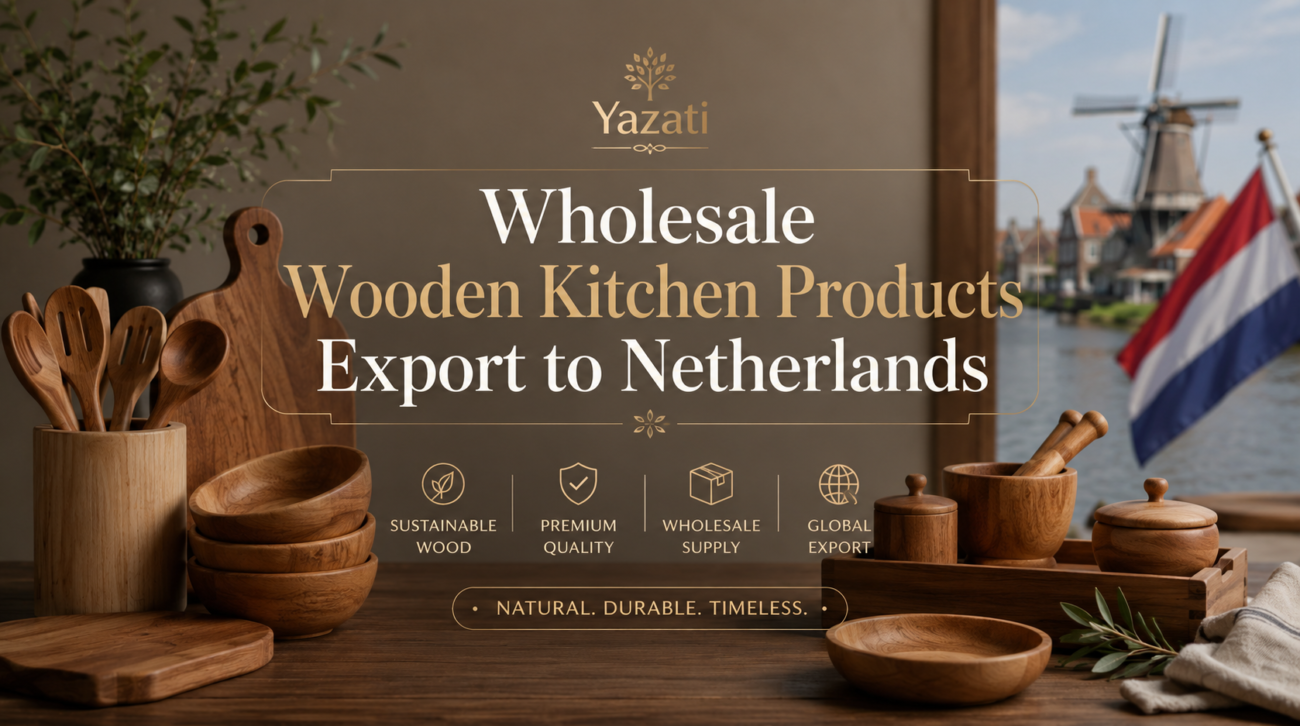
The Wholesale Wooden Kitchen Products Export to Netherlands market is growing rapidly as consumers across Europe shift toward sustainable and eco-friendly lifestyles. Dutch buyers are actively searching for durable, stylish, and environmentally responsible kitchenware products made from natural materials like teak, acacia, mango wood, and bamboo.
From wooden spatulas and serving trays to premium cutting boards and salad bowls, the Netherlands offers excellent opportunities for exporters, wholesalers, and manufacturers worldwide. Businesses that focus on quality craftsmanship, food-safe production, and modern design are seeing increasing demand in the Dutch retail and hospitality sectors.
In this detailed guide, you will learn how to enter the Dutch market successfully, understand compliance requirements, find wholesale buyers, and build a profitable export business in 2026.
Understanding the Dutch Market for Wooden Kitchen Products
Why Netherlands Is a Major Import Hub
The Netherlands is one of Europe’s largest trading and distribution centers. Cities like Rotterdam and Amsterdam serve as major entry points for imported goods entering the European Union.
The country’s advanced logistics infrastructure allows importers to distribute products efficiently throughout Europe. This makes the Netherlands an attractive destination for exporters of wooden kitchen products.
Dutch consumers also value:
- Sustainable living
- Handmade products
- Eco-friendly packaging
- Premium kitchen aesthetics
- Durable household products
As a result, wooden kitchenware fits perfectly into the Dutch lifestyle market.
Consumer Trends in Sustainable Kitchenware
Modern European buyers increasingly avoid plastic kitchen tools. Wooden kitchen products are now viewed as:
- Stylish
- Environmentally friendly
- Long-lasting
- Non-toxic
- Safe for cookware
Products marketed as biodegradable, FSC-certified, and handcrafted often attract higher prices and better wholesale partnerships.
Types of Wooden Kitchen Products in Demand
Wooden Spoons and Spatulas
Wooden spoons remain among the highest-selling kitchen accessories in Europe. They are affordable, lightweight, and highly practical.
Popular export items include:
- Cooking spoons
- Slotted spatulas
- Salad servers
- Mixing paddles
- Soup ladles
Minimalist Scandinavian-style designs are especially popular in Dutch markets.
Cutting Boards and Chopping Blocks
Premium wooden cutting boards generate strong wholesale demand. Buyers prefer products made from:
- Acacia wood
- Teak wood
- Bamboo
- Mango wood
Features that increase product value include:
- Juice grooves
- Handle grips
- Engraved branding
- Organic oil finishing
Wooden Bowls and Serving Trays
Restaurants and home décor retailers in the Netherlands are buying handcrafted serving products in large quantities.
Trending items include:
| Product Type | Popular Use |
|---|---|
| Salad Bowls | Dining and serving |
| Snack Trays | Hospitality sector |
| Cheese Boards | Premium gifting |
| Wooden Platters | Restaurants and cafés |
Eco-Friendly Kitchen Accessories
Additional fast-growing categories include:
- Wooden coasters
- Spice containers
- Napkin holders
- Wooden mugs
- Storage jars
Eco-conscious branding significantly boosts sales potential.
Benefits of Exporting Wooden Kitchenware to Netherlands
Growing Demand for Sustainable Products
The European Union strongly supports environmentally friendly consumer products. Dutch retailers actively seek suppliers who offer:
- Sustainable sourcing
- Plastic-free alternatives
- Ethical manufacturing
- Renewable materials
This creates long-term growth opportunities for exporters.
Strong Retail and E-Commerce Opportunities
Online marketplaces and specialty stores in the Netherlands continue expanding rapidly.
Top retail channels include:
- Home décor stores
- Eco-product retailers
- Kitchenware distributors
- Hotel supply chains
- E-commerce platforms
Many buyers now prefer private-label manufacturing partnerships.
Best Wood Materials for Kitchen Products
Teak Wood
Teak wood is highly valued because it is:
- Water-resistant
- Durable
- Naturally oily
- Resistant to cracking
Premium kitchen products made from teak often command higher prices.
Acacia Wood
Acacia is one of the most popular materials for export kitchenware because it offers:
- Beautiful grain patterns
- Strength and durability
- Affordable production costs
Acacia serving boards perform especially well in Dutch retail markets.
Bamboo and Mango Wood
Bamboo products are popular due to their fast-growing renewable nature.
Mango wood is also becoming increasingly attractive because it combines:
- Sustainability
- Lightweight design
- Natural appearance
Quality Standards and Certifications Required
FSC Certification
FSC certification proves that wood materials come from responsibly managed forests.
Many Dutch importers specifically require FSC-certified wooden products to meet sustainability goals.
Learn more about FSC standards at the official website: https://fsc.org
Food Safety Compliance
Wooden kitchen products must comply with European food-contact safety standards.
Manufacturers should ensure:
- Non-toxic finishes
- Food-grade oils
- Chemical-free polishing
- Hygienic production methods
EU Packaging Regulations
Packaging must follow EU environmental standards.
Recommended packaging materials include:
- Recycled cardboard
- Kraft paper
- Compostable wrapping
- Soy-based inks
Manufacturing Process for Wooden Kitchen Products
Wood Selection and Treatment
High-quality wood selection is essential for export-grade products.
The process includes:
- Drying the wood properly
- Moisture treatment
- Pest control treatment
- Surface preparation
Proper drying prevents cracking during international shipping.
Cutting, Carving, and Finishing
Skilled craftsmanship adds value to wooden kitchenware.
Production stages often include:
- CNC cutting
- Hand carving
- Sanding
- Shape finishing
Smooth finishing improves customer satisfaction significantly.
Polishing and Packaging
Food-safe mineral oils or beeswax are commonly used for polishing.
Products should then be packed carefully to avoid:
- Moisture damage
- Scratches
- Breakage
Packaging Tips for Export Success
Eco-Friendly Packaging Solutions
Sustainable packaging improves buyer trust.
Best practices include:
- Recyclable boxes
- Minimal plastic use
- Paper cushioning
- Eco-label printing
Labeling Requirements for EU Markets
Labels should clearly mention:
- Product material
- Country of origin
- Care instructions
- Importer information
Incorrect labeling may cause customs delays.
Export Documentation Needed
Exporters must prepare accurate documentation before shipping.
Commercial Invoice
Includes:
- Product details
- Quantity
- HS code
- Pricing terms
Packing List
Specifies packaging details and shipment dimensions.
Bill of Lading
Issued by the shipping company for cargo transportation.
Certificate of Origin
Confirms where the products were manufactured.
Shipping and Logistics to Netherlands
Sea Freight vs Air Freight
| Shipping Method | Advantages | Disadvantages |
|---|---|---|
| Sea Freight | Lower cost | Slower delivery |
| Air Freight | Fast shipping | Higher cost |
Sea freight is typically preferred for wholesale shipments.
Major Dutch Ports for Imports
Key import hubs include:
- Rotterdam Port
- Amsterdam Port
Rotterdam is Europe’s largest seaport and handles massive import volumes yearly.
Pricing Strategy for Wholesale Buyers
Cost Calculation Methods
Your pricing should include:
- Raw material cost
- Labor
- Packaging
- Freight charges
- Customs duties
- Profit margin
Competitive Pricing Techniques
Offer:
- Volume discounts
- Private-label options
- Flexible MOQs
- Seasonal promotions
These methods attract long-term Dutch buyers.
Finding Buyers in Netherlands
B2B Marketplaces
Popular platforms include:
- Alibaba
- Europages
- Faire
- Global Sources
Optimize product listings with professional photography and certifications.
Trade Fairs and Exhibitions
Trade shows help build strong business relationships.
Important events include:
- Ambiente Frankfurt
- Trade Mart Utrecht exhibitions
- European home décor expos
Direct Retail Partnerships
Approach:
- Kitchenware stores
- Eco-retailers
- Hotel suppliers
- Restaurant chains
Professional catalogs improve conversion rates.
Digital Marketing for Wooden Kitchenware Exporters
SEO for Export Businesses
To rank on Google, optimize your website using keywords like:
- Wooden kitchenware exporter
- Eco-friendly kitchen products
- Wholesale wooden utensils
- Sustainable kitchen accessories
Include high-quality product descriptions and blogs.
Social Media Promotion
Platforms like Instagram and Pinterest work extremely well for visual products.
Post:
- Product videos
- Manufacturing processes
- Lifestyle photography
- Sustainability stories
Email Outreach Campaigns
Cold email marketing remains effective for B2B exports.
Your emails should include:
- Product catalog
- MOQ details
- Certifications
- Pricing sheet
Common Challenges in Wooden Product Export
Moisture and Cracking Issues
Improper drying causes:
- Product warping
- Surface cracks
- Mold growth
Kiln drying helps reduce risks.
Customs Delays
Incorrect documentation can delay shipments significantly.
Always verify EU import requirements before dispatch.
Price Competition
Competing solely on low pricing reduces profitability.
Instead, focus on:
- Product quality
- Unique design
- Sustainable branding
- Reliable delivery
Future Trends in Wooden Kitchen Products Export
Personalized Wooden Kitchenware
Customized products are becoming increasingly popular.
Examples include:
- Engraved names
- Corporate branding
- Wedding gifts
- Restaurant logos
Smart Eco-Friendly Branding
Brands that highlight sustainability perform better in Europe.
Consumers increasingly prefer businesses that support:
- Ethical sourcing
- Carbon reduction
- Zero-waste packaging
Frequently Asked Questions
Is the Netherlands a good market for wooden kitchen products?
Yes. The Netherlands has strong demand for eco-friendly and sustainable kitchenware products.
Which wood is best for kitchen products export?
Teak, acacia, bamboo, and mango wood are among the most popular choices.
Do wooden kitchen products require certification?
Yes. FSC certification and food-contact safety compliance are highly recommended.
What is the best shipping method for wholesale exports?
Sea freight is usually the most cost-effective option for large wholesale orders.
How can I find buyers in the Netherlands?
You can use B2B marketplaces, trade fairs, LinkedIn outreach, and direct retailer partnerships.
Are eco-friendly products more profitable?
Yes. Sustainable products often command higher retail and wholesale pricing.
Conclusion
The Wholesale Wooden Kitchen Products Export to Netherlands industry offers excellent growth opportunities for manufacturers and exporters focused on sustainability, quality, and modern design. Dutch buyers continue searching for eco-friendly alternatives to plastic kitchenware, creating strong demand for wooden utensils, serving boards, trays, and handcrafted accessories.
Businesses that prioritize FSC-certified materials, attractive packaging, reliable logistics, and strong digital marketing can establish long-term success in European markets. By understanding Dutch consumer preferences and maintaining high production standards, exporters can build profitable wholesale partnerships and expand globally in 2026 and beyond.
✨ Discover Global Sourcing Excellence with Netyex ✨
Netyex is your trusted B2B sourcing partner, connecting international buyers with India’s finest manufacturers and curated product lines—from handicrafts and home décor to kitchenware, textiles, hospitality essentials, and more. With verified suppliers and end-to-end support, we make global procurement seamless, reliable, and efficient.
👉 Elevate your sourcing experience—explore Netyex today.
📦 Bulk orders & customisation | 🌍 Worldwide delivery | 🤝 Trusted by global buyers
Visit Netyex to source premium Indian products with confidence.