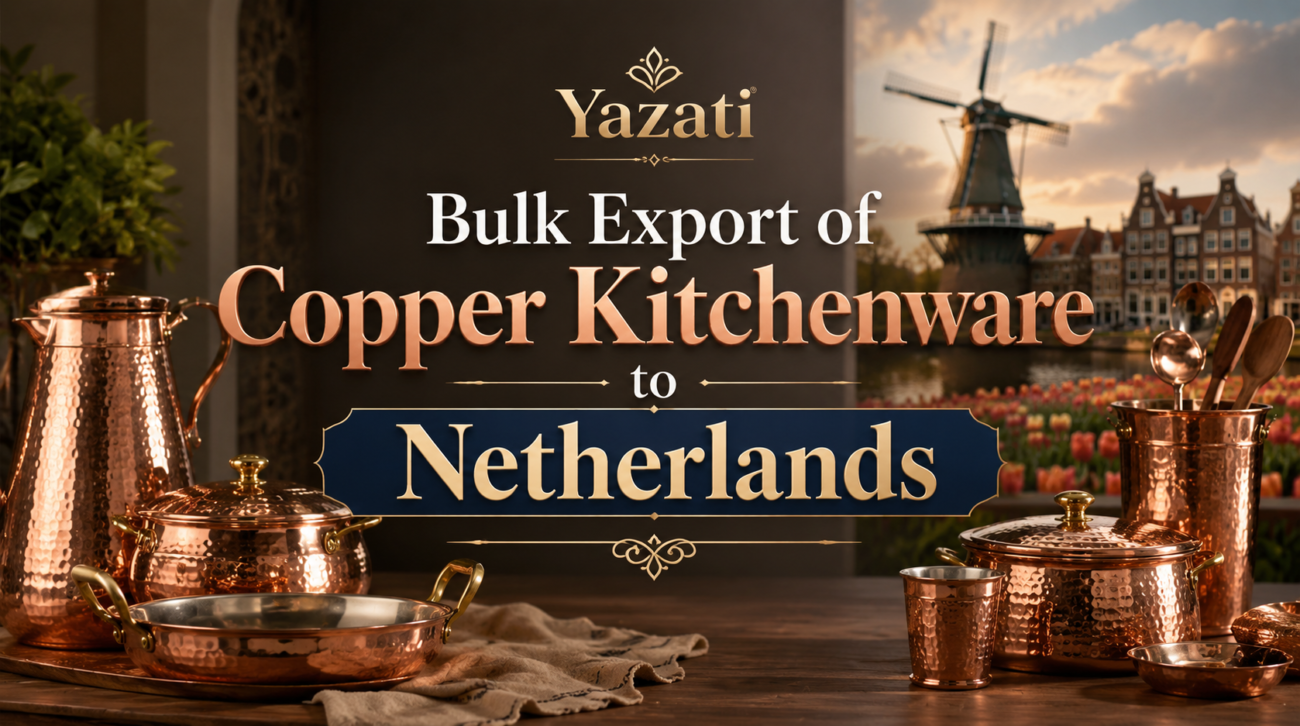
The Bulk Export of Copper Kitchenware to Netherlands has become an increasingly profitable business opportunity for manufacturers, wholesalers, and exporters worldwide. As Dutch consumers continue shifting toward premium, sustainable, and aesthetically pleasing cookware, copper kitchen products are gaining remarkable popularity across retail stores, restaurants, hotels, and online marketplaces.
From handcrafted copper pots to stylish serving trays and copper water bottles, the Netherlands market offers strong demand for both functional and decorative kitchenware. Exporters who understand Dutch consumer behavior, European regulations, and international shipping procedures can build a successful long-term export business.
In this comprehensive guide, you’ll learn everything about exporting copper kitchenware to the Netherlands, including regulations, pricing, logistics, marketing strategies, and future trends.
Introduction to the Dutch Copper Kitchenware Market
The Netherlands is one of Europe’s most active import hubs for home and kitchen products. Dutch consumers value quality craftsmanship, eco-friendly products, and elegant kitchen aesthetics. Copper kitchenware fits perfectly into these preferences.
The country’s advanced retail infrastructure and strong e-commerce ecosystem make it an attractive destination for exporters. Additionally, Rotterdam Port—one of the world’s largest ports—simplifies import and distribution across Europe.
Dutch importers often source:
- Handmade copper cookware
- Copper utensils
- Copper mugs and bottles
- Decorative kitchen items
- Premium restaurant cookware
The increasing popularity of luxury cooking experiences has further boosted demand.
Why Copper Kitchenware Is Popular in Netherlands
Growing Demand for Premium Cookware
Consumers in the Netherlands are increasingly investing in high-quality cookware that combines beauty and performance. Copper products are known for:
- Excellent heat conductivity
- Long durability
- Elegant appearance
- Professional cooking performance
Professional chefs and cooking enthusiasts especially appreciate copper cookware for precision cooking.
Sustainability Trends in Europe
Europe’s sustainability movement strongly influences Dutch buying behavior. Copper is recyclable and long-lasting, making it a preferred alternative to disposable or low-quality kitchen products.
Eco-conscious buyers often choose copper because:
- It reduces waste
- It lasts for decades
- It supports sustainable lifestyles
- It complements eco-friendly kitchens
This sustainability trend creates long-term opportunities for exporters.
Understanding the Netherlands Import Market
The Netherlands serves as a gateway to Europe. Many imported kitchenware products are redistributed to neighboring countries such as Germany, Belgium, and France.
Major Cities Driving Kitchenware Sales
Important Dutch commercial centers include:
| City | Market Importance |
|---|---|
| Amsterdam | Luxury retail and e-commerce |
| Rotterdam | Import logistics and wholesale |
| Utrecht | Home décor and lifestyle market |
| Eindhoven | Modern kitchen trends |
| The Hague | Hospitality sector demand |
Consumer Preferences in Dutch Households
Dutch buyers prefer products that are:
- Functional
- Minimalist in design
- Sustainable
- Easy to maintain
- Premium in quality
Handcrafted copper products with modern finishes often perform very well in the market.
Types of Copper Kitchenware Exported
Copper Pots and Pans
These are among the most demanded products because of their superior cooking performance.
Popular varieties include:
- Sauce pans
- Frying pans
- Stock pots
- Dutch ovens
- Copper-bottom cookware
Copper Water Bottles and Mugs
Copper drinkware has become trendy due to wellness and health-focused marketing.
Common products include:
- Moscow mule mugs
- Copper tumblers
- Water bottles
- Serving pitchers
Decorative Copper Kitchen Accessories
Decorative products also generate strong demand in Europe.
Examples include:
- Fruit baskets
- Serving trays
- Hanging utensils
- Decorative bowls
- Kitchen wall décor
Export Regulations for Copper Kitchenware
Understanding EU import laws is essential for smooth exporting operations.
European Union Compliance Standards
Products entering the Netherlands must comply with European Union regulations regarding:
- Product safety
- Heavy metal restrictions
- Food-contact materials
- Consumer protection
Failure to comply may lead to shipment rejection or penalties.
Food Safety Certifications
Food-contact kitchenware must meet strict standards.
REACH Compliance
The EU REACH regulation controls chemicals used in products. Exporters should ensure their copper kitchenware is free from harmful substances.
CE and Packaging Standards
While not all kitchenware requires CE marking, packaging regulations are extremely important. Exporters must use:
- Recyclable materials
- Proper labeling
- Safe transport packaging
For official EU export guidance, visit:
https://trade.ec.europa.eu/
How to Start Bulk Export of Copper Kitchenware to Netherlands
Finding Reliable Buyers
Finding trustworthy importers is one of the most important steps.
You can locate buyers through:
- International trade fairs
- B2B marketplaces
- LinkedIn networking
- Dutch wholesalers
- Hospitality suppliers
Popular B2B platforms include:
- Alibaba
- Global Sources
- Tradekey
- Europages
Building an Export Business Plan
A professional export plan should include:
| Business Element | Description |
|---|---|
| Target Market | Netherlands & EU |
| Product Range | Copper cookware and accessories |
| Pricing Strategy | Competitive wholesale pricing |
| Logistics Plan | Sea or air shipping |
| Compliance Strategy | EU standards and testing |
| Marketing Plan | B2B outreach and digital marketing |
A structured plan helps reduce risk and improve profitability.
Pricing Strategy for Bulk Copper Kitchenware Export
Pricing determines competitiveness in the European market.
FOB vs CIF Pricing
| Pricing Term | Meaning |
|---|---|
| FOB | Buyer pays shipping after port departure |
| CIF | Seller covers shipping and insurance |
Many Dutch importers prefer CIF pricing for convenience.
Calculating Shipping Costs
Shipping costs depend on:
- Container size
- Product weight
- Packaging type
- Freight rates
- Insurance charges
Sea freight is usually more economical for bulk exports.
Packaging and Labeling Requirements
Eco-Friendly Packaging Trends
Dutch buyers increasingly prefer sustainable packaging.
Recommended materials include:
- Recycled cardboard
- Biodegradable fillers
- Plastic-free wrapping
- Minimalist packaging
Dutch Labeling Expectations
Labels should include:
- Product description
- Country of origin
- Material details
- Usage instructions
- Importer information
Multilingual labeling may improve acceptance across Europe.
Logistics and Shipping Methods
Sea Freight Advantages
Sea freight is the most popular method for bulk shipments because it offers:
- Lower transportation cost
- Large shipment capacity
- Better profitability
Rotterdam Port is a major entry point.
Air Freight for Urgent Deliveries
Air freight works well for:
- Small orders
- Product samples
- High-value shipments
- Urgent inventory needs
However, costs are significantly higher.
Marketing Strategies for Export Success
B2B Platforms and Trade Fairs
Trade exhibitions help exporters connect with distributors and retailers.
Popular European trade fairs include:
- Ambiente Germany
- Maison & Objet Paris
- Horecava Netherlands
Digital Marketing for International Buyers
Strong online visibility helps attract international buyers.
Important strategies include:
- SEO optimization
- LinkedIn marketing
- Email campaigns
- Product catalogs
- Export-focused websites
A professional online presence builds trust with European clients.
Challenges in Exporting Copper Kitchenware
Competition from Other Exporters
Major exporting countries include:
- India
- Turkey
- China
- Morocco
To compete effectively, focus on:
- Better craftsmanship
- Unique designs
- Quality assurance
- Sustainable production
Managing Quality Consistency
European buyers expect consistent quality standards.
Key quality factors include:
- Uniform polishing
- Food-safe coating
- Proper thickness
- Strong packaging
Regular inspections help maintain customer satisfaction.
Profit Opportunities in the Netherlands Market
The Dutch premium kitchenware segment continues expanding rapidly. Exporters can benefit from:
- High consumer purchasing power
- Strong e-commerce demand
- Sustainable product trends
- Hospitality industry growth
Private-label manufacturing also offers additional revenue opportunities.
Future Trends in Copper Kitchenware Exports
Several trends are shaping the future market:
| Trend | Impact |
|---|---|
| Sustainable products | Higher demand |
| Handmade craftsmanship | Premium pricing |
| Smart kitchen décor | Increased copper use |
| Health-conscious consumers | Growth in copper drinkware |
| Luxury home cooking | More cookware sales |
Exporters who adapt early can secure long-term market advantages.
Frequently Asked Questions
1. Is the Netherlands a good market for copper kitchenware exports?
Yes, the Netherlands has strong demand for premium, sustainable, and decorative kitchen products.
2. What certifications are required for exporting copper kitchenware to the Netherlands?
Food-contact safety compliance, REACH regulations, and proper packaging standards are essential.
3. Which shipping method is best for bulk export?
Sea freight is usually the most cost-effective option for large shipments.
4. What products sell best in the Dutch market?
Copper cookware, water bottles, mugs, and decorative kitchen accessories are highly popular.
5. How can exporters find Dutch buyers?
Exporters can use B2B platforms, trade fairs, LinkedIn, and distributor networks.
6. Is eco-friendly packaging important in Europe?
Yes, sustainable packaging significantly improves acceptance among European buyers.
Conclusion
The Bulk Export of Copper Kitchenware to Netherlands presents a strong business opportunity for exporters who prioritize quality, compliance, and sustainability. Dutch consumers appreciate elegant, durable, and eco-friendly kitchen products, making copper kitchenware a highly attractive category.
Success in this market requires understanding European regulations, maintaining excellent product standards, using competitive pricing strategies, and building strong relationships with importers. Exporters who invest in branding, sustainable packaging, and digital marketing can achieve long-term growth and profitability in the Netherlands and broader European market.
As global demand for premium kitchenware continues rising, copper products are expected to remain a valuable export category for years to come.
✨ Discover Global Sourcing Excellence with Netyex ✨
Netyex is your trusted B2B sourcing partner, connecting international buyers with India’s finest manufacturers and curated product lines—from handicrafts and home décor to kitchenware, textiles, hospitality essentials, and more. With verified suppliers and end-to-end support, we make global procurement seamless, reliable, and efficient.
👉 Elevate your sourcing experience—explore Netyex today.
📦 Bulk orders & customisation | 🌍 Worldwide delivery | 🤝 Trusted by global buyers
Visit Netyex to source premium Indian products with confidence.