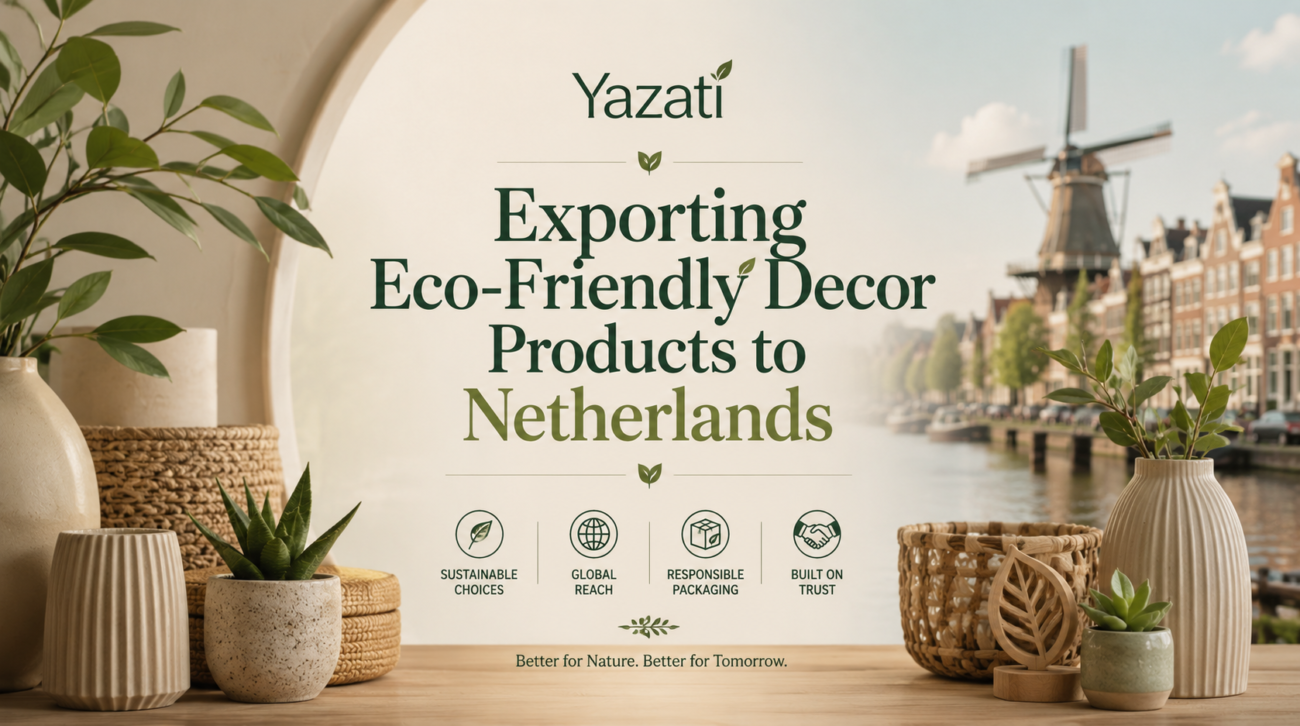
The global demand for sustainable products is rising quickly, and the Netherlands has become one of Europe’s strongest markets for environmentally friendly home decor. Businesses involved in Exporting Eco-Friendly Decor Products to Netherlands can benefit from a growing consumer base that values ethical sourcing, sustainable packaging, and eco-conscious lifestyles.
Dutch consumers actively support brands that care about the planet. From recycled wood furniture to organic textile decorations, eco-friendly products are no longer niche items—they are mainstream choices in Dutch households.
This article explains everything you need to know about entering the Dutch market successfully, including regulations, logistics, branding, pricing, and marketing strategies.
Understanding the Dutch Market for Sustainable Decor
The Netherlands is one of Europe’s most environmentally aware countries. Consumers often prefer products that reduce environmental harm and support fair labor practices.
Why Sustainability Matters in the Netherlands
Sustainability is deeply connected to Dutch culture. Government policies encourage green living, and consumers are willing to pay more for environmentally responsible products.
Many homeowners in cities like Amsterdam, Rotterdam, and Utrecht look for sustainable alternatives when decorating homes and offices.
Important trends include:
- Minimalist interior design
- Natural materials
- Recycled products
- Energy-efficient lifestyles
- Ethical production practices
Consumer Preferences for Eco-Friendly Home Decor
Dutch buyers often look for:
- Products made from recycled materials
- Handmade decorative items
- Plastic-free packaging
- Neutral and Scandinavian-inspired designs
- Certified sustainable wood products
Popular decor styles include modern eco-minimalism and nature-inspired interiors.
Benefits of Exporting Eco-Friendly Decor Products to Netherlands
Entering the Dutch market provides several long-term business advantages.
Expanding Into a High-Income Market
The Netherlands has strong purchasing power and excellent infrastructure. Consumers spend significantly on home decoration and lifestyle products.
This creates profitable opportunities for exporters offering premium sustainable decor.
Rising Demand for Ethical Products
Consumers increasingly avoid mass-produced goods with harmful environmental impacts. Ethical sourcing and transparency have become important buying factors.
Businesses that clearly communicate sustainability practices gain higher trust and stronger customer loyalty.
Popular Eco-Friendly Decor Products in the Netherlands
Certain product categories perform exceptionally well in the Dutch market.
Bamboo and Recycled Wood Furniture
Furniture made from reclaimed wood and bamboo is highly popular because these materials are renewable and stylish.
Examples include:
- Coffee tables
- Wall shelves
- Plant stands
- Decorative storage units
Products with Forest Stewardship Council certification often attract more buyers.
Organic Textile Decor
Eco-friendly textile products are another growing segment.
Popular items include:
- Organic cotton cushion covers
- Hemp curtains
- Recycled fabric rugs
- Linen table runners
Consumers appreciate products free from toxic dyes and synthetic chemicals.
Handmade and Fair-Trade Accessories
Handcrafted decor products have strong emotional appeal. Buyers value authenticity and artisan craftsmanship.
Examples include:
- Handmade baskets
- Ceramic vases
- Coconut shell lamps
- Natural fiber wall art
Fair-trade certification can improve product credibility in Europe.
Market Research Before Exporting
Strong market research helps businesses avoid costly mistakes.
Identifying Target Customers
Your customers may include:
| Customer Type | Buying Motivation |
|---|---|
| Retail stores | Unique sustainable inventory |
| Interior designers | Premium eco-conscious styling |
| Online consumers | Ethical home decor |
| Hospitality businesses | Sustainable branding |
Understanding your audience helps shape pricing, packaging, and product selection.
Studying Competitors
Research local and international brands already selling in the Netherlands.
Look at:
- Product pricing
- Design trends
- Customer reviews
- Packaging styles
- Sustainability messaging
Websites like Etsy and Amazon can help you analyze competitor strategies.
Legal Requirements and Certifications
Compliance is critical when exporting to Europe.
EU Import Regulations
The Netherlands follows European Union import laws. Products entering the market must meet safety, environmental, and labeling standards.
Important requirements may include:
- REACH chemical compliance
- Packaging waste regulations
- Product safety standards
- Timber legality laws
You can review EU trade rules through the European Commission website.
Sustainability Certifications
Certifications improve trust and market acceptance.
FSC Certification
The FSC label confirms wood products come from responsibly managed forests.
Fair Trade Certification
This certification demonstrates ethical labor practices and fair wages.
CE Marking Requirements
Some decor products containing electrical components may require CE marking before sale in Europe.
Packaging and Labeling Standards
Packaging quality strongly influences customer perception.
Eco-Friendly Packaging Expectations
Dutch consumers dislike excessive plastic packaging.
Recommended packaging materials include:
- Recycled cardboard
- Compostable wraps
- Paper tape
- Biodegradable fillers
Sustainable packaging can become part of your marketing strategy.
Dutch Language Labeling Tips
Although English is widely understood, adding Dutch labels improves customer trust.
Include:
- Product materials
- Care instructions
- Country of origin
- Sustainability certifications
Finding Buyers and Distributors
Building strong partnerships is essential for long-term export success.
Using B2B Platforms
Online marketplaces help connect exporters with European buyers.
Popular platforms include:
- Alibaba
- Faire
- Europages
Create professional product catalogs with clear sustainability messaging.
Participating in Trade Shows
Trade fairs are excellent for networking and buyer discovery.
Important European decor events include:
- Ambiente
- Maison&Objet
These events attract retailers, wholesalers, and interior designers from across Europe.
Shipping and Logistics for Netherlands Exports
Reliable logistics help maintain customer satisfaction.
Choosing Sea Freight or Air Freight
| Shipping Method | Advantages | Disadvantages |
|---|---|---|
| Sea Freight | Lower cost | Slower delivery |
| Air Freight | Faster delivery | Higher cost |
Sea freight works best for bulk shipments of furniture and decor products.
Customs Clearance Process
Prepare the following documents carefully:
- Commercial invoice
- Packing list
- Bill of lading
- Certificate of origin
- Import permits if required
Working with experienced freight forwarders simplifies customs procedures.
Pricing Strategy for Dutch Consumers
Pricing affects competitiveness and profitability.
Calculating Export Costs
Consider:
- Manufacturing costs
- Packaging expenses
- Shipping charges
- Customs duties
- VAT taxes
- Distributor margins
Avoid underpricing because Dutch consumers often associate very low prices with poor quality.
Setting Competitive Retail Prices
Study similar products already sold in the market. Sustainable premium products can usually command higher prices when supported by strong branding.
Building a Strong Eco-Friendly Brand
Brand identity matters greatly in Europe.
Storytelling and Sustainability Marketing
Consumers enjoy hearing the story behind products.
Highlight:
- Artisan craftsmanship
- Ethical sourcing
- Environmental impact reduction
- Community support initiatives
Authentic storytelling builds emotional connections.
Social Media Marketing Strategies
Platforms like Instagram and Pinterest are highly effective for decor brands.
Post:
- Interior styling ideas
- Behind-the-scenes production content
- Sustainability tips
- Customer testimonials
Challenges in Exporting Eco-Friendly Decor Products to Netherlands
Exporting also comes with obstacles.
Competition From Local Brands
Many Dutch companies already offer sustainable decor. Your products must stand out through quality, design, or unique craftsmanship.
Shipping Costs and Delays
Global freight rates can fluctuate significantly. Delays may impact seasonal sales and customer relationships.
Strong logistics planning helps reduce these risks.
Digital Marketing for Export Success
Digital visibility is crucial for international growth.
SEO for Eco-Friendly Decor Businesses
Optimize your website with keywords related to sustainability and Dutch home decor trends.
Examples include:
- Sustainable home accessories
- Eco-friendly wall decor
- Recycled furniture Netherlands
Create educational blog content to attract organic traffic.
Influencer Collaborations in Europe
Partnering with eco-conscious influencers can rapidly increase brand awareness.
Interior designers and sustainability bloggers often influence purchasing decisions in the Netherlands.
FAQs
Is the Netherlands a good market for eco-friendly decor products?
Yes, the Netherlands has a strong consumer preference for sustainable and ethically produced home decor items.
Which eco-friendly decor products sell best in the Netherlands?
Recycled wood furniture, organic textiles, handmade accessories, and bamboo decor products perform very well.
Do I need certifications for exporting to the Netherlands?
Certifications like FSC and Fair Trade are not always mandatory but greatly improve credibility and buyer trust.
What is the best shipping method for decor exports?
Sea freight is usually more cost-effective for large shipments, while air freight is suitable for urgent orders.
How can I find Dutch buyers for eco-friendly decor products?
You can use B2B marketplaces, attend international trade fairs, and connect with distributors online.
What packaging do Dutch consumers prefer?
Eco-friendly, recyclable, and plastic-free packaging is strongly preferred in the Dutch market.
Conclusion
Exporting Eco-Friendly Decor Products to Netherlands offers exciting opportunities for businesses committed to sustainability and quality craftsmanship. Dutch consumers actively seek products that align with environmentally responsible lifestyles, making the market highly attractive for eco-conscious exporters.
Success depends on understanding consumer preferences, following EU regulations, building strong branding, and maintaining reliable logistics. Businesses that combine authentic storytelling with sustainable practices can establish long-lasting relationships in the Dutch market.
As demand for green living continues to grow across Europe, exporters who invest in eco-friendly innovation today can build profitable and resilient businesses for the future.
✨ Discover Global Sourcing Excellence with Netyex ✨
Netyex is your trusted B2B sourcing partner, connecting international buyers with India’s finest manufacturers and curated product lines—from handicrafts and home décor to kitchenware, textiles, hospitality essentials, and more. With verified suppliers and end-to-end support, we make global procurement seamless, reliable, and efficient.
👉 Elevate your sourcing experience—explore Netyex today.
📦 Bulk orders & customisation | 🌍 Worldwide delivery | 🤝 Trusted by global buyers
Visit Netyex to source premium Indian products with confidence.