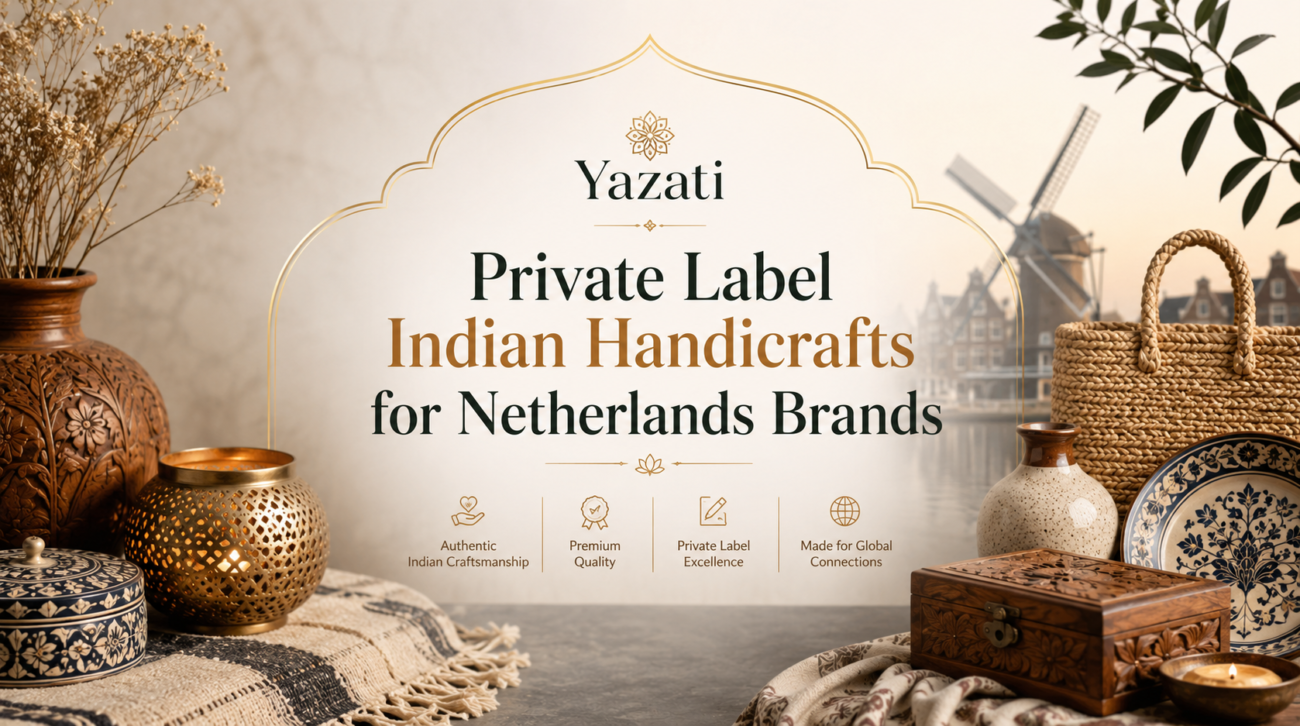
The global demand for handmade and sustainable products is growing rapidly. European consumers, especially in the Netherlands, are increasingly attracted to authentic handmade decor, eco-friendly home accessories, and artisanal lifestyle products. This trend has created huge opportunities for Private Label Indian Handicrafts for Netherlands Brands.
India has long been known for its rich cultural heritage, skilled artisans, and handmade craftsmanship. From wooden decor to embroidered textiles and eco-friendly jute products, Indian handicrafts offer a perfect blend of tradition, quality, and affordability. Dutch brands are now partnering with Indian manufacturers to create exclusive private label collections that match European tastes and sustainability goals.
In this article, you will learn how Netherlands brands can successfully source private label handicrafts from India, the benefits involved, product opportunities, quality standards, logistics, and strategies for building a profitable handicraft business.
Introduction to Indian Handicrafts Export Market
India is one of the world’s largest exporters of handicrafts. The country supplies handcrafted products to Europe, the United States, the Middle East, and many other regions. Indian handicrafts are admired because they combine traditional art techniques with modern product design.
The handicraft industry in India supports millions of artisans, especially in rural communities. Many products are handmade using eco-friendly materials such as wood, bamboo, jute, clay, cotton, brass, and recycled materials.
For Netherlands brands, this market offers:
- Unique product designs
- Competitive wholesale pricing
- Sustainable manufacturing options
- Large customization possibilities
- Handmade authenticity
Today, many Dutch importers focus on ethical sourcing and sustainable retailing, making Indian handicrafts an ideal fit.
Why Netherlands Brands Prefer Indian Handicrafts
Rising Demand for Sustainable Products
Consumers in the Netherlands are becoming more environmentally conscious. They prefer products made from natural materials and produced under ethical labor conditions.
Indian handicrafts align perfectly with these preferences because many products are:
- Handmade
- Eco-friendly
- Recyclable
- Ethically produced
- Low in carbon footprint
This makes private labeling Indian handicrafts a strong business opportunity for European retailers.
Popular Handmade Product Categories
Some of the most popular handicraft categories in Dutch markets include:
| Product Category | Popular Materials | Usage |
|---|---|---|
| Home Decor | Wood, brass, ceramic | Interior styling |
| Wall Art | Metal, fabric | Home decoration |
| Kitchen Accessories | Mango wood, marble | Functional decor |
| Storage Baskets | Jute, cane | Sustainable storage |
| Textiles | Cotton, embroidery | Cushion covers, throws |
| Candles & Holders | Metal, glass | Lifestyle products |
These products are highly suitable for boutiques, online stores, lifestyle brands, and home furnishing retailers.
Understanding Private Label Manufacturing
What Is Private Labeling?
Private labeling means purchasing products from a manufacturer and selling them under your own brand name. Instead of manufacturing products yourself, you work with suppliers who customize products according to your branding requirements.
For example, a Netherlands home decor brand may source handmade lanterns from India but sell them under its own logo and packaging.
Benefits of Private Label Indian Handicrafts for Netherlands Brands
There are several advantages:
- Lower production costs
- Faster market entry
- Unique branding opportunities
- Access to skilled craftsmanship
- Product customization
- Better profit margins
Private labeling also allows businesses to build strong brand identity without investing heavily in manufacturing facilities.
Top Indian Handicraft Categories for Dutch Markets
Wooden Home Decor
Wooden handicrafts are among the most exported Indian products to Europe. Mango wood, teak wood, and reclaimed wood are commonly used.
Popular products include:
- Decorative trays
- Candle holders
- Wall shelves
- Photo frames
- Coffee tables
- Carved furniture
These products suit minimalist and Scandinavian-inspired interiors popular in the Netherlands.
Brass and Metal Crafts
Indian artisans are famous for brass craftsmanship. Dutch consumers often buy brass products for luxury and bohemian interior styles.
Popular items include:
- Lanterns
- Vases
- Decorative bowls
- Wall mirrors
- Candle stands
Textile and Embroidered Products
Indian textiles are globally recognized for their beauty and craftsmanship.
Examples include:
- Cushion covers
- Table runners
- Quilts
- Handwoven rugs
- Embroidered throws
These products are ideal for private label home decor collections.
Eco-Friendly Jute and Cane Products
Sustainability trends have increased the demand for jute and cane handicrafts.
Popular products include:
- Storage baskets
- Laundry bins
- Planters
- Tote bags
- Decorative trays
Eco-conscious consumers in the Netherlands appreciate these natural and biodegradable products.
Key Advantages of Sourcing from India
Skilled Artisan Communities
India has centuries-old artisan traditions passed from generation to generation. Regions like Rajasthan, Uttar Pradesh, Gujarat, and West Bengal specialize in different craft styles.
This deep craftsmanship knowledge gives Indian products authenticity and uniqueness.
Competitive Pricing
Manufacturing costs in India remain affordable compared to many countries. This allows Netherlands brands to achieve healthy profit margins while offering premium handmade products.
Customization and Flexibility
Indian manufacturers often provide:
- Custom product sizes
- Exclusive designs
- Personalized packaging
- Brand logo printing
- Small batch production
This flexibility is valuable for boutique brands and startup retailers.
Quality Standards for Netherlands Importers
EU Compliance Requirements
European markets require strict product safety and compliance standards. Netherlands brands should ensure suppliers follow:
- REACH regulations
- FSC-certified wood sourcing
- CE standards where required
- Eco-friendly chemical usage
Conducting product testing before shipment is highly recommended.
Sustainable Packaging Expectations
Dutch consumers prefer recyclable and plastic-free packaging. Many importers now request:
- Kraft paper packaging
- Recycled cardboard boxes
- Minimal plastic use
- Eco-friendly inks
Sustainable packaging enhances brand reputation.
How to Find Reliable Indian Handicraft Manufacturers
Trade Fairs and B2B Platforms
Popular sourcing channels include:
- India Expo Mart
- IHGF Delhi Fair
- TradeIndia
- Alibaba
- IndiaMART
Attending trade fairs allows buyers to inspect product quality directly.
Factory Verification Process
Before placing bulk orders:
- Request product samples
- Verify export licenses
- Conduct factory audits
- Review certifications
- Check client references
Working with verified exporters reduces sourcing risks.
Branding Opportunities for Netherlands Companies
Creating Unique Product Collections
Private labeling allows Dutch brands to create exclusive collections tailored to local trends.
You can focus on themes such as:
- Scandinavian minimalism
- Bohemian interiors
- Sustainable living
- Luxury handcrafted decor
- Rustic farmhouse design
Packaging and Label Design
Professional branding increases perceived product value.
Strong branding elements include:
- Premium logo design
- Eco-friendly labels
- Storytelling about artisans
- Elegant product photography
- Sustainable packaging aesthetics
Logistics and Shipping from India to the Netherlands
Shipping Methods
The two main shipping methods are:
| Method | Advantages | Disadvantages |
|---|---|---|
| Sea Freight | Cost-effective | Longer delivery time |
| Air Freight | Faster shipping | Higher cost |
Sea freight is commonly used for bulk handicraft orders.
Customs and Documentation
Required export documents may include:
- Commercial invoice
- Packing list
- Bill of lading
- Certificate of origin
- Fumigation certificate for wood items
Working with experienced freight forwarders simplifies customs clearance.
Challenges in Private Label Handicraft Sourcing
Managing Lead Times
Handmade production often takes longer than machine manufacturing. Brands should plan inventory carefully to avoid stock shortages.
Maintaining Consistent Quality
Since products are handmade, slight variations may occur. Establishing clear quality standards and conducting inspections helps maintain consistency.
Digital Marketing Tips for Selling Handicrafts in Europe
SEO and Ecommerce Strategies
To grow online sales:
- Use SEO-optimized product descriptions
- Target sustainable lifestyle keywords
- Create blog content about artisans and craftsmanship
- Optimize product images
- Focus on mobile-friendly ecommerce design
A helpful external resource for European ecommerce trends is the official website of the European Commission.
Social Media Branding
Platforms like Instagram and Pinterest work extremely well for handicraft marketing.
Best practices include:
- Lifestyle photography
- Behind-the-scenes artisan stories
- Video reels
- Sustainable living content
- User-generated content
Visual storytelling increases engagement and brand trust.
FAQs About Private Label Indian Handicrafts for Netherlands Brands
1. Why are Indian handicrafts popular in the Netherlands?
Indian handicrafts are valued for their handmade quality, sustainability, artistic appeal, and affordability.
2. Can Netherlands startups source small quantities from India?
Yes, many Indian manufacturers offer low minimum order quantities for startups and boutique brands.
3. What are the best-selling Indian handicrafts in Europe?
Home decor, jute products, textiles, wooden decor, and brass accessories are highly popular.
4. How long does shipping from India to the Netherlands take?
Sea freight usually takes 25–40 days, while air freight may take 5–10 days.
5. Are Indian handicrafts eco-friendly?
Many products are made using sustainable materials and traditional handmade methods with low environmental impact.
6. How can I verify an Indian handicraft supplier?
Request samples, check certifications, review export history, and conduct third-party factory inspections.
Conclusion
The demand for handmade, ethical, and sustainable products continues to rise across Europe. This creates massive opportunities for Private Label Indian Handicrafts for Netherlands Brands seeking unique products with strong market appeal.
India offers a powerful combination of skilled artisans, affordable manufacturing, product diversity, and customization capabilities. By partnering with reliable Indian exporters, Dutch brands can create exclusive private label collections that resonate with modern consumers.
From eco-friendly jute baskets to elegant brass decor and handcrafted textiles, Indian handicrafts provide endless possibilities for growth in the European home and lifestyle market.
Businesses that focus on quality, branding, sustainability, and strong supplier relationships can build highly successful private label handicraft brands for the Netherlands market.
✨ Discover Global Sourcing Excellence with Netyex ✨
Netyex is your trusted B2B sourcing partner, connecting international buyers with India’s finest manufacturers and curated product lines—from handicrafts and home décor to kitchenware, textiles, hospitality essentials, and more. With verified suppliers and end-to-end support, we make global procurement seamless, reliable, and efficient.
👉 Elevate your sourcing experience—explore Netyex today.
📦 Bulk orders & customisation | 🌍 Worldwide delivery | 🤝 Trusted by global buyers
Visit Netyex to source premium Indian products with confidence.