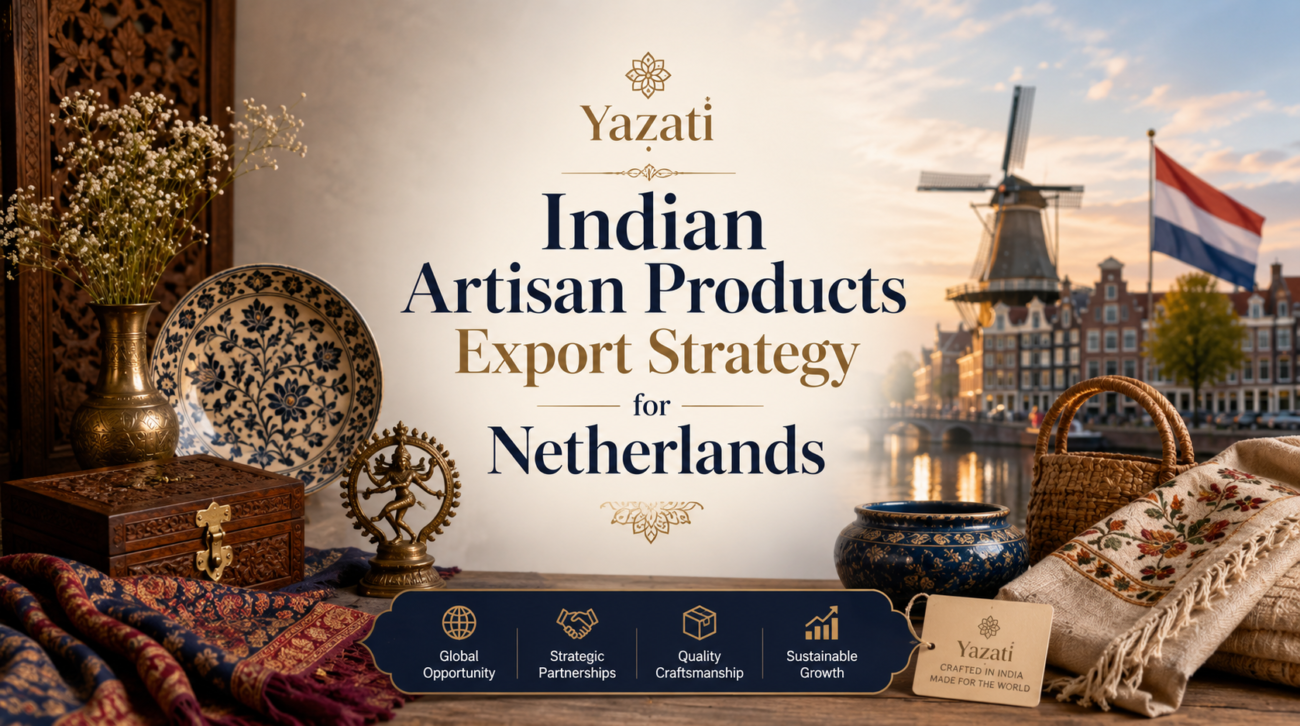
The Netherlands has become one of Europe’s most attractive destinations for handmade and sustainable products. For Indian exporters, artisans, cooperatives, and handicraft businesses, this creates a major opportunity. Indian craftsmanship already enjoys a strong reputation across Europe due to its heritage, authenticity, sustainability, and artistic value.
A successful Indian Artisan Products Export Strategy for Netherlands requires more than simply shipping goods overseas. Exporters must understand Dutch consumer behavior, compliance standards, logistics, pricing, digital marketing, and distribution channels.
This guide explains how Indian artisan businesses can build a profitable and sustainable export strategy for the Dutch market.
Understanding the Dutch Market for Artisan Products
The Netherlands is one of Europe’s strongest import hubs. Dutch consumers appreciate authenticity, sustainability, and handmade craftsmanship. Indian artisans can benefit greatly because many traditional Indian products align naturally with these preferences.
The Dutch market also acts as a distribution gateway to neighboring countries like Germany, Belgium, and France. Once products enter the Netherlands, businesses can expand across the European Union more easily.
Why Netherlands is a Gateway to Europe
The Netherlands has world-class infrastructure, advanced logistics systems, and one of Europe’s busiest ports. Many European importers use Dutch warehouses and distributors to supply products throughout the EU.
Major advantages include:
- Efficient customs systems
- Strong e-commerce ecosystem
- High purchasing power
- Sustainability-focused consumers
- Access to the European single market
For Indian exporters, this creates an ideal starting point for European expansion.
Dutch Consumer Preferences
Dutch consumers prefer products that are:
- Sustainable
- Ethically sourced
- Handmade
- Minimalist yet artistic
- Functional and durable
Products with cultural stories and eco-friendly materials perform exceptionally well in the Netherlands.
Most Profitable Indian Artisan Products to Export
India offers an enormous range of handcrafted goods. However, some categories perform especially well in the Dutch market.
Handmade Textiles
Indian handmade textiles are highly valued for their craftsmanship and vibrant designs.
Popular products include:
- Handwoven rugs
- Organic cotton throws
- Block-printed bedding
- Embroidered cushion covers
- Handloom scarves
Natural dyes and organic fabrics attract environmentally conscious buyers.
Wooden Crafts
Indian wooden handicrafts have strong demand in Dutch interior décor markets.
Best-selling categories include:
- Mango wood furniture
- Hand-carved trays
- Decorative boxes
- Wooden wall art
- Sustainable kitchenware
Minimalist designs tailored for European interiors often perform better than heavily ornate styles.
Sustainable Home Décor
Eco-friendly décor is one of the fastest-growing segments in Europe.
Examples include:
- Bamboo products
- Jute baskets
- Recycled metal art
- Terracotta décor
- Handmade candles
Dutch consumers actively seek sustainable alternatives to mass-produced décor.
Jewelry and Fashion Accessories
Fashion-conscious buyers in the Netherlands appreciate handcrafted accessories.
High-potential products include:
- Silver jewelry
- Beaded necklaces
- Handmade leather bags
- Embroidered handbags
- Natural stone accessories
Small-batch luxury collections can generate premium pricing opportunities.
Market Trends Driving Demand
Understanding consumer trends is essential for a strong Indian Artisan Products Export Strategy for Netherlands.
Eco-Friendly Products
Sustainability is no longer optional in Europe. Buyers increasingly prefer products made from:
- Recycled materials
- Organic cotton
- Natural fibers
- FSC-certified wood
- Eco-safe dyes
Businesses that highlight environmental responsibility gain competitive advantages.
Fair Trade and Ethical Sourcing
European consumers care deeply about worker welfare and ethical sourcing practices.
Certifications such as:
- Fair Trade
- SA8000
- GOTS
- FSC
can increase buyer confidence significantly.
Handmade Luxury Movement
Consumers are moving away from mass-produced goods toward artisanal luxury products with unique stories and craftsmanship.
This trend strongly favors Indian handmade products.
Legal Requirements for Exporting to Netherlands
Exporters must comply with both Indian and European Union regulations.
EU Import Regulations
Key compliance areas include:
- Product safety standards
- REACH chemical regulations
- Packaging waste directives
- Consumer safety labeling
Failure to comply can lead to shipment delays or rejection.
Product Certifications
Depending on the product category, certifications may be required.
Common certifications include:
| Product Type | Certification |
|---|---|
| Organic textiles | GOTS |
| Wooden products | FSC |
| Ethical production | Fair Trade |
| Eco products | EU Eco Label |
Certifications improve credibility and market acceptance.
Packaging and Labeling Rules
Dutch buyers prefer sustainable packaging.
Important labeling details include:
- Country of origin
- Material composition
- Care instructions
- Safety warnings
- Eco claims verification
Minimal plastic packaging is highly preferred.
Pricing Strategy for Dutch Buyers
Pricing plays a major role in export success.
Wholesale Pricing
European importers generally expect:
- Stable pricing
- Transparent costing
- Volume discounts
- Reliable quality consistency
Calculate pricing carefully by including:
- Production costs
- Packaging
- Freight
- Customs duties
- VAT
- Distributor margins
Retail Pricing
Premium artisan products can command high retail margins in Europe.
For example:
Positioning products as premium handmade goods increases perceived value.
Currency and Tax Considerations
Most Dutch buyers transact in Euros.
Exporters should monitor:
- Exchange rate fluctuations
- VAT obligations
- International payment fees
Using export finance services can reduce financial risks.
Logistics and Shipping Strategy
Efficient logistics directly affect profitability.
Best Shipping Methods
Common shipping options include:
- Sea freight for bulk shipments
- Air freight for premium or urgent orders
- Courier services for samples
Sea freight is generally the most cost-effective method.
Rotterdam Port Advantage
Port of Rotterdam is Europe’s largest seaport and a major logistics hub.
Benefits include:
- Fast customs processing
- Strong inland transport networks
- Efficient warehousing
- Access to multiple EU markets
This makes Rotterdam ideal for Indian exporters.
Customs Clearance Tips
To avoid delays:
- Use accurate HS codes
- Maintain complete documentation
- Work with experienced customs brokers
- Ensure product compliance before shipment
Building a Strong Brand Identity
Branding is critical in Europe’s artisan market.
Storytelling in Artisan Branding
Dutch consumers love authentic stories.
Strong storytelling should highlight:
- Artisan communities
- Traditional techniques
- Cultural heritage
- Handmade processes
A compelling story increases emotional connection and brand loyalty.
Sustainability Branding
Brands should clearly communicate:
- Eco-friendly sourcing
- Ethical production
- Low-carbon packaging
- Social impact initiatives
Transparency builds trust with European buyers.
Digital Marketing Strategy
Modern exporters need strong digital visibility.
SEO for European Buyers
Optimize websites for keywords such as:
- Handmade Indian décor wholesale Europe
- Sustainable artisan products Netherlands
- Fair trade handicrafts supplier
SEO can attract international buyers organically.
Social Media Marketing
Platforms like:
work well for artisan brands because visuals strongly influence purchasing decisions.
B2B Marketplace Platforms
Useful platforms include:
- Etsy Wholesale
- Faire
- Alibaba
- IndiaMART
- Europages
These platforms help connect exporters with European importers.
Finding Buyers in Netherlands
Building buyer relationships is essential.
Trade Shows and Exhibitions
Important European trade fairs include:
| Event | Location |
|---|---|
| Ambiente | Frankfurt |
| Maison & Objet | Paris |
| ShowUP | Netherlands |
These exhibitions help businesses meet importers and retailers directly.
Importers and Retail Chains
Potential buyer categories include:
- Interior décor retailers
- Sustainable lifestyle stores
- Museum gift shops
- Boutique furniture stores
Personalized outreach works better than mass emailing.
Online Wholesale Platforms
Digital B2B marketplaces simplify international expansion for small exporters.
Professional product photography greatly improves conversion rates.
Payment and Financial Risk Management
International trade involves financial risks.
Secure Payment Methods
Recommended payment options include:
- Letter of Credit (LC)
- Advance payment
- Escrow services
- Secure international wire transfers
Avoid high-risk unsecured payment arrangements.
Export Credit Insurance
Export insurance protects businesses against:
- Buyer defaults
- Political risks
- Payment delays
This becomes increasingly important for large export volumes.
Challenges in Exporting Indian Artisan Products
Every export business faces obstacles.
Competition from Other Countries
India competes with:
- Vietnam
- Indonesia
- Turkey
- Morocco
Differentiation through storytelling and quality is crucial.
Quality Consistency
European buyers expect consistent quality standards across every shipment.
Exporters should implement:
- Quality control systems
- Production standardization
- Regular inspections
Freight Cost Fluctuations
Global shipping costs can change rapidly.
Businesses should maintain flexible pricing strategies to manage logistics volatility.
Growth Opportunities in 2026
The artisan export sector continues to grow.
Sustainable Luxury Segment
Luxury buyers increasingly prefer ethical and handmade products over factory-made goods.
Indian artisan brands can position themselves in premium European lifestyle markets.
Private Label Partnerships
Many Dutch retailers seek Indian manufacturers for private-label collections.
This creates long-term business opportunities.
E-commerce Expansion
Cross-border e-commerce platforms are making international selling easier than ever.
Direct-to-consumer exports may become a major growth channel for Indian artisans.
For more information on EU trade support, visit the official European Commission trade portal.
FAQs
What artisan products sell best in the Netherlands?
Sustainable home décor, handmade textiles, wooden crafts, and artisan jewelry are among the top-selling Indian products.
Do Indian exporters need certifications for the Dutch market?
Yes, certifications like FSC, GOTS, and Fair Trade can improve compliance and buyer trust.
Which shipping method is best for artisan exports?
Sea freight is usually the most economical for large shipments, while air freight suits urgent orders.
How can Indian artisans find Dutch buyers?
Trade fairs, B2B marketplaces, LinkedIn outreach, and distributor partnerships are effective methods.
Why is sustainability important in the Netherlands?
Dutch consumers strongly prefer eco-friendly and ethically sourced products, making sustainability a key selling point.
Can small artisan businesses export to Europe successfully?
Yes. Small businesses can succeed through niche branding, online platforms, and strategic partnerships.
Conclusion
A successful Indian Artisan Products Export Strategy for Netherlands depends on combining craftsmanship with modern business strategy. Indian exporters who focus on sustainability, branding, compliance, quality control, and digital marketing can build strong positions in the Dutch market.
The Netherlands offers more than just a single-country opportunity. It acts as a gateway to the entire European Union. Businesses that establish strong partnerships and reliable logistics systems can unlock substantial long-term growth.
As global consumers continue shifting toward handmade, ethical, and sustainable products, Indian artisan exports are well-positioned for significant expansion in 2026 and beyond.
✨ Discover Global Sourcing Excellence with Netyex ✨
Netyex is your trusted B2B sourcing partner, connecting international buyers with India’s finest manufacturers and curated product lines—from handicrafts and home décor to kitchenware, textiles, hospitality essentials, and more. With verified suppliers and end-to-end support, we make global procurement seamless, reliable, and efficient.
👉 Elevate your sourcing experience—explore Netyex today.
📦 Bulk orders & customisation | 🌍 Worldwide delivery | 🤝 Trusted by global buyers
Visit Netyex to source premium Indian products with confidence.