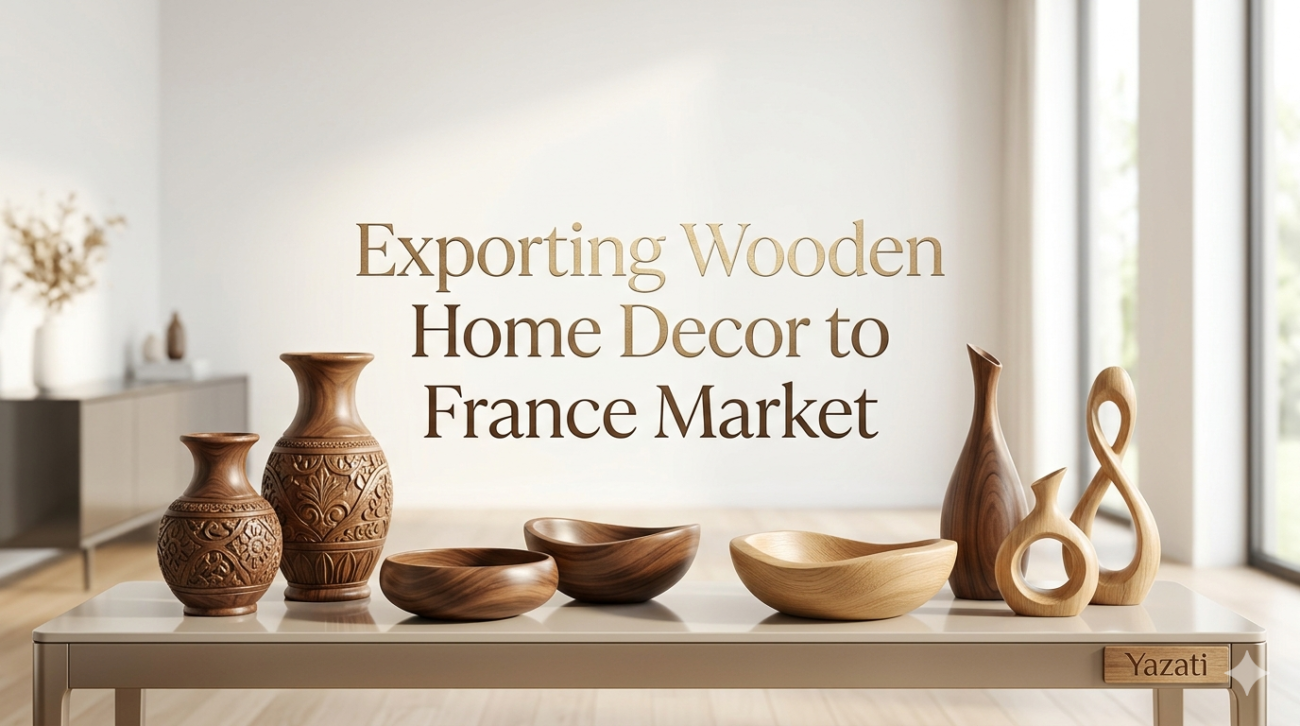
Introduction to the French Home Decor Industry
Exporting Wooden Home Decor to France Market presents significant opportunities for manufacturers, artisans, and exporters seeking access to one of Europe’s most sophisticated consumer markets. France is known for its appreciation of design, craftsmanship, and premium-quality home furnishings. Consumers actively seek decorative products that combine aesthetics, functionality, and sustainability.
Wooden home decor products fit perfectly into these preferences. Whether handcrafted wall art, decorative trays, wooden sculptures, candle holders, or rustic interior accessories, French buyers increasingly value natural materials and eco-friendly production methods.
Why France Is an Attractive Market for Wooden Home Decor
France remains among Europe’s largest importers of home furnishings and decorative accessories. Several factors contribute to its attractiveness.
Consumer Preferences in France
French consumers often favor products that reflect:
- Authentic craftsmanship
- Elegant design
- Sustainable sourcing
- Premium quality
- Cultural storytelling
Products that demonstrate artisanal heritage frequently gain attention in both retail and online channels.
Growing Demand for Sustainable Products
Environmental awareness continues to influence purchasing decisions. Buyers increasingly seek products made from:
- FSC-certified wood
- Recycled materials
- Renewable resources
- Environmentally responsible packaging
This trend creates a strong advantage for exporters that prioritize sustainability.
Market Size and Growth Trends
The French home decoration sector continues to experience steady demand despite economic fluctuations.
Key Import Statistics
France imports decorative products from numerous countries, creating opportunities for new suppliers. Importers continuously seek innovative and differentiated products that align with evolving consumer preferences.
Emerging Design Trends
Popular trends include:
| Trend | Description |
|---|---|
| Scandinavian Style | Minimalist wooden decor |
| Rustic Chic | Natural textures and handcrafted designs |
| Sustainable Living | Eco-friendly decorative products |
| Bohemian Interiors | Artistic wooden accents |
| Contemporary Natural | Modern designs using raw wood finishes |
Understanding these trends helps exporters develop products that resonate with French consumers.
Understanding French Customer Behavior
Premium and Artisan Appeal
French customers often appreciate uniqueness over mass production. Handmade wooden decor products can command higher prices when they communicate craftsmanship and authenticity.
Examples include:
- Hand-carved wall decorations
- Artisan candle holders
- Decorative wooden bowls
- Wooden tabletop accessories
Eco-Conscious Purchasing Decisions
Many consumers evaluate:
- Source of timber
- Manufacturing methods
- Carbon footprint
- Packaging sustainability
Transparent communication about these factors enhances buyer trust.
Popular Wooden Home Decor Products
Several categories perform particularly well in France.
Wall Art and Decorative Panels
Decorative wooden wall pieces remain highly popular among homeowners and interior designers.
Popular options include:
- Geometric wall art
- Laser-cut decorative panels
- Nature-inspired wall decorations
Wooden Sculptures and Figurines
Artistic wooden sculptures often appeal to premium buyers seeking distinctive interior accents.
Decorative Furniture Accessories
Examples include:
- Wooden trays
- Serving boards
- Decorative boxes
- Picture frames
- Candle stands
These products often combine decorative and practical functions.
Product Standards and Compliance Requirements
Compliance is critical when Exporting Wooden Home Decor to France Market.
European Union Regulations
Exporters should ensure products meet applicable European Union requirements concerning:
- Product safety
- Material composition
- Consumer protection standards
Timber Legality and Sustainability Certifications
Widely recognized certifications include:
- FSC (Forest Stewardship Council)
- PEFC (Programme for the Endorsement of Forest Certification)
Such certifications can strengthen credibility with importers and retailers.
For official guidance, exporters can consult the European Commission trade resources: https://trade.ec.europa.eu
Packaging and Labeling Requirements
French Language Considerations
Labels and product information should be easy for French buyers to understand. Providing French-language packaging often improves customer experience.
Sustainable Packaging Expectations
Many retailers prefer:
- Recyclable packaging
- Plastic-free materials
- Minimal waste designs
Sustainable packaging can become a selling point rather than merely a compliance requirement.
Pricing Strategy for France
Cost Calculation
Pricing should account for:
- Production costs
- Packaging expenses
- Inland transportation
- International freight
- Insurance
- Customs duties
- Distributor margins
Competitive Positioning
French buyers may pay premium prices for:
- Handcrafted products
- Sustainable materials
- Exclusive designs
- Limited-edition collections
Competing solely on price is often less effective than emphasizing quality and uniqueness.
Distribution Channels
Importers and Wholesalers
Many exporters enter France through established distributors who already serve retailers and design stores.
Benefits include:
- Faster market entry
- Existing customer networks
- Reduced operational complexity
Retail Stores and Online Marketplaces
Potential sales channels include:
- Home decor boutiques
- Furniture retailers
- Lifestyle stores
- E-commerce platforms
A multi-channel approach often produces the best results.
Building a Strong Brand Presence
Storytelling and Craftsmanship
French consumers appreciate the story behind a product.
Highlight:
- Artisan techniques
- Cultural heritage
- Sustainable sourcing
- Handmade production methods
Strong storytelling differentiates products from mass-produced alternatives.
Digital Marketing Approaches
Effective methods include:
- Social media campaigns
- Influencer partnerships
- Interior design collaborations
- Content marketing
- Visual storytelling
Professional product photography is especially important in the home decor category.
Logistics and Shipping Considerations
Sea Freight vs Air Freight
| Method | Advantages | Limitations |
|---|---|---|
| Sea Freight | Cost-effective for large volumes | Longer transit times |
| Air Freight | Faster delivery | Higher costs |
| Courier Services | Suitable for samples | Not ideal for bulk orders |
Customs Clearance Procedures
Proper documentation is essential:
- Commercial invoice
- Packing list
- Bill of lading
- Certificate of origin
- Relevant certifications
Accurate paperwork reduces delays and additional costs.
Finding Buyers in France
Trade Shows and Exhibitions
Trade fairs remain valuable for networking and buyer acquisition.
Benefits include:
- Direct customer interaction
- Product demonstrations
- Market intelligence
- Distributor relationships
B2B Platforms
Online B2B marketplaces can help exporters identify:
- Importers
- Retailers
- Interior designers
- Procurement professionals
A professional digital presence improves credibility.
Risk Management and Challenges
Currency and Payment Risks
Potential solutions include:
- Advance payments
- Letters of credit
- Currency hedging
- Export credit insurance
Competition from Global Suppliers
Competition exists from suppliers across Asia, Europe, and Latin America. Success often depends on:
- Product differentiation
- Design innovation
- Sustainability credentials
- Reliable delivery
Future Opportunities
Future growth drivers include:
- Eco-friendly lifestyles
- Premium handcrafted products
- Online home decor sales
- Sustainable interior design
- Ethical consumer purchasing
Exporters who align with these trends can strengthen their long-term position in France.
Frequently Asked Questions (FAQs)
1. Is France a good market for wooden home decor exports?
Yes. France has strong demand for stylish, sustainable, and high-quality home decor products.
2. What certifications are useful when exporting wooden products to France?
FSC and PEFC certifications are highly valued because they demonstrate responsible forest management.
3. Which wooden home decor products sell best in France?
Wall art, decorative trays, candle holders, picture frames, sculptures, and handcrafted accessories are among the most popular categories.
4. Do French consumers prefer eco-friendly products?
Yes. Sustainability significantly influences purchasing decisions across many consumer segments.
5. What is the best way to find French buyers?
Trade fairs, B2B marketplaces, distributors, and direct outreach to retailers are effective methods.
6. What are the biggest challenges in exporting to France?
Regulatory compliance, competition, logistics management, and building brand recognition are common challenges.
Conclusion
Exporting Wooden Home Decor to France Market offers substantial opportunities for businesses capable of delivering quality, sustainability, and compelling design. French consumers appreciate craftsmanship, authenticity, and environmentally responsible products. By understanding market trends, complying with regulations, building strong distribution networks, and investing in branding, exporters can establish a profitable and sustainable presence in one of Europe’s most influential home decor markets.
✨ Discover Global Sourcing Excellence with Netyex ✨
Netyex is your trusted B2B sourcing partner, connecting international buyers with India’s finest manufacturers and curated product lines—from handicrafts and home décor to kitchenware, textiles, hospitality essentials, and more. With verified suppliers and end-to-end support, we make global procurement seamless, reliable, and efficient.
👉 Elevate your sourcing experience—explore Netyex today.
📦 Bulk orders & customisation | 🌍 Worldwide delivery | 🤝 Trusted by global buyers
Visit Netyex to source premium Indian products with confidence.