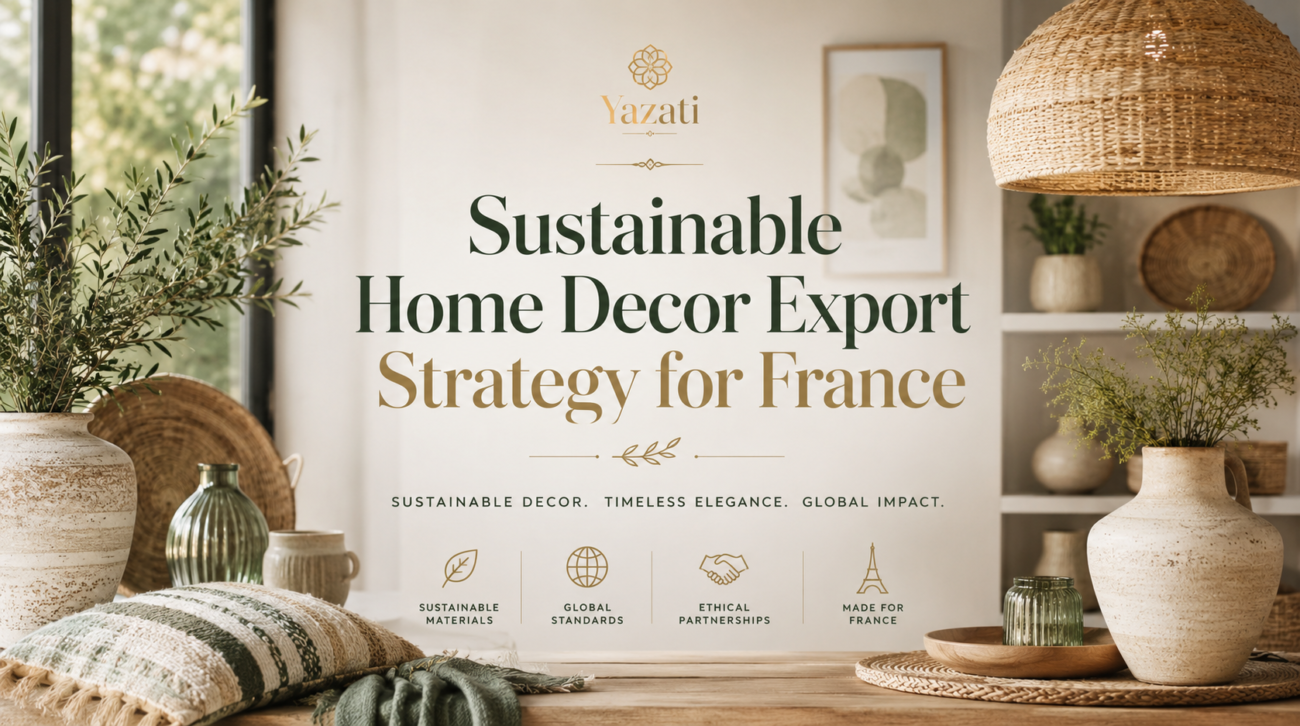
Introduction to France’s Sustainable Home Décor Market
France is one of Europe’s most influential markets for home décor, design, and lifestyle products. Over the past decade, French consumers have become increasingly concerned about environmental sustainability, ethical sourcing, and product transparency. This shift has created significant opportunities for exporters offering sustainable home décor solutions.
A successful Sustainable Home Decor Export Strategy for France requires more than simply shipping products overseas. Exporters must understand French consumer behavior, comply with regulations, build a compelling brand story, and create efficient supply chains.
The growing demand for eco-friendly products has transformed the home décor industry. Consumers now actively seek products made from recycled materials, responsibly harvested wood, organic textiles, and low-impact manufacturing processes.
Why France Is an Attractive Export Destination
France offers a combination of strong purchasing power, appreciation for design, and growing environmental awareness.
Consumer Preferences in France
French consumers value:
- Elegant and functional design
- Product authenticity
- Environmental responsibility
- High-quality craftsmanship
- Ethical sourcing practices
Unlike many mass-market environments, French buyers often prioritize quality and sustainability over low prices.
Growth of Eco-Conscious Purchasing
Sustainability is no longer a niche trend. French households increasingly consider:
- Carbon footprints
- Packaging waste
- Recyclability
- Fair-trade production
- Local and ethical sourcing
This creates a favorable environment for exporters offering genuine sustainable products.
Understanding Sustainable Home Décor Products
Before entering the market, exporters must clearly define what makes their products sustainable.
Popular Sustainable Materials
Products made from the following materials are particularly attractive:
- Bamboo
- Reclaimed wood
- Cork
- Organic cotton
- Recycled glass
- Recycled metal
- Natural fibers such as jute and hemp
These materials align well with French environmental values.
Circular Economy Trends
The circular economy has become an important concept in France.
Consumers increasingly support products that:
- Are recyclable
- Have long lifespans
- Can be repaired
- Use recycled materials
- Generate minimal waste
Brands that incorporate circular principles gain stronger market credibility.
Market Research for Export Success
Thorough market research reduces risk and improves decision-making.
Identifying Target Customers
Potential customer segments include:
- Environmentally conscious homeowners
- Premium lifestyle consumers
- Interior designers
- Boutique retailers
- Hospitality businesses
- Sustainable architecture firms
Each segment requires a different marketing approach.
Competitor Analysis
Study:
- Product categories
- Price points
- Sustainability claims
- Distribution channels
- Customer reviews
Understanding competitors helps identify gaps and opportunities.
Regulatory Requirements in France
Compliance is essential for long-term success.
Product Safety Standards
Products sold in France must comply with European Union regulations concerning:
- Material safety
- Chemical content
- Product labeling
- Consumer protection
Proper documentation should always accompany shipments.
Environmental Compliance
Sustainability claims must be verifiable.
Avoid vague statements such as:
- “100% green”
- “Eco-friendly”
- “Environmentally safe”
Unless supported by evidence and certifications.
Packaging Regulations
France has strict packaging regulations encouraging:
- Waste reduction
- Recyclability
- Material recovery
Exporters should design packaging accordingly.
Sustainable Home Decor Export Strategy for France: Market Entry Framework
A structured market entry approach significantly increases success rates.
Direct Exporting
Advantages include:
- Greater profit margins
- Direct customer relationships
- Brand control
However, it requires more resources and market knowledge.
Distributor Partnerships
French distributors provide:
- Market access
- Existing customer networks
- Local expertise
- Sales support
Many exporters begin with distributor relationships before expanding independently.
Online Marketplaces
Digital channels continue to grow.
Effective platforms may include:
- E-commerce websites
- Design-focused marketplaces
- Sustainable product platforms
Online channels provide rapid market testing opportunities.
Product Positioning and Branding
Branding plays a major role in France.
Storytelling and Sustainability
French consumers appreciate authentic stories.
Communicate:
- Material sourcing
- Artisan craftsmanship
- Environmental impact reduction
- Social responsibility initiatives
Strong storytelling builds emotional connections.
Premium vs Mass-Market Positioning
Most sustainable home décor products perform better in premium segments where consumers are willing to pay for quality and ethics.
Positioning should emphasize:
- Design excellence
- Durability
- Sustainability
- Unique craftsmanship
Pricing Strategy for the French Market
Pricing must balance competitiveness and profitability.
Cost Calculations
Consider:
- Manufacturing costs
- Packaging costs
- Shipping expenses
- Import duties
- Distribution margins
- Marketing expenses
Ignoring hidden costs can quickly erode profitability.
Value-Based Pricing
French consumers often accept higher prices when products demonstrate:
- Superior quality
- Authentic sustainability
- Strong design aesthetics
- Ethical production
Value perception frequently matters more than low pricing.
Logistics and Supply Chain Management
Efficient logistics improve customer satisfaction and profitability.
Shipping Methods
Common options include:
| Method | Advantages | Challenges |
|---|---|---|
| Sea Freight | Cost-effective | Longer transit time |
| Air Freight | Faster delivery | Higher costs |
| Rail Freight | Sustainable option | Limited availability |
| Combined Transport | Flexible | More coordination |
Warehousing Solutions
Local warehousing offers:
- Faster delivery
- Reduced shipping costs
- Better inventory management
- Improved customer experience
Strategic warehousing can create a significant competitive advantage.
Sustainable Packaging Strategies
Packaging significantly influences customer perception.
Eco-Friendly Materials
Popular options include:
- Recycled cardboard
- Compostable fillers
- Paper tape
- Plant-based inks
These materials align with sustainability expectations.
French Consumer Expectations
Consumers prefer packaging that is:
- Minimalistic
- Recyclable
- Attractive
- Functional
Excessive packaging often receives negative feedback.
Digital Marketing and Promotion
Digital visibility is essential.
Social Media Marketing
Effective platforms include:
Visual storytelling performs particularly well for home décor brands.
Influencer Collaborations
Working with eco-conscious influencers can:
- Increase trust
- Improve brand awareness
- Generate sales
- Enhance market credibility
Choose partners whose values align with your sustainability mission.
Trade Shows and B2B Networking
Trade events remain important for entering the French market.
Industry Events
Key opportunities include major design and home décor exhibitions in France and Europe.
Benefits include:
- Buyer meetings
- Market intelligence
- Brand exposure
- Partnership development
Buyer Meetings
Prepare:
- Product catalogs
- Sustainability certifications
- Pricing sheets
- Sample collections
Professional preparation increases conversion rates.
Building Long-Term Distribution Channels
Long-term growth depends on strong distribution networks.
Retail Partnerships
Target:
- Sustainable lifestyle stores
- Boutique décor retailers
- Premium furniture stores
Partnerships can provide stable recurring revenue.
Interior Designer Networks
Interior designers frequently influence purchasing decisions.
Develop relationships through:
- Sample programs
- Design collaborations
- Exclusive collections
These partnerships often lead to repeat business.
Risk Management and Challenges
Every export market involves risks.
Currency Fluctuations
Monitor exchange rates carefully and consider:
- Forward contracts
- Multi-currency pricing
- Hedging strategies
Financial planning reduces uncertainty.
Market Competition
Competition continues to increase as sustainability gains popularity.
Differentiate through:
- Innovation
- Design
- Certifications
- Brand storytelling
- Customer experience
Future Trends in Sustainable Home Décor
Smart Sustainable Products
Emerging trends include:
- Energy-efficient décor
- Smart lighting
- Sustainable technology integration
Innovation will increasingly influence purchasing decisions.
Circular Design Innovations
Future products will emphasize:
- Reusability
- Modular design
- Repairability
- Material recovery
Businesses embracing these trends early may gain substantial advantages.
Frequently Asked Questions
1. Why is France attractive for sustainable home décor exports?
France has strong consumer demand for environmentally responsible products, premium design, and ethical manufacturing practices.
2. What certifications help sustainable products succeed in France?
Environmental certifications, responsible sourcing certifications, and product safety compliance documentation can strengthen market acceptance.
3. Should exporters use distributors or sell directly?
New exporters often benefit from distributors, while experienced exporters may combine direct sales with distribution partnerships.
4. What materials are most popular in sustainable home décor?
Bamboo, reclaimed wood, recycled glass, organic cotton, hemp, cork, and recycled metals are highly favored.
5. How important is sustainable packaging?
Very important. French consumers increasingly evaluate products based on packaging sustainability and waste reduction.
6. Which marketing channels work best?
Instagram, Pinterest, influencer collaborations, e-commerce platforms, and trade exhibitions are among the most effective channels.
7. What is the biggest challenge when exporting to France?
Balancing regulatory compliance, competitive pricing, logistics efficiency, and strong brand differentiation can be challenging.
Conclusion
A successful Sustainable Home Decor Export Strategy for France combines market intelligence, regulatory compliance, authentic sustainability, strong branding, and efficient logistics. French consumers increasingly seek products that reflect environmental responsibility without sacrificing quality or aesthetics. Exporters that invest in sustainable materials, transparent supply chains, compelling storytelling, and strategic partnerships can establish a strong foothold in this growing market.
For additional guidance on European sustainability initiatives, visit the official European Commission sustainability resources.
✨ Discover Global Sourcing Excellence with Netyex ✨
Netyex is your trusted B2B sourcing partner, connecting international buyers with India’s finest manufacturers and curated product lines—from handicrafts and home décor to kitchenware, textiles, hospitality essentials, and more. With verified suppliers and end-to-end support, we make global procurement seamless, reliable, and efficient.
👉 Elevate your sourcing experience—explore Netyex today.
📦 Bulk orders & customisation | 🌍 Worldwide delivery | 🤝 Trusted by global buyers
Visit Netyex to source premium Indian products with confidence.