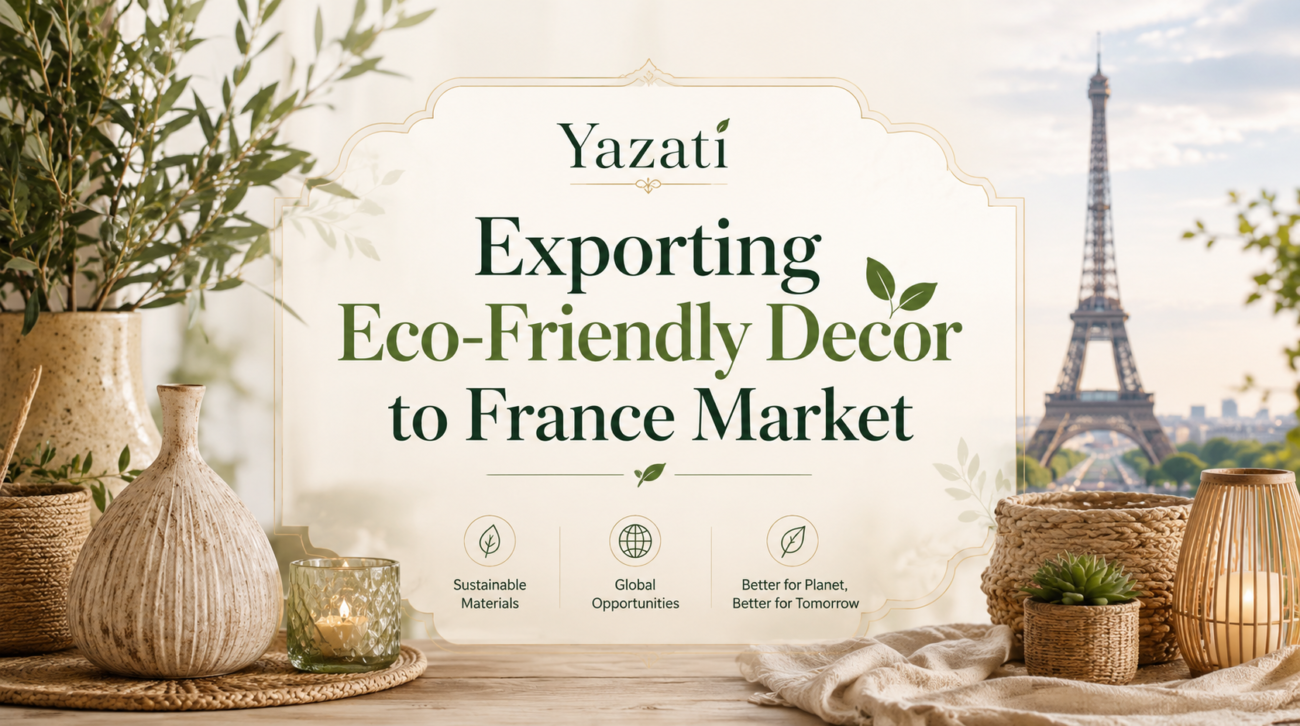
France has become one of Europe’s most promising destinations for sustainable home products. As environmental awareness continues to rise, consumers are increasingly seeking eco-friendly furniture, decorative accessories, handmade crafts, and sustainable home décor items. For exporters, Exporting Eco-Friendly Decor to France Market offers significant opportunities to establish long-term business relationships and generate consistent revenue.
French consumers are known for valuing quality, aesthetics, sustainability, and craftsmanship. Businesses that successfully combine these elements can gain a strong competitive advantage in this growing market.
Introduction to the French Eco-Friendly Decor Market
The eco-friendly home décor industry in France has expanded rapidly over the last decade. Growing environmental concerns, government initiatives supporting sustainability, and changing consumer habits have contributed to this trend.
Consumers are increasingly looking for products that:
- Reduce environmental impact
- Use renewable materials
- Support ethical production
- Promote circular economy principles
- Offer long-lasting quality
This shift has created substantial opportunities for exporters specializing in sustainable décor products.
Why France Is an Attractive Destination for Sustainable Decor
Growth of Green Consumerism
French consumers have become more conscious of the environmental footprint of their purchases. Many buyers actively seek brands that demonstrate genuine commitment to sustainability.
Research consistently shows that consumers are willing to pay premium prices for products that:
- Are environmentally friendly
- Have transparent sourcing
- Support fair trade practices
- Use recyclable packaging
This creates favorable conditions for exporters offering eco-friendly decorative products.
Market Size and Demand Trends
France represents one of Europe’s largest home décor markets. Demand continues growing for:
- Handmade decorations
- Natural fiber products
- Recycled-material décor
- Sustainable furniture accessories
- Artisan-crafted home accents
The increasing popularity of eco-conscious lifestyles further strengthens market potential.
Understanding French Consumer Preferences
Success depends heavily on understanding local tastes and expectations.
Popular Eco-Friendly Home Decor Categories
Several product categories perform exceptionally well:
| Product Category | Market Demand |
|---|---|
| Bamboo Decor | High |
| Recycled Glass Products | High |
| Organic Cotton Textiles | High |
| Natural Fiber Baskets | Very High |
| Wooden Decorative Items | High |
| Handmade Artisan Products | Very High |
French consumers appreciate products that combine functionality with aesthetic appeal.
Design Aesthetics Preferred in France
French interior design often emphasizes:
- Minimalism
- Natural textures
- Neutral colors
- Elegant simplicity
- Timeless design
- Artisan craftsmanship
Exporters should adapt product collections to reflect these preferences whenever possible.
Market Research Before Exporting
Conducting thorough market research minimizes risk and improves decision-making.
Identifying Target Customers
Potential customer segments include:
- Eco-conscious homeowners
- Interior designers
- Sustainable lifestyle enthusiasts
- Boutique retailers
- Luxury home décor stores
- Online shoppers
Each segment requires a different marketing approach.
Competitor Analysis
Analyze competitors to understand:
- Pricing structures
- Product features
- Branding strategies
- Distribution methods
- Customer reviews
Learning from successful competitors can help refine your market entry strategy.
Product Compliance and French Regulations
Regulatory compliance is essential when entering the French market.
Environmental Standards
Products should meet relevant European sustainability requirements.
Important considerations include:
- Material safety
- Sustainable sourcing
- Chemical restrictions
- Waste reduction practices
Documentation proving compliance strengthens buyer confidence.
Packaging and Labeling Requirements
Packaging should ideally be:
- Recyclable
- Minimalistic
- Informative
- Environmentally friendly
Labels should clearly indicate:
- Product origin
- Material composition
- Sustainability certifications
- Care instructions
Sustainable Materials That Sell Well in France
Bamboo Products
Bamboo remains highly popular due to:
- Rapid renewability
- Durability
- Attractive appearance
- Versatility
Common products include trays, lamps, baskets, and decorative accents.
Recycled Materials
French consumers appreciate products made from:
- Recycled glass
- Reclaimed wood
- Upcycled metals
- Recycled textiles
These products align with circular economy values.
Natural Fiber Decor
Natural fibers are increasingly sought after.
Examples include:
- Jute
- Seagrass
- Rattan
- Hemp
- Organic cotton
Their rustic and authentic appeal complements modern French interiors.
Pricing Strategy for the French Market
Cost Calculation
When determining export prices, include:
- Manufacturing costs
- Packaging expenses
- Freight charges
- Customs duties
- Marketing expenses
- Distributor margins
Accurate pricing ensures sustainable profitability.
Premium Positioning
Eco-friendly products often perform best with premium positioning.
Rather than competing solely on price, emphasize:
- Sustainability
- Quality
- Design
- Craftsmanship
- Ethical production
Premium branding frequently leads to higher profit margins.
Distribution Channels for Eco-Friendly Decor
Retail Stores
Eco-focused retail chains and independent boutiques remain important sales channels.
Advantages include:
- Physical product exposure
- Brand credibility
- Direct consumer interaction
Online Marketplaces
E-commerce is growing rapidly in France.
Popular channels include:
- Amazon France
- Etsy
- Sustainable lifestyle marketplaces
- Independent online stores
A strong digital presence significantly expands reach.
Interior Designers and Boutiques
Collaborating with interior designers can generate recurring orders.
Design professionals often seek:
- Unique products
- Sustainable materials
- Exclusive collections
This channel can provide long-term growth opportunities.
Logistics and Shipping Considerations
Freight Options
Common shipping methods include:
Sea Freight
- Cost-effective
- Suitable for large shipments
Air Freight
- Faster delivery
- Higher transportation costs
Rail and Multimodal Solutions
- Increasingly sustainable
- Competitive pricing options
Customs Procedures
Prepare:
- Commercial invoices
- Packing lists
- Certificates of origin
- Compliance documentation
Proper documentation helps avoid delays.
Building a Strong Brand Presence
Sustainability Storytelling
French consumers value authentic brand narratives.
Tell your story by highlighting:
- Ethical sourcing
- Artisan craftsmanship
- Environmental commitment
- Community impact
Authenticity strengthens customer loyalty.
Certifications and Trust Signals
Recognized certifications can enhance credibility.
Examples include:
- FSC certification
- Fair Trade certifications
- Organic certifications
- Environmental management standards
These trust signals often influence purchasing decisions.
Digital Marketing Strategies
SEO and Content Marketing
Create valuable content covering:
- Sustainable living
- Eco-friendly decorating ideas
- Interior design trends
- Responsible consumption
For more information on European sustainability initiatives, visit the European Commission: https://ec.europa.eu
Strong SEO increases visibility among French consumers.
Social Media Marketing
Focus on visually driven platforms such as:
- LinkedIn for B2B networking
Share:
- Product images
- Behind-the-scenes production stories
- Sustainability achievements
- Customer testimonials
Trade Shows and Networking Opportunities
Participating in French trade fairs can accelerate market entry.
Benefits include:
- Meeting buyers face-to-face
- Understanding market trends
- Building distributor relationships
- Showcasing products directly
Trade events often serve as valuable networking platforms for exporters.
Common Challenges and Solutions
| Challenge | Solution |
|---|---|
| Strong Competition | Differentiate through sustainability and design |
| Regulatory Complexity | Work with compliance experts |
| Shipping Costs | Optimize logistics partnerships |
| Brand Recognition | Invest in digital marketing |
| Cultural Differences | Localize communication strategies |
Addressing these challenges proactively improves success rates.
Future Trends in France’s Sustainable Decor Industry
Several trends are expected to shape future demand:
- Circular economy products
- Carbon-neutral manufacturing
- Upcycled décor collections
- Smart sustainable homes
- Locally inspired artisan products
- Transparent supply chains
Exporters who align with these trends can strengthen their market position.
Frequently Asked Questions
1. Is France a good market for eco-friendly décor products?
Yes. France has strong consumer demand for sustainable, ethically produced home décor items.
2. Which eco-friendly materials are most popular in France?
Bamboo, recycled glass, reclaimed wood, jute, hemp, and organic cotton are particularly popular.
3. Do I need sustainability certifications to export to France?
While not always mandatory, certifications significantly improve credibility and buyer trust.
4. Which sales channels work best in France?
Online marketplaces, specialty boutiques, interior designers, and sustainable lifestyle retailers are effective channels.
5. How important is packaging for French consumers?
Very important. Environmentally friendly and recyclable packaging strongly influences purchasing decisions.
6. What is the biggest success factor when Exporting Eco-Friendly Decor to France Market?
Combining sustainability, attractive design, regulatory compliance, and effective branding is often the key to long-term success.
Conclusion
Exporting Eco-Friendly Decor to France Market presents substantial opportunities for businesses committed to sustainability and quality craftsmanship. French consumers increasingly prioritize environmentally responsible products that align with their values while maintaining high standards of design and functionality.
Success requires a comprehensive approach that includes market research, regulatory compliance, sustainable sourcing, premium branding, effective distribution, and strategic digital marketing. Companies that invest in understanding French consumer preferences and build authentic sustainability narratives can establish a strong foothold in this growing market.
As demand for eco-friendly living continues to expand, exporters who adapt to evolving trends and maintain a commitment to environmental responsibility will be well-positioned for long-term growth and profitability in France.
✨ Discover Global Sourcing Excellence with Netyex ✨
Netyex is your trusted B2B sourcing partner, connecting international buyers with India’s finest manufacturers and curated product lines—from handicrafts and home décor to kitchenware, textiles, hospitality essentials, and more. With verified suppliers and end-to-end support, we make global procurement seamless, reliable, and efficient.
👉 Elevate your sourcing experience—explore Netyex today.
📦 Bulk orders & customisation | 🌍 Worldwide delivery | 🤝 Trusted by global buyers
Visit Netyex to source premium Indian products with confidence.