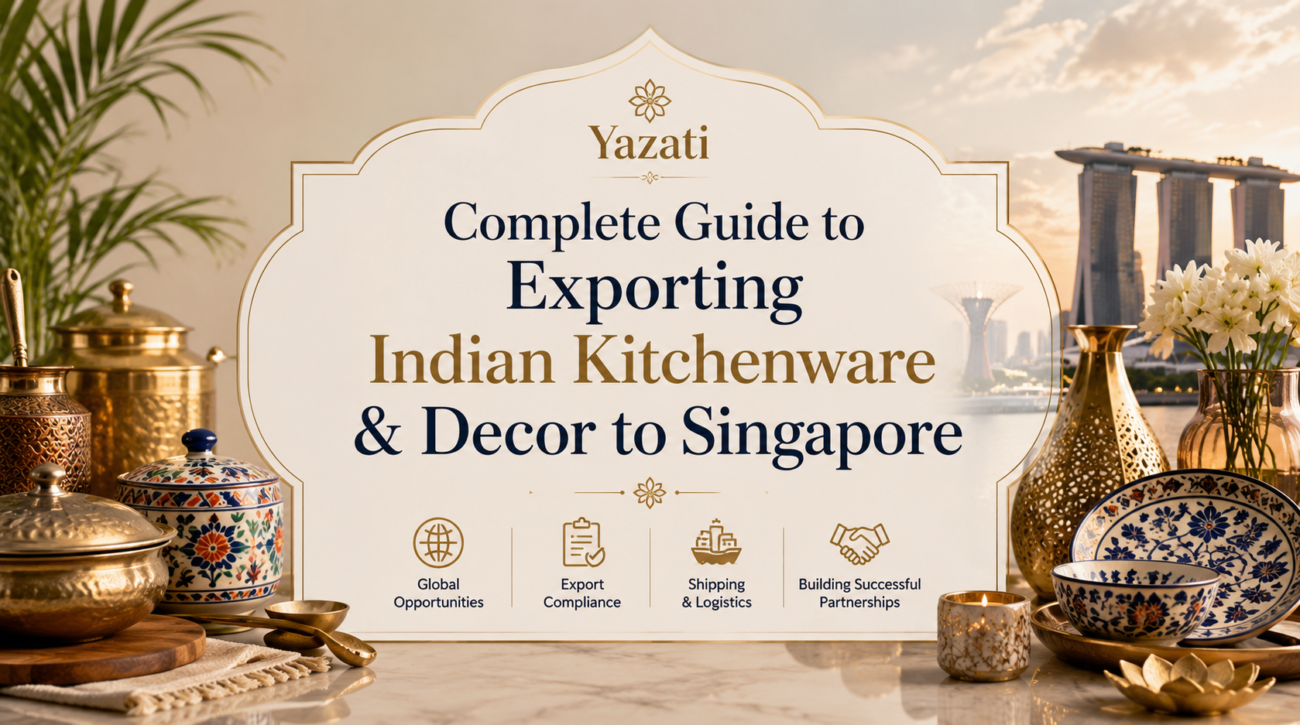
Singapore has become one of Asia’s most attractive import markets for premium home products, handcrafted decor, and ethnic kitchenware. For Indian manufacturers, artisans, wholesalers, and exporters, the opportunity is significant due to Singapore’s multicultural population, strong purchasing power, and appreciation for high-quality handcrafted goods.
This Complete Guide to Exporting Indian Kitchenware & Decor to Singapore explains everything from market research and compliance requirements to logistics and buyer acquisition strategies.
Introduction to the Singapore Market
Singapore serves as a major trading hub connecting Southeast Asia with global markets. Despite its small geographical size, the country imports a large volume of consumer goods due to limited domestic manufacturing.
Indian products enjoy strong recognition because of cultural familiarity, the presence of a large Indian community, and growing interest in sustainable and handcrafted home products.
Key characteristics of the Singapore market include:
- High disposable income
- Preference for premium quality products
- Strong demand for sustainable goods
- Rapid growth of e-commerce
- Transparent import regulations
These factors make Singapore an ideal destination for Indian kitchenware and home decor exporters.
Why Singapore Is an Attractive Export Destination
Consumer Preferences in Singapore
Singaporean consumers appreciate products that combine functionality, aesthetics, and sustainability.
Popular buying factors include:
- Elegant design
- Durability
- Eco-friendly materials
- Cultural uniqueness
- Premium packaging
Products that tell a story often perform exceptionally well in this market.
Demand for Indian Kitchenware and Home Decor
Indian products are increasingly sought after because they offer distinctive craftsmanship and authenticity.
Popular categories include:
| Product Category | Demand Level |
|---|---|
| Copper Bottles | High |
| Brass Utensils | High |
| Wooden Serveware | High |
| Handmade Decor | High |
| Wall Art | Medium |
| Candle Holders | High |
| Ceramic Kitchenware | Medium |
| Sustainable Home Products | Very High |
Understanding Singapore’s Import Regulations
Before exporting, businesses must understand Singapore’s import framework.
Product Safety Requirements
Kitchenware products must be safe for food contact applications.
Important considerations include:
- Material composition testing
- Chemical safety compliance
- Heavy metal restrictions
- Food-grade certification where applicable
Customs Documentation
Typical documentation includes:
- Commercial invoice
- Packing list
- Bill of lading
- Certificate of origin
- Insurance certificate
- Import permits (when required)
Accurate documentation minimizes customs delays.
Identifying High-Demand Indian Products
Selecting the right products significantly improves export success.
Brass and Copper Kitchenware
Singapore consumers increasingly purchase:
- Copper water bottles
- Copper tumblers
- Brass serving bowls
- Traditional Indian cookware
Benefits include:
- Premium appearance
- Wellness association
- Cultural appeal
Wooden Home Decor Items
Popular wooden products include:
- Serving trays
- Decorative bowls
- Wall panels
- Table accessories
Eco-conscious buyers particularly favor sustainably sourced wood products.
Handcrafted Decorative Products
Handmade decor continues to grow in popularity because consumers seek unique products rather than mass-produced alternatives.
Examples include:
- Hand-painted decor
- Artisan sculptures
- Decorative lanterns
- Traditional Indian handicrafts
Market Research and Competitor Analysis
Successful exporters invest heavily in understanding market conditions.
Pricing Trends
Singapore buyers generally accept premium pricing when products offer:
- Superior quality
- Authentic craftsmanship
- Strong branding
- Sustainable sourcing
Research competitors regularly to identify pricing gaps.
Retail and E-commerce Opportunities
Key sales channels include:
- Specialty home decor stores
- Department stores
- Boutique retailers
- Online marketplaces
- Corporate gifting companies
E-commerce growth presents significant opportunities for exporters willing to invest in digital marketing.
Export Registration Requirements in India
Indian exporters must complete specific registrations before shipping internationally.
IEC Registration
An Import Export Code (IEC) is mandatory for export activities.
Benefits include:
- Legal export authorization
- Customs clearance facilitation
- Access to export incentives
GST and Compliance Requirements
Businesses should maintain:
- GST registration
- Proper invoicing systems
- Export documentation records
- Compliance with foreign trade regulations
Strong documentation practices reduce operational risks.
Product Standards and Quality Assurance
Quality consistency is essential for maintaining buyer confidence.
Packaging Standards
Good packaging protects products during international transit.
Recommended packaging features:
- Corrugated export cartons
- Shock-resistant inserts
- Moisture protection
- Tamper-evident sealing
Labeling Requirements
Labels should clearly display:
- Product description
- Country of origin
- Material information
- Quantity
- Manufacturer details
Professional labeling improves brand perception.
Shipping and Logistics Planning
Efficient logistics significantly impact profitability.
Air Freight vs Sea Freight
| Factor | Air Freight | Sea Freight |
|---|---|---|
| Speed | Very Fast | Moderate |
| Cost | High | Lower |
| Suitable For | Small Shipments | Bulk Orders |
| Inventory Turnover | High | Medium |
Sea freight is typically more economical for larger shipments.
Choosing Freight Forwarders
Look for providers offering:
- Export documentation support
- Customs expertise
- Cargo tracking
- Insurance options
- Singapore trade experience
Reliable logistics partners help prevent costly delays.
Customs Clearance Process
Export Documentation Checklist
Prepare:
- Commercial invoice
- Packing list
- Shipping bill
- Certificate of origin
- Insurance documents
- Freight documents
Singapore Import Procedures
Importers typically manage:
- Customs declarations
- Duty assessments
- Goods and Services Tax payments
- Cargo release procedures
Working closely with your Singapore buyer simplifies the process.
Pricing Strategy for Singapore Buyers
Cost Calculation Framework
Include:
- Manufacturing cost
- Packaging cost
- Inland transportation
- Export documentation
- Freight charges
- Insurance
- Marketing expenses
A complete cost structure ensures profitability.
Profit Margin Planning
Premium handcrafted products often support higher margins due to:
- Artisan value
- Limited production
- Unique designs
- Cultural authenticity
Focus on value rather than competing solely on price.
Finding Buyers and Distributors
Trade Shows and B2B Platforms
Effective channels include:
- International trade fairs
- B2B marketplaces
- Chamber of commerce events
- Industry networking forums
Useful resource: https://www.enterprisesg.gov.sg/
Building Long-Term Partnerships
Strong buyer relationships depend on:
- Consistent quality
- Timely delivery
- Clear communication
- Competitive pricing
- After-sales support
Long-term partnerships often generate repeat orders and referrals.
Digital Marketing for Export Success
Website Optimization
Your export website should include:
- Product catalog
- Certifications
- Company profile
- Inquiry forms
- High-quality images
Search engine optimization helps attract overseas buyers.
Social Media Promotion
Focus on:
- LinkedIn for B2B networking
- Instagram for product showcases
- Facebook business pages
- Video demonstrations
Visual storytelling is especially effective for handcrafted products.
Common Challenges and Solutions
| Challenge | Solution |
|---|---|
| Price Competition | Emphasize craftsmanship and quality |
| Shipping Costs | Consolidate shipments |
| Customs Delays | Maintain accurate documentation |
| Quality Consistency | Implement quality control systems |
| Finding Buyers | Use multiple lead-generation channels |
| Currency Fluctuations | Consider hedging strategies |
Future Opportunities in Singapore
Several trends are creating new opportunities:
- Sustainable home products
- Eco-friendly kitchenware
- Luxury handcrafted decor
- Corporate gifting solutions
- Smart home accessories with traditional aesthetics
- Premium hospitality sector sourcing
Indian exporters who align with these trends are likely to experience sustained growth.
Frequently Asked Questions
1. Is Singapore a good market for Indian kitchenware exports?
Yes. Singapore has strong purchasing power, a multicultural consumer base, and growing demand for premium handcrafted products.
2. Do Indian exporters need an IEC to export to Singapore?
Yes. An Import Export Code is generally required for export activities from India.
3. Which Indian kitchenware products sell best in Singapore?
Copper bottles, brass utensils, wooden serveware, and sustainable kitchen accessories are among the most popular.
4. What is the best shipping method for kitchenware exports?
Sea freight is usually more economical for larger shipments, while air freight is suitable for urgent or smaller orders.
5. How can exporters find Singapore buyers?
Through trade fairs, B2B marketplaces, distributors, importers, and digital marketing efforts.
6. Are handcrafted decor items popular in Singapore?
Yes. Consumers increasingly prefer unique artisan-made products with cultural authenticity and sustainable production methods.
Conclusion
The Complete Guide to Exporting Indian Kitchenware & Decor to Singapore demonstrates that Singapore offers substantial opportunities for Indian exporters willing to invest in quality, compliance, branding, and relationship building. With strong demand for premium kitchenware, handcrafted decor, and sustainable products, businesses can establish profitable long-term export operations.
Success depends on careful market research, regulatory compliance, efficient logistics, competitive pricing, and consistent quality standards. Exporters who combine traditional Indian craftsmanship with modern business practices are well-positioned to thrive in Singapore’s dynamic import market.
✨ Discover Global Sourcing Excellence with Netyex ✨
Netyex is your trusted B2B sourcing partner, connecting international buyers with India’s finest manufacturers and curated product lines—from handicrafts and home décor to kitchenware, textiles, hospitality essentials, and more. With verified suppliers and end-to-end support, we make global procurement seamless, reliable, and efficient.
👉 Elevate your sourcing experience—explore Netyex today.
📦 Bulk orders & customisation | 🌍 Worldwide delivery | 🤝 Trusted by global buyers
Visit Netyex to source premium Indian products with confidence.