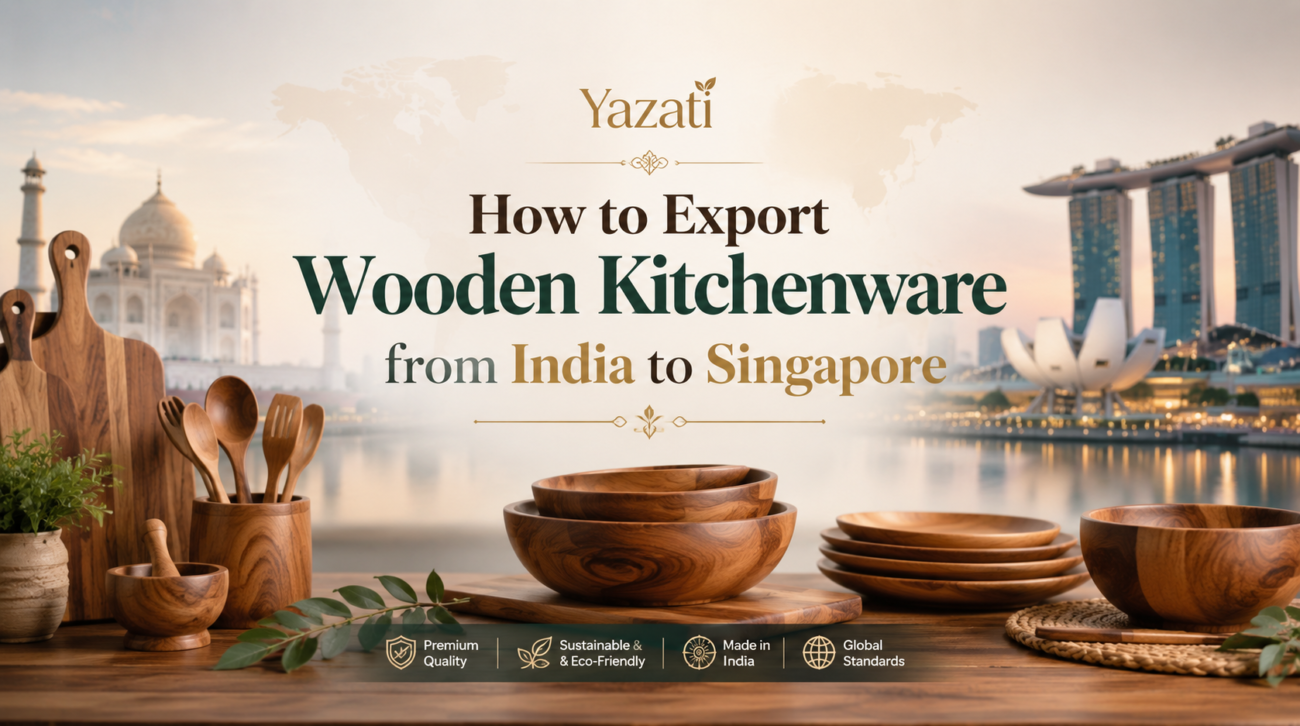
Introduction to the Wooden Kitchenware Export Business
India has become a significant supplier of wooden kitchenware to global markets due to its skilled craftsmanship, abundant wood resources, and competitive manufacturing costs. Singapore presents an attractive export destination because of its strong retail sector, environmentally conscious consumers, and strategic position as a regional trade hub.
If you’re exploring How to Export Wooden Kitchenware from India to Singapore, understanding the complete export process can help you avoid costly mistakes and build a sustainable business.
Wooden kitchenware products commonly exported include:
- Wooden spoons
- Chopping boards
- Serving trays
- Salad bowls
- Rolling pins
- Wooden spatulas
- Cooking utensil sets
These products are increasingly preferred because they are eco-friendly, durable, and aesthetically appealing.
Understanding the Singapore Market
Consumer Preferences in Singapore
Singaporean consumers value:
- Premium quality
- Sustainable materials
- Food-safe products
- Attractive packaging
- Modern designs
The country’s middle and upper-income households often prefer environmentally responsible kitchen products.
Demand Trends for Sustainable Kitchen Products
Sustainability is driving consumer purchasing decisions. Wooden kitchenware aligns perfectly with Singapore’s growing preference for:
- Plastic-free products
- Renewable materials
- Handcrafted home goods
- Eco-conscious lifestyle products
This trend creates opportunities for Indian manufacturers and exporters.
Types of Wooden Kitchenware Suitable for Export
Wooden Spoons and Spatulas
These products enjoy consistent demand because they:
- Protect non-stick cookware
- Are heat resistant
- Offer natural aesthetics
Chopping Boards
Wooden chopping boards remain popular in both residential and commercial kitchens.
Key selling points include:
- Durability
- Natural appearance
- Eco-friendliness
Serving Trays and Bowls
Premium serving products attract hospitality businesses, restaurants, and gift retailers.
Wooden Utensil Sets
Complete utensil sets often command higher margins and are easier to market as premium kitchen collections.
Legal Requirements for Exporting from India
Obtaining an Import Export Code (IEC)
An IEC is mandatory for any export activity from India.
You can obtain it through the Directorate General of Foreign Trade (DGFT).
Requirements typically include:
- PAN card
- Business registration
- Bank account details
- Address proof
Business Registration Requirements
You may operate as:
- Proprietorship
- Partnership
- LLP
- Private Limited Company
For larger export operations, an LLP or Private Limited Company is generally preferred.
Product Standards and Compliance
Food Contact Safety Requirements
Since wooden kitchenware comes into contact with food, products should:
- Be free from harmful chemicals
- Use food-safe finishes and oils
- Avoid toxic paints and coatings
Wood Treatment and Quality Standards
Proper treatment helps prevent:
- Mold growth
- Pest infestation
- Cracking during transportation
Maintaining consistent moisture levels improves product longevity and buyer satisfaction.
Identifying the Correct HS Code
HS codes determine customs classification.
The exact code depends on the specific wooden kitchenware product being exported.
Before shipping, verify the latest classification through Indian customs authorities or a customs broker to ensure accurate documentation.
Finding Buyers in Singapore
B2B Marketplaces
Popular sourcing platforms include:
- Alibaba
- IndiaMART
- TradeIndia
- Global Sources
These platforms help connect exporters with wholesalers and retailers.
Trade Exhibitions and Networking
Trade fairs remain one of the most effective methods for buyer acquisition.
Potential opportunities include:
- Houseware exhibitions
- Hospitality trade fairs
- Lifestyle product expos
Building direct relationships often leads to repeat orders.
Product Pricing Strategy
Cost Calculation
Include all costs:
| Cost Component | Examples |
|---|---|
| Manufacturing | Raw materials, labor |
| Packaging | Boxes, labels |
| Inland Transport | Factory to port |
| Documentation | Export paperwork |
| Freight | Air or sea shipping |
| Insurance | Cargo protection |
Profit Margin Planning
Most exporters target margins based on:
- Product uniqueness
- Market competition
- Order volume
- Distribution channel
Avoid underpricing simply to win orders.
Packaging and Labeling Requirements
Packaging should:
- Protect products from moisture
- Prevent breakage
- Support long-distance transportation
Labels should include:
- Product name
- Country of origin
- Material information
- Importer details (if required)
- Usage instructions
Premium packaging can significantly improve perceived value.
Export Documentation Checklist
Proper documentation is critical.
Commercial Invoice
Contains:
- Buyer details
- Product description
- Quantity
- Value
- Terms of sale
Packing List
Includes:
- Number of cartons
- Dimensions
- Gross weight
- Net weight
Certificate of Origin
This document certifies that the products originate from India.
Additional documents may include:
- Bill of Lading
- Shipping Bill
- Insurance Certificate
- Fumigation Certificate (if required)
- Inspection Certificate
Shipping and Logistics
Sea Freight vs Air Freight
| Factor | Sea Freight | Air Freight |
|---|---|---|
| Cost | Lower | Higher |
| Speed | Slower | Faster |
| Large Orders | Ideal | Less economical |
| Small Orders | Possible | Suitable |
Sea freight is usually preferred for wooden kitchenware due to cost efficiency.
Freight Forwarder Selection
Choose a freight forwarder with experience in:
- Singapore shipments
- Wooden product exports
- Customs documentation
A reliable partner reduces shipping delays.
Customs Clearance Process
The basic process includes:
- Export filing in India
- Customs examination
- Shipment departure
- Arrival in Singapore
- Import customs clearance
- Delivery to buyer
Accurate paperwork minimizes clearance issues.
Payment Methods and Risk Management
Letter of Credit
A Letter of Credit provides greater security for exporters by involving banks in the payment process.
Benefits include:
- Reduced payment risk
- Better transaction security
- Increased buyer confidence
Advance Payment
For new exporters, partial or full advance payment is often the safest option.
Common arrangements:
- 30% advance, 70% before shipment
- 50% advance, 50% before dispatch
- 100% advance for small orders
Marketing Your Wooden Kitchenware Brand
Successful exporters focus on branding.
Strategies include:
- Professional product photography
- Product catalogs
- Social media marketing
- B2B outreach campaigns
- Distributor partnerships
Useful export information can also be found through the official Indian trade promotion resources: https://www.dgft.gov.in
Brand storytelling around sustainability and craftsmanship can differentiate your products.
Common Export Challenges and Solutions
| Challenge | Solution |
|---|---|
| Finding buyers | Use multiple sourcing channels |
| Quality complaints | Implement strict quality control |
| Shipping delays | Work with experienced forwarders |
| Price competition | Focus on premium positioning |
| Documentation errors | Use export consultants initially |
| Payment risk | Use secure payment methods |
By proactively addressing these challenges, exporters can build long-term business relationships.
FAQs
1. Do I need an IEC to export wooden kitchenware from India?
Yes. An Import Export Code (IEC) is mandatory for commercial exports from India.
2. Is Singapore a good market for wooden kitchenware?
Yes. Singapore has strong demand for sustainable, high-quality household products and serves as a gateway to Southeast Asia.
3. What wood types are commonly used for export kitchenware?
Common options include teak, acacia, mango wood, rubberwood, and sheesham, depending on product specifications and buyer requirements.
4. Can I export handmade wooden kitchenware?
Yes. Handmade products often command premium prices due to their uniqueness and craftsmanship.
5. Which shipping method is best for wooden kitchenware exports?
Sea freight is generally more economical for bulk shipments, while air freight is suitable for urgent or smaller consignments.
6. How can I find buyers in Singapore?
You can find buyers through B2B marketplaces, trade fairs, importers, distributors, retail chains, and direct outreach campaigns.
7. Do wooden kitchenware products require fumigation?
Requirements vary depending on product type, wood treatment method, and importing regulations. Always verify current requirements before shipment.
8. How long does shipping from India to Singapore take?
Sea freight commonly takes approximately 5–15 days depending on the port and logistics arrangements, while air freight may take only a few days.
Conclusion
Understanding How to Export Wooden Kitchenware from India to Singapore requires careful planning, regulatory compliance, quality control, and effective buyer acquisition strategies. With Singapore’s growing demand for sustainable and premium household products, Indian exporters have a strong opportunity to build profitable long-term businesses. By obtaining the necessary licenses, maintaining food-safe standards, preparing accurate documentation, and developing reliable distribution channels, you can successfully enter and grow within this promising market.
✨ Discover Global Sourcing Excellence with Netyex ✨
Netyex is your trusted B2B sourcing partner, connecting international buyers with India’s finest manufacturers and curated product lines—from handicrafts and home décor to kitchenware, textiles, hospitality essentials, and more. With verified suppliers and end-to-end support, we make global procurement seamless, reliable, and efficient.
👉 Elevate your sourcing experience—explore Netyex today.
📦 Bulk orders & customisation | 🌍 Worldwide delivery | 🤝 Trusted by global buyers
Visit Netyex to source premium Indian products with confidence.