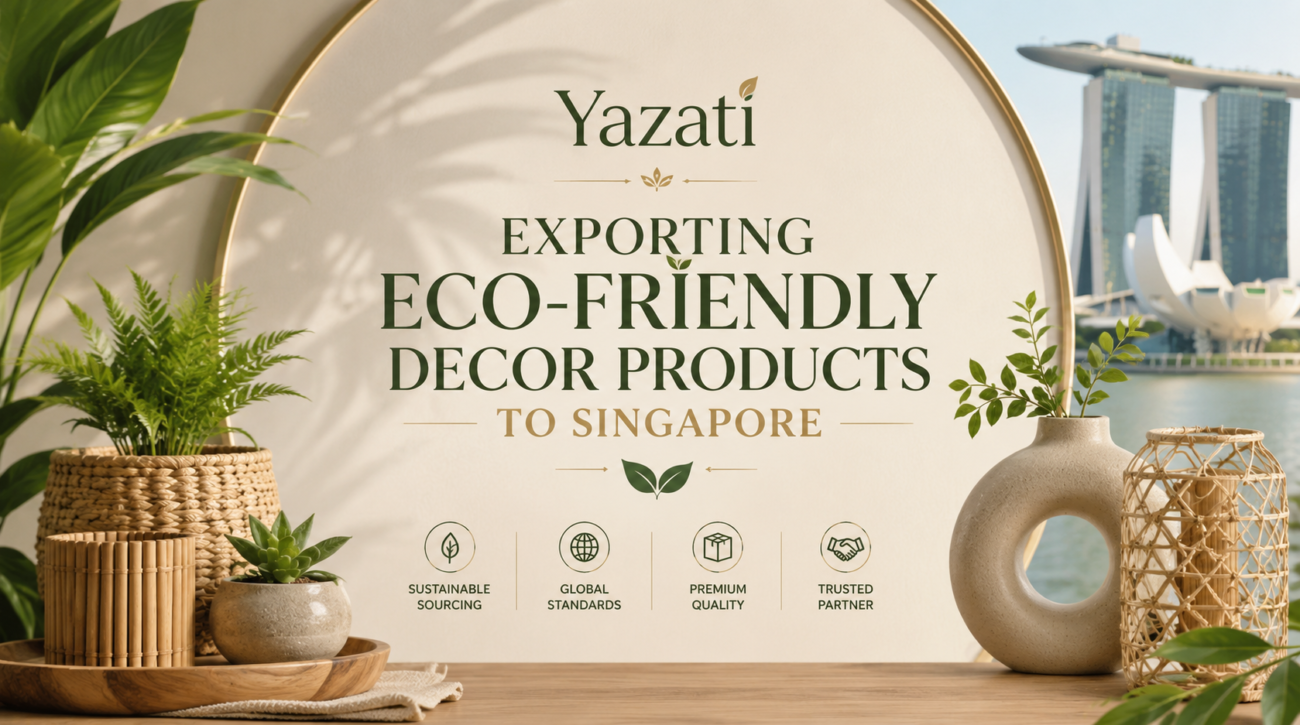
Introduction to Singapore’s Sustainable Decor Market
Exporting Eco-Friendly Decor Products to Singapore presents a promising opportunity for manufacturers, artisans, and exporters worldwide. Singapore has become one of Asia’s leading sustainability-focused economies, with consumers increasingly seeking environmentally responsible products for their homes and workplaces.
As urban lifestyles evolve and environmental awareness grows, sustainable home decor products are no longer niche offerings. From recycled furniture and bamboo accessories to handmade wall art and natural fiber textiles, eco-friendly decor is becoming a preferred choice among Singaporean buyers.
Businesses that understand market expectations, regulatory requirements, and consumer preferences can establish a strong presence in this growing market.
Why Singapore Is an Attractive Market for Eco-Friendly Products
Consumer Demand for Green Living
Singapore consumers are increasingly interested in reducing their environmental footprint. Many households actively seek products that:
- Use renewable materials
- Reduce waste
- Minimize carbon emissions
- Support ethical production practices
This trend extends beyond food and fashion into home decoration and interior design.
Government Support for Sustainability
Singapore has implemented numerous sustainability initiatives under its national green plans. These efforts encourage businesses and consumers to adopt environmentally friendly practices, creating favorable conditions for sustainable product imports.
Understanding Eco-Friendly Decor Products
Eco-friendly decor products are designed to minimize environmental impact throughout their lifecycle.
Popular Sustainable Decor Categories
Common categories include:
| Product Category | Examples |
|---|---|
| Furniture | Bamboo tables, reclaimed wood furniture |
| Wall Decor | Recycled metal art, eco-friendly paintings |
| Textiles | Organic cotton cushions, hemp curtains |
| Lighting | Energy-efficient decorative lamps |
| Accessories | Handmade baskets, cork products |
Materials Preferred by Singaporean Consumers
Popular sustainable materials include:
- Bamboo
- Cork
- Recycled wood
- Organic cotton
- Hemp
- Recycled glass
- Natural fibers
- Water-based finishes
Products made from these materials often attract environmentally conscious buyers.
Market Research Before Exporting
Successful exporting begins with detailed market research.
Identifying Target Customers
Potential customer groups include:
- Eco-conscious homeowners
- Interior designers
- Hospitality businesses
- Sustainable lifestyle retailers
- Corporate offices pursuing green certifications
Understanding these segments helps exporters tailor their products and marketing messages.
Analyzing Competitors
Evaluate:
- Product pricing
- Design trends
- Customer reviews
- Sustainability claims
- Distribution methods
Competitor analysis helps identify market gaps and opportunities.
Regulatory Requirements and Compliance
Product Safety Standards
Although decor products may face fewer restrictions than electronics or food items, exporters should ensure products meet applicable safety and labeling standards.
Important considerations include:
- Material safety
- Fire resistance requirements where applicable
- Accurate product labeling
- Consumer safety information
Import Documentation Requirements
Typical export documentation includes:
- Commercial invoice
- Packing list
- Bill of lading or airway bill
- Certificate of origin
- Customs declarations
Working with a customs broker can simplify the process.
Sustainable Packaging Requirements
Packaging plays a major role in sustainability.
Recommended packaging solutions include:
- Recyclable cardboard
- Biodegradable fillers
- Compostable wrapping materials
- Minimal plastic usage
Eco-friendly packaging not only reduces environmental impact but also strengthens brand credibility.
Building a Competitive Pricing Strategy
Pricing should balance profitability and competitiveness.
Factors influencing pricing include:
- Manufacturing costs
- Packaging expenses
- Freight charges
- Customs duties
- Distribution margins
- Marketing expenses
A value-based pricing model often works well for premium sustainable products because consumers are willing to pay more for genuine environmental benefits.
Logistics and Shipping Considerations
Sea Freight vs Air Freight
| Factor | Sea Freight | Air Freight |
|---|---|---|
| Cost | Lower | Higher |
| Speed | Slower | Faster |
| Sustainability | Generally lower emissions per unit | Higher emissions |
| Volume | Large shipments | Small shipments |
Sea freight is usually the preferred option for bulk decor products.
Warehousing Solutions
Options include:
- Third-party logistics providers
- Local distribution centers
- Direct-to-retailer shipping
Efficient warehousing improves delivery performance and customer satisfaction.
Branding and Product Positioning
Sustainability Certifications
Certifications can increase buyer confidence.
Examples include:
- FSC-certified wood products
- Organic textile certifications
- Fair Trade certifications
- Recycled material certifications
These credentials demonstrate commitment to environmental responsibility.
Storytelling for Eco-Conscious Buyers
Consumers often connect emotionally with brands that share:
- Artisan stories
- Community impact
- Sustainable sourcing practices
- Waste reduction initiatives
Authentic storytelling can significantly improve brand recognition.
Finding Distribution Channels
Retail Partnerships
Potential partners include:
- Sustainable lifestyle stores
- Home furnishing retailers
- Boutique decor outlets
- Interior design firms
Strong retail relationships help build market presence.
E-Commerce Opportunities
Online platforms provide excellent market access.
Popular channels include:
- Company websites
- Online marketplaces
- Social commerce platforms
A strong digital presence is increasingly important in Singapore’s connected consumer environment.
For additional trade guidance, exporters may consult resources from the World Trade Organization (WTO): https://www.wto.org
Marketing Strategies for Singapore
Effective marketing techniques include:
- Social media campaigns
- Influencer collaborations
- Sustainability-focused content marketing
- Participation in trade fairs
- Email marketing
- Green lifestyle partnerships
Marketing should emphasize authenticity, transparency, and measurable environmental benefits.
Common Challenges and Solutions
| Challenge | Solution |
|---|---|
| High competition | Differentiate through design and sustainability |
| Shipping costs | Consolidate shipments |
| Market entry barriers | Partner with local distributors |
| Consumer trust | Use certifications and transparency |
| Brand awareness | Invest in digital marketing |
Addressing these challenges proactively improves long-term success.
Future Trends in Sustainable Home Decor
Several trends are expected to shape the future of Exporting Eco-Friendly Decor Products to Singapore:
- Circular economy products
- Upcycled decor collections
- Carbon-neutral manufacturing
- Smart sustainable homes
- Biodegradable decorative materials
- Ethical sourcing transparency
Exporters who adapt to these trends early may gain a significant competitive advantage.
Frequently Asked Questions (FAQs)
1. Is Singapore a good market for eco-friendly decor products?
Yes. Singapore has a growing population of environmentally conscious consumers and strong support for sustainability initiatives.
2. What are the most popular eco-friendly decor products in Singapore?
Bamboo furniture, recycled wood decor, organic textiles, natural fiber accessories, and sustainable lighting solutions are among the most popular categories.
3. Do eco-friendly products require special certifications?
While not always mandatory, certifications can improve credibility and increase customer trust.
4. What shipping method is best for decor exports?
Sea freight is generally the most cost-effective option for large-volume shipments.
5. How can exporters find buyers in Singapore?
Exporters can work with distributors, retailers, online marketplaces, trade fairs, and interior design firms.
6. What packaging should be used for sustainable decor products?
Recyclable, biodegradable, and minimal-waste packaging solutions are preferred by environmentally conscious consumers.
Conclusion
Exporting Eco-Friendly Decor Products to Singapore offers substantial opportunities for businesses committed to sustainability, quality, and innovation. Singapore’s environmentally aware consumers, supportive sustainability policies, and advanced retail infrastructure make it an attractive destination for eco-friendly home decor brands.
Success depends on conducting thorough market research, complying with import regulations, using sustainable packaging, developing strong branding, and building reliable distribution networks. By aligning products with consumer expectations and emerging sustainability trends, exporters can create long-term growth and establish a trusted presence in Singapore’s expanding green economy.
✨ Discover Global Sourcing Excellence with Netyex ✨
Netyex is your trusted B2B sourcing partner, connecting international buyers with India’s finest manufacturers and curated product lines—from handicrafts and home décor to kitchenware, textiles, hospitality essentials, and more. With verified suppliers and end-to-end support, we make global procurement seamless, reliable, and efficient.
👉 Elevate your sourcing experience—explore Netyex today.
📦 Bulk orders & customisation | 🌍 Worldwide delivery | 🤝 Trusted by global buyers
Visit Netyex to source premium Indian products with confidence.