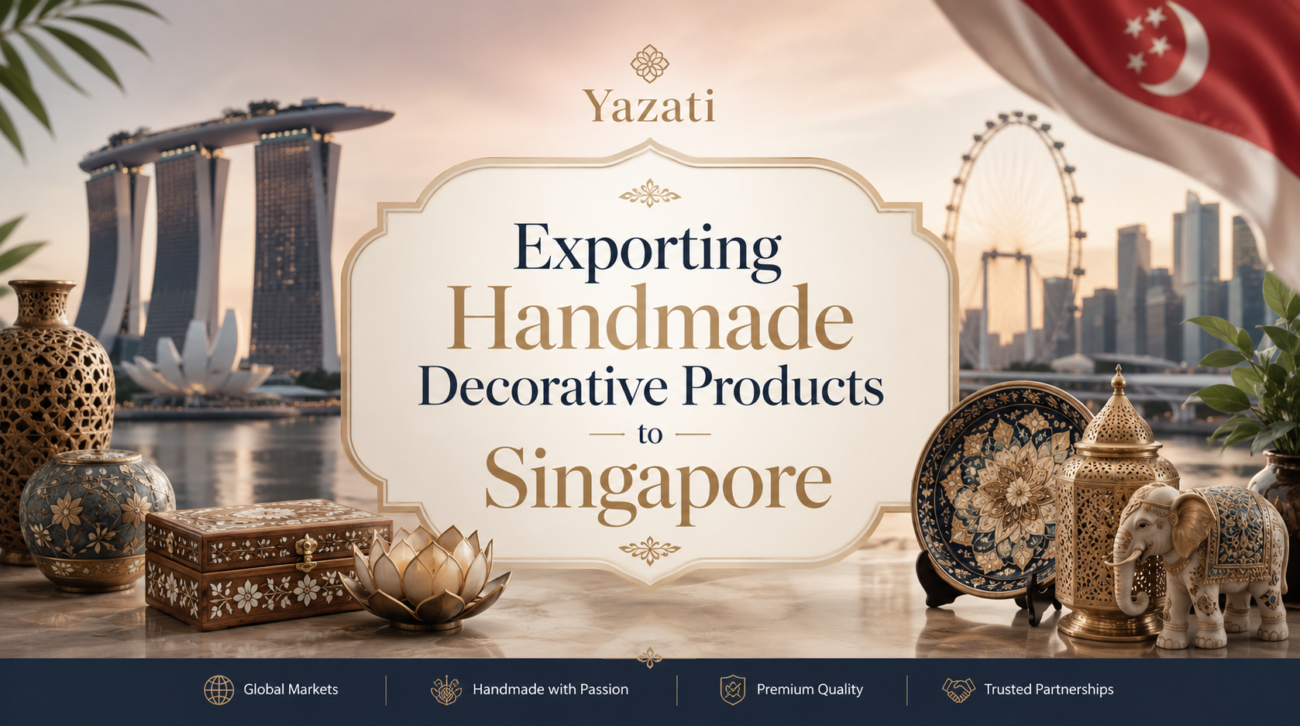
Introduction to Exporting Handmade Decorative Products to Singapore
Exporting Handmade Decorative Products to Singapore presents a promising opportunity for artisans, manufacturers, and small businesses seeking international growth. Singapore is one of Asia’s most developed economies, known for its sophisticated consumers, strong retail sector, and appreciation for high-quality handcrafted goods.
The country’s multicultural population and preference for stylish home décor have created a thriving market for handmade decorative products. From handcrafted wall art and ceramic pieces to eco-friendly décor accessories and traditional crafts, Singaporean consumers increasingly value unique products that tell a story.
For exporters, Singapore offers several advantages, including efficient customs procedures, excellent logistics infrastructure, and strong protection of intellectual property rights. These factors make it easier for businesses to enter and expand within the market.
In this comprehensive guide, you’ll learn everything about exporting handmade decorative products to Singapore, from market research and legal requirements to shipping, pricing, and marketing strategies.
Understanding the Singapore Market for Handmade Decorative Products
Singapore’s home décor market continues to evolve as consumers seek personalized and aesthetically pleasing living spaces.
Consumer Preferences and Buying Behavior
Singaporean consumers generally prefer:
- Premium-quality products
- Sustainable and eco-friendly materials
- Unique handcrafted designs
- Products with cultural significance
- Minimalist and modern aesthetics
Many buyers are willing to pay higher prices for authentic handmade products that stand out from mass-produced alternatives.
Popular Handmade Décor Categories
The following product categories perform particularly well:
| Product Category | Demand Level |
|---|---|
| Handmade Wall Art | High |
| Decorative Ceramics | High |
| Wooden Crafts | Medium-High |
| Sustainable Home Accessories | High |
| Handwoven Textiles | Medium |
| Artisan Candles | High |
Why Singapore Is an Attractive Export Destination
Singapore offers numerous advantages for exporters.
Strong Purchasing Power
Singapore consistently ranks among the world’s wealthiest countries by GDP per capita. Consumers have significant disposable income and are willing to spend on premium decorative products.
Growing Demand for Artisan and Sustainable Products
Consumers increasingly favor:
- Handmade products
- Ethical sourcing
- Sustainable production methods
- Small-batch craftsmanship
This trend aligns perfectly with handmade decorative product businesses.
Types of Handmade Decorative Products in Demand
Home Décor Items
Popular items include:
- Decorative bowls
- Handmade vases
- Table centerpieces
- Candle holders
- Decorative trays
Handcrafted Wall Art
Wall décor remains one of the strongest-performing categories.
Examples include:
- Canvas paintings
- Wooden carvings
- Metal artwork
- Textile wall hangings
Eco-Friendly Decorative Accessories
Environmental awareness continues to rise.
Examples:
- Bamboo décor
- Recycled material crafts
- Natural fiber baskets
- Sustainable wooden products
Market Research Before Exporting
Successful exporters invest heavily in research.
Identifying Target Customers
Potential customer segments include:
- Interior designers
- Boutique retailers
- Online marketplaces
- Homeowners
- Hospitality businesses
Understanding your audience helps tailor products and marketing efforts.
Analyzing Competitors
Evaluate:
- Pricing structures
- Product quality
- Packaging standards
- Marketing approaches
- Customer reviews
Competitor analysis reveals opportunities to differentiate your offerings.
Legal Requirements for Exporting Handmade Decorative Products to Singapore
Compliance is essential when exporting.
Product Compliance Standards
Depending on the product type, regulations may apply regarding:
- Material safety
- Chemical content
- Wooden packaging standards
- Labeling requirements
Always verify current import requirements through official Singapore government trade resources.
Import Documentation Requirements
Commonly required documents include:
- Commercial invoice
- Packing list
- Bill of lading or airway bill
- Certificate of origin
- Insurance documents (if applicable)
Export Documentation Checklist
Proper documentation reduces delays.
Commercial Invoice
Must include:
- Product descriptions
- Quantity
- Unit value
- Total value
- Buyer and seller information
Packing List
Provides:
- Package dimensions
- Gross weight
- Net weight
- Number of cartons
Certificate of Origin
May help importers qualify for trade agreement benefits where applicable.
Packaging and Labeling Best Practices
Packaging significantly influences buying decisions.
Sustainable Packaging Trends
Consumers increasingly prefer:
- Recyclable packaging
- Biodegradable materials
- Plastic-free solutions
Sustainable packaging can become a competitive advantage.
Product Information Requirements
Labels should include:
- Product name
- Materials used
- Country of origin
- Care instructions
Pricing Strategy for Singapore Buyers
Pricing requires careful planning.
Cost Calculation Methods
Consider:
- Manufacturing costs
- Packaging costs
- Freight charges
- Customs expenses
- Marketing expenses
Profit Margin Considerations
A simple pricing formula:
Selling Price = Total Cost + Desired Profit Margin
Maintain competitive pricing while preserving profitability.
Logistics and Shipping Solutions
Reliable logistics support business growth.
Air Freight vs Sea Freight
| Factor | Air Freight | Sea Freight |
|---|---|---|
| Speed | Fast | Slow |
| Cost | Higher | Lower |
| Small Shipments | Excellent | Less Suitable |
| Large Shipments | Expensive | Cost Effective |
Choosing Reliable Freight Forwarders
Select providers offering:
- Customs expertise
- Cargo tracking
- Insurance options
- Strong Singapore experience
Digital Marketing for Singapore Customers
Strong online visibility is crucial.
Social Media Marketing
Focus on:
- TikTok
Showcase craftsmanship through high-quality visuals and behind-the-scenes content.
E-commerce Marketplaces
Consider selling through:
- Local marketplaces
- Specialized artisan platforms
- Your own online store
For international visibility, platforms like Etsy and Amazon Handmade can help attract Singapore buyers.
Building Relationships with Singapore Importers
Business relationships play a significant role in long-term success.
Trade Shows and Networking
Participate in:
- Home décor exhibitions
- Lifestyle fairs
- Gift and handicraft trade shows
These events provide direct access to buyers and distributors.
Business Communication Tips
Singapore businesses value:
- Professionalism
- Reliability
- Prompt responses
- Clear documentation
Building trust often leads to repeat orders.
Common Challenges and Solutions
Customs Delays
Solutions include:
- Accurate documentation
- Proper HS classification
- Experienced freight partners
Competition from Local Brands
Differentiate through:
- Unique craftsmanship
- Authentic cultural stories
- Superior quality
- Sustainable production methods
Future Trends in Handmade Decorative Product Exports
Sustainable and Ethical Products
Demand for environmentally responsible products is expected to continue growing.
Personalized Decorative Items
Customization is becoming increasingly popular, including:
- Personalized wall art
- Custom engravings
- Bespoke home décor collections
Exporters offering personalization can gain a competitive advantage.
Frequently Asked Questions (FAQs)
1. Is Singapore a good market for handmade decorative products?
Yes. Singapore has strong purchasing power and growing demand for premium handmade and sustainable products.
2. What documents are required for exporting handmade decorative products to Singapore?
Typically, exporters need a commercial invoice, packing list, shipping documents, and sometimes a certificate of origin.
3. Which handmade products sell best in Singapore?
Handmade wall art, artisan ceramics, eco-friendly décor, candles, and handcrafted wooden products perform particularly well.
4. How can I find buyers in Singapore?
You can connect with buyers through trade fairs, online B2B marketplaces, social media, and direct outreach to retailers and interior designers.
5. Should I use air freight or sea freight?
Air freight is ideal for small, urgent shipments, while sea freight is more economical for large orders.
6. How important is sustainable packaging in Singapore?
Very important. Many Singapore consumers prefer brands that use environmentally friendly packaging materials.
Conclusion
Exporting Handmade Decorative Products to Singapore offers significant growth opportunities for artisans and manufacturers who understand the market’s expectations. Singapore’s affluent consumer base, appreciation for craftsmanship, and increasing interest in sustainable products create favorable conditions for exporters.
Success depends on conducting thorough market research, complying with regulations, using effective logistics solutions, maintaining competitive pricing, and building strong customer relationships. By focusing on quality, authenticity, and sustainability, businesses can establish a strong presence and achieve long-term success in Singapore’s vibrant home décor market.
For additional trade information, exporters can explore official resources from the Enterprise Singapore and the Singapore Customs.
✨ Discover Global Sourcing Excellence with Netyex ✨
Netyex is your trusted B2B sourcing partner, connecting international buyers with India’s finest manufacturers and curated product lines—from handicrafts and home décor to kitchenware, textiles, hospitality essentials, and more. With verified suppliers and end-to-end support, we make global procurement seamless, reliable, and efficient.
👉 Elevate your sourcing experience—explore Netyex today.
📦 Bulk orders & customisation | 🌍 Worldwide delivery | 🤝 Trusted by global buyers
Visit Netyex to source premium Indian products with confidence.