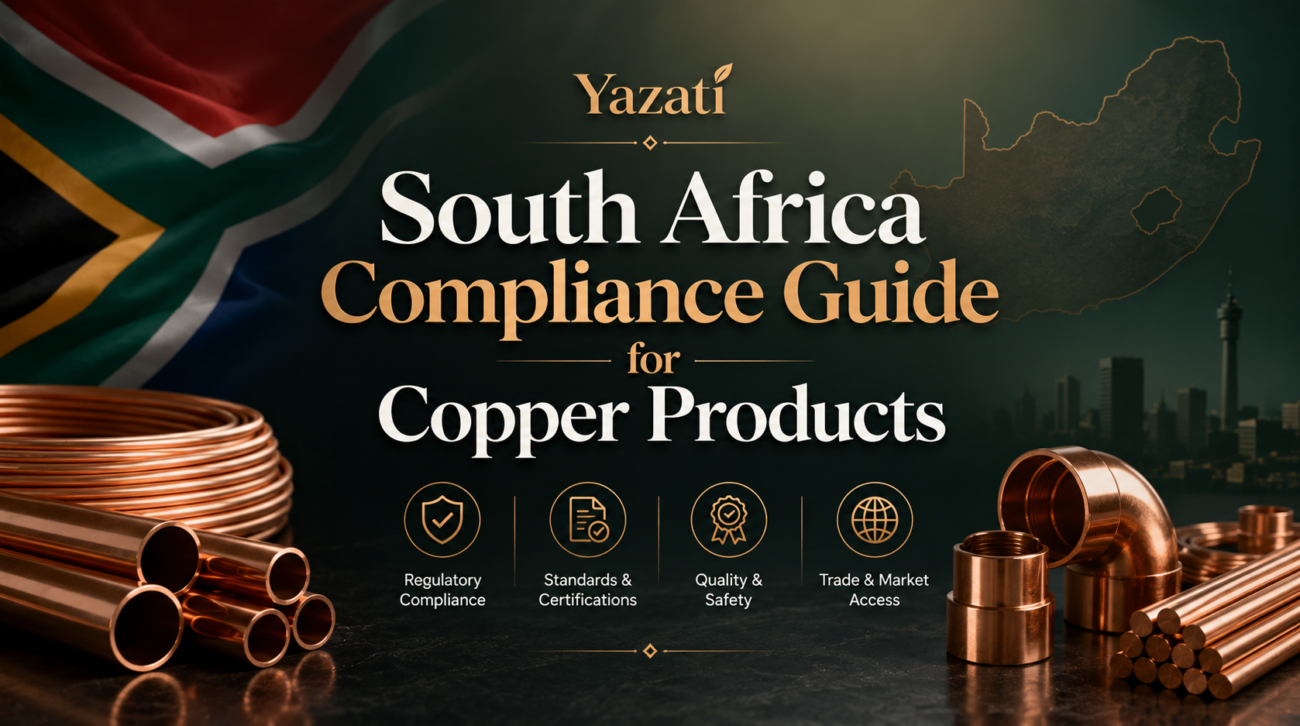
Introduction to South Africa Compliance Guide for Copper Products
The South Africa Compliance Guide for Copper Products is an essential resource for manufacturers, importers, exporters, distributors, and investors operating within the copper industry. South Africa remains one of Africa’s most significant industrial economies, with copper products playing a vital role in construction, mining, telecommunications, energy transmission, automotive manufacturing, and infrastructure development.
Compliance with local regulations is critical for ensuring product quality, consumer safety, environmental protection, and smooth market access. Failure to meet regulatory requirements can result in penalties, shipment delays, product recalls, and reputational damage.
This guide provides a comprehensive overview of the legal, technical, and operational requirements applicable to copper products in South Africa.
Overview of the South African Copper Industry
South Africa possesses a well-developed industrial sector that consumes substantial quantities of copper products annually. Copper is widely used due to its excellent electrical conductivity, corrosion resistance, and durability.
Importance of Copper Products in Key Sectors
Copper products support several major industries:
- Electrical power transmission
- Telecommunications infrastructure
- Construction and plumbing
- Automotive manufacturing
- Renewable energy projects
- Mining operations
The demand for copper continues to grow as South Africa invests in infrastructure modernization and renewable energy development.
Domestic and International Market Demand
Both locally produced and imported copper products are actively traded within South Africa. Businesses supplying copper products must comply with national standards while meeting international customer expectations.
Regulatory Framework Governing Copper Products in South Africa
The compliance landscape for copper products involves multiple laws, regulations, and technical standards.
National Legislation and Industry Standards
Key regulatory frameworks include:
- National Regulator for Compulsory Specifications (NRCS) regulations
- Occupational Health and Safety Act
- National Environmental Management Act
- Customs and Excise Act
- Consumer Protection Act
- South African National Standards (SANS)
Together, these regulations ensure product safety, environmental responsibility, and fair trade practices.
Regulatory Authorities and Their Roles
Important authorities include:
| Authority | Primary Function |
|---|---|
| National Regulator for Compulsory Specifications (NRCS) | Product compliance and compulsory specifications |
| South African Bureau of Standards (SABS) | Development and maintenance of standards |
| South African Revenue Service (SARS) | Customs and import/export administration |
| Department of Trade, Industry and Competition (DTIC) | Trade regulation and industrial development |
| Department of Environment, Forestry and Fisheries | Environmental oversight |
Product Classification and Compliance Requirements
Correct classification of copper products is fundamental to regulatory compliance.
Types of Copper Products Covered
Common categories include:
- Copper cathodes
- Copper rods
- Copper wires
- Copper cables
- Copper sheets
- Copper tubes
- Copper bars
- Copper alloys
Copper Rods, Wires, Sheets, and Tubes
Each category may be subject to unique testing and certification requirements depending on its intended application.
Manufactured and Semi-Finished Copper Products
Manufactured products used in electrical systems or construction projects often face stricter compliance requirements than raw materials.
South African National Standards (SANS) for Copper Products
Compliance with SANS standards is often a prerequisite for market acceptance.
Relevant SANS Specifications
Depending on product type, applicable standards may address:
- Electrical conductivity
- Mechanical strength
- Corrosion resistance
- Dimensional tolerances
- Material composition
Manufacturers should verify current standards through the official website of the South African Bureau of Standards.
Quality Assurance and Testing Requirements
Testing may include:
- Chemical composition analysis
- Tensile strength testing
- Conductivity testing
- Dimensional inspections
- Surface quality verification
Documented quality control procedures significantly improve compliance outcomes.
Import Regulations for Copper Products
Importers must satisfy customs and regulatory requirements before products enter the South African market.
Customs Documentation and Procedures
Typical documentation includes:
- Commercial invoice
- Packing list
- Bill of lading
- Certificate of origin
- Import permits (where applicable)
- Product compliance certificates
Accurate documentation helps prevent costly customs delays.
Tariff Codes and Duties
Copper products are classified using Harmonized System (HS) codes. Correct classification ensures proper duty assessment and trade reporting.
Businesses should regularly verify tariff schedules as rates may change over time.
Export Compliance for Copper Products
South African exporters must meet both local and destination-country requirements.
Export Documentation Requirements
Required documents commonly include:
- Export declaration
- Commercial invoice
- Packing list
- Certificate of origin
- Inspection certificates
- Shipping documentation
International Trade Agreements and Benefits
South Africa participates in several trade agreements that may offer preferential tariff treatment for qualifying exports.
Understanding applicable agreements can significantly improve competitiveness in foreign markets.
Environmental Compliance Requirements
Environmental stewardship has become increasingly important within the metals industry.
Waste Management Regulations
Organizations handling copper products must properly manage:
- Metal scrap
- Industrial waste
- Chemical by-products
- Packaging materials
Failure to comply with environmental regulations can result in substantial penalties.
Sustainable Manufacturing Practices
Best practices include:
- Recycling copper scrap
- Reducing emissions
- Improving energy efficiency
- Conserving water resources
- Implementing environmental management systems
Many companies align their operations with international sustainability frameworks.
Health and Safety Regulations
Workplace safety is a critical component of compliance.
Workplace Safety Standards
Employers should establish procedures covering:
- Equipment operation
- Personal protective equipment (PPE)
- Emergency response planning
- Hazard identification
- Employee training
Hazardous Materials Handling
While copper itself presents relatively low risk, associated manufacturing processes may involve:
- Chemicals
- High-temperature operations
- Heavy machinery
- Dust generation
Proper controls help minimize workplace hazards.
Certification and Product Testing
Certification provides evidence that products satisfy applicable requirements.
Accredited Laboratories and Inspection Bodies
Testing should be conducted by recognized laboratories capable of demonstrating technical competence and traceability.
Compliance Audits and Verification
Regular audits help organizations:
- Identify non-conformities
- Improve quality systems
- Maintain regulatory compliance
- Strengthen customer confidence
Labeling and Packaging Requirements
Proper labeling supports traceability and product identification.
Mandatory Product Information
Labels may include:
- Product description
- Grade specification
- Manufacturer details
- Batch number
- Country of origin
- Safety information
Transportation and Storage Guidelines
Packaging should protect products from:
- Moisture exposure
- Physical damage
- Contamination
- Corrosion risks
Appropriate storage conditions preserve product quality throughout the supply chain.
Anti-Counterfeiting and Traceability Measures
Supply Chain Transparency
Organizations increasingly implement:
- Batch tracking systems
- Digital records
- Supplier verification procedures
- Material traceability programs
These measures help prevent fraud and support quality assurance.
Record-Keeping Requirements
Businesses should maintain records relating to:
- Procurement
- Production
- Testing
- Distribution
- Customer complaints
Comprehensive documentation supports regulatory inspections and audits.
Common Compliance Challenges
Regulatory Updates and Changes
Regulations evolve frequently. Companies should monitor developments from regulatory agencies and industry associations.
Managing Cross-Border Trade Risks
Challenges often include:
- Customs delays
- Documentation errors
- Changing tariff rates
- Product certification requirements
- International sanctions compliance
Proactive planning reduces these risks.
Best Practices for Maintaining Compliance
Internal Compliance Programs
An effective compliance program should include:
- Written policies and procedures
- Regulatory monitoring systems
- Internal audits
- Risk assessments
- Management reviews
Staff Training and Documentation
Regular training ensures employees understand:
- Applicable regulations
- Safety requirements
- Documentation procedures
- Quality standards
Well-trained staff significantly reduce compliance failures.
Frequently Asked Questions (FAQs)
1. Are copper products subject to compulsory certification in South Africa?
Some copper products may require compliance with compulsory specifications depending on their intended use, particularly in electrical applications.
2. What is the role of SANS standards for copper products?
SANS standards establish technical requirements related to quality, performance, and safety.
3. Do imported copper products require testing?
Testing requirements vary by product category, application, and regulatory obligations.
4. Which authority oversees product compliance?
The National Regulator for Compulsory Specifications (NRCS) plays a key role in product compliance oversight.
5. Why is traceability important for copper products?
Traceability helps verify product origin, quality, and authenticity while supporting regulatory compliance.
6. How can companies stay updated on compliance changes?
Businesses should monitor regulatory publications, industry associations, government notices, and official agency websites.
Conclusion and Key Takeaways
The South Africa Compliance Guide for Copper Products demonstrates that regulatory compliance extends far beyond simple product quality checks. Manufacturers, importers, exporters, and distributors must address technical standards, customs procedures, environmental obligations, workplace safety requirements, certification processes, and traceability expectations.
Organizations that establish strong compliance systems benefit from smoother market access, reduced legal risk, improved customer confidence, and stronger long-term competitiveness. By aligning operations with SANS standards, regulatory requirements, and international best practices, businesses can successfully participate in South Africa’s growing copper products market.
For additional official information, consult the South African Bureau of Standards at: https://www.sabs.co.za
✨ Discover Global Sourcing Excellence with Netyex ✨
Netyex is your trusted B2B sourcing partner, connecting international buyers with India’s finest manufacturers and curated product lines—from handicrafts and home décor to kitchenware, textiles, hospitality essentials, and more. With verified suppliers and end-to-end support, we make global procurement seamless, reliable, and efficient.
👉 Elevate your sourcing experience—explore Netyex today.
📦 Bulk orders & customisation | 🌍 Worldwide delivery | 🤝 Trusted by global buyers
Visit Netyex to source premium Indian products with confidence.