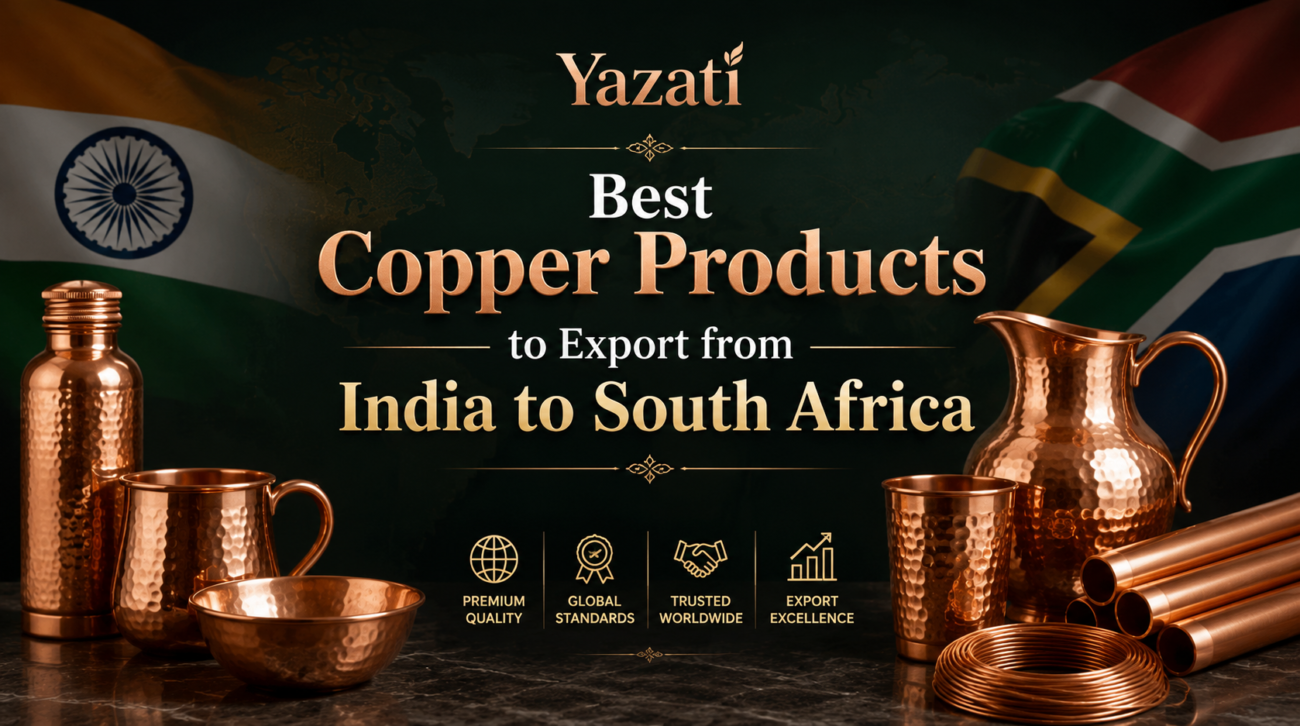
India and South Africa share strong trade relations, creating significant opportunities for exporters in the metals and minerals sector. Among various industrial products, copper and copper-based products remain highly sought after due to their extensive use in construction, energy, telecommunications, automotive manufacturing, and infrastructure development.
If you’re looking for the best copper products to export from India to South Africa, understanding market demand, profit potential, and buyer requirements is essential. South Africa’s growing industrial base continues to create demand for quality copper products sourced from reliable international suppliers.
Overview of India–South Africa Copper Trade
Trade between India and South Africa has expanded steadily over the years. Both countries are members of international trade organizations and maintain strong commercial partnerships.
Copper products are imported into South Africa to support:
- Power generation projects
- Electrical infrastructure
- Construction activities
- Renewable energy installations
- Telecommunications networks
- Automotive manufacturing
India has emerged as a competitive supplier because of its manufacturing capabilities, quality standards, and cost advantages.
Why South Africa Imports Copper Products
Several factors contribute to South Africa’s copper import requirements:
Growing Infrastructure Projects
Government investments in transportation, housing, and utilities create strong demand for copper-based materials.
Renewable Energy Expansion
Solar and wind projects require significant amounts of copper wiring, busbars, and connectors.
Industrial Manufacturing
Manufacturing facilities need copper components for machinery, motors, and electrical systems.
Telecommunications Development
Expansion of broadband and communication networks drives demand for copper cables and conductors.
Advantages of Exporting Copper Products from India
Indian exporters enjoy several competitive advantages:
| Advantage | Benefit |
|---|---|
| Competitive Manufacturing Costs | Better pricing |
| Large Production Capacity | Consistent supply |
| International Quality Standards | Increased buyer confidence |
| Established Export Infrastructure | Faster shipments |
| Skilled Workforce | High-quality products |
| Product Variety | Ability to serve multiple industries |
These advantages make Indian copper products attractive to South African importers.
Top Copper Products in Demand
1. Copper Cathodes
Copper cathodes are among the most traded copper products globally.
Applications include:
- Wire manufacturing
- Cable production
- Alloy manufacturing
- Industrial processing
High-purity cathodes are particularly attractive for South African manufacturers.
2. Copper Wire Rods
Copper wire rods are essential raw materials for producing electrical conductors.
Demand comes from:
- Power transmission companies
- Cable manufacturers
- Electrical equipment producers
These products often offer stable export volumes and recurring orders.
3. Copper Electrical Wires and Cables
One of the most profitable export categories.
Popular products include:
- Power cables
- Control cables
- Building wires
- Industrial cables
South Africa’s electrical infrastructure projects create ongoing demand for quality copper cables.
4. Copper Tubes and Pipes
Copper tubes are widely used in:
- HVAC systems
- Refrigeration
- Plumbing
- Industrial installations
The construction and commercial building sectors support strong demand for these products.
5. Copper Busbars
Busbars are critical components in electrical distribution systems.
Key buyers include:
- Power utilities
- Solar energy projects
- Industrial plants
- Electrical panel manufacturers
Growing renewable energy investments make busbars an attractive export product.
6. Copper Strips and Foils
Copper strips and foils are used extensively in:
- Transformers
- Electric vehicles
- Batteries
- Electronics manufacturing
The global shift toward electrification is increasing demand for these specialized products.
7. Copper Sheets and Plates
Copper sheets are used for:
- Roofing
- Industrial fabrication
- Decorative applications
- Engineering projects
These products often command premium pricing depending on thickness and specifications.
8. Copper Earthing Equipment
Earthing products are required in:
- Power plants
- Telecommunications towers
- Data centers
- Industrial facilities
Common exports include:
- Earthing rods
- Grounding strips
- Copper bonding conductors
9. Copper Alloys and Components
South African manufacturers import various copper alloy products, including:
- Brass components
- Bronze parts
- Industrial fittings
- Precision-machined components
These value-added products often generate higher margins than raw copper materials.
10. Copper Scrap for Recycling
Recycling industries import copper scrap for refining and reuse.
High-grade copper scrap remains in demand due to sustainability initiatives and raw material cost considerations.
Industries Driving Copper Demand in South Africa
Construction Sector
Residential and commercial developments require large volumes of copper wiring and plumbing products.
Energy Sector
Electricity generation and transmission projects consume significant quantities of copper.
Mining Industry
South Africa’s mining operations use copper equipment, cables, and electrical components extensively.
Automotive Manufacturing
Vehicle production requires copper in electrical systems, motors, and electronics.
Telecommunications
Network expansion continues to create demand for copper-based communication infrastructure.
Export Regulations and Compliance
Before exporting copper products, ensure compliance with:
- Export documentation requirements
- Certificate of origin
- Commercial invoices
- Packing lists
- Quality certifications
- Customs regulations
- Product-specific standards
Exporters should also verify South African import requirements and applicable duties.
For official trade information, exporters can consult the World Trade Organization (WTO) and India’s Directorate General of Foreign Trade (DGFT).
Logistics and Shipping Considerations
Successful exports depend heavily on logistics planning.
Important factors include:
Packaging
Copper products should be protected from:
- Moisture
- Corrosion
- Physical damage
Shipping Routes
Major Indian ports serving South African trade include:
- Mumbai
- Mundra
- Chennai
- Nhava Sheva
Transit Times
Typical sea freight transit times range from 15–30 days depending on routing and destination port.
Pricing and Profit Margins
Profitability depends on:
- Global copper prices
- Manufacturing costs
- Freight rates
- Exchange rates
- Product specialization
Generally, value-added products such as cables, busbars, and machined components provide higher margins than raw copper exports.
Finding Buyers in South Africa
Trade Exhibitions
Participate in:
- Mining expos
- Electrical industry events
- Construction exhibitions
B2B Marketplaces
Use international platforms to identify verified buyers.
Industry Associations
Networking with industry organizations can generate valuable leads.
Local Distributors
Partnering with established South African distributors can accelerate market entry.
Risks and Challenges
Exporters should prepare for:
- Copper price volatility
- Currency fluctuations
- Shipping disruptions
- Regulatory changes
- Competitive pressures
Proper contracts and risk management strategies can help mitigate these challenges.
Future Growth Opportunities
Several trends support future demand:
- Renewable energy projects
- Electric vehicle adoption
- Smart grid investments
- Industrial modernization
- Infrastructure expansion
These developments are expected to increase South Africa’s need for high-quality copper products over the coming years.
Frequently Asked Questions
1. Which copper product is most profitable to export to South Africa?
Copper electrical cables, busbars, and value-added copper components typically offer the highest profit margins.
2. Is there strong demand for copper wires in South Africa?
Yes. Power infrastructure, construction, and telecommunications sectors generate substantial demand for copper wires and cables.
3. Do Indian copper products meet South African quality standards?
Many Indian manufacturers comply with international standards and can supply products suitable for South African industrial requirements.
4. What industries buy copper products in South Africa?
Construction, mining, power generation, telecommunications, automotive manufacturing, and renewable energy sectors are major buyers.
5. How can exporters find South African copper buyers?
Trade fairs, B2B platforms, distributors, importers, and industry associations are effective channels.
6. Are copper busbars a good export opportunity?
Yes. The growth of renewable energy and electrical infrastructure projects has increased demand for copper busbars.
Conclusion
The best copper products to export from India to South Africa include copper cathodes, wire rods, electrical cables, tubes, busbars, strips, foils, sheets, earthing materials, and value-added copper alloy components. Among these, electrical cables, busbars, and specialized industrial components generally offer the strongest profit potential.
Exporters who focus on quality certification, competitive pricing, reliable logistics, and long-term buyer relationships can build a successful and sustainable copper export business in South Africa’s growing industrial market.
✨ Discover Global Sourcing Excellence with Netyex ✨
Netyex is your trusted B2B sourcing partner, connecting international buyers with India’s finest manufacturers and curated product lines—from handicrafts and home décor to kitchenware, textiles, hospitality essentials, and more. With verified suppliers and end-to-end support, we make global procurement seamless, reliable, and efficient.
👉 Elevate your sourcing experience—explore Netyex today.
📦 Bulk orders & customisation | 🌍 Worldwide delivery | 🤝 Trusted by global buyers
Visit Netyex to source premium Indian products with confidence.