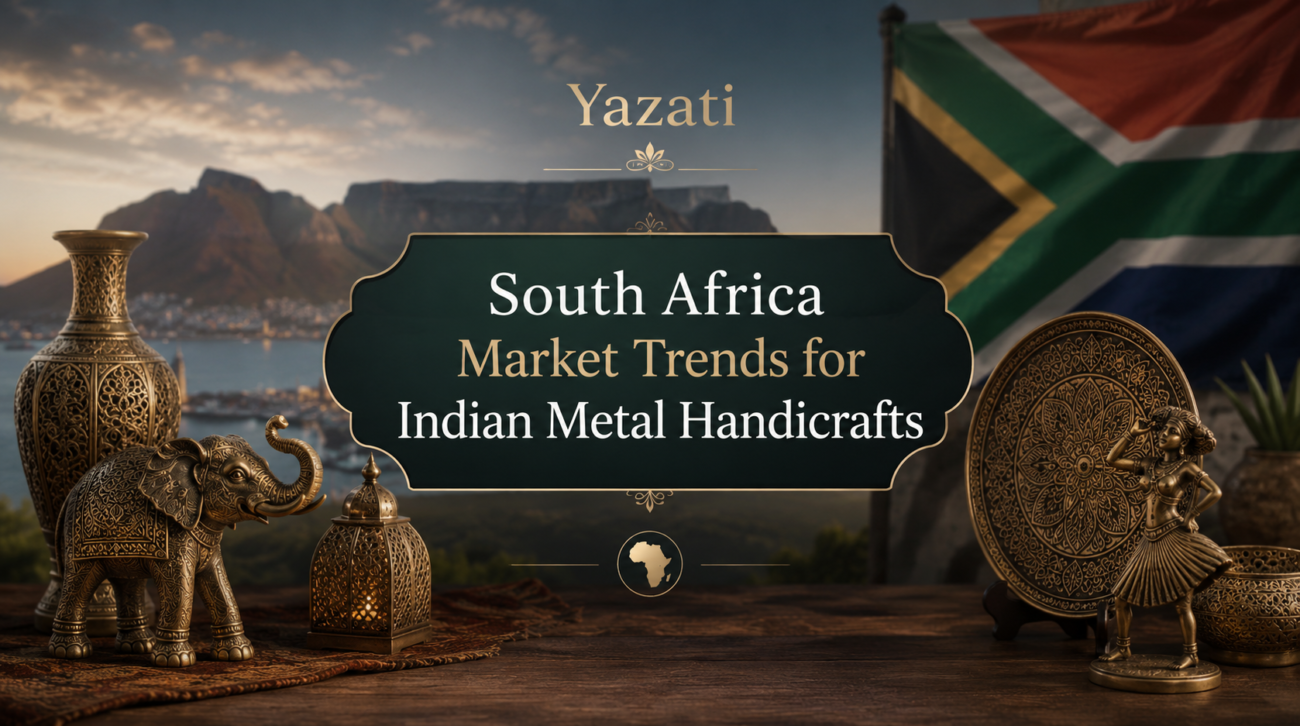
South Africa has emerged as one of the most promising destinations for Indian handicraft exporters. The country’s growing middle class, increasing interest in home décor, and appreciation for handmade artistic products are creating favorable conditions for Indian manufacturers and exporters. Understanding South Africa Market Trends for Indian Metal Handicrafts can help businesses identify profitable opportunities and build sustainable export strategies.
Introduction to the South African Handicrafts Market
The South African handicrafts sector has experienced steady growth over the last decade. Consumers are increasingly looking for products that combine aesthetics, craftsmanship, and cultural significance. Metal handicrafts from India fit perfectly into this trend because they offer unique designs, traditional artistry, and excellent durability.
Urban centers such as Johannesburg, Cape Town, and Durban have become major consumption hubs for premium décor and handcrafted products. These cities host a large population of homeowners, interior designers, hotels, and businesses seeking distinctive decorative items.
Why South Africa Is an Attractive Export Destination
Economic and Retail Landscape
South Africa remains one of Africa’s most developed retail markets. Modern shopping centers, lifestyle stores, and specialty décor outlets create numerous opportunities for imported handicrafts.
The country’s retail sector continues to expand, especially in categories related to:
- Home decoration
- Interior design
- Corporate gifting
- Hospitality furnishings
- Cultural collectibles
Growth of Home Décor and Lifestyle Segments
Home improvement and interior decoration have become increasingly popular among South African consumers. Social media platforms and global design trends are encouraging consumers to invest in unique decorative pieces that reflect personal style and cultural appreciation.
Indian metal handicrafts often fulfill this demand through:
- Decorative bowls
- Lanterns
- Wall art
- Sculptures
- Candle holders
- Traditional figurines
Current Demand Trends for Metal Handicrafts
Rising Popularity of Handmade Products
Consumers increasingly value products made by skilled artisans rather than mass-produced factory goods. Handmade metal handicrafts carry authenticity and uniqueness that appeal to modern buyers.
This trend is especially strong among:
- Affluent homeowners
- Boutique hotel owners
- Interior decorators
- Gift buyers
Preference for Artisan-Crafted Décor
Many South African consumers appreciate the stories behind handcrafted products. Items that showcase traditional Indian craftsmanship often command premium pricing due to their artistic value and cultural heritage.
Popular Indian Metal Handicraft Categories
Brass Decorative Items
Brass remains one of the most sought-after materials in imported handicrafts.
Popular products include:
- Brass statues
- Decorative trays
- Temple bells
- Traditional lamps
- Antique-finish décor pieces
Aluminum and Iron Handicrafts
Aluminum and iron products are gaining traction because they offer modern aesthetics at competitive prices.
High-demand products include:
- Industrial-style décor
- Wall hangings
- Garden ornaments
- Contemporary sculptures
Religious and Cultural Artifacts
South Africa has a sizeable Indian-origin population, creating demand for:
- Hindu religious idols
- Prayer accessories
- Festival décor
- Spiritual gifts
These products often see increased sales during cultural and religious celebrations.
Consumer Buying Behavior in South Africa
Premium vs. Budget Segments
The market can broadly be divided into two segments:
| Premium Segment | Budget Segment |
|---|---|
| High-quality handcrafted products | Affordable decorative items |
| Boutique retailers | Mass retail chains |
| Luxury home décor buyers | General consumers |
| Custom-made products | Standardized designs |
Indian exporters often find greater margins in the premium segment where craftsmanship is highly valued.
Urban Consumer Preferences
Urban consumers tend to favor:
- Contemporary designs
- Fusion décor
- Metallic finishes
- Sustainable products
- Limited-edition collections
Combining traditional Indian artistry with modern design elements can significantly improve market acceptance.
Sustainability and Ethical Sourcing Trends
Eco-Friendly Manufacturing Demand
Environmental awareness continues to influence purchasing decisions. Consumers increasingly prefer products made using:
- Recycled metals
- Sustainable production methods
- Low-impact packaging
- Environmentally responsible processes
Fair Trade and Artisan Storytelling
Buyers are more likely to purchase products when they understand:
- Who made the product
- How artisans benefit
- Cultural significance
- Production techniques
Storytelling has become a powerful marketing tool for Indian handicraft exporters.
Impact of E-Commerce on Metal Handicraft Sales
Online Marketplaces
Digital commerce is transforming the handicrafts industry. Consumers increasingly browse and purchase decorative products online.
Popular channels include:
- Marketplace platforms
- Home décor websites
- Independent online stores
- Social media shops
Social Commerce Opportunities
Instagram, Facebook, and Pinterest play a major role in product discovery. High-quality images and engaging content can significantly influence purchase decisions.
Exporters who invest in digital marketing often achieve stronger brand visibility and customer engagement.
Competitive Landscape
Local Artisans
South African artisans produce a variety of handcrafted products that compete directly with imports. However, Indian handicrafts often maintain an advantage through:
- Detailed craftsmanship
- Rich cultural heritage
- Diverse product range
- Competitive pricing
Imports from Asia and Europe
India competes with exporters from:
- China
- Vietnam
- Indonesia
- Turkey
- European countries
Success depends on product differentiation, quality consistency, and strong distributor relationships.
Pricing Trends and Market Positioning
Value-Based Pricing
Consumers are willing to pay more when products offer:
- Superior craftsmanship
- Authenticity
- Limited availability
- Cultural value
Luxury Décor Segment Growth
Luxury home décor continues to expand, particularly in major urban centers. Premium metal handicrafts with intricate designs can achieve attractive profit margins.
Distribution Channels for Indian Exporters
Importers and Wholesalers
Many exporters enter the market through:
- National distributors
- Wholesale importers
- Gift suppliers
- Home décor distributors
Retail Chains and Specialty Stores
Key sales channels include:
- Home décor retailers
- Lifestyle stores
- Furniture showrooms
- Boutique gift shops
- Museum stores
A multi-channel approach often delivers the best results.
Regulatory and Import Considerations
Customs and Duties
Exporters should carefully review:
- Import tariffs
- Customs regulations
- Product classifications
- Shipping documentation
Proper compliance reduces delays and unexpected costs.
Product Standards and Documentation
Essential requirements generally include:
- Commercial invoices
- Packing lists
- Certificates of origin
- Product descriptions
- Shipping documents
Working with experienced freight partners can simplify the process.
Marketing Strategies for Indian Handicraft Exporters
Digital Marketing
Effective strategies include:
- Search engine optimization
- Social media campaigns
- Influencer collaborations
- Video storytelling
- Email marketing
Trade Fairs and Exhibitions
Participation in international trade events helps exporters:
- Meet distributors
- Identify market trends
- Showcase craftsmanship
- Build long-term partnerships
For additional export guidance, businesses can explore resources from organizations such as the Export Promotion Council for Handicrafts (EPCH) at https://www.epch.in.
Future Opportunities Through 2030
Hospitality Sector Growth
Hotels, resorts, and guesthouses increasingly seek distinctive decorative elements. Indian metal handicrafts can serve as:
- Lobby décor
- Room accessories
- Restaurant decorations
- Cultural display pieces
Corporate Gifting Market Expansion
Businesses are investing more in premium corporate gifts. Customized metal handicrafts offer excellent opportunities in this segment.
Growing demand for personalization is expected to create additional revenue streams for exporters.
Frequently Asked Questions
1. Why is South Africa a promising market for Indian metal handicrafts?
South Africa has growing demand for unique home décor, artisan-made products, and culturally inspired decorative items, making it attractive for Indian exporters.
2. Which Indian metal handicrafts are most popular in South Africa?
Brass statues, decorative lanterns, wall art, candle holders, trays, sculptures, and religious artifacts are among the most popular categories.
3. What consumer trends are driving demand?
Interest in handmade products, sustainability, premium home décor, and authentic craftsmanship are key demand drivers.
4. Which cities offer the best market opportunities?
Johannesburg, Cape Town, and Durban are among the leading markets due to higher consumer spending and strong retail infrastructure.
5. How can exporters enter the South African market?
Exporters typically work through importers, wholesalers, distributors, retail chains, specialty décor stores, and e-commerce platforms.
6. What is the biggest opportunity for Indian exporters?
The premium décor and hospitality sectors offer substantial opportunities because customers are willing to pay more for authentic handcrafted products.
Conclusion
The South Africa Market Trends for Indian Metal Handicrafts indicate a highly promising future for exporters who can combine quality craftsmanship, modern design, sustainability, and effective marketing. Growing demand for handmade décor, luxury home accessories, hospitality furnishings, and culturally inspired products creates multiple avenues for expansion. Businesses that focus on premium positioning, digital promotion, and strong local partnerships will be best positioned to capture long-term growth in the South African market.
✨ Discover Global Sourcing Excellence with Netyex ✨
Netyex is your trusted B2B sourcing partner, connecting international buyers with India’s finest manufacturers and curated product lines—from handicrafts and home décor to kitchenware, textiles, hospitality essentials, and more. With verified suppliers and end-to-end support, we make global procurement seamless, reliable, and efficient.
👉 Elevate your sourcing experience—explore Netyex today.
📦 Bulk orders & customisation | 🌍 Worldwide delivery | 🤝 Trusted by global buyers
Visit Netyex to source premium Indian products with confidence.