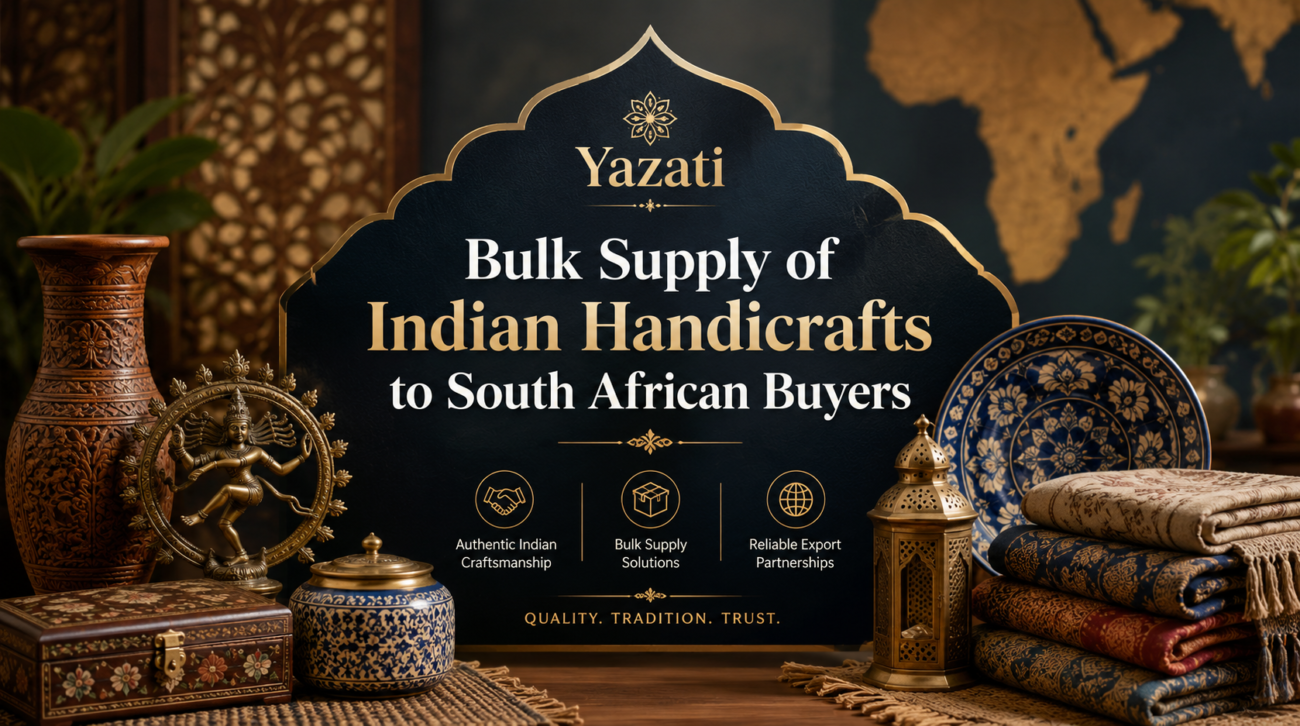
India has long been recognized as a global hub for handcrafted products. From intricate wooden carvings and brass artifacts to embroidered textiles and home décor items, Indian artisans create products that attract buyers worldwide. Among the emerging international markets, South Africa has become an attractive destination for exporters seeking opportunities in the handicraft sector.
The Bulk Supply of Indian Handicrafts to South African Buyers presents a profitable avenue for manufacturers, exporters, and trading companies. With increasing appreciation for handmade, sustainable, and culturally rich products, South African wholesalers and retailers are actively sourcing unique handicrafts from India.
Introduction to the Indian Handicraft Export Market
India’s handicraft industry employs millions of artisans and contributes significantly to export earnings. The sector encompasses a diverse range of products including:
- Wooden handicrafts
- Brass and metal artifacts
- Stone carvings
- Handwoven textiles
- Handmade paper products
- Decorative home accessories
- Jewelry and fashion accessories
The country’s rich artistic heritage provides exporters with a competitive advantage in global markets.
Why South Africa is a Promising Market for Indian Handicrafts
South Africa’s growing middle class and expanding retail sector have increased demand for decorative and lifestyle products.
Consumer Preferences in South Africa
South African consumers increasingly seek:
- Handmade products
- Ethnic décor
- Sustainable merchandise
- Artisan-crafted gifts
- Premium home accessories
These preferences align perfectly with India’s handicraft offerings.
Growing Demand for Ethnic and Handmade Products
Modern consumers appreciate authenticity. Products that tell a story and reflect traditional craftsmanship often command higher prices than mass-produced alternatives.
Popular Indian Handicrafts Exported to South Africa
Wooden Handicrafts
Indian wooden handicrafts are highly valued due to their craftsmanship and durability.
Popular products include:
- Carved furniture
- Decorative boxes
- Wall hangings
- Candle holders
- Sculptures
Metal Artifacts
Metal handicrafts continue to enjoy strong demand.
Examples include:
- Brass figurines
- Copper décor items
- Aluminum decorative products
- Religious artifacts
- Antique-finish accessories
Textile and Embroidered Products
Textile products remain among India’s strongest export categories.
Popular options include:
- Cushion covers
- Table runners
- Wall tapestries
- Handwoven throws
- Embroidered home furnishings
Home Décor and Gift Items
Gift items offer excellent opportunities for bulk exports.
Examples:
- Photo frames
- Decorative trays
- Lanterns
- Potpourri holders
- Festival decorations
Advantages of Bulk Supply Operations
Bulk exports provide several benefits:
| Advantage | Benefit |
|---|---|
| Economies of Scale | Reduced production costs |
| Better Freight Rates | Lower shipping cost per unit |
| Higher Profit Margins | Improved business returns |
| Long-Term Contracts | Stable revenue streams |
| Brand Recognition | Stronger market presence |
Exporters focusing on bulk supply can establish lasting relationships with major buyers.
Identifying Reliable South African Buyers
Finding trustworthy buyers is crucial for export success.
Importers and Distributors
Importers typically purchase large quantities and distribute products across retail channels.
Ideal partners include:
- Home décor distributors
- Giftware importers
- Furniture wholesalers
- Lifestyle product distributors
Retail Chains and Wholesalers
Large retailers often seek unique imported products to differentiate themselves from competitors.
E-commerce and Online Retailers
Online marketplaces are expanding rapidly across South Africa, creating opportunities for wholesale suppliers.
Sourcing High-Quality Handicrafts in India
Major Production Clusters
India’s leading handicraft centers include:
| Region | Specialty |
|---|---|
| Moradabad | Metal handicrafts |
| Saharanpur | Wooden crafts |
| Jaipur | Stone and decorative items |
| Jodhpur | Furniture and décor |
| Varanasi | Textiles |
| Kashmir | Handcrafted art and shawls |
These clusters provide reliable sourcing options for exporters.
Quality Control Measures
Maintaining quality standards is essential.
Best practices include:
- Supplier audits
- Product inspections
- Packaging checks
- Material testing
- Sample approvals
Consistent quality increases buyer confidence and repeat orders.
Export Documentation Requirements
Successful exports require accurate documentation.
IEC and GST Compliance
Exporters must obtain:
- Import Export Code (IEC)
- GST registration
- Export invoices
- Bank documentation
Commercial Invoices and Shipping Documents
Common documents include:
- Commercial invoice
- Packing list
- Bill of lading
- Certificate of origin
- Insurance certificate
Proper documentation ensures smooth customs clearance.
Packaging Standards for International Shipments
Packaging directly impacts product safety and customer satisfaction.
Recommended methods include:
- Bubble wrapping
- Corrugated cartons
- Moisture-resistant materials
- Palletized shipments
- Fragile-item labeling
Strong packaging minimizes transit damage.
Logistics and Freight Solutions
Sea Freight vs Air Freight
| Mode | Advantages | Limitations |
|---|---|---|
| Sea Freight | Cost-effective | Longer transit time |
| Air Freight | Faster delivery | Higher cost |
Bulk shipments generally benefit from sea freight solutions.
Choosing Freight Forwarders
Reliable freight partners should offer:
- Customs expertise
- Shipment tracking
- Warehousing support
- Competitive rates
- South African market experience
Pricing Strategy for Bulk Orders
Pricing should account for:
- Manufacturing cost
- Packaging expenses
- Freight charges
- Insurance costs
- Duties and taxes
- Desired profit margins
A transparent pricing structure strengthens buyer trust.
Marketing Indian Handicrafts to South African Buyers
Digital Marketing Techniques
Effective digital strategies include:
- Professional websites
- Search engine optimization
- LinkedIn outreach
- Email marketing
- Product catalogs
For export promotion, resources such as the Export Promotion Council for Handicrafts (EPCH) can provide valuable industry support and guidance.
Trade Shows and B2B Platforms
Participating in international trade events helps exporters:
- Meet buyers directly
- Showcase products
- Understand market trends
- Build credibility
B2B platforms can also generate qualified leads.
Managing Risks in International Trade
Common risks include:
- Payment delays
- Currency fluctuations
- Shipping disruptions
- Product damage
- Regulatory changes
Risk mitigation strategies include:
- Export insurance
- Advance payments
- Letters of credit
- Clear contracts
- Professional logistics partners
Building Long-Term Buyer Relationships
Long-term success depends on trust and reliability.
Best practices:
- Deliver on time.
- Maintain consistent quality.
- Communicate regularly.
- Offer competitive pricing.
- Respond quickly to inquiries.
- Provide after-sales support.
Strong buyer relationships often lead to recurring bulk orders.
Future Trends in Handicraft Exports
Emerging trends include:
- Sustainable products
- Eco-friendly packaging
- Ethical sourcing
- Personalized handicrafts
- Digital wholesale marketplaces
Exporters who adapt to these trends will remain competitive in the coming years.
Frequently Asked Questions
1. Why is South Africa a good market for Indian handicrafts?
South Africa has growing demand for handmade, decorative, and culturally unique products, making it an attractive export destination.
2. Which Indian handicrafts are most popular in South Africa?
Wooden crafts, metal artifacts, textiles, home décor items, and gift products are among the most sought-after categories.
3. What is the best shipping method for bulk handicraft exports?
Sea freight is usually the most cost-effective option for large-volume shipments.
4. Do exporters need special licenses to export handicrafts from India?
Yes. Exporters generally require an Import Export Code (IEC) and compliance with applicable regulations.
5. How can exporters find South African buyers?
Through trade fairs, B2B marketplaces, distributor networks, and direct digital marketing efforts.
6. How can exporters reduce risks in international transactions?
Using export insurance, secure payment methods, clear contracts, and reliable logistics providers can significantly reduce risk.
Conclusion
The Bulk Supply of Indian Handicrafts to South African Buyers offers substantial growth potential for exporters willing to invest in quality, compliance, logistics, and relationship-building. South Africa’s expanding demand for authentic handmade products creates a favorable environment for Indian suppliers. By sourcing high-quality products, implementing effective pricing strategies, maintaining export standards, and cultivating strong buyer relationships, businesses can establish a profitable and sustainable presence in this promising international market.
✨ Discover Global Sourcing Excellence with Netyex ✨
Netyex is your trusted B2B sourcing partner, connecting international buyers with India’s finest manufacturers and curated product lines—from handicrafts and home décor to kitchenware, textiles, hospitality essentials, and more. With verified suppliers and end-to-end support, we make global procurement seamless, reliable, and efficient.
👉 Elevate your sourcing experience—explore Netyex today.
📦 Bulk orders & customisation | 🌍 Worldwide delivery | 🤝 Trusted by global buyers
Visit Netyex to source premium Indian products with confidence.