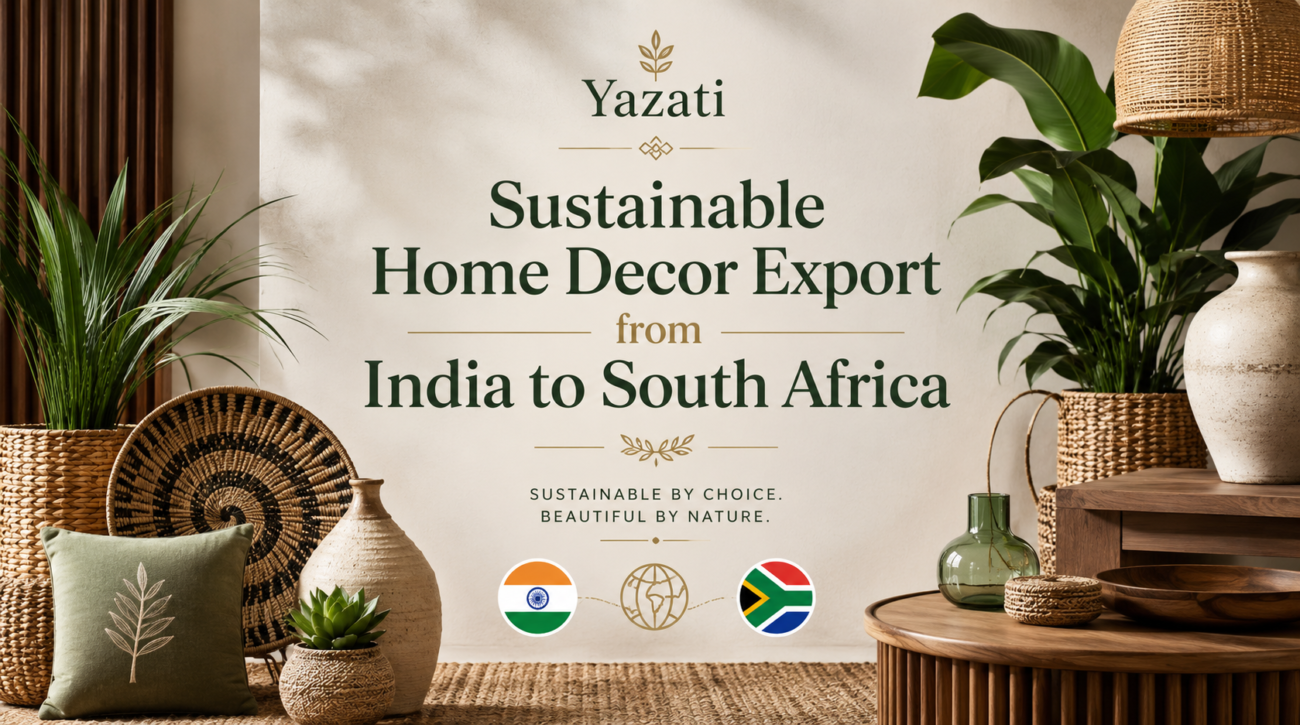
The market for Sustainable Home Decor Export from India to South Africa is expanding rapidly as consumers and businesses increasingly prioritize environmentally responsible products. South African buyers are seeking home décor items that combine aesthetic appeal with sustainability, creating excellent opportunities for Indian exporters.
India has long been recognized for its rich handicraft traditions, natural materials, and skilled artisans. By leveraging these strengths, exporters can successfully enter and grow within South Africa’s eco-conscious home décor market.
Introduction to Sustainable Home Decor Trade
Sustainable home décor refers to products designed and manufactured with minimal environmental impact. These items often use renewable, recycled, biodegradable, or responsibly sourced materials.
Examples include:
- Bamboo décor
- Jute baskets
- Reclaimed wood furniture
- Organic cotton textiles
- Handcrafted ceramic products
- Recycled glass decorations
The growing global movement toward sustainability has increased demand for these products, particularly in emerging markets like South Africa.
Why South Africa Is a Growing Market for Eco-Friendly Decor
South Africa’s middle-class population is increasingly embracing sustainable lifestyles. Consumers are becoming more aware of environmental issues and are actively seeking products that align with their values.
Several factors are driving this trend:
- Rising environmental awareness
- Growth in eco-friendly housing developments
- Expansion of boutique hotels and lodges
- Demand for ethically sourced products
- Increased online shopping for sustainable goods
Additionally, South Africa serves as a gateway to other African markets, making it strategically important for exporters.
Understanding Sustainable Home Decor Products
Recycled Material Decor
Products made from recycled materials reduce waste and appeal to environmentally conscious buyers.
Popular items include:
- Recycled metal wall art
- Reclaimed wood decorations
- Upcycled glass vases
- Recycled paper lampshades
These products often carry a unique story that enhances their market value.
Natural Fiber Home Accessories
India is a leading producer of natural fibers.
Common materials include:
- Jute
- Cotton
- Banana fiber
- Water hyacinth
- Bamboo
- Cane
These materials are used to create:
- Rugs
- Storage baskets
- Table mats
- Wall hangings
- Decorative planters
Handcrafted Wooden Decor
Responsibly sourced wood products remain highly desirable.
Examples include:
- Decorative trays
- Sculptures
- Candle holders
- Serving boards
- Accent furniture
Consumers appreciate the combination of sustainability and craftsmanship.
India’s Competitive Advantage in Sustainable Manufacturing
India possesses several strengths that support successful exports.
Skilled Artisan Networks
Millions of artisans across India create handcrafted products using traditional techniques.
Benefits include:
- Unique designs
- Cultural authenticity
- Flexible production capabilities
- Competitive pricing
Availability of Eco-Friendly Raw Materials
India has abundant access to renewable resources such as:
- Bamboo
- Jute
- Organic cotton
- Coconut shells
- Reclaimed wood
This supports large-scale sustainable production while maintaining cost efficiency.
Market Trends in South Africa
Consumer Demand for Sustainable Living
Modern South African consumers increasingly favor:
- Ethical brands
- Locally inspired designs
- Eco-conscious products
- Natural textures and materials
Products that communicate environmental responsibility often command premium pricing.
Hospitality and Commercial Sector Demand
South Africa’s tourism industry creates strong demand for sustainable décor.
Hotels, resorts, lodges, and guesthouses seek:
- Eco-friendly furnishings
- Natural fiber accessories
- Sustainable lighting
- Handmade decorative items
This sector can provide recurring bulk orders for exporters.
Popular Sustainable Home Decor Export Categories
Baskets and Storage Solutions
Handwoven baskets made from natural fibers are highly popular.
Applications include:
- Storage
- Decorative displays
- Retail merchandising
- Hospitality use
Rugs and Textiles
Sustainable textile products include:
- Organic cotton rugs
- Handwoven dhurries
- Cushion covers
- Throws
- Table linens
These products fit modern interior design trends.
Decorative Lighting
Eco-friendly lighting options include:
- Bamboo lamps
- Rattan pendants
- Recycled metal fixtures
- Handmade lanterns
Furniture and Accent Pieces
Demand is growing for:
- Sustainable coffee tables
- Side tables
- Accent chairs
- Wooden shelving units
Minimalist and natural aesthetics are especially popular.
Export Regulations and Compliance Requirements
Product Standards
Exporters should ensure:
- Proper material declarations
- Compliance with environmental standards
- Accurate product descriptions
- Safety certifications when required
Labeling Requirements
Labels should include:
- Country of origin
- Material composition
- Care instructions
- Sustainability claims supported by evidence
Transparent labeling helps build trust with buyers.
Shipping and Logistics Considerations
Successful exporting requires efficient logistics management.
Key considerations include:
- Container optimization
- Product protection during transit
- Customs documentation
- Freight cost management
Major South African ports include:
- Durban
- Cape Town
- Port Elizabeth
- Richards Bay
Sea freight remains the most cost-effective option for large shipments.
Pricing Strategy for South African Buyers
Pricing should balance competitiveness with profitability.
Factors influencing pricing include:
| Cost Component | Impact |
|---|---|
| Raw Materials | Medium |
| Labor | Medium |
| Packaging | Low |
| Freight | High |
| Customs Duties | Medium |
| Currency Fluctuations | High |
Offering tiered pricing for larger orders can attract distributors and retailers.
Marketing and Distribution Channels
Online Marketplaces
Effective channels include:
- B2B platforms
- Wholesale marketplaces
- E-commerce partnerships
- Social commerce networks
A strong digital presence helps buyers discover suppliers.
Retail Partnerships
Collaborating with:
- Home décor retailers
- Interior designers
- Hospitality procurement firms
- Lifestyle boutiques
can significantly expand market reach.
Challenges and Risk Management
Exporters may face:
- Currency volatility
- Shipping delays
- Regulatory changes
- Competitive pricing pressures
Mitigation strategies include:
- Diversified customer portfolios
- Long-term supplier agreements
- Freight planning
- Export insurance
Sustainable Packaging Solutions
Packaging plays an important role in sustainability.
Recommended options include:
- Recycled cardboard
- Paper tape
- Biodegradable fillers
- Reusable packaging materials
Eco-friendly packaging enhances brand perception and supports sustainability goals.
Future Opportunities for Exporters
The future of Sustainable Home Decor Export from India to South Africa appears highly promising.
Emerging opportunities include:
- Eco-luxury product lines
- Hospitality sector partnerships
- Fair-trade certified collections
- Sustainable furniture exports
- Online direct-to-consumer sales
As sustainability becomes mainstream, exporters who invest early in quality, certification, and branding will gain a competitive advantage.
Frequently Asked Questions
1. Why is South Africa attractive for sustainable home décor exports?
South Africa has growing consumer awareness of environmental issues and increasing demand for eco-friendly lifestyle products.
2. Which sustainable materials are most popular in home décor exports?
Jute, bamboo, reclaimed wood, organic cotton, cane, and recycled materials are among the most sought-after options.
3. What are the best-selling sustainable home décor products from India?
Baskets, rugs, lighting fixtures, wall décor, furniture, and textile accessories are consistently popular.
4. Do exporters need sustainability certifications?
While not always mandatory, certifications can improve buyer confidence and open doors to premium markets.
5. Which sectors drive demand in South Africa?
Retail consumers, hospitality businesses, interior designers, and commercial property developers are major buyers.
6. What is the most economical shipping method?
Sea freight is generally the most cost-effective method for exporting home décor products in large quantities.
Conclusion
The Sustainable Home Decor Export from India to South Africa sector offers substantial growth opportunities for manufacturers, artisans, and exporters. India’s strengths in craftsmanship, natural materials, and sustainable production align perfectly with South Africa’s increasing demand for eco-friendly products. By focusing on quality, compliance, sustainable packaging, and strategic partnerships, exporters can build a profitable and long-lasting presence in this expanding market.
✨ Discover Global Sourcing Excellence with Netyex ✨
Netyex is your trusted B2B sourcing partner, connecting international buyers with India’s finest manufacturers and curated product lines—from handicrafts and home décor to kitchenware, textiles, hospitality essentials, and more. With verified suppliers and end-to-end support, we make global procurement seamless, reliable, and efficient.
👉 Elevate your sourcing experience—explore Netyex today.
📦 Bulk orders & customisation | 🌍 Worldwide delivery | 🤝 Trusted by global buyers
Visit Netyex to source premium Indian products with confidence.