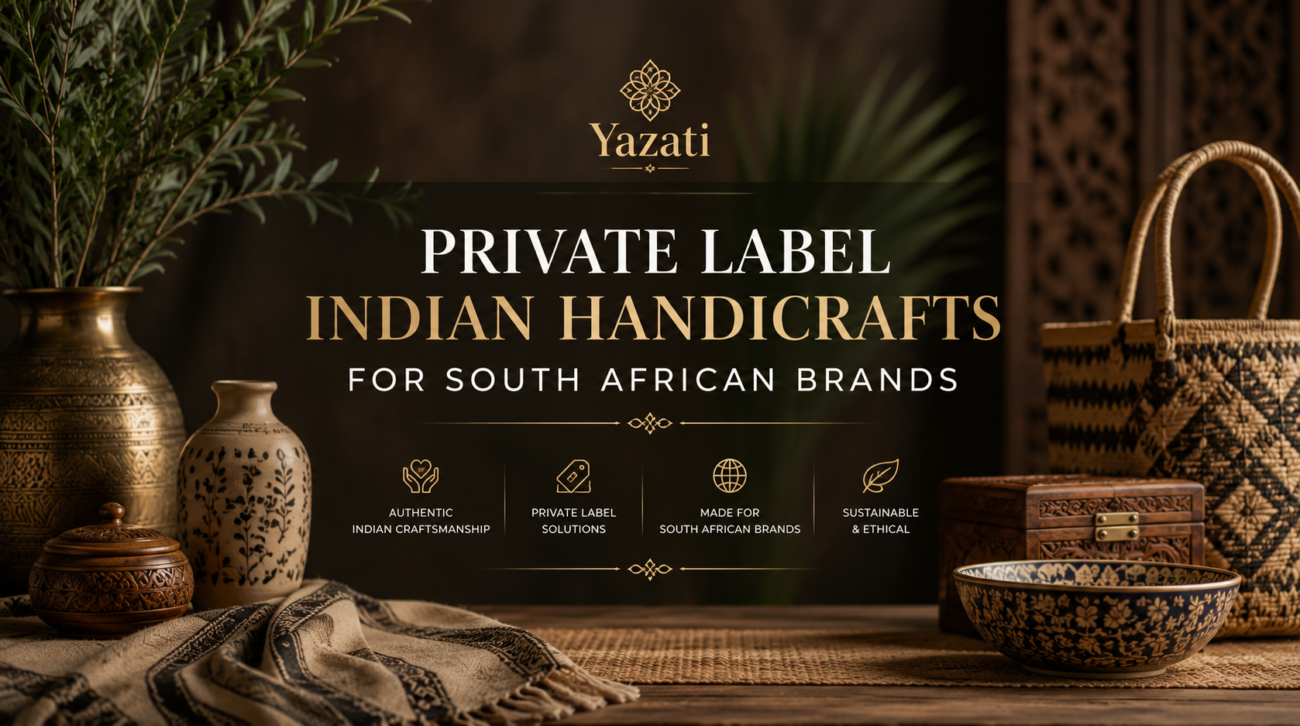
Introduction to Private Label Indian Handicrafts for South African Brands
The demand for authentic, handcrafted, and sustainable products continues to grow across global markets. Among the most promising sourcing opportunities today are Private Label Indian Handicrafts for South African Brands. South African retailers, wholesalers, e-commerce businesses, and lifestyle brands are increasingly turning to India for unique handcrafted products that combine cultural richness, artisan craftsmanship, and competitive manufacturing costs.
India has been a global center for handicrafts for centuries. From intricate wooden carvings and handcrafted textiles to metal art and eco-friendly décor items, Indian artisans produce products that appeal to consumers seeking authenticity and quality. By partnering with Indian manufacturers under private label agreements, South African brands can create exclusive collections while maintaining full control over branding and customer experience.
Understanding the Indian Handicrafts Industry
India’s handicrafts industry is one of the largest in the world, employing millions of artisans across rural and urban communities. The sector encompasses traditional skills passed down through generations, resulting in products that are difficult to replicate through mass production.
Size and Global Reach of Indian Handicraft Exports
Indian handicrafts are exported to markets across North America, Europe, Australia, the Middle East, and Africa. The industry’s strength lies in its ability to blend traditional artistry with modern design preferences.
Export-oriented manufacturers frequently work with international buyers to create custom collections tailored to specific markets. This flexibility makes India an ideal sourcing destination for South African brands seeking differentiation.
Major Handicraft Manufacturing Regions in India
Several regions specialize in particular handicraft categories:
| Region | Specialty |
|---|---|
| Rajasthan | Wooden crafts, textiles, blue pottery |
| Moradabad | Metal handicrafts |
| Saharanpur | Wooden furniture and décor |
| Jaipur | Handmade jewelry and textiles |
| Kashmir | Carpets and wool products |
| Gujarat | Embroidery and artisan fabrics |
These clusters provide buyers with access to specialized craftsmanship and production expertise.
Why South African Brands Are Choosing Indian Handicrafts
Cost Advantages and Competitive Pricing
One of the primary reasons South African businesses source from India is affordability. Indian manufacturers often provide competitive pricing while maintaining high craftsmanship standards.
Lower production costs allow brands to achieve healthy profit margins without sacrificing product quality.
Access to Skilled Artisan Communities
Indian artisans possess generations of expertise in woodworking, weaving, metalworking, pottery, and textile production. Their craftsmanship adds authenticity and value to private label collections.
Consumers increasingly appreciate products with a story, making artisan-made goods attractive in premium market segments.
Product Diversity and Customization
India offers an extensive range of handcrafted products, enabling South African brands to create diverse product lines under a single sourcing relationship.
Customization options include:
- Exclusive designs
- Custom colors
- Personalized packaging
- Logo branding
- Market-specific product modifications
Popular Private Label Handicraft Categories
Home Décor and Interior Accessories
Home décor remains one of the strongest categories for private labeling.
Popular products include:
- Decorative bowls
- Wall hangings
- Candle holders
- Mirrors
- Table décor
These products align with growing consumer interest in personalized living spaces.
Wooden Handicrafts
Handcrafted wooden products are highly sought after because of their durability and natural appeal.
Examples include:
- Serving trays
- Decorative boxes
- Sculptures
- Furniture accents
- Kitchen accessories
Metal Art and Decorative Items
Metal handicrafts add elegance and sophistication to product collections.
Common offerings include:
- Lanterns
- Wall art
- Vases
- Decorative figurines
- Centerpieces
Textile and Handmade Fabrics
India’s textile heritage provides countless private label opportunities.
Products include:
- Cushion covers
- Throws
- Table runners
- Curtains
- Handmade bags
Eco-Friendly and Sustainable Products
Sustainability continues to influence purchasing decisions globally.
Popular eco-friendly options include:
- Bamboo products
- Jute bags
- Recycled-material décor
- Organic cotton textiles
- Natural fiber baskets
Benefits of Private Labeling for South African Businesses
Brand Ownership and Market Differentiation
Private labeling enables businesses to build their own brand identity rather than promoting third-party manufacturers.
Exclusive branding creates stronger customer loyalty and recognition.
Higher Profit Margins
Owning the brand often results in better profit margins compared to reselling established products.
Businesses can position products according to their target audience and pricing strategy.
Exclusive Product Collections
Customized collections help brands stand out in competitive markets.
Exclusivity can become a major selling point for retailers and online stores.
How to Source Private Label Indian Handicrafts
Identifying Reliable Manufacturers
Finding trustworthy manufacturing partners is critical.
Key evaluation criteria include:
- Export experience
- Product quality
- Production capacity
- Communication responsiveness
- Certifications
Factory Verification Methods
Before committing to large orders, buyers should:
- Request company documentation
- Conduct virtual factory tours
- Obtain product samples
- Review export history
- Check customer references
Product Quality Assessment
Assess:
- Material quality
- Craftsmanship consistency
- Packaging standards
- Product durability
Quality evaluation during sampling reduces future risks.
Customization Options Available
Logo Branding and Packaging
Manufacturers often provide:
- Private labels
- Printed logos
- Custom tags
- Branded boxes
- Retail-ready packaging
Product Design Modifications
South African brands can request modifications to align with local consumer preferences.
Examples include:
- Size adjustments
- Pattern variations
- Contemporary styling
- Cultural adaptations
Custom Color and Material Selection
Custom materials and finishes allow businesses to create truly unique collections.
Options may include:
- Different wood types
- Alternative metals
- Customized fabrics
- Specialty finishes
Quality Control Best Practices
Pre-Production Inspection
Pre-production reviews verify:
- Approved materials
- Design specifications
- Packaging requirements
In-Process Quality Monitoring
Regular inspections during production help identify issues early.
Benefits include:
- Reduced defects
- Improved consistency
- Better supplier accountability
Final Shipment Inspection
Final inspections confirm that products meet agreed standards before export.
This step minimizes costly returns and customer complaints.
Shipping and Logistics from India to South Africa
Freight Options
South African importers generally choose between:
| Freight Method | Advantages |
|---|---|
| Sea Freight | Lower cost for bulk orders |
| Air Freight | Faster delivery |
| Express Courier | Ideal for samples |
Customs and Import Documentation
Typical documentation includes:
- Commercial invoices
- Packing lists
- Certificates of origin
- Bill of lading
- Import permits where required
Working with experienced freight forwarders simplifies the process.
Sustainability and Ethical Sourcing Trends
Fair Trade Practices
Consumers increasingly support products produced under ethical working conditions.
Fair trade sourcing can strengthen brand reputation and customer trust.
Eco-Conscious Consumer Demand
Environmentally responsible products continue to gain market share.
Brands that emphasize sustainability often enjoy stronger customer loyalty and premium pricing opportunities.
For more information on sustainable trade initiatives, visit the .
Challenges and Solutions in Private Label Sourcing
Managing Lead Times
Handcrafted products often require longer production periods.
Solutions include:
- Advanced planning
- Forecasting demand
- Maintaining safety stock
Maintaining Consistent Quality
Consistency can be achieved through:
- Detailed specifications
- Quality inspections
- Long-term supplier relationships
Marketing Private Label Indian Handicrafts in South Africa
Online Sales Channels
Successful channels include:
- E-commerce stores
- Online marketplaces
- Social media commerce
- Direct-to-consumer websites
Retail and Boutique Partnerships
Boutiques often value unique handcrafted products that differentiate their inventory from mass-market retailers.
Collaborations with interior designers can also increase exposure.
Future Trends in the Handicraft Industry
Several trends are expected to shape the market:
- Sustainable materials
- Personalized products
- Artisan storytelling
- Limited-edition collections
- Digitally enabled customization
- Ethical sourcing transparency
Brands that embrace these trends will likely enjoy stronger market positioning.
Frequently Asked Questions
1. Why are Indian handicrafts popular among South African brands?
Indian handicrafts offer unique designs, skilled craftsmanship, competitive pricing, and extensive customization options.
2. Can Indian manufacturers provide private label services?
Yes. Many export-focused manufacturers offer branding, packaging, and product customization services.
3. What is the minimum order quantity for private label handicrafts?
Minimum order quantities vary depending on the manufacturer and product category.
4. How long does production typically take?
Production timelines generally range from a few weeks to several months depending on complexity and order volume.
5. Are eco-friendly handicraft options available?
Yes. India offers a wide variety of sustainable products made from bamboo, jute, recycled materials, and organic fabrics.
6. What are the most popular handicraft products for private labeling?
Home décor, wooden crafts, metal art, textiles, and eco-friendly accessories remain among the most popular categories.
Conclusion
Private Label Indian Handicrafts for South African Brands represent a significant opportunity for businesses seeking distinctive, high-quality products with strong market appeal. India’s extensive artisan network, manufacturing flexibility, and competitive pricing make it an ideal sourcing destination. By focusing on reliable suppliers, effective quality control, sustainable practices, and strong branding, South African businesses can build profitable and memorable product collections that resonate with modern consumers.
✨ Discover Global Sourcing Excellence with Netyex ✨
Netyex is your trusted B2B sourcing partner, connecting international buyers with India’s finest manufacturers and curated product lines—from handicrafts and home décor to kitchenware, textiles, hospitality essentials, and more. With verified suppliers and end-to-end support, we make global procurement seamless, reliable, and efficient.
👉 Elevate your sourcing experience—explore Netyex today.
📦 Bulk orders & customisation | 🌍 Worldwide delivery | 🤝 Trusted by global buyers
Visit Netyex to source premium Indian products with confidence.