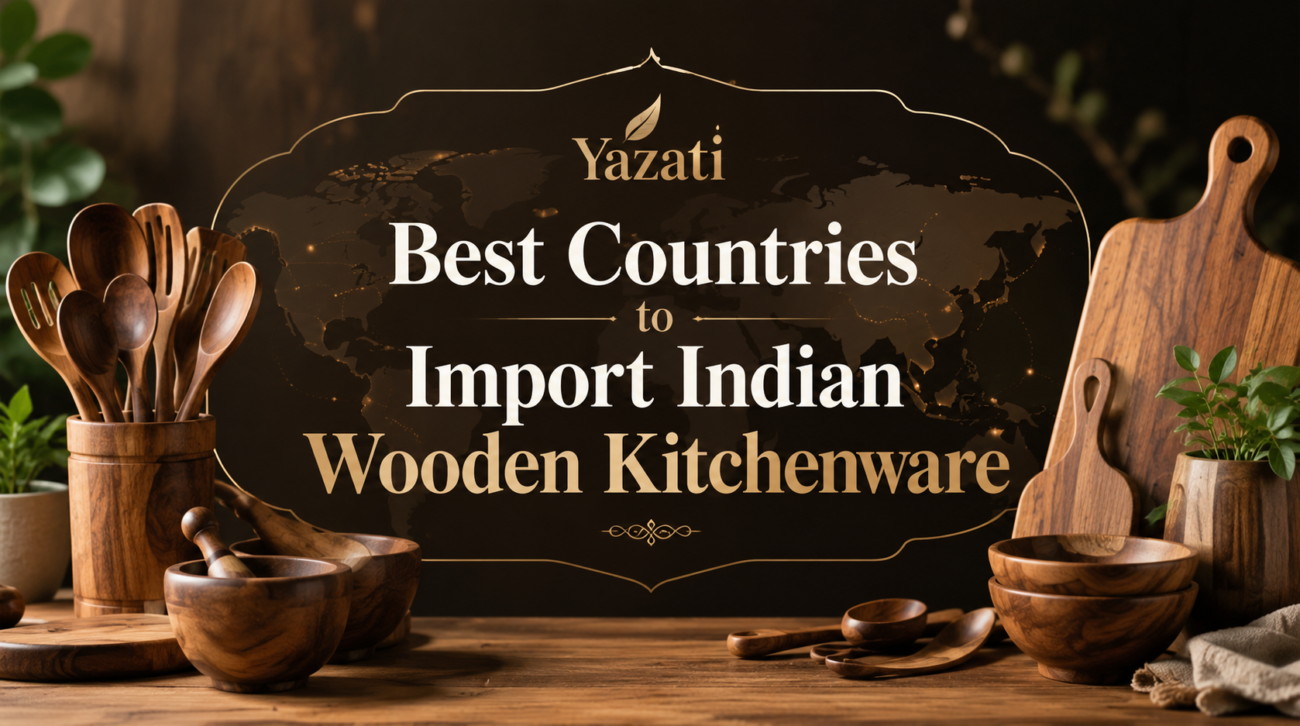
Introduction to Indian Wooden Kitchenware Exports
Indian wooden kitchenware has become a sought-after product in international markets. From handcrafted spoons and spatulas to cutting boards, serving trays, bowls, and salad servers, Indian manufacturers have successfully combined traditional craftsmanship with modern functionality.
The growing global preference for sustainable and eco-friendly kitchen products has created excellent opportunities for Indian exporters. Wooden kitchenware made from neem, acacia, mango wood, teak, and sheesham is increasingly replacing plastic alternatives in homes, restaurants, and hospitality businesses worldwide.
Understanding the Best Countries to Import Indian Wooden Kitchenware is essential for exporters looking to expand globally and maximize profits.
Why Indian Wooden Kitchenware Is Popular Worldwide
Sustainability and Eco-Friendly Appeal
Consumers across the globe are actively seeking environmentally responsible products. Wooden kitchenware aligns perfectly with this trend because it is:
- Biodegradable
- Renewable
- Durable
- Plastic-free
- Safe for food preparation
Many buyers prefer wooden utensils because they reduce environmental impact while adding natural beauty to kitchens.
Craftsmanship and Traditional Designs
India has centuries of woodworking expertise. Skilled artisans create products that combine functionality with aesthetic appeal. This unique blend of tradition and innovation makes Indian wooden kitchenware highly competitive in international markets.
Global Demand Trends for Wooden Kitchen Products
Several factors are driving demand:
| Trend | Impact |
|---|---|
| Sustainable Living | Increased preference for wooden products |
| Home Cooking Boom | Higher demand for kitchen accessories |
| Premium Kitchen Decor | Growth in decorative serving ware |
| E-commerce Expansion | Easier access to international buyers |
| Hospitality Industry Growth | Increased commercial purchases |
The shift toward natural materials continues to support strong demand across developed and emerging economies.
Factors That Make a Country Attractive for Imports
Consumer Purchasing Power
Countries with higher disposable incomes tend to spend more on premium kitchen products.
Import Regulations
Markets with transparent import procedures and favorable trade relations offer easier access for exporters.
Market Size and Growth Potential
Large populations, developed retail networks, and growing e-commerce platforms increase opportunities for wooden kitchenware suppliers.
United States
The United States remains one of the largest importers of home and kitchen products globally.
Market Opportunities
Key opportunities include:
- Eco-friendly kitchen utensils
- Wooden cutting boards
- Serving trays
- Premium gift products
- Restaurant supply chains
Consumers increasingly value handcrafted and sustainable products, making the U.S. an excellent destination for Indian exporters.
Germany
The Germany is Europe’s largest economy and a major importer of sustainable household goods.
Sustainability-Driven Demand
German consumers often prioritize:
- Certified sustainable products
- Natural materials
- Ethical sourcing
- Durable household goods
Indian wooden kitchenware fits these preferences exceptionally well.
United Kingdom
The United Kingdom continues to experience strong demand for artisan homeware.
Growing Interest in Natural Kitchen Products
Popular categories include:
- Wooden serving boards
- Salad bowls
- Handmade utensils
- Decorative kitchen accessories
Online marketplaces have made importing easier than ever.
Canada
The Canada offers a stable and growing market.
Eco-Conscious Consumer Base
Canadian consumers increasingly seek:
- Sustainable products
- Fair-trade goods
- Handmade home accessories
Wooden kitchenware aligns perfectly with these preferences.
Australia
The Australia has a thriving premium homeware segment.
Premium Homeware Market
Australian buyers often look for:
- High-quality craftsmanship
- Natural finishes
- Eco-friendly materials
- Designer kitchen accessories
Indian suppliers can command attractive margins in this market.
France
The France values aesthetics and craftsmanship.
Preference for Artisan Products
French consumers appreciate:
- Handmade serving products
- Elegant wooden tableware
- Sustainable kitchen accessories
Premium positioning works particularly well here.
Netherlands
The Netherlands serves as a key gateway to Europe.
European Distribution Hub
Benefits include:
- Strong logistics infrastructure
- Major import-export networks
- Access to wider EU markets
Many exporters use Dutch importers as entry points into Europe.
Japan
The Japan is known for its appreciation of quality and craftsmanship.
Appreciation for Quality Craftsmanship
Japanese consumers value:
- Precision manufacturing
- Natural materials
- Elegant design
- Long-lasting products
Premium Indian wooden kitchenware can perform exceptionally well in this market.
United Arab Emirates
The United Arab Emirates is a major regional trading center.
Strong Retail and Hospitality Sector
Demand comes from:
- Hotels
- Restaurants
- Luxury retailers
- Gift stores
Dubai serves as a gateway to broader Middle Eastern markets.
Saudi Arabia
The Saudi Arabia is experiencing rapid retail growth.
Expanding Home and Lifestyle Market
Growing urbanization and rising disposable incomes continue to increase demand for quality kitchenware products.
Singapore
The Singapore offers access to affluent consumers.
High-End Kitchenware Demand
The market favors:
- Premium products
- Sustainable materials
- Modern kitchen accessories
Singapore also serves as a regional distribution hub.
South Korea
The South Korea has witnessed growing interest in sustainable living.
Rising Interest in Sustainable Living
Consumers increasingly prefer:
- Eco-friendly household goods
- Natural kitchen products
- Stylish home accessories
This trend creates opportunities for Indian manufacturers.
Export Requirements for Indian Suppliers
Before exporting, suppliers should ensure:
- Import-country compliance
- Proper product labeling
- Phytosanitary requirements where applicable
- Food-contact safety standards
- Quality certifications
- Export documentation
Organizations such as Export Promotion Council for Handicrafts and Federation of Indian Export Organisations can provide valuable guidance.
For export procedures and compliance information, visit the official portal of Directorate General of Foreign Trade.
Marketing Strategies for International Buyers
Successful exporters often:
- Participate in international trade fairs.
- Build professional B2B websites.
- Use marketplaces such as Amazon and Alibaba.
- Highlight sustainability credentials.
- Offer private-label manufacturing.
- Provide customization options.
Common Challenges and Solutions
| Challenge | Solution |
|---|---|
| Regulatory Compliance | Work with export consultants |
| Shipping Costs | Consolidate shipments |
| Competition | Differentiate through design |
| Quality Control | Implement strict inspections |
| Market Entry | Partner with local distributors |
Future Outlook for Indian Wooden Kitchenware Exports
The future looks highly promising. Rising environmental awareness, growing demand for sustainable household products, and expanding e-commerce channels are expected to support long-term growth.
Exporters who focus on quality, certification, branding, and innovation are likely to gain significant advantages in global markets.
FAQs
1. Which country imports the most wooden kitchenware?
The United States is among the largest importers due to its massive consumer market and strong demand for sustainable products.
2. What wood is commonly used in Indian kitchenware?
Acacia, mango wood, neem, teak, and sheesham are commonly used.
3. Is wooden kitchenware in demand globally?
Yes. Demand continues to grow as consumers seek eco-friendly alternatives to plastic products.
4. Which European countries are best for exporting Indian wooden kitchenware?
Germany, the United Kingdom, France, and the Netherlands are among the strongest markets.
5. Do exporters need certifications?
Requirements vary by country, but quality, safety, and phytosanitary compliance are often important.
6. What is the fastest-growing market for premium wooden kitchenware?
Countries in the Middle East and Asia-Pacific, including the UAE, Saudi Arabia, Singapore, and South Korea, are showing strong growth.
Conclusion
Identifying the Best Countries to Import Indian Wooden Kitchenware is crucial for exporters aiming to expand internationally. The United States, Germany, United Kingdom, Canada, Australia, France, Netherlands, Japan, UAE, Saudi Arabia, Singapore, and South Korea stand out as attractive markets due to strong consumer demand, sustainability trends, and growing appreciation for handcrafted products. By focusing on quality, compliance, and strategic marketing, Indian manufacturers can successfully build long-term export relationships and increase global market share.
✨ Discover Global Sourcing Excellence with Netyex ✨
Netyex is your trusted B2B sourcing partner, connecting international buyers with India’s finest manufacturers and curated product lines—from handicrafts and home décor to kitchenware, textiles, hospitality essentials, and more. With verified suppliers and end-to-end support, we make global procurement seamless, reliable, and efficient.
👉 Elevate your sourcing experience—explore Netyex today.
📦 Bulk orders & customisation | 🌍 Worldwide delivery | 🤝 Trusted by global buyers
Visit Netyex to source premium Indian products with confidence.